

You want the leadership secrets and product frameworks that built Apple into a multi-trillion-dollar empire, but you don't have 20 hours to read a 600-page book. Walter Isaacson’s authorized biography is a masterpiece of business history, but its sheer size is daunting. You need the unfiltered essence of his unapologetic management style and uncompromising design principles right now.
And for busy professionals who want to absorb the core lessons from this biography and other business essentials without dedicating 20 hours, a microlearning app can distill the key ideas for you.


Get the core principles from Walter Isaacson's 'Steve Jobs' and other essential business books in just 15-minute reads or listens, perfect for your commute.
 LeapAhead
This guide strips away the filler. It delivers the exact frameworks Jobs used to fire underperformers, design iconic hardware, and disrupt entire industries.
Steve Jobs Walter Isaacson Summary: The Core Philosophies
Before mapping his life timeline, you must understand the psychological frameworks that drove his decisions. Isaacson highlights several recurring themes that define Jobs's worldview.
The Reality Distortion Field (RDF)
Jobs refused to accept limits. If an engineer told him a task would take six months, Jobs would stare them down and declare it could be done in two weeks. This wasn't just bullying; it was a willful refusal to accept standard metrics of reality. He convinced the original Mac team to shave ten seconds off the computer's boot time by arguing that saving ten seconds for millions of users equated to saving dozens of lifetimes. It worked.

This unique blend of charisma, intense focus, and sheer willpower became legendary in Silicon Valley. For a deeper look at how he used this psychological tool to bend reality to his will:
End-to-End Integration (The Closed System)
Jobs fundamentally disagreed with Microsoft's and Google's open licensing models. He believed that to create a seamless user experience, a company must control the entire widget—the hardware, the operating system, and the application layer. This relentless control resulted in products that "just work." Apple devices operate beautifully because the hardware and software teams design them in lockstep, a stark contrast to the fragmented Android ecosystem.
Simplicity is the Ultimate Sophistication
Jobs obsessed over stripping away the unnecessary. When designing the iPod, his rule was simple: a user must be able to reach any song in three clicks. If an interface required a manual, it was poorly designed. He forced engineers to remove the on/off switch from most Apple devices entirely. True simplicity, he argued, comes from conquering complexities, not ignoring them.
To truly understand how Apple achieved this level of uncompromising simplicity, you have to look at the man who translated Jobs's visions into physical aluminum and glass. If you're fascinated by the industrial design process that birthed the iMac, iPod, and iPhone, diving into the story of Apple's former Chief Design Officer is a must-read. It offers a brilliant behind-the-scenes look at the secretive design studio that defined modern consumer technology.

Jony Ive
Leander Kahney
 15 Duration
 7 Key Points
 4.7 Rate
Steve Jobs Chapter by Chapter Summary (Condensed into Eras)
A literal Steve Jobs chapter by chapter summary of all 42 chapters bogs down in family disputes and dietary habits. For business professionals, his life is best understood through four distinct eras of failure, exile, and triumph.
Era 1: The Counterculture Hacker (Chapters 1-9)
Raised in Silicon Valley, Jobs combined hippie counterculture with hardcore electronics. He and Steve Wozniak started by building "blue boxes" to hack the telephone network. This taught Jobs a dangerous lesson: a small group of rebels could take down giant infrastructure. They founded Apple in a garage. While Wozniak was the engineering genius, Jobs was the visionary who knew how to package, market, and sell the Apple II to the masses.
Era 2: The Mac, the Ego, and the Fall (Chapters 10-17)
As Apple grew, Jobs became increasingly erratic. He launched the Macintosh in 1984, pushing a closed-system philosophy and promoting his team as pirates hoisting a Jolly Roger flag. To bring in "adult supervision," he recruited Pepsi executive John Sculley with the famous line: "Do you want to sell sugar water for the rest of your life, or do you want to come with me and change the world?" That move backfired. Jobs’s volatile temper and failure to hit sales targets led Sculley and the board to strip him of all operational power in 1985. Jobs left Apple.
Era 3: The Wilderness Years - NeXT and Pixar (Chapters 18-24)
During his exile, Jobs founded NeXT. The hardware failed commercially, but its advanced object-oriented operating system became the foundation for the modern macOS and iOS. Concurrently, he bought a small computer graphics division from George Lucas for $5 million. He helped build it into Pixar. When Toy Story became a massive hit, it made Jobs a billionaire and gave him the leverage he needed for his next act.

Jobs's time at Pixar wasn't just a profitable detour; it fundamentally changed his approach to managing creative talent. If you want to explore the culture that produced Toy Story and allowed brilliant creatives to thrive, the firsthand account from Pixar's co-founder is essential reading. It provides a masterclass in building an environment where art and technology intersect, offering leadership lessons that perfectly complement Jobs's own intense style.

Creativity, Inc.
Ed Catmull, Amy Wallace
45 Duration9 Key Points4.7 RateEra 4: The Rescue and the i-Revolution (Chapters 25-42)
Apple was weeks away from bankruptcy in 1997. They bought NeXT to get its software, bringing Jobs back. He immediately staged a boardroom coup, became CEO, and launched the "Think Different" campaign. He slashed Apple’s fragmented product line down to a simple four-quadrant grid (Consumer/Pro, Desktop/Portable).
What followed was the greatest second act in business history:
- 1998: iMac (bringing color to a beige industry).
- 2001: iPod ("1,000 songs in your pocket").
- 2007: iPhone (touching the software directly, killing the physical keyboard).
- 2010: iPad (bridging the phone and the laptop).
The book ends with his tragic battle with pancreatic cancer. Ironically, the same Reality Distortion Field that helped him build Apple caused him to delay necessary surgery in favor of alternative diets, which Isaacson notes as a fatal miscalculation.
Steve Jobs Biography Key Takeaways
If you are a founder, manager, or creator, the book offers brutal but highly effective operational frameworks.
1. Focus Means Saying No
When Jobs returned to Apple, he didn't invent a new product right away. He killed 70% of the existing projects. He argued that deciding what not to do is as important as deciding what to do. Put your top talent on your top three priorities and ruthlessly execute them.

2. Tolerate Only A-Players
Jobs believed in the "bozo explosion." If you hire B-players, they will eventually hire C-players to feel superior. He was notorious for telling employees their work was garbage. While his delivery lacked basic empathy, it created an environment where A-players did the best work of their lives because they knew mediocrity would not be tolerated.
This 'A-players only' mindset was a cornerstone of his management approach, yielding incredible results but often at a significant personal cost to his team.
3. Connect Humanities and Science
Jobs often stood at the intersection of technology and the liberal arts. The Macintosh didn't just compute data; it had beautiful typography because Jobs took a calligraphy class at Reed College. He realized that a product must resonate emotionally. Design is not how it looks; design is how it works.
4. Cannibalize Yourself Before Competitors Do
Jobs knew the iPhone would destroy the iPod market. He didn't care. "If you don't cannibalize yourself, someone else will," he said. Never protect a legacy product at the expense of a revolutionary one.
Jobs's willingness to cannibalize his own most profitable products wasn't just instinct—it was deeply influenced by one of the few business strategy books he ever praised. If you want to understand the exact framework that convinced Apple to build the iPhone (knowing it would eventually kill the iPod), you should check out the foundational text on disruptive innovation. It's a mandatory playbook for any founder trying to stay ahead of the curve.
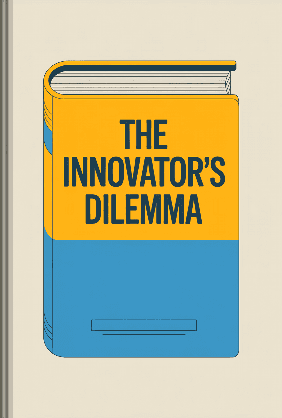
The Innovator's Dilemma
Clayton M. Christensen
22 Duration7 Key Points4.8 RateSteve Jobs Book Review: Is the Full Text Worth Reading?
This summary gives you the tactical execution and product philosophy. But should you engage with the full text?
As a Steve Jobs book review, Isaacson's work is a masterpiece precisely because Jobs gave up all editorial control. It is not a polished PR piece. It is a raw, often uncomfortable look at a genius who parked in handicap spaces, cried during board meetings, and denied paternity of his first daughter for years.
If you want the micro-details of how he negotiated the digital music rights with record labels, or how he screamed at Google's founders over Android, the full book is unparalleled. For commuters, grabbing the audiobook on Audible is a great way to consume the narrative. You can also easily find physical or digital copies on Amazon and Apple Books.
Summaries are a fantastic way to grasp the high-level frameworks, but nothing replaces the raw, unfiltered experience of reading the full biography. If you're ready to dive into the micro-details of Jobs's intense negotiations, his complex personal life, and the unvarnished truth of his legacy, picking up the complete authorized account is highly recommended. It remains one of the most compelling business biographies ever published.
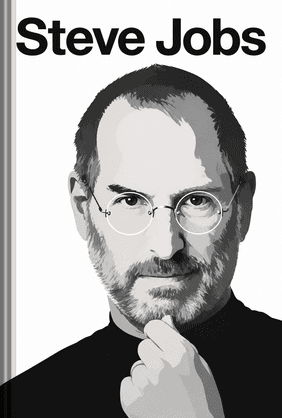
Steve Jobs
Walter Isaacson
39 Duration8 Key Points4.5 RateFAQ
What is the main message of the Steve Jobs book?
The central message is that true innovation happens at the intersection of art and science. Jobs proved that combining relentless perfectionism, absolute focus, and end-to-end control of a product yields superior user experiences that can transform entire industries.
The central message is that true innovation happens at the intersection of art and science. Jobs proved that combining relentless perfectionism, absolute focus, and end-to-end control of a product yields superior user experiences that can transform entire industries.
Was Steve Jobs actually a good leader?
He was a highly effective visionary, but a deeply flawed manager. He drove his teams to achieve impossible feats using his "reality distortion field," but he was also volatile, lacked empathy, and frequently insulted his staff. He led by brilliant dictation rather than consensus.
He was a highly effective visionary, but a deeply flawed manager. He drove his teams to achieve impossible feats using his "reality distortion field," but he was also volatile, lacked empathy, and frequently insulted his staff. He led by brilliant dictation rather than consensus.
How long does it take to read the Walter Isaacson biography?
At over 600 pages, the average reader will spend about 15 to 20 hours reading the book. The audiobook version on Audible is approximately 25 hours long.
At over 600 pages, the average reader will spend about 15 to 20 hours reading the book. The audiobook version on Audible is approximately 25 hours long.
Why did Steve Jobs choose Walter Isaacson to write his biography?
Jobs knew he was dying and wanted a completely objective record of his life for his children. He chose Isaacson because of his previous biographies on Albert Einstein and Benjamin Franklin. Jobs gave Isaacson full access and specifically asked for no editorial control over the final text.
Jobs knew he was dying and wanted a completely objective record of his life for his children. He chose Isaacson because of his previous biographies on Albert Einstein and Benjamin Franklin. Jobs gave Isaacson full access and specifically asked for no editorial control over the final text.