

You look at your latest product release, and it feels painfully average. Your team hits deadlines and stays under budget, but the output lacks the revolutionary spark required to actually dominate the market. You need a way to push your people out of their comfortable corporate routines to build something extraordinary, but standard management advice feels too soft for the mission at hand.

If you want to build products that put a dent in the universe, conventional leadership playbooks will fail you. You must fundamentally change how you evaluate talent, allocate focus, and demand execution.
Decoding the Steve Jobs Business Philosophy: Radical Focus
Most leaders fail because they try to do too much. They hedge their bets, launching multiple average products hoping one sticks. The foundational pillar of the Steve Jobs business philosophy is the exact opposite: radical, ruthless focus.
When Jobs returned to Apple in 1997, the company was bleeding money and producing dozens of disjointed products—from printers to a confusing array of Macintosh models. His first major leadership move was not to invent something new, but to destroy what was mediocre. He drew a simple two-by-two grid (Consumer/Pro vs. Desktop/Portable) and killed 70% of Apple's product line.

Focus does not mean saying yes to the thing you have to focus on. It means saying no to the hundred other good ideas that are competing for your team's limited bandwidth.
How to Execute Radical Focus
- The Top 3 Rule: Take your company’s current strategic initiatives. If you have ten, rank them. Now, cross out numbers four through ten. Those are no longer your backlog; they are your "avoid-at-all-costs" list until the top three are conquered.
- Kill the "Features" Mindset: Stop adding features to mask a weak core product. If the foundational utility of your product is not best-in-class, no amount of extra software bells and whistles will save it.
If you find yourself struggling to embrace this level of ruthless prioritization, you aren't alone. It goes against our natural corporate instincts to say "no" to good opportunities. To truly master the art of doing less but better, you need a framework for distinguishing the vital few from the trivial many. If you want to systematically apply Jobs' philosophy of radical focus to your own career and company, this is the ultimate playbook to help you reclaim your time and energy.

Essentialism
Greg McKeown
 32 Duration
 10 Key Points
 4.6 Rate
How Steve Jobs Ran Apple: The DRI Framework
Corporate structures naturally breed a diffusion of responsibility. When an initiative fails, teams point fingers. Marketing blames product, product blames engineering, and engineering blames unrealistic timelines.
If you want to know how Steve Jobs ran Apple with such high efficiency, look at the DRI (Directly Responsible Individual) framework.

Jobs despised ambiguity in ownership. At Apple, every single meeting agenda, action item, and project milestone had a specific name attached to it. That person was the DRI. If the project failed, the DRI failed. There were no joint committees to hide behind.
Implementing DRI in Your Operations
- Eradicate Co-Ownership: Two people cannot own a project. If two people are accountable, no one is accountable. Assign one name to every major deliverable.
- Empower the DRI: Accountability without authority is just a setup for failure. If someone is the DRI for a product launch, they must have the veto power to make fast decisions without running it up the flagpole.
- The Meeting Rule: Never hold a meeting without a clear agenda, and never end a meeting without assigning a DRI to every resulting action item.
The concept of the Directly Responsible Individual is incredibly powerful, but enforcing it requires a fundamental shift in how your team views accountability. When you eradicate finger-pointing and force leaders to own their outcomes entirely, performance skyrockets. If you want to dive deeper into the mechanics of absolute accountability and learn how elite teams handle high-stakes responsibility without making excuses, exploring the military-grade application of this mindset is highly recommended.

Extreme Ownership
Jocko Willink, Leif Babin
45 Duration7 Key Points4.6 RateDemanding A-Players: Uncompromising Standards
Jobs operated under a strict talent philosophy: A-players want to work with A-players, and they hate tolerating B-players.
Many of the most vital Steve Jobs management lessons revolve around talent density. When a startup is young, it is usually fueled by highly motivated A-players. But as the company scales, managers often compromise. They hire B-players just to fill seats and hit hiring quotas. Soon, the B-players hire C-players to feel superior, leading to what tech veterans call a "bozo explosion."
Jobs was notoriously abrasive when he encountered subpar work. While you do not need to replicate his volatile temper, you must adopt his zero-tolerance policy for sustained mediocrity.
Maintaining Talent Density
- Audit Your Team: Look at your immediate direct reports. If any of them resigned tomorrow, would you fight to keep them, or would you feel secretly relieved? If you feel relieved, you need to let them go.
- Protect the A-Players: Top performers burn out not from working too hard, but from having to carry the weight of underperforming colleagues. Firing a B-player is the best way to retain an A-player.
- Reframe "Niceness": Accepting low-quality work to spare someone's feelings is not kindness; it is organizational sabotage. True professional respect means demanding a person's absolute best.
For more insights into Jobs' uncompromising philosophy, it's helpful to see it in his own words.
The Reality Distortion Field: Pushing Past the Impossible
When discussing Steve Jobs leadership traits Isaacson highlighted in his famous biography, the "Reality Distortion Field" is the most misunderstood. Observers often write it off as simple charisma or manipulation. In reality, it was a tactical weapon to break down the self-imposed limitations of his engineering and design teams.

When Jobs wanted the original Macintosh to boot up faster, engineers told him it was impossible. He reframed the problem: "If it would save a person's life, could you find a way to shave ten seconds off the boot time?" By shifting the perspective, he forced the engineers to abandon their standard operating procedures. They rewrote the code and shaved off 28 seconds.
Before the launch of the first iPhone, Jobs decided the plastic screen would scratch too easily. He told his team he wanted glass. When told that mass-producing scratch-resistant glass in a few months was impossible, Jobs met with the CEO of Corning. He refused to accept the standard industrial timelines, pushed the manufacturer beyond their perceived limits, and Gorilla Glass was delivered on time.
How to Apply Reality Distortion (Responsibly)
- Reject Industry Baselines: Just because your competitors take six months to ship a feature does not mean it takes six months. Industry standards are usually a reflection of collective laziness.
- Demand the Outcome, Do Not Micro-Manage the Process: Jobs rarely told his engineers how to code. He demanded an exact, seemingly impossible outcome and let his top-tier talent figure out the physics and mechanics of getting there.
- Create Manufactured Urgency: Set aggressive deadlines that force your team to strip away bureaucratic fat. When time is restricted, teams are forced to innovate their workflows.
To truly understand how the Reality Distortion Field functioned in practice, you have to look at the man's entire life and career. Walter Isaacson’s masterfully crafted biography—written with unprecedented access to Jobs during his final years—provides an unfiltered look at how these demanding leadership traits built the world's most valuable company. If you only read one book to decode the complex psychology and management tactics that shaped Apple's history, this definitive account is an absolute must-read.
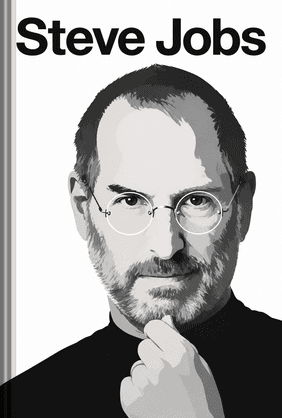
Steve Jobs
Walter Isaacson
39 Duration8 Key Points4.5 RateFor leaders who want to absorb the key lessons from Isaacson's biography but don't have time for all 600+ pages, there's a more efficient way to get started.


LeapAhead

Get the core insights from Walter Isaacson's 'Steve Jobs' and other essential leadership books in 15-minute audio or text summaries.
Product Over Profits: The Long Game
A fatal mistake managers make is optimizing for short-term revenue at the expense of product quality. Financial metrics are trailing indicators of product value.
The core of the Steve Jobs leadership style is that the product is the absolute center of the universe. When you build something truly revolutionary that delights users, the market share and profit margins will follow. When Apple developed the iPod, they didn't focus on maximizing digital rights management or squeezing extra pennies out of suppliers; they focused on the seamless magic of putting "1,000 songs in your pocket."
If your executive meetings are dominated by pricing discussions rather than product experience, you are losing the plot.
Shifting Focus Back to Product
- Be the Chief User Advocate: Walk through your product exactly as a new customer would. Do not use test accounts. Buy your own product. If the unboxing experience or software onboarding is clunky, halt the marketing spend until you fix it.
- Fire the Spreadsheets: Data is crucial, but it cannot invent the future. Do not let market research dictate your product roadmap. Customers only know what they want based on what already exists. It is your job to build what they cannot yet imagine.
Transitioning your organizational culture from a sales-driven or spreadsheet-obsessed mindset back to a pure product focus is one of the hardest pivots a leader can make. You need more than just a vision; you need a structured approach to discovering and delivering products that customers actually love. For modern leaders looking to build an engineering and design culture that rivals early Apple, mastering the foundations of tech product management is essential.

Inspired
Marty Cagan
34 Duration9 Key Points4.5 RateThe Trap: What Founders Get Wrong About Jobs
It is easy to read about Jobs, put on a black turtleneck, and start yelling at your employees. This is a catastrophic misread of his legacy.
Jobs was demanding, but his demands were backed by an unparalleled product vision, exceptional taste, and a deep understanding of the intersection between technology and liberal arts. If you adopt his abrasiveness without possessing his genius-level product intuition, you are not visionary—you are just a bad boss.
The goal is not to copy his personality. The goal is to copy his frameworks: the relentless focus, the clarity of the DRI system, the refusal to accept B-level talent, and the unwavering commitment to building something great.
Putting these powerful frameworks into practice requires continuous learning, which is a challenge for any busy leader. If you want to absorb the core ideas from these recommended books and more without falling behind, an app can help.
LeapAhead
Master the key lessons from books on leadership, focus, and product management in just 15 minutes a day, fitting professional growth into any schedule.
For a comprehensive overview of the biography that inspired this analysis, a detailed summary can provide the key takeaways.
FAQ
Was Steve Jobs a good leader or just a tyrant?
Steve Jobs was a highly effective leader for a specific type of mission: building revolutionary products. While his methods could be tyrannical and abrasive, he possessed the unique ability to push talented people to achieve things they never thought possible. His leadership style is best evaluated by its undeniable results, though it is not a model for psychological safety.
Steve Jobs was a highly effective leader for a specific type of mission: building revolutionary products. While his methods could be tyrannical and abrasive, he possessed the unique ability to push talented people to achieve things they never thought possible. His leadership style is best evaluated by its undeniable results, though it is not a model for psychological safety.
How can I apply the Steve Jobs leadership style without alienating my team?
Focus on the mechanisms, not the temperament. You can implement radical focus, assign clear DRIs (Directly Responsible Individuals), and set uncompromising standards for excellence without raising your voice. Communicate your high expectations clearly, and frame your demands around the shared goal of building a world-class product, not personal attacks.
Focus on the mechanisms, not the temperament. You can implement radical focus, assign clear DRIs (Directly Responsible Individuals), and set uncompromising standards for excellence without raising your voice. Communicate your high expectations clearly, and frame your demands around the shared goal of building a world-class product, not personal attacks.
What is the "Reality Distortion Field" and can anyone use it?
The Reality Distortion Field was a term coined by Apple employees to describe Jobs' ability to convince himself and others that the impossible was achievable. You can use this by refusing to accept standard industry constraints and challenging your team to rethink fundamental assumptions. It works when you back up your impossible demands with unwavering confidence and necessary resources.
The Reality Distortion Field was a term coined by Apple employees to describe Jobs' ability to convince himself and others that the impossible was achievable. You can use this by refusing to accept standard industry constraints and challenging your team to rethink fundamental assumptions. It works when you back up your impossible demands with unwavering confidence and necessary resources.
What is the best way to learn about his specific management tactics?
While Walter Isaacson's biography provides great insight into his character, looking at Apple’s internal processes—such as the Top 100 retreats, the DRI framework, and the decision to kill 70% of Apple's product line in 1997—offers the most actionable business blueprints.
While Walter Isaacson's biography provides great insight into his character, looking at Apple’s internal processes—such as the Top 100 retreats, the DRI framework, and the decision to kill 70% of Apple's product line in 1997—offers the most actionable business blueprints.