

You are staring at a blank slide or feeling stuck on a complex creative project. You know a heavy-hitting piece of wisdom will drive your point home and snap your audience to attention, but digging through a dense 600-page book takes hours you do not have. Whether you picked up the hardcover at Barnes & Noble or downloaded it on Apple Books, finding that one perfect, verified sentence is a frustrating hunt. You need undeniable truths, not fabricated internet fluff. Here is the definitive, categorized breakdown of the most powerful insights from his life, structured so you can grab exactly what you need right now.
And if you want to absorb the full context of the Steve Jobs biography—or other game-changing books—but don't have time to read all 600 pages, there's a more efficient way to get the core ideas.


LeapAhead

Get the key insights from Walter Isaacson's *Steve Jobs* and other essential biographies in just 15 minutes, perfect for when you need powerful ideas without the long read.

Steve Jobs Quotes About Innovation and Creativity
When public speakers or product designers look for material, they usually start here. Jobs did not view innovation as a mysterious force. He saw it as a rigorous intersection of technology and liberal arts. If you need to convince a room full of stakeholders to take a bold risk, these Steve Jobs quotes about innovation provide the ultimate leverage.
"Some people say, 'Give the customers what they want.' But that's not my approach. Our job is to figure out what they're going to want before they do."
The Context: Jobs famously disdained focus groups. During the development of the original Macintosh, he noted that Henry Ford once said if he asked customers what they wanted, they would have told him "a faster horse." Jobs believed true innovation requires trusting your intuition rather than relying on market research data.
The Takeaway: Use this quote when you need to justify an unconventional product feature or a disruptive business pivot. It validates the courage to build something the market has not yet imagined.
The Takeaway: Use this quote when you need to justify an unconventional product feature or a disruptive business pivot. It validates the courage to build something the market has not yet imagined.
"Creativity is just connecting things."
The Context: When Walter Isaacson pressed Jobs on his creative process, Jobs downplayed the idea of solitary genius. He explained that creative people simply see relationships between seemingly disparate experiences. Because Jobs took a calligraphy class at Reed College, the Mac had beautiful typography.
The Takeaway: Great ideas do not happen in a vacuum. Broaden your experiences. Read outside your industry, travel, and collect diverse data points. The magic happens when you connect them.
The Takeaway: Great ideas do not happen in a vacuum. Broaden your experiences. Read outside your industry, travel, and collect diverse data points. The magic happens when you connect them.
"Real artists ship."
The Context: During the intense pressure-cooker days of building the first Macintosh, the engineering team was obsessing over tiny details, risking severe delays. Jobs wrote this phrase on a whiteboard to push his team.
The Takeaway: Perfectionism is a noble trait until it becomes a delay tactic. If you are a creator struggling to publish your work, remember that an imperfect product in the hands of users is infinitely more valuable than a flawless concept locked on your hard drive.

The Takeaway: Perfectionism is a noble trait until it becomes a delay tactic. If you are a creator struggling to publish your work, remember that an imperfect product in the hands of users is infinitely more valuable than a flawless concept locked on your hard drive.
Jobs didn't just apply this creative philosophy to Apple; he also used it to help build Pixar Animation Studios into an absolute powerhouse. If you are fascinated by how visionary leaders foster environments where groundbreaking innovation can thrive without being suffocated by corporate bureaucracy, you should dive into the story behind Pixar. Written by Pixar's co-founder who worked alongside Jobs for decades, it offers a brilliant roadmap for managing creative teams and protecting new ideas.

Creativity, Inc.
Ed Catmull, Amy Wallace
 45 Duration
 9 Key Points
 4.7 Rate
Steve Jobs Walter Isaacson Quotes on Relentless Focus
Jobs was famous for his terrifying, laser-like focus. He routinely filtered out anything he deemed a distraction. For leaders struggling with bloated project scopes or scattered teams, these Steve Jobs Walter Isaacson quotes serve as a brutal reality check.
"Deciding what not to do is as important as deciding what to do. That's true for companies, and it's true for products."
The Context: When Jobs returned to Apple in 1997, the company was bleeding money and producing dozens of confusing product variations. He walked up to a whiteboard, drew a simple two-by-two grid (Consumer/Pro, Desktop/Portable), and killed 70% of Apple's hardware lineup. That ruthless cut saved the company.
The Takeaway: Strategy is sacrifice. If you are pitching a new strategy, use this to explain why you are killing off legacy projects to fund your best ideas.

The Takeaway: Strategy is sacrifice. If you are pitching a new strategy, use this to explain why you are killing off legacy projects to fund your best ideas.
"If you keep your eye on the profit, you're going to skimp on the product. But if you focus on making really great products, then the profits will follow."
The Context: Jobs frequently criticized corporate executives who prioritized sales over product engineering. He believed that when the finance department takes over a tech company, the products degrade, and the company eventually loses its soul.
The Takeaway: Build this into your core business philosophy. Measure your success by the quality of what you ship and the user experience you deliver, not just the quarterly margins.
The Takeaway: Build this into your core business philosophy. Measure your success by the quality of what you ship and the user experience you deliver, not just the quarterly margins.
"When you're a carpenter making a beautiful chest of drawers, you're not going to use a piece of plywood on the back, even though it faces the wall and nobody will ever see it."
The Context: Jobs learned this from his adoptive father, Paul Jobs. It drove his obsession with the internal components of Apple computers. He demanded that the circuit boards inside the original Mac look beautiful, even though the casing required a special tool to open.
The Takeaway: Integrity in your craft matters. The unseen details dictate the overall quality of the final result.
The Takeaway: Integrity in your craft matters. The unseen details dictate the overall quality of the final result.
Jobs’s ability to relentlessly cut away the non-essential is a superpower that any modern professional can learn. If you find yourself constantly overwhelmed by bloated project scopes or saying yes to too many mediocre opportunities, you need a system to ruthlessly prioritize your time. Embracing the disciplined pursuit of less will help you channel your energy into the few things that actually matter, echoing the exact focus that saved Apple from bankruptcy.

Essentialism
Greg McKeown
32 Duration10 Key Points4.6 RateThis intense focus was part of a larger psychological phenomenon that those around him both feared and admired. His unique charisma and unshakeable conviction allowed him to push teams beyond their perceived limits, a trait that became legendary in Silicon Valley.
Steve Jobs Best Advice for Building A-Tier Teams
You cannot build a trillion-dollar company alone. Jobs had a distinct, often abrasive, but highly effective method for managing talent. If you are stepping into a management role, this is the Steve Jobs best advice for team dynamics.
"I've learned over the years that when you have really good people, you don't have to baby them. By expecting them to do great things, you can get them to do great things."
The Context: Jobs was notoriously tough on his teams, often calling their work "garbage" if it did not meet his standards. While his delivery was flawed, his underlying principle was solid: top-tier talent wants to be pushed to their absolute limits, not coddled.
The Takeaway: Raise your standards. A-players respect radical candor and high expectations. B-players want comfort.
The Takeaway: Raise your standards. A-players respect radical candor and high expectations. B-players want comfort.
"The dynamic range between average and the best is at most 30%... but in software, the difference between the average software developer and the best is 50:1."
The Context: Jobs believed strongly in the concept of the "bozo explosion"—the idea that if you hire a few B-level employees, they will eventually hire C-level employees so they can feel superior. He insisted on working only with A-players.
The Takeaway: Never compromise on hiring. Leaving a position empty is better than filling it with an average candidate who will drag down the rest of your high-performing team.
The Takeaway: Never compromise on hiring. Leaving a position empty is better than filling it with an average candidate who will drag down the rest of your high-performing team.
Holding out for A-players is only half the battle; knowing how to manage and communicate with them is what actually builds a high-performing culture. Jobs was famous for his blunt feedback, but there is a profound difference between being fiercely direct and just being a jerk. To master the art of challenging your team directly while still caring about them personally—a framework heavily inspired by the management culture at Apple—you might want to explore how top Silicon Valley leaders navigate tough conversations.

Radical Candor
Kim Scott
19 Duration7 Key Points4.6 RateJobs's methods were often controversial, but they were undeniably effective in building one of the world's most valuable companies. Understanding the nuances of his approach—from product strategy to talent management—can offer valuable lessons for any aspiring leader.
Essential Steve Jobs Life Lessons on Passion and Purpose
Beyond the corporate boardroom, the biography reveals a man deeply aware of his own mortality and determined to leave a dent in the universe. These Steve Jobs life lessons are raw, philosophical, and perfect for inspiring a broader audience.
"Remembering that you are going to die is the best way I know to avoid the trap of thinking you have something to lose. You are already naked. There is no reason not to follow your heart."
The Context: Though this was popularized in his 2005 Stanford commencement address, Isaacson's biography explores how Jobs's brush with cancer amplified this mindset. He lived with an intense urgency, knowing his time was strictly finite.
The Takeaway: Fear of failure, embarrassment, or financial loss paralyzes most people. Use the ultimate perspective of mortality to break through hesitation and make bold career moves.
The Takeaway: Fear of failure, embarrassment, or financial loss paralyzes most people. Use the ultimate perspective of mortality to break through hesitation and make bold career moves.
"Your time is limited, so don't waste it living someone else's life. Don't be trapped by dogma—which is living with the results of other people's thinking."
The Context: Jobs dropped out of college, traveled to India, and studied Zen Buddhism. He refused to follow the traditional American corporate path of the 1970s. This independence allowed him to see the computer not just as a calculator, but as a bicycle for the mind.
The Takeaway: Stop running playbooks written by other people. Authenticity is your massive competitive advantage in business and life.
The Takeaway: Stop running playbooks written by other people. Authenticity is your massive competitive advantage in business and life.
"The people who are crazy enough to think they can change the world are the ones who do."
The Context: This is the core text of the famous "Think Different" ad campaign. Isaacson details how Jobs returned to Apple and personally obsessed over the script of this commercial. It was not just marketing; it was a deeply held personal manifesto.
The Takeaway: Dismiss the skeptics. If your project sounds entirely unreasonable to the average person, you might be on the exact right track.

The Takeaway: Dismiss the skeptics. If your project sounds entirely unreasonable to the average person, you might be on the exact right track.
Selecting the right Steve Jobs biography quotes gives your argument immediate historical weight. Walter Isaacson captured the duality of Jobs—his ruthless demand for excellence and his profound artistic sensitivity. When you reference these insights, do not just quote them; apply their underlying mechanics to your specific challenge today.
While these quotes offer potent snapshots of his genius, a full summary of the biography provides the overarching narrative of his life's journey and key turning points.
If you want to truly absorb the magnitude of Jobs's mindset rather than just grabbing a few quick quotes, reading the complete, authorized account of his life is an absolute must. Walter Isaacson's definitive biography provides the raw, unfiltered look at the Apple founder's genius, his flaws, and the revolutionary products he willed into existence. It's the ultimate playbook for anyone looking to understand what it actually takes to put a dent in the universe.
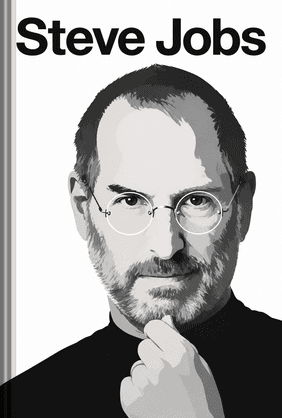
Steve Jobs
Walter Isaacson
39 Duration8 Key Points4.5 RateInspired to tackle this book and the others mentioned, but struggling to find the time? You can start by absorbing their main ideas in minutes, turning your commute or workout into valuable learning time.
LeapAhead
Listen to the key ideas from *Steve Jobs*, *Essentialism*, and other bestsellers in 15-minute audio summaries, helping you clear your reading list without the guilt.
FAQ
Are all the quotes attributed to Steve Jobs online actually from him?
No. The internet is flooded with misattributed and fabricated quotes. To ensure accuracy, especially for professional presentations, always verify the source. Relying on the official Walter Isaacson biography guarantees you are citing his actual words and philosophies accurately.
How can I use these quotes in a presentation without sounding cliché?
Do not just drop a quote on a slide and read it. Provide the specific historical context—like the return to Apple in 1997 or the development of the iPhone—and immediately tie it to the specific problem your team is facing right now. Connect his philosophy to your actionable next step.
What did Steve Jobs mean by "Stay hungry, stay foolish"?
While deeply associated with Jobs, he actually quoted this from the final issue of the Whole Earth Catalog, a publication he loved in his youth. It means you should never lose your relentless ambition (stay hungry) and never stop taking unconventional risks that others might deem irrational (stay foolish).
Why is the Walter Isaacson biography considered the definitive source for his life lessons?
Jobs personally selected Isaacson for the project and granted him unprecedented access, including more than 40 recorded interviews over two years. Jobs asked for no control over the manuscript and no right to read it before publication, resulting in an unfiltered, highly accurate look into his actual mindset and daily operations.