

Many readers close Stephen Chbosky’s novel or walk out of the movie theater with a heavy, lingering question about what exactly happened inside Charlie’s mind. You sense the intense emotional weight of his letters long before the final revelation about his Aunt Helen. The narrative does not just tell a coming-of-age story; it serves as a precise clinical window into the mind of a teenager battling severe, repressed trauma. To truly understand Charlie’s behaviors—his intense isolation, his blackouts, and his overwhelming empathy—we need to look past the surface of high school drama and examine the clinical realities driving his reality.

A thorough the perks of being a wallflower mental health analysis shifts our perspective of Charlie from a quirky, introverted teenager to a survivor navigating the agonizing aftermath of childhood sexual abuse.
Unpacking the Diagnosis: Trauma and Dissociation
Charlie exhibits a textbook trauma response. Many psychological professionals and readers alike turn to the text to understand how unaddressed abuse manifests years after the event. When performing a Charlie Perks of Being a Wallflower PTSD evaluation, several undeniable diagnostic criteria emerge right on the page.
The Mechanism of Dissociative Amnesia
The most prominent psychological defense mechanism Charlie uses is dissociative amnesia. The human brain is engineered for survival. When a child experiences trauma so severe that they lack the cognitive or emotional capacity to process it—especially at the hands of a trusted caregiver like Aunt Helen—the mind fragments the memory. It blocks the conscious recollection of the abuse to allow the child to continue functioning.
Charlie did not simply "forget" what his aunt did to him; his brain aggressively walled off the memory to protect his fragile psyche. This is why Charlie constantly feels like a spectator in his own life. Being a "wallflower" is not just a quirky personality trait; it is a learned freeze response. He observes rather than participates because participating in reality feels inherently dangerous to his nervous system.

For a closer look at the personality traits and psychology behind this term, it's helpful to understand the nuances of this observational role.
Flashbacks and Hyperarousal
As Charlie begins to experience high school—making friends, dating, and engaging with his own sexuality—the triggers multiply. Trauma stored in the body starts to bleed into his conscious mind. His blackouts, particularly the violent episode where he defends his friend Patrick, highlight a state of dissociation where his fight-or-flight response takes entirely over. The hallucinations and the profound physical breakdown he experiences toward the end of the narrative occur because the defensive walls holding back his repressed memories finally collapse.
If Charlie’s experience of physical breakdowns and visceral flashbacks resonates with you, it’s important to understand how profoundly trauma impacts the physical brain and nervous system. The idea that unaddressed emotional wounds manifest as physical symptoms is a cornerstone of modern psychology. For a deeply comprehensive look at how trauma reorganizes the brain's wiring and how it can eventually be healed, this groundbreaking book is an essential read.
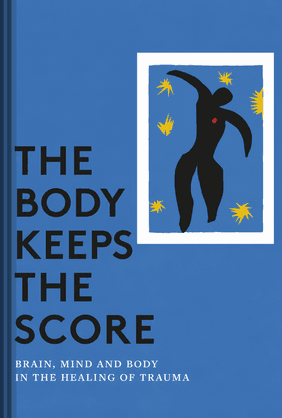
The Body Keeps The Score
Bessel Van Der Kolk
 32 Duration
 10 Key Points
 4.5 Rate
The Reality of Overcoming Teenage Depression
Charlie’s emotional landscape is deeply colored by profound sadness, grief, and survivor's guilt, heavily exacerbated by the suicide of his middle school friend, Michael. His narrative presents a highly realistic model for overcoming teenage depression, primarily because it refuses to offer a fairy-tale cure.
Depression in teenagers often looks like extreme withdrawal, chronic crying spells without an immediately identifiable trigger, and a distorted sense of self-worth. Charlie constantly prioritizes everyone else's feelings over his own. He internalizes the pain of his family and friends, acting as an emotional sponge. This lack of boundaries is a hallmark of someone who does not believe their own feelings are valid—a direct byproduct of his underlying depressive state and early trauma.
Chbosky’s narrative outlines that overcoming this level of clinical depression requires breaking the cycle of isolation. Charlie’s English teacher, Bill, gives him a foundational piece of psychological advice: "We accept the love we think we deserve." This quote is the clinical core of cognitive reframing. Until Charlie addresses his subconscious belief that he is fundamentally broken or unworthy—a belief instilled by his trauma—he will continue to accept mistreatment and remain locked in his depression.
This line is one of the most memorable from the novel, but it's not the only one packed with meaning about life, love, and mental health.
Breaking free from the heavy weight of depression often requires us to radically shift how we view our own past. Instead of asking what is inherently wrong with us, the healing journey begins when we ask ourselves what actually happened to us during our formative years. If you want to explore the profound impact that early experiences have on our mental health—and learn actionable ways to rebuild a sense of self-worth and emotional resilience—this insightful read offers a deeply compassionate perspective.
What Happened to You
Bruce D. Perry, M.D., Ph.D., and Oprah Winfrey
39 Duration8 Key Points4.5 RateDeep Dive into Perks of Being a Wallflower Psychology
Analyzing Perks of Being a Wallflower psychology allows us to understand the practical steps toward psychological integration. Healing from complex trauma is never an isolated event. It requires a multifaceted approach involving secure attachments and clinical intervention.
The Role of Safe Attachments
Sam and Patrick function as Charlie's first secure attachments outside of his immediate family. In psychological terms, secure attachment figures provide a "safe haven" and a "secure base." They do not judge Charlie for his emotional intensity. By accepting him unconditionally, they challenge his internal narrative of worthlessness. However, the book makes a vital psychological distinction: friends are not therapists.
While Sam and Patrick provide the social scaffolding Charlie needs to start participating in life, their love is not enough to cure his PTSD. When Charlie’s repressed memories surface, his friends are completely unequipped to handle his psychiatric emergency.

Charlie's journey of making friends and finding a sense of belonging is a core element of the story, offering valuable insights for anyone struggling with social connection.
The Necessity of Professional Intervention
The climax of the story is an absolute triumph of realistic mental health advocacy. When Charlie spirals into a full psychiatric crisis, he is admitted to a hospital where he receives professional psychiatric care. This hospitalization is not portrayed as a punishment, but as a necessary, life-saving intervention.
The story validates that love and friendship cannot rewire a traumatized nervous system on their own. Charlie needs doctors, a safe clinical environment, and structured therapy to safely unpack the trauma of Aunt Helen. His eventual release from the hospital does not mean he is "cured"—it means he now possesses the tools, the professional support, and the conscious awareness needed to manage his triggers and begin real recovery.
Taking the step to seek professional help is arguably one of the most courageous things a person can do, yet the actual process of therapy can still feel intimidating or mysterious to many. Understanding the dynamic between a therapist and their patient can help demystify the journey of healing. If you are curious about the transformative power of therapy, the messy reality of human growth, and what truly happens behind the closed doors of a counseling room, consider picking up this incredibly revealing and relatable memoir.

Maybe You Should Talk to Someone
Lori Gottlieb
23 Duration10 Key Points4.5 RateBuilding a reading list with powerful books like these is a great first step, but finding the time and energy to read them all can be a challenge, especially when dealing with heavy topics.


LeapAhead

Get the core ideas from essential psychology and self-improvement books in 15-minute summaries, making it easier to absorb life-changing knowledge without feeling overwhelmed.
Setting the Standard for Trauma Representation in Books
It is easy to find young adult fiction on the shelves of Barnes & Noble or highly-rated lists on Goodreads that romanticize mental illness. Many narratives fall into the trap of using trauma merely as a plot device to make a character seem edgy, or they push the dangerous trope that the love of a good partner can fix a broken mind.
Stephen Chbosky avoids these pitfalls entirely, establishing a gold standard for trauma representation in books. The novel treats Charlie’s condition with immense clinical respect. It shows the ugly, terrifying reality of losing control of your own mind. It portrays the intense confusion of loving someone who abused you, perfectly capturing the devastating duality of Charlie’s feelings toward his Aunt Helen.
Most importantly, the narrative emphasizes agency. The final letters Charlie writes show a shift from a passive observer (the wallflower) to an active participant in his own life. He recognizes that while he did not choose his trauma, he must take responsibility for his healing.
Moving Forward: The Path to Integration
Charlie’s journey offers a profound blueprint for anyone navigating the aftermath of psychological trauma. The ultimate goal of trauma therapy is not to forget what happened, but to integrate the memory so that it no longer controls your present behavior.
By the end of the narrative, Charlie achieves a state of integration. He acknowledges the horrific reality of his past, forgives himself for the protective mechanisms his brain employed, and consciously chooses to stay grounded in the present moment. He realizes that even though his past is a permanent part of his history, it does not dictate his future.

Charlie’s path to integrating his past illustrates that recovery is an ongoing, active process. For those navigating their own journey through complex trauma, having structured, professional tools can make all the difference in moving from mere survival to genuine thriving. If you are looking for practical exercises to help manage emotional triggers, safely process painful memories, and cultivate a sense of safety in your daily life, this comprehensive workbook is an invaluable resource to guide your healing.
The Complex PTSD Workbook
Arielle Schwartz and Jim Knipe
21 Duration7 Key Points4.8 RateFAQ
What specific mental illness does Charlie have in the book?
While the book does not provide a formal clinical DSM diagnosis on the page, psychological analysis indicates Charlie suffers from Post-Traumatic Stress Disorder (PTSD) with dissociative features, specifically dissociative amnesia. He also exhibits clear symptoms of severe clinical depression and anxiety.
While the book does not provide a formal clinical DSM diagnosis on the page, psychological analysis indicates Charlie suffers from Post-Traumatic Stress Disorder (PTSD) with dissociative features, specifically dissociative amnesia. He also exhibits clear symptoms of severe clinical depression and anxiety.
Why did Charlie forget what Aunt Helen did to him?
Charlie’s brain utilized a defense mechanism known as dissociative amnesia. Because the abuse was perpetrated by a trusted, beloved caregiver, the psychological conflict was too severe for a child's brain to process. His mind walled off the memory to protect him from emotional collapse, allowing him to survive his childhood.
Charlie’s brain utilized a defense mechanism known as dissociative amnesia. Because the abuse was perpetrated by a trusted, beloved caregiver, the psychological conflict was too severe for a child's brain to process. His mind walled off the memory to protect him from emotional collapse, allowing him to survive his childhood.
Does the novel romanticize mental illness and depression?
No. Unlike many coming-of-age stories, the novel does not use mental illness as a quirky personality trait. It showcases the terrifying reality of psychiatric breakdowns, blackouts, and the severe impact trauma has on daily functioning. It distinctly separates the value of friendship from the absolute necessity of professional psychiatric care.
No. Unlike many coming-of-age stories, the novel does not use mental illness as a quirky personality trait. It showcases the terrifying reality of psychiatric breakdowns, blackouts, and the severe impact trauma has on daily functioning. It distinctly separates the value of friendship from the absolute necessity of professional psychiatric care.
How does the book emphasize the importance of therapy?
The turning point in Charlie’s survival occurs when he is hospitalized and placed under psychiatric care. The narrative makes a clear, responsible distinction: while supportive friends like Sam and Patrick are crucial for emotional connection, resolving complex trauma and PTSD requires trained medical and psychological professionals.
The turning point in Charlie’s survival occurs when he is hospitalized and placed under psychiatric care. The narrative makes a clear, responsible distinction: while supportive friends like Sam and Patrick are crucial for emotional connection, resolving complex trauma and PTSD requires trained medical and psychological professionals.