

You stumble across a line from Stephen Chbosky's novel on a Goodreads list or hear it echoing in a trending video, and it stops you dead in your tracks. Whether you are struggling to understand why you stay in toxic relationships, trying to make sense of your own anxiety, or just trying to figure out where you fit in, these aren't just fictional words on a page. They mirror the very real, often messy process of processing trauma, building self-worth, and learning how to actually participate in your own life.

Here is a deep dive into the psychology and philosophy behind the most impactful quotes from the story, and what they mean for your personal growth.
The Brutal Truth: "We Accept the Love We Think We Deserve" Meaning
When Charlie’s English teacher, Bill, delivers this line, it acts as a mirror for anyone who has ever compromised their own boundaries for the sake of affection.
The we accept the love we think we deserve meaning is deeply rooted in the psychology of self-worth and attachment theory. If your internal baseline dictates that you are flawed, unlovable, or broken, your subconscious will actively seek out partners and friends who confirm that bias. You will tolerate emotional unavailability, disrespect, or even abuse because, on a deep neurological level, it aligns with how you view yourself.
Why do we do this?
- Familiarity over safety: Human beings gravitate toward what feels familiar, even if it hurts. If you grew up walking on eggshells, a chaotic relationship feels like home.
- The savior complex: We often accept less hoping we can "fix" the other person, which is just a distraction from fixing ourselves.
- Low baseline of standards: If you rate your own value at a 3 out of 10, a partner treating you like a 4 feels like a blessing.

How to break the cycle:
You cannot change the love you receive until you change the love you believe you are entitled to. This requires a ruthless audit of your current relationships. Start noticing the red flags you excuse. Healing means raising your internal standard and being willing to walk away from anyone who cannot meet you there. You have to risk loneliness to filter out people who treat you poorly.
You cannot change the love you receive until you change the love you believe you are entitled to. This requires a ruthless audit of your current relationships. Start noticing the red flags you excuse. Healing means raising your internal standard and being willing to walk away from anyone who cannot meet you there. You have to risk loneliness to filter out people who treat you poorly.
If you find yourself consistently drawn to emotionally unavailable partners or stuck in chaotic relationship loops, you might be battling your own biological wiring. Understanding your personal attachment style is the first and most crucial step toward breaking these destructive patterns. For a deep dive into why we chase love that hurts and how to reprogram yourself for secure, healthy relationships, this foundational guide on adult attachment is an absolute game-changer.
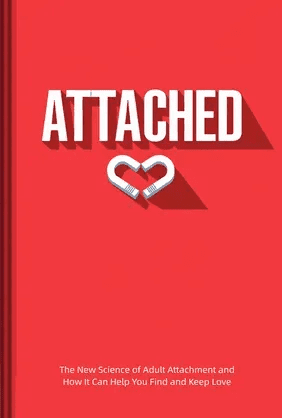
Attached
Amir Levine, PhD, Rachel Heller, MA
 48 Duration
 9 Key Points
 4.5 Rate
Breaking Dissociation: The "Feeling Infinite" Meaning
"And in that moment, I swear we were infinite."
For anyone dealing with depression, anxiety, or trauma, a vast majority of life is spent either agonizing over the past or dreading the future. Trauma pulls you out of your body. You become a passive observer—a wallflower—watching your life happen from a distance without actually feeling it.
This feeling of detachment is central to the wallflower experience. But what exactly defines this personality type, and how does it differ from simple introversion?
The feeling infinite meaning is the exact opposite of that dissociation. It is the raw, unfiltered experience of absolute presence. When Charlie is driving through the tunnel, listening to that perfect song with the wind hitting his face, he is no longer trapped in his own head. He isn't analyzing his childhood trauma or worrying about high school hierarchy. He is entirely anchored in the "now."

Feeling infinite isn't about being immortal or powerful. It is about a sudden, sharp clarity where the boundaries between you and the rest of the world dissolve. You feel connected. You realize you are not just a collection of your worst memories; you are alive, right here, right now.
Finding your own infinity:
You don't need a perfectly timed road trip to experience this. It comes from intentional mindfulness. It happens when you put down your phone, step outside, and let yourself get completely absorbed in a conversation, a hobby, or just the physical sensation of breathing cold air. It is the active choice to stop thinking and start experiencing.
You don't need a perfectly timed road trip to experience this. It comes from intentional mindfulness. It happens when you put down your phone, step outside, and let yourself get completely absorbed in a conversation, a hobby, or just the physical sensation of breathing cold air. It is the active choice to stop thinking and start experiencing.
Trauma has a profound way of detaching us from the present moment, keeping us trapped in a constant state of hypervigilance. When your mind is stuck reliving painful memories, your physical body pays the price, often resulting in that exact feeling of dissociation Charlie experiences. To truly grasp how deeply our past experiences shape our physical reality—and more importantly, how to guide your mind and body back to a state of safety and presence—this groundbreaking work by Dr. Bessel van der Kolk is a must-read.
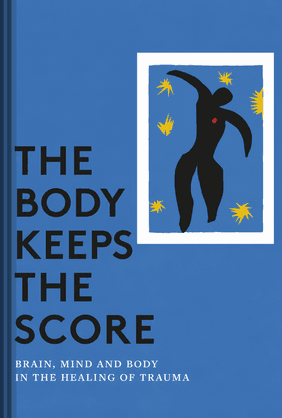
The Body Keeps The Score
Bessel Van Der Kolk
32 Duration10 Key Points4.5 RateA book this profound is life-changing, but it can also be a heavy and time-consuming read. If you want to start absorbing these critical insights on trauma and healing without the overwhelm, a summary app can be a great first step.


Grasp the core ideas from dense books like 'The Body Keeps The Score' in 15-minute audio or text summaries, making profound knowledge more accessible on your healing journey.
 LeapAhead
Powerful Perks of Being a Wallflower Quotes About Life
Chbosky’s writing forces readers to confront the discomfort of taking agency. If you are looking for perks of being a wallflower quotes about life, the most critical ones revolve around the transition from observation to action.
"Even if we don't have the power to choose where we come from, we can still choose where we go from there."
This is the ultimate rejection of a victim mindset. Trauma, bad parenting, poverty, or early heartbreak—these are the hands we are dealt. We do not choose our starting line. But holding onto the anger of where you came from will only paralyze you. Adulthood is the realization that your trauma might not be your fault, but healing from it is absolutely your responsibility.
"You can't just sit there and put everybody's lives ahead of yours and think that counts as love."
Many people, especially those who identify as "wallflowers," use self-sacrifice as a shield. They listen to everyone else's problems and mold themselves to fit what others need. They think this makes them noble or inherently good. It doesn't. It makes them invisible. Realizing that self-abandonment is not the same thing as love is a brutal but necessary life lesson. You have to assert your own needs, even if it makes people uncomfortable.
Learning to prioritize your own needs without feeling crippling guilt is one of the hardest lessons for a chronic people-pleaser to master. It requires completely dismantling the belief that setting limits makes you a bad or selfish friend. If you want practical, actionable advice on how to stop over-committing, clearly communicate your needs, and establish healthy limits with the people in your life, you might want to explore this essential guide on reclaiming your personal space and peace of mind.
Set Boundaries, Find Peace
Nedra Glover Tawwab
29 Duration10 Key Points4.5 RateExploring Mental Health Quotes by Stephen Chbosky
Long before it was socially acceptable to talk openly about therapy and mental health on platforms like TikTok or Instagram, Chbosky was writing raw, unfiltered truths about mental illness. The mental health quotes stephen chbosky penned capture the isolating, confusing nature of a brain fighting against itself.
"I am both happy and sad and I'm still trying to figure out how that could be."
Emotional duality is a core component of mental health struggles. Society often paints emotions in black and white: you are either cured and happy, or depressed and miserable. The reality is a gray area. You can have a great day at work, laugh with your friends, and still feel an underlying current of grief or anxiety when you go home. Recognizing that happiness and sadness can coexist stops the guilt trip. You do not have to feel guilty for being sad on a good day, and you don't have to feel guilty for laughing while you are grieving.
"So, I guess we are who we are for a lot of reasons. And maybe we'll never know most of them."
Over-analyzing every trigger, every childhood memory, and every slight behavior can become its own form of mental trap. Sometimes, the pursuit of finding the "root cause" of your depression or anxiety becomes an obsession that prevents you from actually living. Healing eventually requires acceptance. You might never fully understand why your brain reacts the way it does, but you can still choose how you manage it today.
These quotes offer a glimpse into the mental health struggles Charlie faces. For a more comprehensive look at how the novel portrays trauma, PTSD, and the journey toward healing, it's worth exploring a deeper psychological analysis of the characters.
Moving From Wallflower to Participant
The entire narrative arc of the story, and the real meaning behind these quotes, is the journey from hiding to participating. Being a wallflower has its perks. You see things. You understand people. You gather wisdom. But wisdom is completely useless if you never apply it.
This journey from observation to participation is filled with crucial lessons about friendship, identity, and finding your place in the world.
If you spend your whole life observing from the sidelines, you stay safe, but you stay stagnant. You have to get on the dance floor. You have to risk getting hurt to experience love. You have to risk failure to build a career. You have to risk looking foolish to find your people.
The deepest the perks of being a wallflower quotes meaning is a call to action: Stop watching your life pass by. Realize your worth, demand the love you actually deserve, anchor yourself in the present moment, and participate.
Stepping off the sidelines and choosing to actively participate in your own life is intimidating, especially when you carry the heavy baggage of past trauma. But true healing isn't just about understanding your past; it's about taking daily, deliberate actions to rewrite your future. If you are ready to stop being a passive observer and want a practical framework for self-healing, building resilience, and authentically creating the life you deserve, this empowering read provides the exact roadmap you need to finally get on the dance floor.
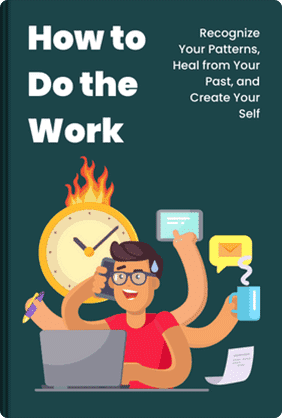
How to Do the Work
Dr. Nicole LePera
47 Duration10 Key Points4.6 RateThe journey from wallflower to participant is fueled by knowledge, but finding the time to read all these essential books can feel like a huge hurdle. If you're ready to take action but your to-read list feels overwhelming, there's a smarter way to get started.
Turn your new reading list into a consistent learning habit by listening to key takeaways from these essential books on personal growth in just 15 minutes a day.
LeapAhead
FAQ
What is the core psychological message of The Perks of Being a Wallflower?
The core message is that unaddressed trauma will dictate your choices, relationships, and self-worth until you actively confront it. It highlights the transition from a passive observer of life (a wallflower) to an active participant who sets boundaries, seeks help, and embraces human connection despite the risk of pain.
The core message is that unaddressed trauma will dictate your choices, relationships, and self-worth until you actively confront it. It highlights the transition from a passive observer of life (a wallflower) to an active participant who sets boundaries, seeks help, and embraces human connection despite the risk of pain.
How can I practically apply "we accept the love we think we deserve" to my own life?
Start by auditing your boundaries. Write down the behaviors you currently tolerate from partners, friends, or family members that make you feel small or unvalued. Then, identify where those low standards come from. Applying this quote means intentionally setting a new standard for how you allow others to treat you and practicing the habit of walking away when those standards are violated.
Start by auditing your boundaries. Write down the behaviors you currently tolerate from partners, friends, or family members that make you feel small or unvalued. Then, identify where those low standards come from. Applying this quote means intentionally setting a new standard for how you allow others to treat you and practicing the habit of walking away when those standards are violated.
Why is "feeling infinite" associated with overcoming trauma?
Trauma naturally causes individuals to detach from reality as a defense mechanism to avoid pain. "Feeling infinite" represents a moment of complete grounding and presence. It is a state of profound connection to the present moment, signifying that the person feels safe enough in their body and environment to drop their defenses and experience pure joy.
Trauma naturally causes individuals to detach from reality as a defense mechanism to avoid pain. "Feeling infinite" represents a moment of complete grounding and presence. It is a state of profound connection to the present moment, signifying that the person feels safe enough in their body and environment to drop their defenses and experience pure joy.
Does Stephen Chbosky suggest that being a "wallflower" is a bad thing?
No. Being a wallflower is portrayed as a strength that brings deep empathy, intelligence, and observational skills. However, the quotes and the story caution against staying a wallflower forever. The danger lies in using observation as a hiding place to avoid the vulnerability required to truly live.
No. Being a wallflower is portrayed as a strength that brings deep empathy, intelligence, and observational skills. However, the quotes and the story caution against staying a wallflower forever. The danger lies in using observation as a hiding place to avoid the vulnerability required to truly live.