
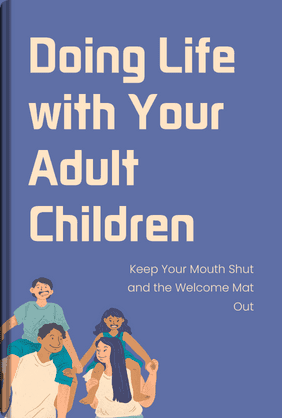
Doing Life with Your Adult Children
Jim Burns Ph.D
 25 min
 8 Key Points
 4.5 Rate
What's inside?
Explore practical advice and strategies on maintaining healthy relationships with your adult children, while setting boundaries and respecting their independence.
You'll learn
 1. Keeping it cool with your grown-up kids2. Talking right without stepping on toes3. Handling tough stuff like divorce, money woes, and addiction4. Giving advice without pushing your own agenda5. Keeping the family vibe strong while letting your kids be adults6. Striking the balance between being a parent and a pal.
Key points
01Understanding the Psychology of Adult Children
The transition from adolescence to adulthood is a bit like a caterpillar morphing into a butterfly. It's a time of profound change, not just physically, but emotionally and psychologically as well. And just as the caterpillar's transformation affects its relationship with the world around it, so too does the transition to adulthood affect the relationship between parents and their children. As children grow into adults, their needs change. They're no longer dependent on their parents for their basic needs, but that doesn't mean they don't need their parents at all. Instead, their needs become more complex. They need their parents to respect their independence, to understand their struggles, and to support them as they navigate the challenges of adulthood. But it's not just about needs. Adult children also have expectations about their relationship with their parents. They expect their parents to treat them as equals, to respect their decisions, and to acknowledge their maturity. Understanding these needs and expectations is crucial for maintaining a healthy relationship with adult children. In Jim Burns' book, "Doing Life with Your Adult Children: Keep Your Mouth Shut and the Welcome Mat Out", he emphasizes the importance of treating adult children as independent individuals. This respect is not just about acknowledging their autonomy, but also about fostering a positive and respectful relationship. It's about showing them that you trust their judgment, that you believe in their abilities, and that you're confident in their capacity to handle life's challenges. This respect can significantly contribute to an adult child's self-esteem and confidence. Take, for example, a scenario from the book where a mother learns to respect her adult daughter's decision to move to a different city for a job opportunity. Initially, the mother was worried and expressed her concerns in a way that made her daughter feel judged and belittled. But after reading Burns' book, the mother learned to express her concerns in a respectful and non-judgmental manner. She acknowledged her daughter's independence and respected her decision, even though she didn't fully agree with it. This shift in the mother's approach not only improved their relationship but also boosted the daughter's confidence in her decision-making abilities. Respecting adult children's decisions is a crucial aspect of maintaining a healthy relationship with them. It's about understanding that they're no longer children who need to be told what to do, but adults who are capable of making their own decisions. It's about expressing concerns in a respectful and non-judgmental manner, rather than imposing your own views and expectations on them. In conclusion, understanding the psychology of adult children is crucial for parents. It's about recognizing their transition from adolescence to adulthood, understanding their needs and expectations, and respecting their independence and decisions. By adapting their parenting style to these changes, parents can maintain a healthy and respectful relationship with their adult children.
02Effective Communication Strategies with Adult Children
Navigating the waters of parent-adult child relationships can be tricky. It's like a dance where both parties are trying to figure out the steps. One misstep, and toes get stepped on. But, with effective communication, this dance can become a harmonious waltz. Effective communication is more than just talking. It's about conveying your thoughts, feelings, and concerns in a way that your adult child can understand and respond to positively. It's about having clear, open, and honest conversations that foster mutual respect and understanding. It's not about winning an argument or proving a point, but about building a bridge of understanding that strengthens your relationship. Active listening plays a crucial role in effective communication. It's not just about hearing the words your adult child is saying, but understanding the emotions and thoughts behind those words. It's about giving them your undivided attention, showing empathy, and validating their feelings. This helps in building trust and understanding, which are the cornerstones of a healthy relationship. Non-confrontational expression is another key aspect of effective communication. It's about expressing your feelings and concerns without blaming or criticizing your adult child. Using "I" statements, such as "I feel hurt when you don't call" instead of "You never call me," can help in promoting understanding and empathy. It shifts the focus from blaming to expressing feelings, which can prevent conflicts and misunderstandings. Timing is also crucial in communication. Choosing the right time for important conversations can make a world of difference. If your adult child is stressed or tired, they might not be in the right frame of mind to have a meaningful conversation. Waiting for a time when they are relaxed and open can help in ensuring that your message is received in the right spirit. Avoiding unnecessary conflicts is essential in maintaining a healthy relationship with your adult child. This doesn't mean avoiding difficult conversations, but handling them in a way that promotes understanding and respect. By practicing effective communication, active listening, non-confrontational expression, and appropriate timing, you can navigate through the choppy waters of conflicts and misunderstandings. In conclusion, effective communication is not just about talking, but about understanding and being understood. It's about building a bridge of understanding that strengthens your relationship with your adult child. So, the next time you find yourself in a difficult conversation with your adult child, remember these strategies. They might just turn that tricky dance into a harmonious waltz.
Continue reading with LeapAhead app
Full summary is waiting for you in the app
03Setting Boundaries with Adult Children: A Guide
04Strategies for Discussing Sensitive Topics with Empathy
05How to support adult children without enabling dependency?
06How to Foster a Healthy Relationship with Your Adult Children
07Coping with Empty Nest Syndrome: A Guide
08Conclusion
About Jim Burns Ph.D
Jim Burns, Ph.D., is a renowned author, speaker, and president of HomeWord, a Christian organization dedicated to strengthening families. He holds a doctorate in Religious Education and has authored numerous books on parenting and family issues. His expertise is widely recognized in Christian circles.

