
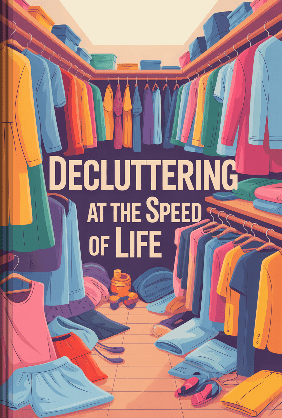
Decluttering at the Speed of Life
Dana K. White and Thomas Nelson
 20 分鐘
20 分鐘 7 重點
7 重點 4.9 評分
內容重點
Discover practical strategies to organize your home and keep it clutter-free, helping you create a more peaceful and productive living environment.
您將學到
 1. Quick and easy ways to declutter your home2. Keeping your space tidy for good3. Letting go of stuff you're attached to4. Making decluttering a regular thing5. Getting the family on board with tidying up6. The health benefits of a clutter-free home.
重點
01Understanding Clutter and its Impact on Our Lives
You're sitting in your living room, surrounded by piles of magazines, old mail, and random knick-knacks. You can't find the remote control, and you're pretty sure there's a coffee cup under that pile of papers. This is clutter, and it's not just about the physical stuff. It's also about the emotional and mental baggage that comes with it. Clutter can have a significant impact on our lives. It's not just an eyesore; it can also affect our productivity and mental health. In "Decluttering at the Speed of Life," Dana K. White shares a story about a woman who was constantly stressed and overwhelmed due to the chaotic state of her home. She couldn't focus on her work or enjoy her free time because she was always worried about the mess. This case illustrates how clutter can create a chaotic environment that hinders our ability to function effectively. But why do we accumulate clutter in the first place? Often, it's due to emotional reasons. We attach sentimental value to items, or we fear scarcity, so we hold onto things "just in case." It's like carrying a heavy backpack everywhere you go. Sure, you might need that extra sweater or that book you haven't read yet, but carrying it all the time is exhausting and unnecessary. It's important to differentiate between clutter and hoarding, though. While both involve accumulating items, hoarding is a more severe condition characterized by an inability to discard items, regardless of their value. Understanding this difference is crucial when addressing the issue of clutter. Recognizing clutter as a problem is the first step towards decluttering. It's about understanding your habits and patterns that contribute to the clutter. In her book, White shares another case of a man who realized that his habit of buying books he never read was contributing to his clutter problem. By acknowledging this, he was able to make a change and start decluttering. So, take a look around. Are you surrounded by clutter? If so, it's time to reflect on your habits and consider taking steps towards decluttering. Remember, it's not just about making your space look neat; it's about improving your productivity, mental health, and overall quality of life.
02Dana K. White's 5-step guide to decluttering
You're standing in the middle of your living room, surrounded by piles of stuff. It's a familiar scene, right? The good news is, there's a solution to this never-ending battle with clutter, and it's simpler than you might think. Dana K. White, in her book "Decluttering at the Speed of Life," offers a 5-step guide to decluttering that can help you reclaim your space and your peace of mind. The first step in this journey is identifying what constitutes clutter. It's not just about physical mess; clutter can also be emotional and psychological. It's the stuff that's taking up space in your home and your mind, the stuff that's not serving any purpose or bringing you joy. Recognizing clutter for what it is can be a powerful first step towards reclaiming your space. Once you've identified the clutter, the next step is deciding what to keep. This can be a challenging process, as we often attach sentimental value to our possessions or convince ourselves that we might need them someday. But the truth is, if an item isn't useful, necessary, or bringing you joy, it's probably clutter. To make this decision easier, ask yourself: "If I were shopping right now, would I buy this?" If the answer is no, it's time to let it go. Disposing of unwanted items is the third step in the decluttering process. There are several ways to do this, including selling, donating, recycling, or simply trashing. Letting go of items can be emotionally challenging, but remember, by doing so, you're making room for new experiences and opportunities. Once you've cleared out the clutter, it's time to organize the remaining items. This doesn't mean you need to rush out and buy a bunch of storage containers. Instead, think about how you use your items and organize them in a way that makes sense for your lifestyle. For example, keep frequently used items within easy reach, and store seasonal or rarely used items out of the way. The final step in the decluttering process is maintaining a clutter-free environment. This involves regular decluttering sessions and being mindful of what you bring into your home. Before you buy something new, ask yourself if it's something you really need or if it will just become more clutter. In conclusion, decluttering isn't just about tidying up; it's about creating a space that reflects who you are and what you value. By following Dana K. White's 5-step guide to decluttering, you can transform your home from a cluttered mess into a peaceful sanctuary. So why not start your decluttering journey today? You might be surprised at the difference it can make.
03-step guide to decluttering
04Your guide to decluttering every room in your house
05Overcoming Obstacles in Home Decluttering
06How to maintain a clutter-free lifestyle?
07The Benefits of Decluttering: A Guide to Improved Productivity and Mental Health
08Conclusion
關於 Dana K. White and Thomas Nelson
Dana K. White is a decluttering expert and author, known for her realistic approach to managing a home. Thomas Nelson is a publishing house, recognized for publishing Christian books and Bibles, as well as inspirational and world-changing titles.