

You just finished reading Attached, and if your results leaned toward an avoidant attachment style, you probably feel like the villain of your own dating life. Instead of offering a nuanced psychological framework, the text often reads like a survival guide for anxious daters on how to spot, tolerate, or flee from avoidant partners. This glaring imbalance leaves many readers—especially skeptics and psychology enthusiasts—questioning the scientific validity of the text and searching for a more objective perspective on how adult attachment actually works.
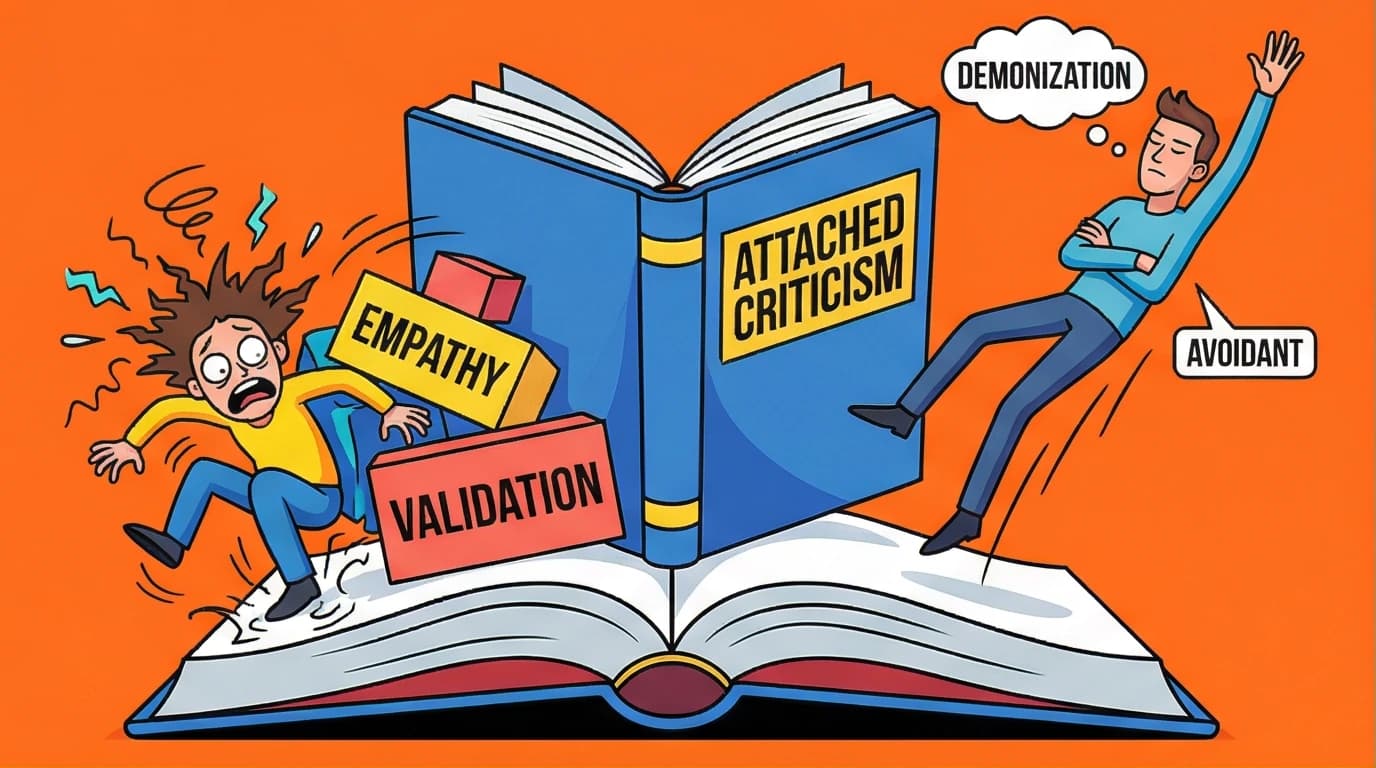
To understand the core of the Attached book criticism, we have to separate the foundational science of attachment theory from the specific narrative Levine and Heller chose to publish.
For those who haven't read the book or need a quick refresher on its main arguments, a summary can provide the necessary context before diving into the nuances of the criticism.
The Core Problem: Why Readers Are Pushing Back
If you look up an average Attached book review on Amazon or Goodreads, you will see thousands of glowing five-star ratings. It is widely celebrated for translating decades of dense clinical research into an easy-to-read, dating-focused manual. However, popularity does not always equal clinical accuracy.
The primary frustration stems from the book’s clear target audience. The authors structured the narrative to validate the anxious reader. While anxious behaviors (like excessive calling, jealousy, or protesting) are framed as natural biological responses to a lack of intimacy, avoidant behaviors (like needing physical space or shutting down during conflict) are painted as conscious, manipulative tactics designed to keep partners insecure.
This creates a rigid binary: anxious people are victims seeking love, while avoidants are emotionally stunted roadblocks. For anyone looking for actual relationship repair, this black-and-white framing is not just unhelpful—it is damaging.
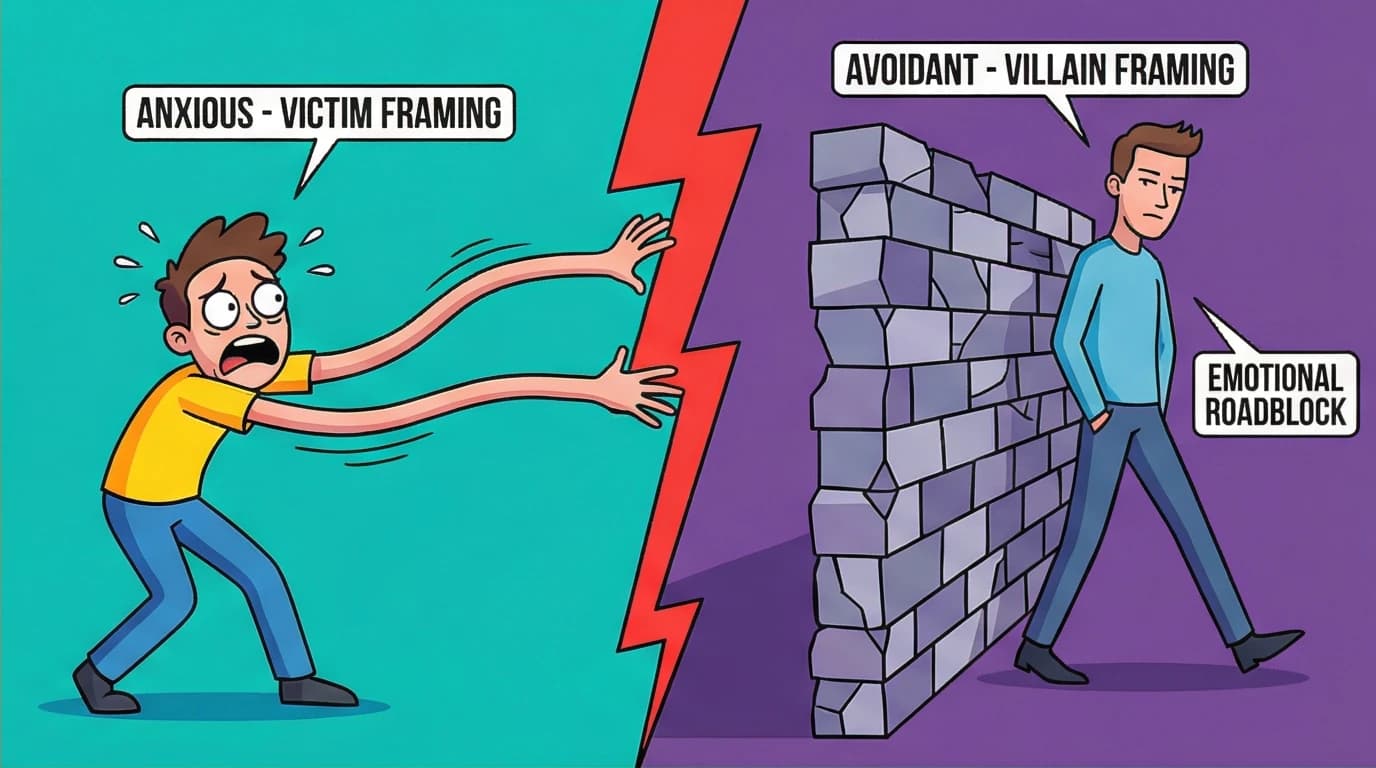
This destructive dynamic is often the root cause of repeated conflict in relationships. For a deeper look at how these opposing attachment styles clash, it is helpful to understand the underlying mechanics of the cycle.
If you haven't read the original material yet, it is still worth picking up a copy of the book to understand the foundational concepts that sparked this massive cultural conversation. While it is important to approach the text with a critical eye regarding its categorical biases, the book remains a highly accessible entry point into John Bowlby and Mary Ainsworth's groundbreaking theories. Reading it for yourself will help you better identify the anxious and avoidant patterns that play out in everyday dating scenarios.
Attached
Amir Levine, PhD, Rachel Heller, MA
 48 Duration
 9 Key Points
 4.5 Rate
Is Attached Book Accurate? Evaluating the Science
A major question clinical professionals field from clients is: is Attached book accurate? The answer is a heavily qualified "partially."
The foundation of the book relies on the pioneering work of John Bowlby and Mary Ainsworth, who established that human beings are biologically wired for connection. The concept of the "attachment system" as a mechanism that regulates safety and proximity is scientifically sound. The inaccuracy lies in how the book applies these concepts to adult romantic relationships.
Categorical vs. Dimensional Attachment
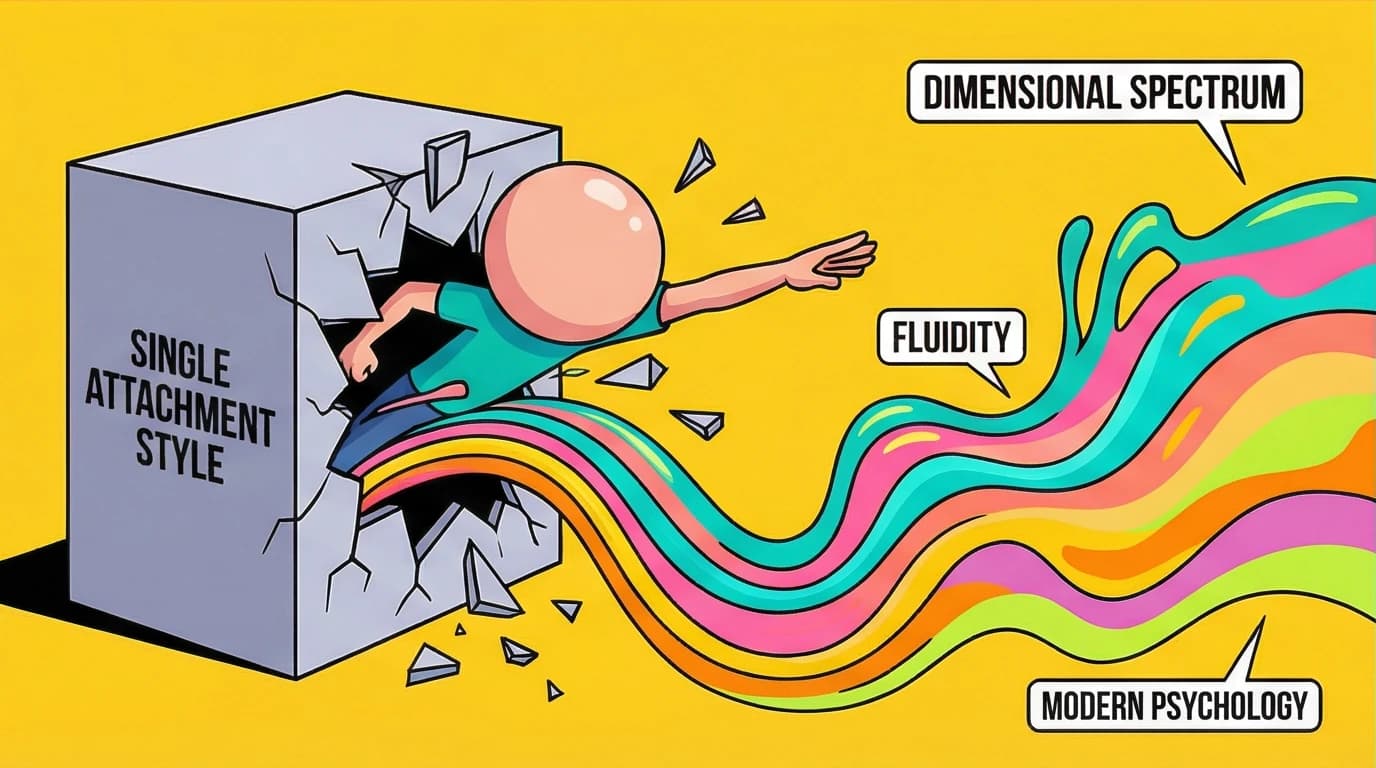
Attached places people into three neat boxes: Secure, Anxious, and Avoidant. It treats these categories like fixed personality traits or zodiac signs. Modern psychological research, however, views attachment on a dimensional spectrum. You score on a continuum of anxiety and a continuum of avoidance.
You might be highly avoidant when stressed but secure in your daily baseline. You might present as anxious with a distant partner but avoidant with an overbearing one. By forcing readers into strict categories, the book ignores the fluid, dynamic nature of human behavior.
The Myth of the Fixed Style
The book heavily implies that your attachment style is a life sentence unless you manage to pair up with a secure partner. It barely acknowledges the concept of "earned secure attachment"—the psychological reality that individuals can actively rewire their attachment patterns through self-awareness, therapy, and conscious behavioral changes. The scientific consensus is that our brains possess neuroplasticity; our attachment styles are adaptable, not permanent hardware limits.
The Avoidant Villain: Criticism of Amir Levine Attached
The most severe criticism of Amir Levine Attached centers on its treatment of the avoidant attachment style. The text systematically fails to explore the trauma and nervous system dysregulation that drive avoidant behaviors.
Misunderstanding "Deactivating Strategies"
Levine introduces "deactivating strategies"—actions avoidants take to squelch intimacy, such as focusing on a partner's minor flaws, pulling away when things go well, or keeping secrets. The book frames these as flaws in the avoidant's character.
What it misses is the biological "why." Avoidant attachment is typically forged in early environments where caregivers were emotionally unavailable, intrusive, or punitive when the child expressed needs. For the avoidant, independence was a survival mechanism. Deactivating strategies are not malicious attempts to hurt a partner; they are a triggered nervous system's desperate attempt to self-soothe and regain safety. When the book ignores this trauma response, it strips avoidants of their humanity.
To truly understand why an avoidant partner relies on deactivating strategies, you have to look at the environment where their nervous system was formed. If you grew up with caregivers who were emotionally unavailable, dismissive, or easily overwhelmed by your needs, learning to disconnect was your safest survival option. Exploring these early childhood dynamics can be incredibly validating. A deeper dive into how our parents' emotional limitations shape our adult relationship patterns can provide the crucial missing context that black-and-white attachment guides tend to overlook.
Adult Children of Emotionally Immature Parents
Lindsay C. Gibson, Psy.D.
39 Duration8 Key Points4.6 RateThe Double Standard in Behavioral Framing
Notice the tone shift when the book discusses anxious individuals. Their "activating strategies" (anxiety, clinging, demanding reassurance) are treated with deep empathy. The text suggests that anxious people simply have a more sensitive radar for relationship threats.
If anxious clinging is a valid biological cry for safety, then avoidant distancing is a similarly valid biological retreat from perceived engulfment. Treating one as a victim and the other as an antagonist is a glaring clinical bias.
The "Find a Secure Partner" Solution Falls Short
Another significant blind spot in Attached is its ultimate advice for navigating relationship struggles. If you are anxious, the book's primary solution is: stop dating avoidants and find a secure partner.
While theoretically sound, this advice is practically useless for millions of people. It places the entire burden of emotional regulation on this hypothetical "secure" savior. It fails to teach anxious individuals how to self-soothe their own nervous systems.
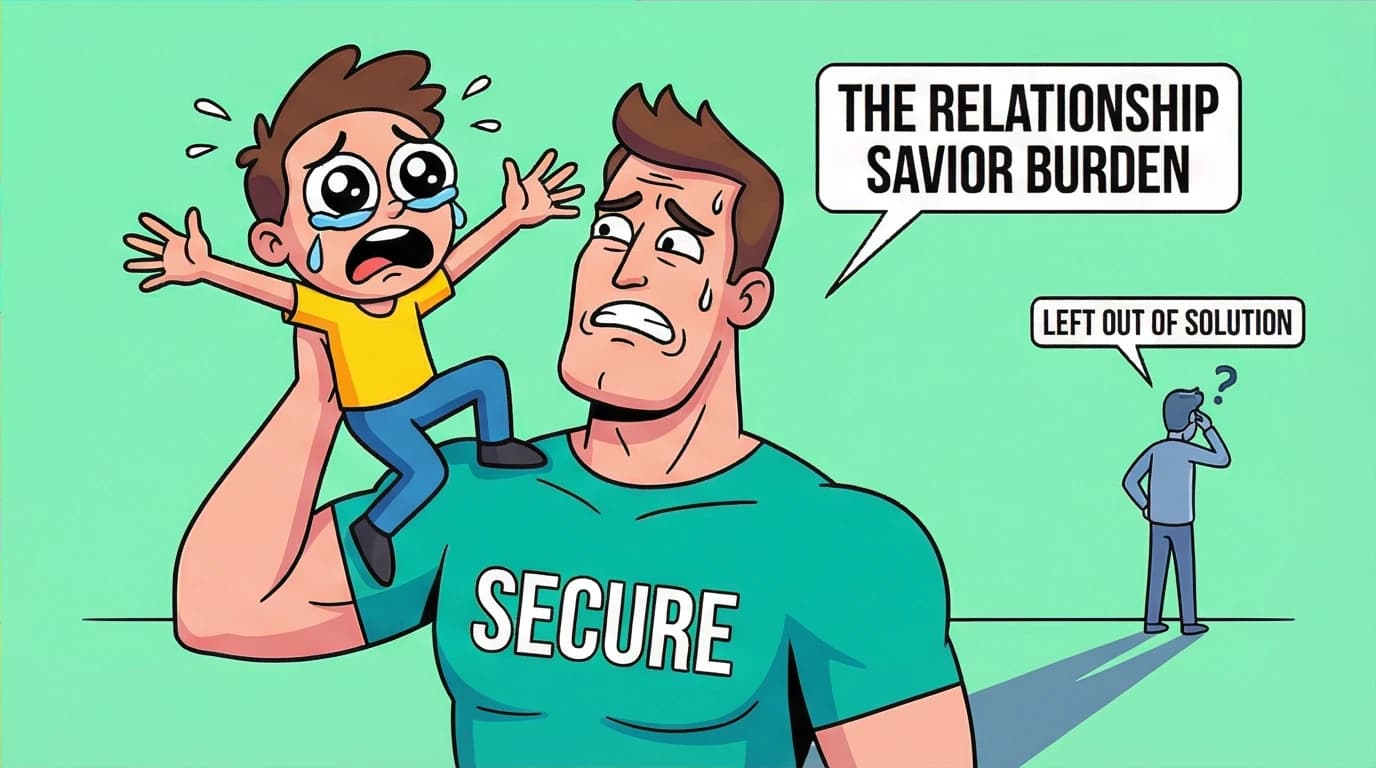
Furthermore, what if you are the avoidant reader? The book offers remarkably little actionable advice for you. It mostly serves as a warning label to others. It does not provide the avoidant reader with tools to gradually increase their tolerance for intimacy, recognize their triggers, or communicate their need for space without causing harm. It effectively leaves them behind.

Discover actionable insights from thousands of psychology and self-help books in just 15 minutes a day with the LeapAhead app.

Download LeapAhead App now
Finding Balance: Books Like Attached
If you recognized the flaws in Levine and Heller's work and want resources that offer a more compassionate, balanced, and scientifically robust view of relationship dynamics, you need to look beyond the mainstream dating aisle. There are several books like Attached that tackle adult attachment without the heavy-handed bias.
Here are the most effective alternatives available at Barnes & Noble, Amazon, or on Audible:
1. Polysecure by Jessica Fern
Do not let the title mislead you. Even if you are strictly monogamous, Jessica Fern's breakdown of attachment theory is arguably the most nuanced and trauma-informed on the market. Unlike Attached, Fern dives deep into how systemic trauma, childhood environment, and even societal factors shape our attachment. She offers a profound, compassionate view of avoidant behaviors and provides actual frameworks for building "earned security" without requiring a perfectly secure partner to save you.
Whether you are navigating monogamy or ethical non-monogamy, this book is an essential read for anyone ready to do the deep work of healing. Jessica Fern masterfully expands traditional attachment theory by acknowledging how broader systemic factors and past traumas influence our ability to trust. If you are looking for a resource that treats both anxious and avoidant behaviors with equal empathy while providing actionable steps toward earned security, this guide will completely transform your perspective on adult intimacy.
Polysecure
Jessica Fern, Eve Rickert, et al.
22 Duration7 Key Points5 Rate2. Hold Me Tight by Dr. Sue Johnson
Dr. Sue Johnson is the developer of Emotionally Focused Therapy (EFT), which is the gold standard for couples counseling. Hold Me Tight does not label one partner as the villain. Instead, it looks at the "demon dialogues"—the negative communication loops couples get stuck in. It explains how the anxious partner’s pursuit and the avoidant partner’s withdrawal are two sides of the exact same coin: a fear of losing connection. It teaches both sides how to step out of the cycle.
Stepping out of a toxic communication loop requires a complete shift in how you view your partner's reactions. Dr. Sue Johnson's pioneering approach moves couples away from finger-pointing and helps them see the hidden emotional panic driving their conflicts. If you are tired of having the exact same fight over and over again, picking up her definitive guide to Emotionally Focused Therapy is a fantastic next step. It provides the practical tools you need to rebuild a foundation of safety and mutual understanding.
Hold Me Tight
Dr. Sue Johnson
26 Duration10 Key Points4.6 Rate3. LeapAhead for Bite-Sized Learning
For those who want to absorb these complex psychological concepts but don't have time for dense reading, an app like LeapAhead is a practical alternative. It provides 15-minute summaries of over 30,000 nonfiction books—including many on attachment, trauma, and relationships—in both audio and text formats. This approach is perfect for learning the core ideas from multiple authors during a commute or workout. While a summary can't replace the therapeutic depth of a full book like Hold Me Tight, it's an excellent way to survey different viewpoints, reinforce key takeaways, and build a consistent learning habit without feeling overwhelmed. The primary limitation is that a summary may not satisfy those seeking deep, academic-level analysis, but it serves as a powerful and accessible starting point for personal growth.
4. Wired for Dating by Stan Tatkin
Stan Tatkin approaches relationships from a neurobiological perspective. He categorizes styles slightly differently (Anchors, Islands, and Waves). His work is highly analytical but deeply compassionate. He explains exactly what happens in the brain when an "Island" (avoidant) shuts down and what happens when a "Wave" (anxious) panics. He provides actionable tools for both types to regulate each other’s nervous systems, rather than telling one to run away from the other.
Build a consistent learning habit around psychology and relationships. Get key ideas from bestselling books with LeapAhead.
Download LeapAhead App now
How to Apply Attachment Theory Without the Bias
If you want to utilize attachment theory to improve your dating life or current relationship, you must strip away the judgment found in Attached. Use these principles as your baseline:
- View behaviors as protective, not malicious. When your partner pulls away, recognize it as an automatic nervous system response to feeling overwhelmed, not a calculated plot to make you feel abandoned.
- Take responsibility for self-regulation. Whether you lean anxious or avoidant, your primary job is learning how to calm your own nervous system. You cannot outsource your emotional stability entirely to your partner.
- Focus on the dynamic, not the label. Stop hyper-fixating on whether someone is a textbook avoidant. Focus instead on the dynamic the two of you create together. Does their distancing trigger your anxiety? Does your pursuit trigger their withdrawal? Disrupt the cycle, not the person.
Levine and Heller started a vital conversation by bringing attachment theory into the mainstream. But it is only the first stepping stone. To build a truly secure relationship, you have to move past the blame game and start looking at the deeper mechanics of human vulnerability.
FAQ
Does the book Attached unfairly blame avoidants?
Yes, this is the most common criticism from both readers and clinical professionals. The book frequently frames anxious attachment behaviors as understandable biological needs while framing avoidant behaviors as conscious, negative tactics designed to withhold affection, largely ignoring the underlying trauma or anxiety that drives avoidant distancing.
Can an avoidant person become secure?
Absolutely. Attachment styles are not permanent. Through self-awareness, therapy (like EFT or EMDR), and intentional behavioral changes, individuals can develop "earned secure attachment." The brain is capable of rewiring its responses to intimacy and perceived threats at any stage of life.
Is Amir Levine a real psychologist?
Amir Levine is an adult, child, and adolescent psychiatrist and neuroscientist, not a clinical psychologist. While his medical background is robust, critics argue that his approach in Attached relies too heavily on categorical, simplified behavioral models rather than the nuanced, trauma-informed approaches often used by practicing psychotherapists.
Should I still read Attached if I have an avoidant attachment style?
You can read it, but approach it with a highly analytical filter. It is a useful primer to understand how anxious partners experience the relationship dynamic. However, do not internalize the book's framing of your style. Supplement your reading with trauma-informed resources like Hold Me Tight to understand the valid biological reasons behind your need for space.