


You buy the expensive prep books from Barnes & Noble. You download study guides from Apple Books. You highlight entire paragraphs in bright colors, reread your notes until your eyes burn, and listen to lectures on Audible at 2x speed. Yet, when you sit down for finals or a major certification exam, the information vanishes. You hit a cognitive wall.
The problem is not your intelligence or your work ethic. The problem is your system. Inputting information into your brain is useless if you do not train your brain to output that information.
To build a flawless, long-term memory retention strategy, you need to stop passively consuming content and start engineering your study habits. This requires mastering the ultimate learning engine: active recall and spaced repetition.
Active Recall vs Spaced Repetition: Two Halves of One Engine
Advanced learners often search for active recall vs spaced repetition as if they are competing frameworks. They are not. Think of them as the hardware and software of your learning system. They rely entirely on each other to function.
Active Recall (The Action): This is the process of actively stimulating your memory for a piece of information. Instead of looking at a textbook chapter on cardiovascular anatomy, you close the book and force yourself to draw the pathway of blood through the heart from memory. The mental strain you feel during this process is the exact mechanism that strengthens the neural connection.
Spaced Repetition (The Schedule): This is the strategic timing of those active recall sessions. In the late 19th century, psychologist Hermann Ebbinghaus discovered the "Forgetting Curve," which shows how memory retention exponentially decays over time. Spaced repetition hacks this curve. It forces you to review information at specific, increasing intervals—say, at 24 hours, 3 days, 1 week, and 1 month.
If you use active recall without spaced repetition, you will understand the concept today but forget it by next month. If you use spaced repetition without active recall (like passively rereading notes on a schedule), you waste time reviewing weak memories. You must use them together.
If you are fascinated by the cognitive science behind why highlighting and rereading fail—and why retrieval practice is so incredibly effective—you might want to explore the definitive literature on the subject. Understanding the exact neurological mechanics of memory can completely transform how you approach your textbooks. For a deep dive into the empirical evidence supporting active recall, this foundational guide is highly recommended for any serious student looking to study smarter.
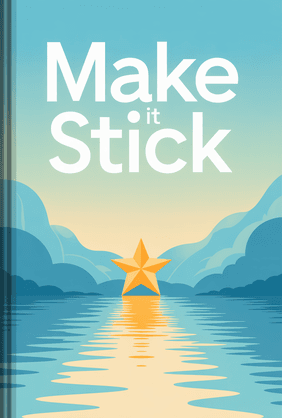
Make It Stick
Peter C. Brown, Mark A. McDaniel, Ph.D., Henry L. Roediger III, Ph.D.
 18 Duration
 8 Key Points
 4.6 Rate
Of course, for busy students and professionals, adding another full-length book to the reading list can feel daunting. If you want to quickly grasp the core concepts from influential books on learning without the heavy time commitment, microlearning apps can be a powerful tool.

Get the key takeaways from books like 'Make It Stick' and other learning bestsellers in just 15 minutes, making it easier to absorb proven study strategies on the go.

Download LeapAhead App now

How to Combine Active Recall and Spaced Repetition
Knowing the theory is easy. Executing it efficiently is where most students fail. Building a study system that actually works requires a strict, sequential workflow. Here is exactly how to combine active recall and spaced repetition without burning out.
Step 1: The Initial Encoding (Do Not Skip This)
A common mistake is trying to memorize information you do not understand. Spaced repetition algorithms cannot fix poor comprehension. Before you create a single flashcard, you must mentally organize the material. Read the chapter, watch the lecture, and map out the big picture. You need to realize how concept A connects to concept B.
Step 2: Extraction and Formatting
Once you understand the material, extract the core facts and format them into questions. This is where you set up your active recall triggers.
Follow the Minimum Information Principle. Do not copy an entire paragraph onto the back of a flashcard. Break complex ideas down into bite-sized questions.
- Bad: "Tell me about the First Amendment."
- Good: "Which five freedoms are protected by the First Amendment?"
Step 3: Algorithmic Scheduling
Do not rely on your calendar or your memory to schedule your reviews. Use dedicated software like Anki, RemNote, or Quizlet. These tools use spaced repetition algorithms to track your performance on individual questions.
When you test yourself (active recall) and get an answer correct, the algorithm pushes the next review further into the future (spaced repetition). If you get it wrong, the interval resets, forcing you to review it sooner. Trust the algorithm. Review your due cards every single day. Consistency is the only way this system works.
Of course, the best spaced repetition algorithm in the world is useless if you do not actually open the app. Sticking to a strict daily study schedule requires more than just willpower; it requires you to engineer your environment and build friction-free routines. If you constantly struggle with procrastination or find it hard to review your flashcards every single day, mastering the psychology of habit formation is your next necessary step.

Atomic Habits
James Clear
26 Duration8 Key Points4.7 Rate
Scaling Up: Layering the Best Study Techniques
Once your core engine is running, you can scale your efficiency by integrating other high-level frameworks. The best study techniques do not replace your baseline system; they enhance it.
The Feynman Technique and Active Recall
The Feynman Technique involves explaining a complex concept in plain, simple language, as if you were teaching it to a middle school student.
When you integrate the Feynman technique and active recall, you create a powerful diagnostic tool. Instead of just answering a short flashcard, prompt yourself to explain an entire mechanism out loud. If you stumble, use jargon to hide your confusion, or draw a blank, you have instantly identified a gap in your knowledge. Go back to the source material, patch the gap, and try explaining it again. This is active recall at its highest level of cognitive demand.
The Blurting Method vs Active Recall
You might see studying influencers debating the blurting method vs active recall. This is a misunderstanding of terms. Blurting is simply a highly intensive, unstructured format of active recall.
To use the blurting method, you take a blank sheet of paper or a whiteboard, pick a topic, and write down absolutely everything you can remember about it within a set time limit. Once the time is up, you open your textbook and use a red pen to correct your mistakes and add the missing information in a different color.
When to use which:
- Use standard flashcards (micro-active recall) for daily spaced repetition of dense facts, dates, vocabulary, and specific formulas.
- Use the blurting method (macro-active recall) one week before a major exam to test your ability to connect broad concepts and see the entire landscape of the subject.
Layering these advanced strategies requires a solid understanding of how your brain processes and categorizes complex information. Sometimes, when using methods like the Feynman Technique, you will still hit mental roadblocks. Learning how to effectively switch your brain between focused problem-solving and diffuse, creative thinking can help you bypass those hurdles. If you are looking to further optimize your mental toolkit and understand the biological reality of studying, this resource is a fantastic addition to your library.
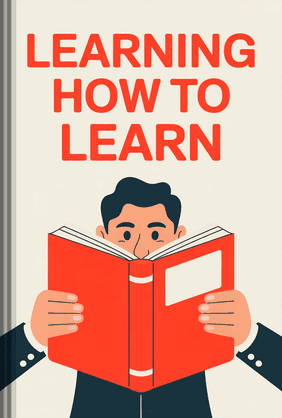
Learning How To Learn
Barbara Oakley, Terrence Sejnowski
21 Duration10 Key Points4.6 RateCritical Pitfalls to Avoid
Even with the right framework, execution errors will destroy your efficiency. Watch out for these three traps.
1. The Illusion of Competence
Looking at the back of a flashcard and saying, "Oh yeah, I knew that," is a lie you tell yourself. If you did not articulate the exact answer out loud or write it down before flipping the card, you did not perform active recall. You experienced recognition, which is useless on an exam. Always force an explicit answer before checking.
Looking at the back of a flashcard and saying, "Oh yeah, I knew that," is a lie you tell yourself. If you did not articulate the exact answer out loud or write it down before flipping the card, you did not perform active recall. You experienced recognition, which is useless on an exam. Always force an explicit answer before checking.

2. Flashcard Bloat
It is easy to get addicted to making cards. If you make 200 flashcards for a single lecture, you will drown in your own review queue. Your daily reviews will stretch from 30 minutes to 3 hours, leading to burnout. Only make cards for the hardest, most vital pieces of information. Trust your brain to hold the connecting logic.
It is easy to get addicted to making cards. If you make 200 flashcards for a single lecture, you will drown in your own review queue. Your daily reviews will stretch from 30 minutes to 3 hours, leading to burnout. Only make cards for the hardest, most vital pieces of information. Trust your brain to hold the connecting logic.
3. Ignoring the Daily Grind
Spaced repetition is unforgiving. If you skip your reviews for a weekend, the algorithm will bury you in overdue cards by Monday. Treat your daily reviews like brushing your teeth. Do them on your phone while waiting in line, commuting, or walking on the treadmill. Keep the queue at zero.
Spaced repetition is unforgiving. If you skip your reviews for a weekend, the algorithm will bury you in overdue cards by Monday. Treat your daily reviews like brushing your teeth. Do them on your phone while waiting in line, commuting, or walking on the treadmill. Keep the queue at zero.
Just as you can turn idle moments into productive review sessions, you can also use that downtime to absorb new ideas. For those times when you're too mentally fatigued for active recall but still want to learn, listening to key insights from non-fiction bestsellers is a great alternative.
Use your commute or workout to listen to 15-minute summaries of books on productivity and self-improvement, helping you stay in a learning mindset even on low-energy days.
Download LeapAhead App now
Building Your Long-Term Strategy
Your goal is not just to pass the next test. Your goal is to build a permanent database of knowledge in your head. Whether you are studying for the USMLE, the Bar Exam, or simply trying to master a new language, the biological rules of learning remain the same.
Stop reading passively. Stop highlighting. Start forcing your brain to retrieve information, and start timing those retrievals strategically. Once you align your habits with how the human brain actually operates, you will cut your study time in half while doubling your retention.
When your ultimate goal is to conquer massively intimidating projects—like passing medical board exams, mastering a foreign language from scratch, or teaching yourself to code—you can push these core principles even further. Aggressive, self-directed study projects require a specialized roadmap that goes beyond standard college prep. For those looking to design high-intensity learning projects and rapidly acquire hard skills that will set them apart in a competitive job market, this strategic guide is an absolute must-read.

Ultralearning
Scott H. Young
32 Duration8 Key Points4.5 RateFAQ
How much time should I spend on active recall daily?
Focus on clearing your spaced repetition queue rather than hitting a specific time metric. For most advanced learners, 30 to 60 minutes of daily flashcard review is enough to maintain thousands of active cards. The rest of your study time should be spent encoding new information and doing macro-reviews like the Feynman technique or practice exams.
Focus on clearing your spaced repetition queue rather than hitting a specific time metric. For most advanced learners, 30 to 60 minutes of daily flashcard review is enough to maintain thousands of active cards. The rest of your study time should be spent encoding new information and doing macro-reviews like the Feynman technique or practice exams.
Can I use these methods for math and physics, or just memorization?
Yes, but the format changes. You do not use flashcards to memorize the final answers to math problems. Instead, use spaced repetition to memorize core formulas and the conditions under which to apply them. Use active recall by solving entirely new practice problems without looking at the step-by-step solutions until you finish.
Yes, but the format changes. You do not use flashcards to memorize the final answers to math problems. Instead, use spaced repetition to memorize core formulas and the conditions under which to apply them. Use active recall by solving entirely new practice problems without looking at the step-by-step solutions until you finish.
Is Anki the only way to do spaced repetition?
No, but it is the industry standard because it is open-source, highly customizable, and uses a proven algorithm. Other excellent tools include RemNote, which integrates note-taking with flashcard generation, and Quizlet (though you need the premium version to access true spaced repetition algorithms). You can even use physical index cards with the Leitner System, though software is far more efficient for scaling.
No, but it is the industry standard because it is open-source, highly customizable, and uses a proven algorithm. Other excellent tools include RemNote, which integrates note-taking with flashcard generation, and Quizlet (though you need the premium version to access true spaced repetition algorithms). You can even use physical index cards with the Leitner System, though software is far more efficient for scaling.
What should I do if I have too many overdue cards?
Do not panic and do not delete your deck. Sort the overdue cards by priority if your software allows it. Cap your maximum daily reviews to a manageable number (e.g., 100 cards a day) to slowly chip away at the backlog. Do not add any new cards to your system until you have completely cleared the overdue queue.
Do not panic and do not delete your deck. Sort the overdue cards by priority if your software allows it. Cap your maximum daily reviews to a manageable number (e.g., 100 cards a day) to slowly chip away at the backlog. Do not add any new cards to your system until you have completely cleared the overdue queue.