


You highlight textbooks. You reread lecture slides. You watch hours of video tutorials on YouTube. Yet, when test day arrives and you stare at a blank exam paper, your mind goes completely blank.
You are experiencing the "illusion of competence."
Your brain recognizes the material when it is sitting right in front of you. This recognition tricks you into thinking you actually know it. If you are preparing for a rigorous exam—whether it is the USMLE, the Bar exam, or a brutal college physics final—you cannot afford this risk. You do not have the time to experiment with unverified TikTok study hacks. You need a method with a proven return on investment.
You are likely asking: does active recall work, or is it just another overhyped productivity trend? The short answer is that active recall is not a trend. It is the biological mechanism of learning itself. Here is the exact science, the hard evidence, and the blueprint for how high-achievers use it to dominate exams.
The Active Recall Science: How Your Brain Actually Learns
To understand why active recall is effective, you have to look at the underlying cognitive science. Learning happens in two primary phases: encoding and retrieval.
Most students spend 90% of their time encoding. They read chapters, highlight sentences in different colors, and copy notes word-for-word. They are trying to push information into the brain.
The active recall science Flips this equation. Active recall (also known as retrieval practice) focuses on pulling information out of the brain. When you close your book and force yourself to remember a concept, you trigger a biological process.
Your brain registers a knowledge gap. As you strain to remember the answer, your neurons fire. The neural pathways connecting that specific piece of information physically strengthen. The myelin sheath wrapping around your neurons thickens, allowing electrical signals to travel faster.
Cognitive psychologist Robert Bjork coined a term for this: Desirable Difficulty.
When a study method feels hard, it is working. The mental friction you feel when trying to answer a flashcard without looking at the back is exactly what cements that fact into your long-term memory. Rereading feels easy because your brain is on autopilot. Active recall feels exhausting because your brain is actually remodeling itself.

LeapAhead

Turn your commute into a powerful learning session. LeapAhead delivers key insights from bestselling books in 15-minute audio summaries, perfect for building a consistent, evidence-based learning habit.

Active Recall Evidence: What the Research Shows
Skeptical learners need data. You want active recall evidence before you completely abandon your highlighters and re-reading habits. Fortunately, cognitive psychology has studied retrieval practice for over a century, dating back to Hermann Ebbinghaus and the Forgetting Curve in the 1880s.
Modern research provides undeniable proof.
In a landmark 2006 study by cognitive psychologists Henry Roediger and Jeffrey Karpicke, students were asked to read a scientific passage. The students were then divided into two groups:
- The Restudy Group: Reread the passage a second time.
- The Test Group: Wrote down everything they could remember from the passage without looking (a free-recall test).
When tested 5 minutes later, the Restudy Group performed slightly better. However, exams are not taken 5 minutes after you read a book.
When tested one week later, the results shifted dramatically. The Test Group retained 61% of the material, while the Restudy Group retained only 40%.

The students who used active recall remembered 50% more information a week later, despite spending the exact same amount of time studying. This study perfectly isolates why active recall is effective: testing yourself is not just a way to measure learning; it is the most powerful way to create learning.
If you are fascinated by the cognitive psychology behind Henry Roediger's research, you should absolutely check out Make It Stick. Co-authored by Roediger himself, this groundbreaking book dives deeper into why traditional study habits like rereading and highlighting are essentially a waste of time. It is packed with real-world examples and actionable strategies to help you leverage retrieval practice, spacing, and interleaving to truly master any subject. It is practically required reading for any serious student who wants to stop working hard and start working smart.
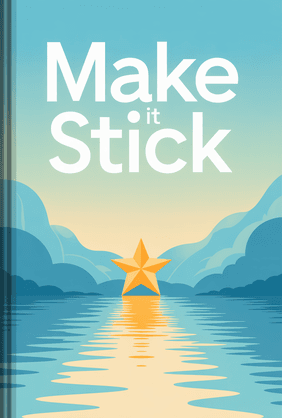
Make It Stick
Peter C. Brown, Mark A. McDaniel, Ph.D., Henry L. Roediger III, Ph.D.
 18 Duration
 8 Key Points
 4.6 Rate
Active Recall for Medical School: Surviving the Firehose
If you want to test the limits of a study method, look at American medical students.
Medical school requires memorizing tens of thousands of diseases, pharmacological pathways, and anatomical structures in a very short window. Med students famously describe it as "drinking from a firehose."
Active recall for medical school is not just a study tip. It is a strict survival requirement.
Go to any top medical school in the United States and ask students how they study for the USMLE Step 1. You will hear the same two tools mentioned repeatedly: Anki and UWorld.
- Anki is a digital flashcard application built entirely around active recall and spaced repetition. Students download decks with thousands of cards (like the famous AnKing deck). They look at a prompt, force themselves to recall the answer, and then flip the digital card.
- UWorld is a massive test bank of thousands of clinical vignette questions. Students do blocks of 40 random questions a day. They are constantly testing themselves, failing, reviewing the explanations, and trying again.
High-achievers in medicine abandon passive reading early in their first year. They rarely reread textbooks. They rely on active recall because it is the only methodology efficient enough to handle the immense volume of data required to become a doctor.
While Anki is a powerhouse, especially in the medical community, the landscape of learning software is vast. Finding the right digital tool can make all the difference in staying consistent.
Surviving a rigorous academic environment like medical school requires more than just good intentions—it requires a systematic approach to aggressive, self-directed learning. If you want to adopt the exact frameworks used by top-tier students and self-taught prodigies to conquer massive amounts of information in record time, Ultralearning is an incredible resource. Scott Young explores the extreme techniques that high-achievers use to bypass traditional education hurdles, making it a perfect companion guide for anyone facing a daunting exam or looking to master a complex new skill fast.
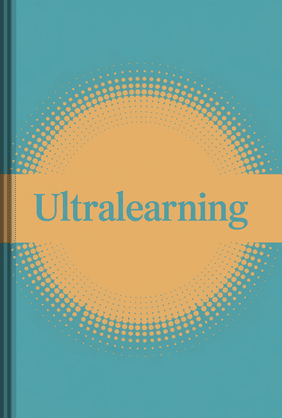
Ultralearning
Scott H. Young
32 Duration8 Key Points4.5 RateIs Active Recall the Best Study Method?
With all the different study frameworks available—mind mapping, the Pomodoro technique, speed reading—is active recall the best study method overall?
In 2013, Professor John Dunlosky and a team of researchers published a massive, comprehensive review in the journal Psychological Science in the Public Interest. They analyzed ten of the most popular study techniques used by students.
They ranked methods like highlighting, underlining, and rereading as having low utility. They found no evidence that these methods boost exam performance.
They ranked Practice Testing (Active Recall) and Distributed Practice (Spaced Repetition) as having high utility. These were the only two methods proven to be highly effective across different age groups, different subjects, and different testing formats.
So, yes. When paired with spaced repetition, active recall is objectively the best study method available to modern learners.
The real magic happens when you stop seeing these as two separate tactics and start using them as one unified system.
LeapAhead
Combine active recall with micro-learning. LeapAhead helps you absorb and retain knowledge from thousands of nonfiction books with quick, engaging summaries and visual aids.
Still wondering how to optimize your study sessions even further? Understanding the quirky, counterintuitive ways our brains actually operate can give you a massive advantage. In How We Learn, science reporter Benedict Carey unpacks the hidden mechanics of memory, showing why forgetting is actually a crucial part of learning and how environmental shifts can boost your retention. It is a fantastic read if you want to ditch the guilt of not studying "perfectly" and instead align your habits with the proven science of human cognition.
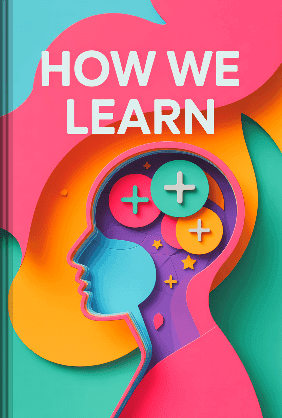
How We Learn
Benedict Carey
22 Duration10 Key Points4.7 RateHow to Implement Active Recall Today
You know the science. You have seen the evidence. Now you need to execute. Here are five frictionless ways to integrate active recall into your daily routine right now.
1. The Whiteboard Brain Dump
Read a chapter of your textbook or watch a lecture. Close the book. Close the laptop. Take a blank sheet of paper or stand in front of a whiteboard. Write down everything you can remember about the topic. Draw diagrams. Connect concepts.
Once you can no longer remember a single detail, open the book. The gaps on your whiteboard are the exact areas your brain failed to encode. Focus your review only on those gaps.
Once you can no longer remember a single detail, open the book. The gaps on your whiteboard are the exact areas your brain failed to encode. Focus your review only on those gaps.
2. Spaced Repetition Flashcards (Anki / Quizlet)
Stop writing traditional, linear notes. Instead, write questions.
If you are reading about the cardiovascular system, do not write: "Veins carry deoxygenated blood to the heart."
Write: "What type of blood vessel carries deoxygenated blood back to the heart?"
Put these questions into a spaced repetition software like Anki. Let the algorithm feed you the questions right as you are about to forget them.
If you are reading about the cardiovascular system, do not write: "Veins carry deoxygenated blood to the heart."
Write: "What type of blood vessel carries deoxygenated blood back to the heart?"
Put these questions into a spaced repetition software like Anki. Let the algorithm feed you the questions right as you are about to forget them.
3. The Feynman Technique
Named after the Nobel Prize-winning physicist Richard Feynman, this method forces you to explain a complex topic in simple terms.
Pretend you are explaining the concept to a middle schooler. Speak out loud. If you stumble, stutter, or have to use complex jargon to hide your lack of understanding, you have identified a knowledge gap. Go back to the source material, review it, and try explaining it out loud again.
Pretend you are explaining the concept to a middle schooler. Speak out loud. If you stumble, stutter, or have to use complex jargon to hide your lack of understanding, you have identified a knowledge gap. Go back to the source material, review it, and try explaining it out loud again.
4. Use Micro-Learning Apps for Consistent Review
Active recall doesn't always have to be a formal, hour-long study block. You can reinforce concepts during "in-between" moments like a commute or a workout. Apps like LeapAhead provide 15-minute audio and text summaries of non-fiction books. After listening to a summary on a topic you're studying, pause and try to recall the three main arguments. This low-friction retrieval practice helps cement high-level concepts and builds a consistent learning habit. While these summaries don't replace deep, primary study for a technical exam, they are an excellent tool for spaced repetition and for building a broad base of knowledge that makes your core study material easier to understand.
5. Immediate Practice Questions
If you are studying for a standardized test (SAT, GRE, Bar Exam, IT Certifications), prioritize practice questions over reading. Do practice questions before you even feel "ready." You will get them wrong. Getting them wrong provides immediate feedback and primes your brain to absorb the correct answer when you read the explanation.
The Mental Hurdle: Surviving the Friction
You need a warning before you start. Active recall is uncomfortable.
When you sit down with a blank piece of paper and try to pull information from your brain, you will likely feel inadequate. You will realize how little you actually absorbed from that two-hour lecture. This frustration causes many students to quit and retreat to the warm, comforting safety of rereading their highlighted notes.

Do not quit.
That frustration is the feeling of neural pathways growing. Just as lifting heavy weights tears muscle fibers to build physical strength, forcing your brain to recall information causes mental strain to build memory strength. Embrace the struggle. Trust the science.
Leaning into the discomfort of active recall requires an environment free from notifications, social media, and multitasking. You simply cannot remodel your neural pathways while checking your phone every ten minutes. To truly master this level of intense concentration, Deep Work by Cal Newport is a game-changer. Newport provides a rigorous blueprint for training your brain to focus without distraction, allowing you to push through the cognitive friction of active recall and produce massive results in a fraction of the time.
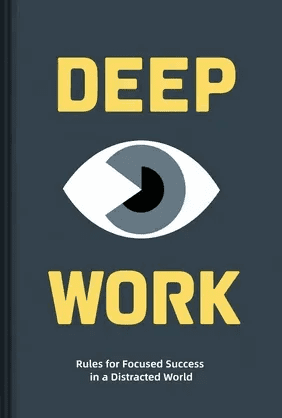
Deep Work
Cal Newport
47 Duration8 Key Points4.6 RateFAQ
Why does active recall feel so exhausting?
Because it is a highly active cognitive process. Rereading is passive; your eyes simply track words on a page. Active recall forces your brain to search its network, retrieve a memory, and reconstruct it. This process consumes more glucose and requires intense focus, leading to faster mental fatigue. Study in focused 25 to 45-minute blocks, then rest.
Because it is a highly active cognitive process. Rereading is passive; your eyes simply track words on a page. Active recall forces your brain to search its network, retrieve a memory, and reconstruct it. This process consumes more glucose and requires intense focus, leading to faster mental fatigue. Study in focused 25 to 45-minute blocks, then rest.
Can I use active recall for math and problem-solving, or just memorization?
It works flawlessly for math, coding, and physics. In these subjects, active recall means attempting to solve a practice problem without looking at the solution manual. Looking at a solution and thinking, "Oh yeah, that makes sense," is the illusion of competence. Doing the math step-by-step from a blank page is active recall.
It works flawlessly for math, coding, and physics. In these subjects, active recall means attempting to solve a practice problem without looking at the solution manual. Looking at a solution and thinking, "Oh yeah, that makes sense," is the illusion of competence. Doing the math step-by-step from a blank page is active recall.
Should I stop taking notes entirely?
No. You still need an initial encoding phase. You cannot recall information you never learned in the first place. Take brief, high-level notes to grasp the core concepts. However, shift your time ratio. Spend 20% of your time taking initial notes, and 80% of your time testing yourself on those notes.
No. You still need an initial encoding phase. You cannot recall information you never learned in the first place. Take brief, high-level notes to grasp the core concepts. However, shift your time ratio. Spend 20% of your time taking initial notes, and 80% of your time testing yourself on those notes.
How long does it take to see results from active recall?
You will notice a difference in your retention within days. By your first major exam (usually within a few weeks), the difference will be undeniable. You will find that you no longer need to cram the night before because the knowledge is already securely locked in your long-term memory.
You will notice a difference in your retention within days. By your first major exam (usually within a few weeks), the difference will be undeniable. You will find that you no longer need to cram the night before because the knowledge is already securely locked in your long-term memory.