

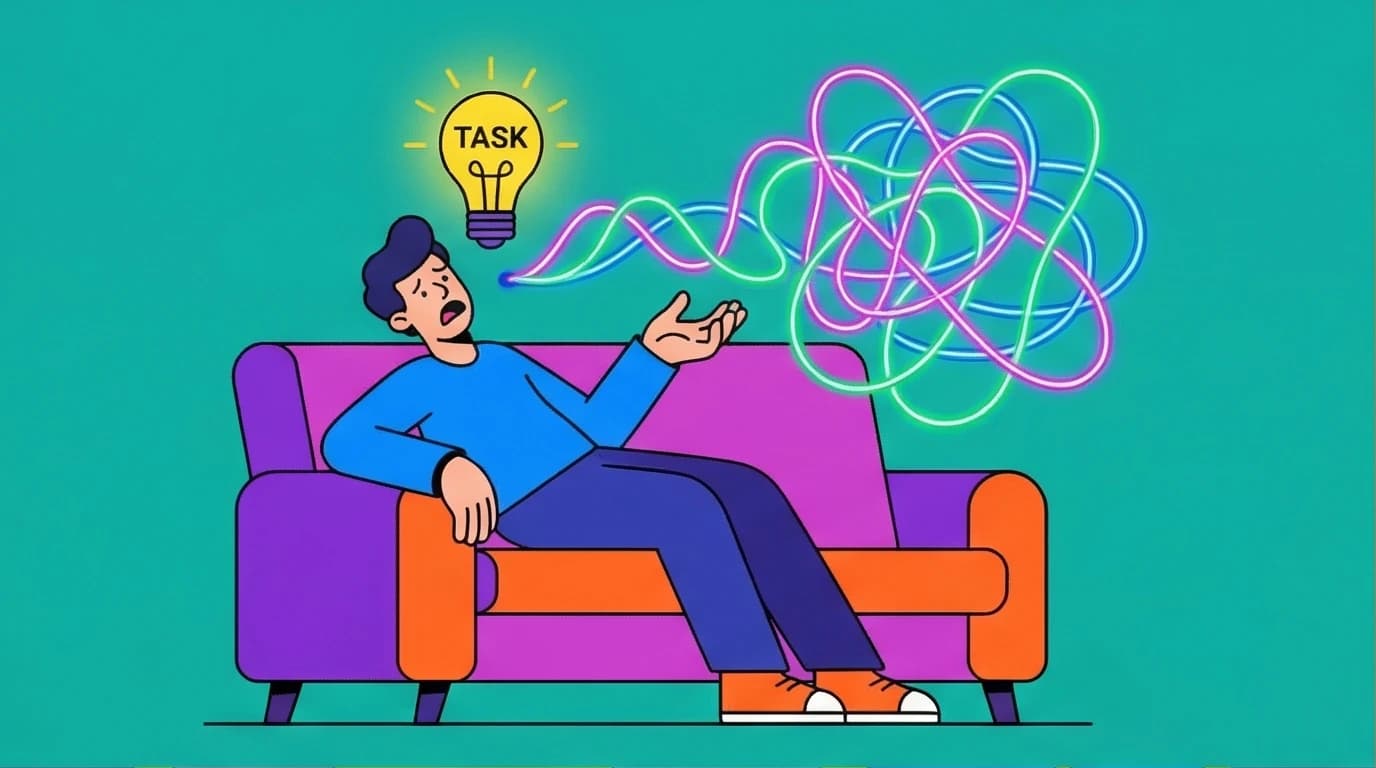
You are sitting on your couch. You have an assignment due tomorrow, an email you needed to send three days ago, and a pile of laundry staring at you from the corner of the room. Your brain is screaming at you to get up. You know the consequences of not doing these things. Yet, you stay glued to your phone, scrolling endlessly, feeling a crushing weight in your chest.
You ask yourself the same question you always do: Why am I so lazy?
Stop right there.
If this scenario sounds painfully familiar, you are likely not dealing with a moral failing or poor time management. The line between ADHD paralysis vs procrastination is often blurred in mainstream productivity advice, leading highly capable people to internalize deep shame. When you are fighting a brain that processes dopamine and task-initiation differently, buying another expensive planner at Barnes & Noble isn't going to fix the problem.
To break the cycle, you need to understand the exact mechanics of what is happening in your brain.
The Science of Being Stuck
To untangle the complex relationship between ADHD and procrastination, we have to look past the surface behavior. From the outside, both look identical: a person who is not doing the thing they are supposed to be doing. The difference lies entirely in the internal experience and the neurological mechanisms at play.
What is Traditional Procrastination?
Everyone procrastinates. A neurotypical person might look at a dense spreadsheet, decide it looks incredibly boring, and choose to watch Netflix instead. They make a cost-benefit analysis. The temporary relief of watching a show outweighs the immediate discomfort of the spreadsheet.
Crucially, traditional procrastination is a choice. The person retains the ability to shift gears when the deadline gets close enough. They feel a manageable amount of stress, the adrenaline kicks in, and they power through the task.
What is ADHD Paralysis?
ADHD paralysis is a complete system overload. It is a manifestation of executive dysfunction—a breakdown in the brain's management system located in the prefrontal cortex.
In a neurodivergent brain, dopamine and norepinephrine pathways are disrupted. These neurotransmitters are responsible for motivation, reward, and task initiation. When faced with a task that is overwhelming, under-stimulating, or vaguely defined, the ADHD brain simply does not generate the necessary neurochemical spark to bridge the gap between knowing what to do and doing it.
You enter a state of neurological freeze. It is not a choice. You are held hostage by your own neurobiology, fully aware of the ticking clock, experiencing intense anxiety, but physically unable to transition into action.
If you want to dive deeper into the fascinating neuroscience behind your prefrontal cortex and dopamine pathways, ADHD 2.0 is an incredible resource. Dr. Edward Hallowell and Dr. John Ratey explain the unique mechanics of the neurodivergent brain and offer actionable, science-backed strategies to turn these traits into strengths instead of frustrating roadblocks. It is an absolute game-changer for any adult who is tired of fighting their own biology and wants to truly understand how their neurological wiring operates.
ADHD 2.0
Edward M. Hallowell, M.D., John J. Ratey, M.D.
 43 Duration
 9 Key Points
 4.5 Rate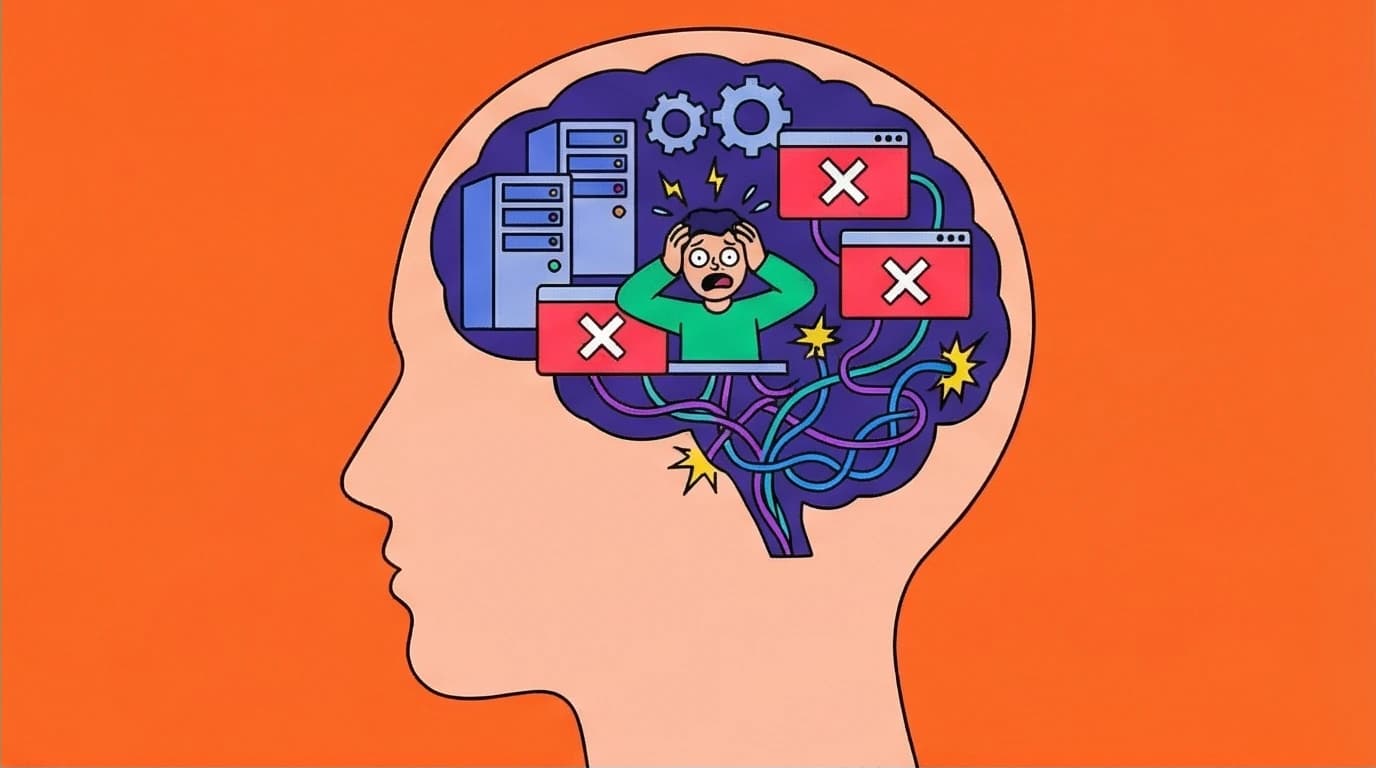
ADHD Paralysis vs Procrastination: The Litmus Test
How can you definitively tell which one you are experiencing in the moment? Look at your emotional and physical state.
1. The "Want" Factor
- Procrastination: You don't want to do the task, so you actively avoid it to do something more enjoyable.
- ADHD Paralysis: You desperately want to do the task. You might even be begging your body to move. The desire is there, but the ignition switch is broken.
2. The Internal Experience
- Procrastination: Often accompanied by a feeling of relief or mild, manageable guilt. You are usually enjoying the distraction.
- ADHD Paralysis: Accompanied by severe anxiety, physical tension, and overwhelming shame. You are not enjoying the distraction (doomscrolling, staring at a wall); you are using it to cope with a nervous system in distress.
3. The Trigger
- Procrastination: Triggered by boredom or preferring immediate gratification.
- ADHD Paralysis: Triggered by task overwhelm, sensory overload, perfectionism, or unclear instructions.
The Overlap: Anxiety Procrastination
It is also critical to recognize anxiety procrastination. This occurs when the fear of failing, making a mistake, or not doing a task perfectly causes a freeze response. For adults with undiagnosed or unmanaged ADHD, years of dropping the ball and disappointing others lead to a massive buildup of anxiety.
Over time, your brain starts linking tasks—like opening your inbox or looking at a bank statement—with intense emotional pain. Anxiety procrastination merges with executive dysfunction, creating a reinforced wall that makes starting feel like stepping into traffic.
If you constantly find your executive dysfunction intertwined with severe anxiety and perfectionism, it is worth exploring the root causes of this painful overlap. Dr. Gabor Maté’s Scattered Minds offers a deeply compassionate look at how our environments, emotional pain, and nervous system development shape attention deficit issues. It is a beautifully written guide that helps reframe your anxiety and focus struggles not as a personal failure, but as a highly sensitive nervous system trying its best to cope.
Scattered Minds
Gabor Maté
40 Duration9 Key Points4.3 RateThe Three Faces of ADHD Paralysis
Recognizing how paralysis shows up in your daily life is the first step to dismantling it. It usually falls into three distinct categories:
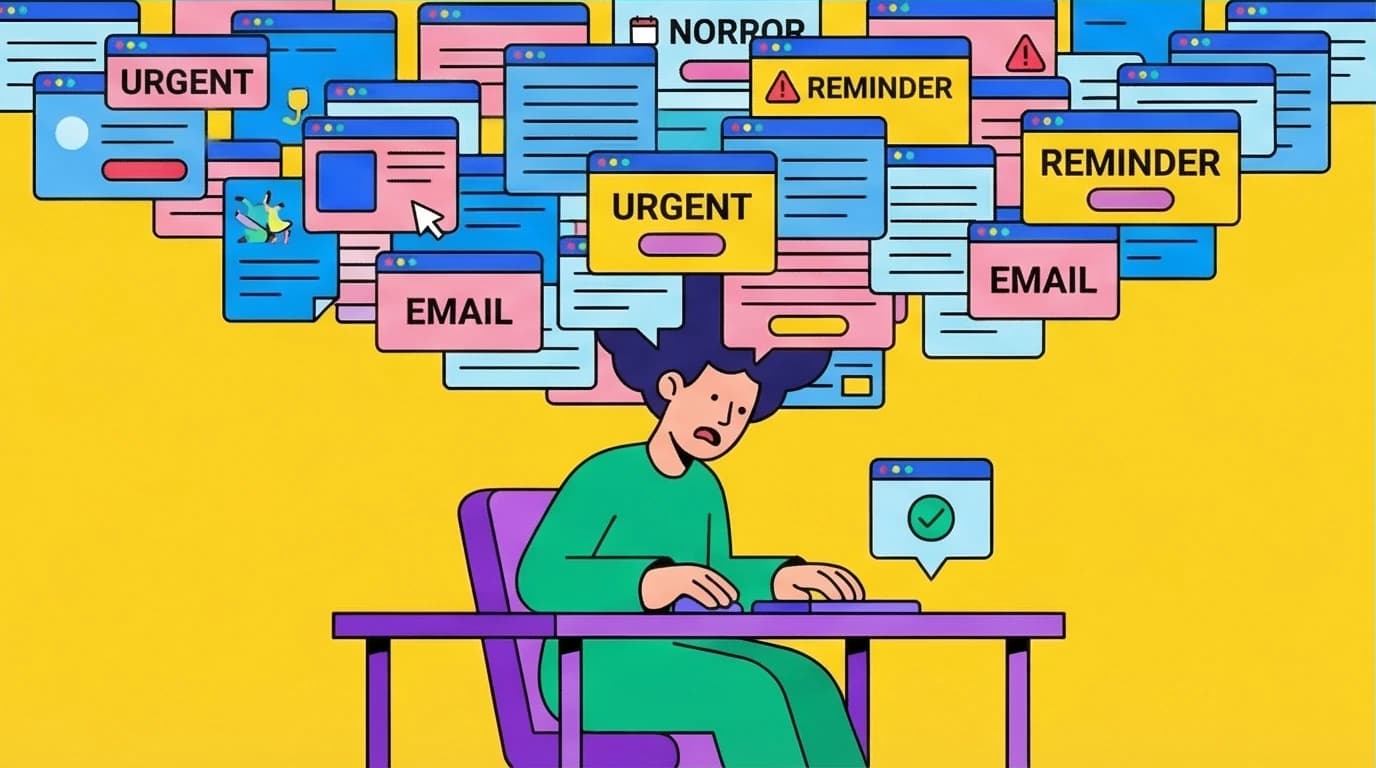
Mental Paralysis: Your brain feels like a browser with 150 tabs open, and music is playing from an unknown source. You have so many thoughts and micro-tasks swirling around that you cannot identify step one. Result: Brain fog and crashing on the couch.
Physical Paralysis: The psychological overwhelm translates into a physical heavy sensation. You feel literal fatigue. Your limbs feel like lead. You might lie in bed fully awake, unable to make the physical transition to stand up.
Choice Paralysis: Also known as analysis paralysis. When faced with too many options—what to eat for dinner, which software to use, which email to answer first—your working memory crashes. Without a clear "best" choice, the brain shuts down the decision-making process entirely.


Feeling overwhelmed? Break the paralysis by learning the key ideas from a bestselling book in just 15 minutes with LeapAhead.
 LeapAhead
Neurodivergent Productivity: How to Finally Get Unstuck
If standard advice like "eat the frog" or "just make a list" worked for you, you wouldn't be reading this. Neurodivergent productivity requires working with your brain's dopamine deficiency, not against it. You cannot shame yourself into action.
Here are highly actionable, science-backed strategies designed to bypass executive dysfunction.
1. Lower the Barrier to Entry (The "Trash Can" Method)
When executive dysfunction hits, a task like "clean the bedroom" is entirely too massive. Your brain sees 400 micro-steps. You need to radically lower the barrier to entry until the resistance is zero.
Do not clean the room. Just commit to throwing away three pieces of actual trash. That's it. Do not pick up clothes, do not organize books.
- Can't brush your teeth for two minutes? Use mouthwash or keep disposable toothbrushes on your nightstand.
- Can't fold laundry? Stop folding. Use the two-basket system: one for clean clothes, one for dirty clothes.
Remove the neurotypical standard of "doing it right." Doing it poorly is vastly superior to not doing it at all.
The strategy of radically scaling down your expectations until there is zero friction is perfectly echoed in BJ Fogg's Tiny Habits. While traditional productivity gurus scream at you to make massive overnight lifestyle changes, Dr. Fogg proves that lasting momentum is actually built on hilariously small, simple actions. If you struggle with task initiation, his approach to attaching microscopic habits to your existing daily routines is a completely judgment-free way to bypass your brain's natural freeze response.
Tiny Habits
BJ Fogg, Ph.D.
40 Duration8 Key Points4.7 Rate2. Implement Body Doubling
This is one of the most effective tools for ADHD paralysis. Body doubling involves working alongside someone else, either physically or virtually.
You don't have to interact. Just having another human presence acts as an external anchor for your wandering attention and provides a gentle, non-judgmental pressure to stay engaged.
- Go to a local coffee shop or library.
- Invite a friend over with the explicit agreement: "We are just going to sit in silence and work for an hour."
- Use virtual body doubling platforms or watch "Study With Me" videos on YouTube.
3. Create a "Dopamine Menu"
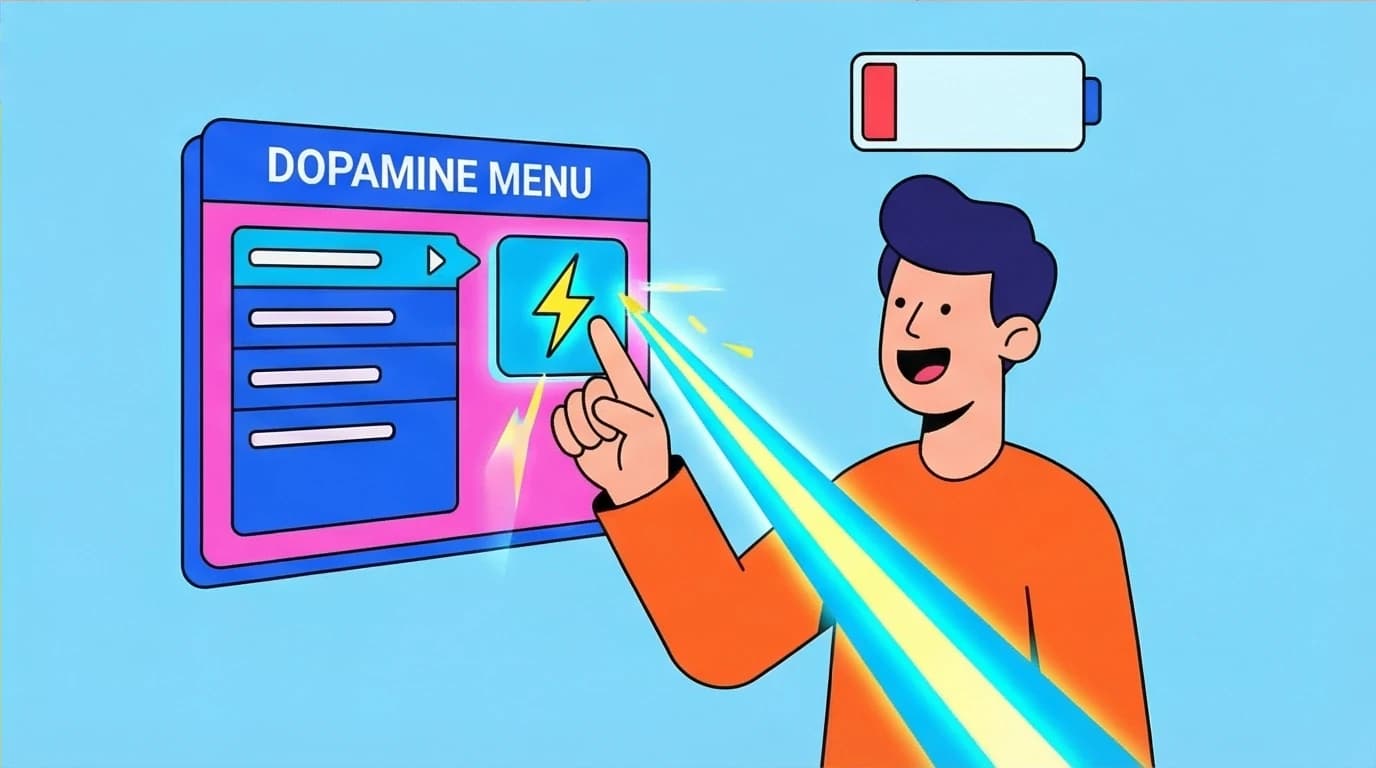
Because your brain lacks intrinsic dopamine to start boring tasks, you must source it externally. A dopamine menu is a pre-written list of healthy, stimulating activities you can use to jumpstart your brain before attempting a hard task.
- Appetizers (Quick hits): Drinking a cold glass of water, doing 10 jumping jacks, listening to one high-energy song.
- Mains (Deep focus aids): Putting on a specific video game soundtrack (designed to keep players focused without distraction), using a standing desk, lighting a strongly scented candle.
- Desserts (Rewards): Guilt-free scrolling, watching a show, a specific treat.
Use an appetizer to jolt the nervous system out of physical paralysis before sitting down to work.
4. Leverage Microlearning to Build Momentum
For a brain battling executive dysfunction, the idea of "reading more" to improve yourself can feel like an impossible command. The sheer scale of a 300-page book can trigger immediate task paralysis. The solution is to shrink the act of learning into a dose so small it feels effortless. This is where a microlearning app like LeapAhead can be a game-changer. It’s built on the idea that absorbing knowledge doesn't have to be a monumental effort.
LeapAhead transforms bestselling nonfiction books into 15-minute summaries available in both audio and text. This format is incredibly well-suited for a neurodivergent mind. You can absorb key ideas from a book on productivity or emotional regulation while commuting, walking, or doing chores—perfect for a brain that craves stimulation and struggles with sitting still. Themed learning paths and daily goal-setting features also help combat choice paralysis and provide the small, consistent dopamine hits needed to build a sustainable habit.
Of course, a 15-minute summary won't provide the deep, academic nuance of a full text. But when the alternative is being too overwhelmed to learn at all, it's a powerful tool. The goal is progress, not perfection. However, it's worth noting that its mobile-first design is best for on-the-go learning and may feel limiting for those who prefer to study on a desktop.
Turn your commute or workout into a productive win. Try LeapAhead to fit powerful learning into your busiest days.
LeapAhead5. Break the "Time Blindness" with External Visualization
ADHD brains struggle with time blindness—the inability to sense the passing of time or estimate how long a task will take. This fuels choice paralysis.
Instead of writing a massive to-do list, use visual time constraints. Get an analog visual timer (like a Time Timer) where you can actually see the red disc disappearing. Set it for an absurdly low amount of time. Tell yourself: I am only going to draft this email for 8 minutes. When the timer rings, I have permission to stop.
Often, starting is the only hurdle. Once the timer is going, momentum takes over.
6. Regulate the Nervous System First
If you are locked in anxiety procrastination, your sympathetic nervous system is in a fight-or-flight state. You cannot logic your way out of this. You have to regulate your body before your brain will allow you to work.
If you are frozen:
- Change your physical temperature. Splash freezing cold water on your face or hold an ice cube. This triggers the mammalian dive reflex, instantly lowering your heart rate and interrupting the anxiety loop.
- Change your environment. Move from the couch to the floor. Step outside into the sunlight for exactly two minutes. Breaking the physical environment breaks the psychological loop.
Escaping the Shame Cycle
The most destructive part of ADHD paralysis is not the delayed task itself; it is the brutal self-talk that follows. You call yourself lazy, stupid, or broken. This spikes your anxiety further, depleting what little dopamine you have left, ensuring you remain paralyzed for the next task.
Recognizing the stark difference between ADHD paralysis vs procrastination is your exit ticket from this cycle.
Your brain is structurally different. It requires different fuel, different environments, and different rules of engagement. Stop holding yourself to neurotypical standards of productivity. Validate your struggle, drop the moral judgment, and start experimenting with strategies that actually fit the way your mind is built.
Breaking free from the chronic guilt of uncompleted tasks requires confronting the heavy shame you have likely been carrying around for years. Dr. Brené Brown’s I Thought It Was Just Me is an essential read if you constantly beat yourself up for not meeting neurotypical standards. This book provides a brilliant, research-backed framework for recognizing shame triggers, building emotional resilience, and replacing your harsh inner critic with radical self-compassion. It is the perfect companion for healing the emotional toll of ADHD.

I Thought It Was Just Me
Brené Brown, Ph.D.
22 Duration9 Key Points4.4 RateFAQ
Can you experience ADHD paralysis even if you haven't been officially diagnosed?
Yes. You do not need a piece of paper to experience severe executive dysfunction. Many adults live for decades with undiagnosed ADHD, anxiety disorders, or burnout that manifests exactly like ADHD paralysis. If the strategies for neurodivergent brains help you get unstuck, use them immediately regardless of your diagnostic status.
Yes. You do not need a piece of paper to experience severe executive dysfunction. Many adults live for decades with undiagnosed ADHD, anxiety disorders, or burnout that manifests exactly like ADHD paralysis. If the strategies for neurodivergent brains help you get unstuck, use them immediately regardless of your diagnostic status.
Will ADHD medication instantly cure my paralysis?
No. While stimulant medications (like Adderall or Vyvanse) are highly effective at increasing dopamine and norepinephrine availability in the brain, they do not dictate what you focus on. Medication gives you the fuel to start the car, but you still have to steer. You must combine medication with behavioral strategies (like body doubling or breaking tasks down) to effectively overcome paralysis.
No. While stimulant medications (like Adderall or Vyvanse) are highly effective at increasing dopamine and norepinephrine availability in the brain, they do not dictate what you focus on. Medication gives you the fuel to start the car, but you still have to steer. You must combine medication with behavioral strategies (like body doubling or breaking tasks down) to effectively overcome paralysis.
Why does my paralysis get worse when I'm stressed or anxious?
Stress consumes massive amounts of cognitive energy. When you are anxious, your amygdala (the fear center of the brain) hijacks your prefrontal cortex (the logic and task-initiation center). For an ADHD brain already struggling with executive function, this anxiety effectively shuts down the entire operating system, turning mild resistance into complete physical and mental paralysis.
Stress consumes massive amounts of cognitive energy. When you are anxious, your amygdala (the fear center of the brain) hijacks your prefrontal cortex (the logic and task-initiation center). For an ADHD brain already struggling with executive function, this anxiety effectively shuts down the entire operating system, turning mild resistance into complete physical and mental paralysis.
How do I explain ADHD paralysis to my boss or partner who thinks I'm just procrastinating?
Frame it around neurobiology rather than willpower. Explain that executive dysfunction is like trying to drive a car with a broken starter. The engine is fine, the gas tank is full, but the spark plug connecting the intention to the action misfires. Emphasize that you are actively seeking coping mechanisms, and ask for specific support, such as clearer, bite-sized deadlines or body-doubling sessions.
Frame it around neurobiology rather than willpower. Explain that executive dysfunction is like trying to drive a car with a broken starter. The engine is fine, the gas tank is full, but the spark plug connecting the intention to the action misfires. Emphasize that you are actively seeking coping mechanisms, and ask for specific support, such as clearer, bite-sized deadlines or body-doubling sessions.