

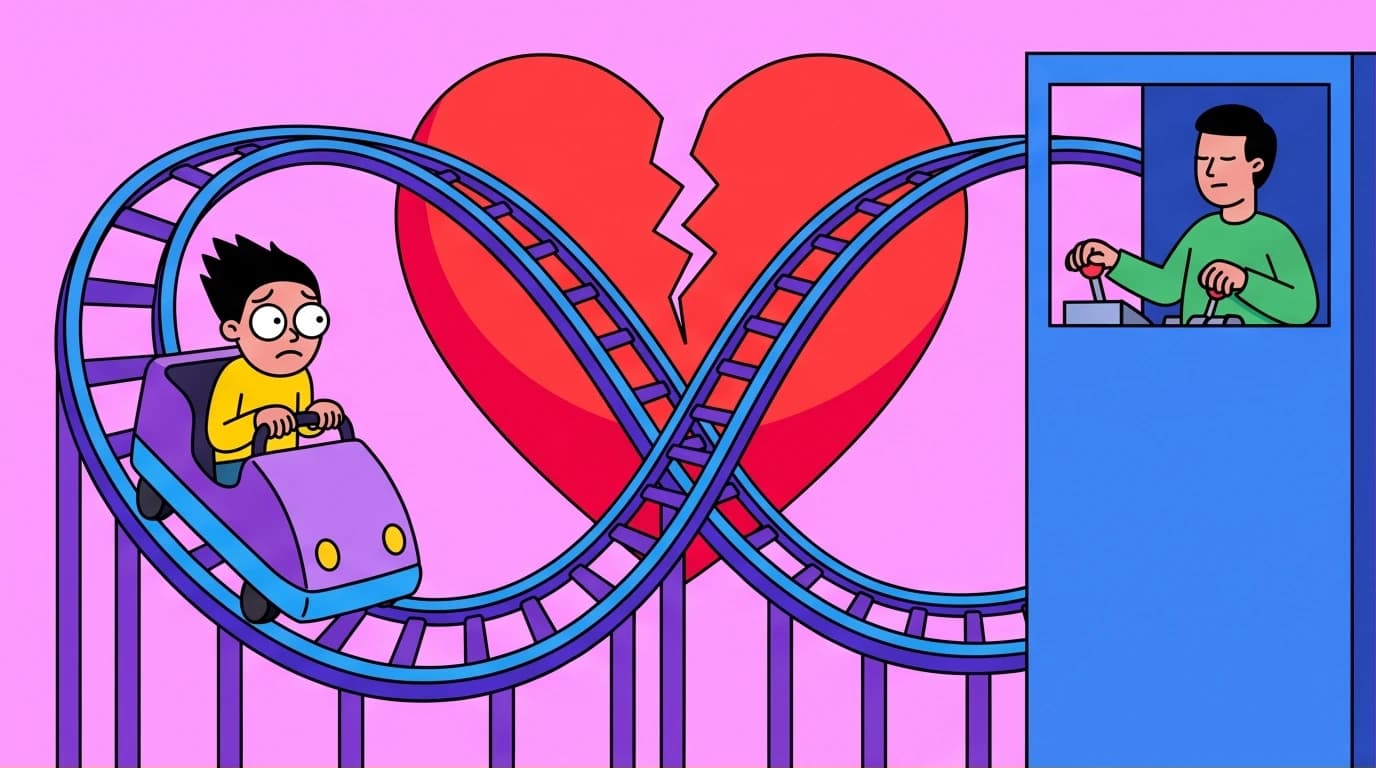
You send a vulnerable text, and they take hours to reply with one word. You finally pull back, and they suddenly reel you back in with warmth and affection. This exhausting emotional rollercoaster isn't in your head, and you aren't crazy. You are caught in a documented psychological cycle that drains your energy and damages your self-esteem.
If you want to stop the pain, you need to understand exactly how this dynamic works and what you can do about it today.
The Mechanics of the Push-Pull Dynamic
Every anxious and avoidant relationship operates on a predictable loop. It feels personal, but it is entirely systematic. The conflict stems from a fundamental mismatch in how both individuals perceive safety.
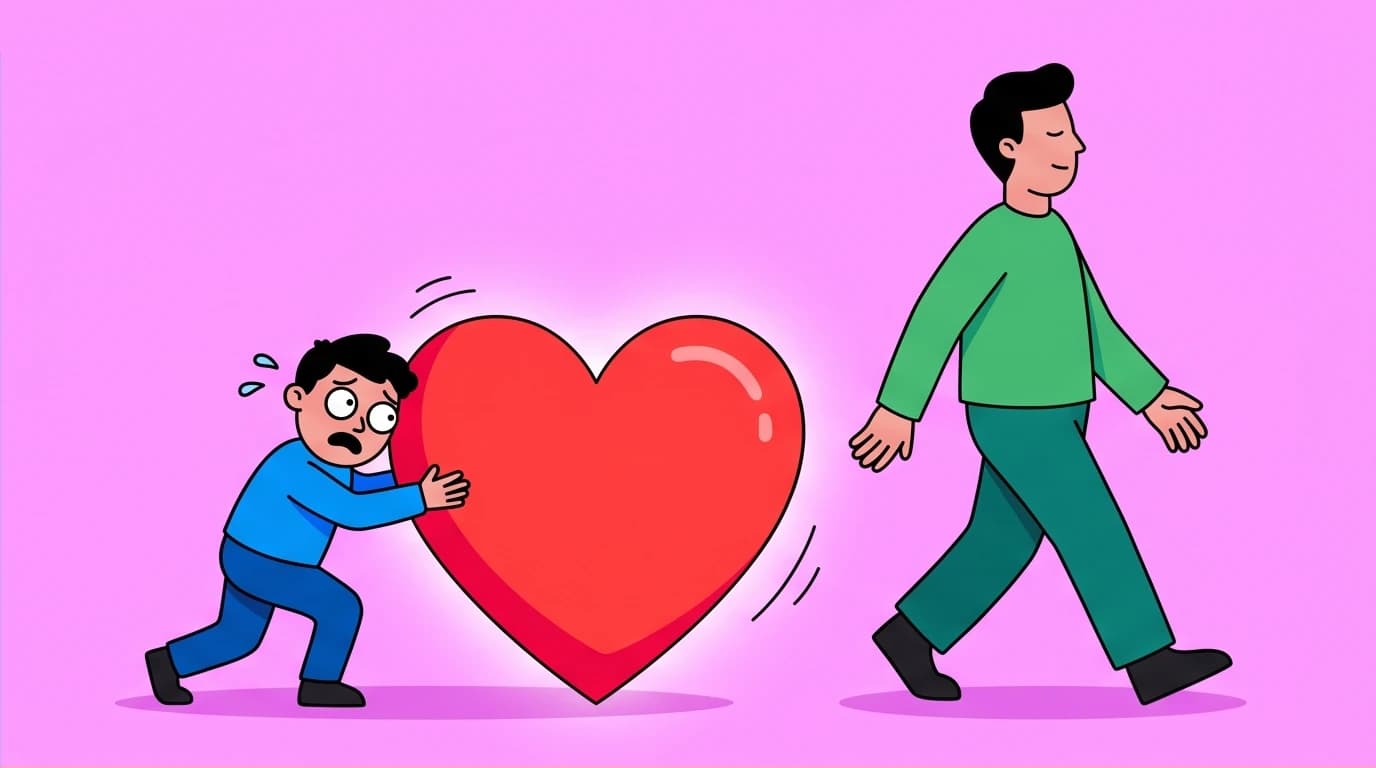
For the anxious partner, closeness equals safety. When distance occurs, their internal alarm system goes off. For the avoidant partner, distance equals safety. When things get too close or emotional, they feel suffocated and their survival instinct tells them to retreat.
This creates the classic push-pull. The harder you push for a resolution or a simple conversation, the faster they run. When you give up and step back, the avoidant partner's threat level drops. They feel safe again and re-initiate contact, resetting the trap.
Recognizing which role you tend to play is the first step toward breaking the cycle. If you're unsure about your own patterns, it can be incredibly clarifying to see where you land.
Recognizing the Symptoms
You are likely in this trap if you experience the following:
- The Emotional Hangover: You spend hours analyzing their text messages or decoding their silence.
- Intermittent Reinforcement: You stay because of the "good days." You convince yourself that if you just act perfectly, the warm, loving person from the beginning of the relationship will permanently return.
- Devaluation: Your partner makes you feel like your basic relationship needs (like wanting to see them more than once a week or expecting a text back) are "needy" or "unreasonable."
If you find yourself constantly obsessing over a partner's mood shifts and losing your own identity in the process, you might be dealing with codependent tendencies. To break this exhausting habit, one of the most highly regarded resources is Melody Beattie's classic guide. It offers practical, no-nonsense advice on how to stop controlling (or being controlled by) your partner's emotional unavailability, helping you reclaim your peace of mind and self-worth.
Codependent No More
Beattie Melody
 19 Duration
 8 Key Points
 4.6 Rate
What Amir Levine and Rachel Heller Teach Us
If you want to understand the anxious avoidant trap attached book insights provide the exact answers you need. Written by psychiatrist Amir Levine and psychologist Rachel Heller, Attached revolutionized how we view adult relationships by applying attachment theory to modern dating.
In the Attached book anxious attachment is described not as a character flaw, but as a biological reality. Your attachment system is a mechanism in your brain responsible for tracking the safety and availability of your attachment figures. When your partner becomes distant, your attachment system activates.
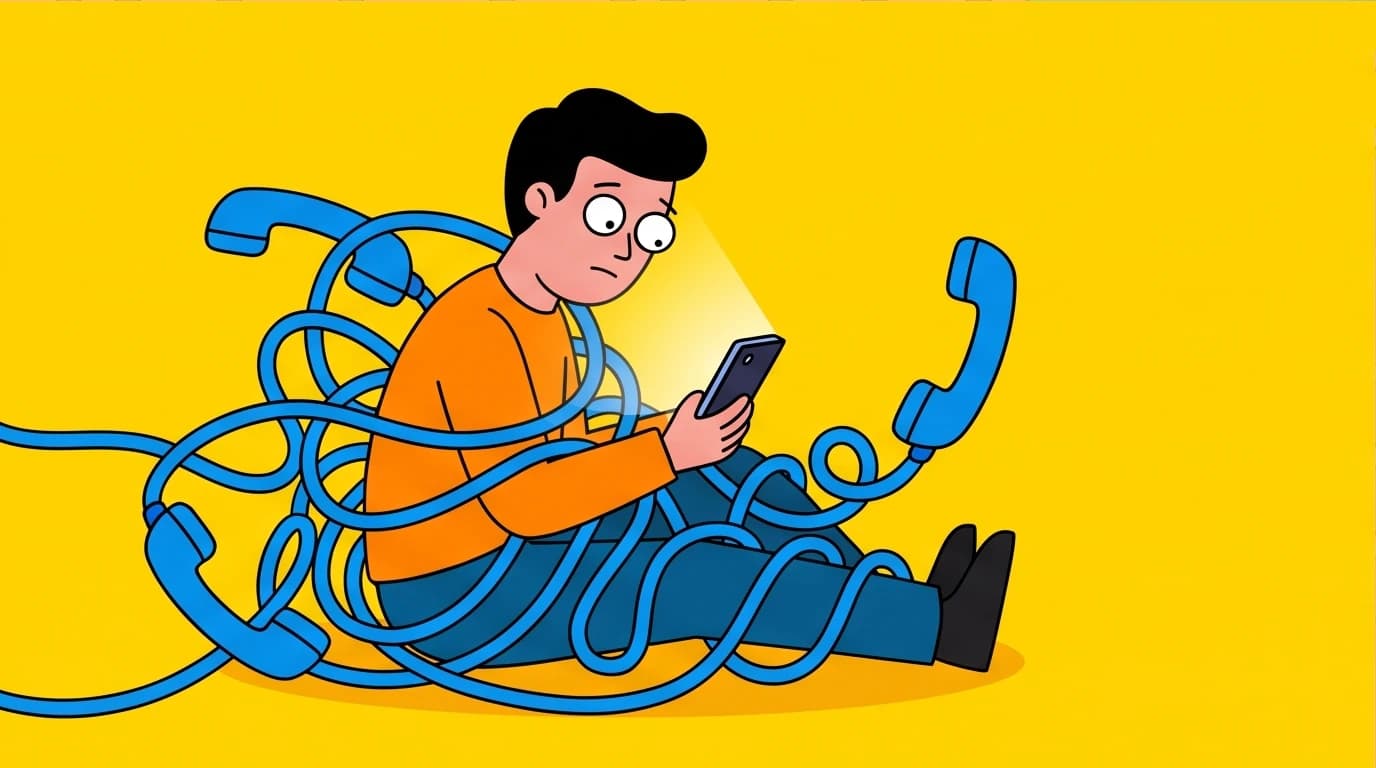
This activation leads to "protest behaviors." These are the things you do to re-establish connection and get their attention:
- Calling multiple times in a row.
- Keeping score (e.g., "They took four hours to text back, I'll wait exactly four hours").
- Threatening to leave, hoping they will beg you to stay.
The book makes one thing incredibly clear: your needs are valid. But relying on protest behaviors rather than direct communication keeps you stuck in the mud.
Since this entire framework comes directly from Amir Levine and Rachel Heller's groundbreaking research, picking up a copy of their work is an absolute must if you want to dig deeper. It is widely considered the modern dating bible for understanding how your biological wiring impacts your love life. Reading it will give you a series of "aha" moments that completely validate your experiences and provide a clear roadmap toward a secure, healthy relationship.

Attached
Amir Levine, PhD, Rachel Heller, MA
48 Duration9 Key Points4.5 RateIf you're feeling too drained by the relationship dynamic to dive into a full book right now, you can get the core insights from Attached and other relationship psychology books in a more manageable way.

Absorb the key ideas from bestselling relationship books like Attached in just 15 minutes, helping you find clarity without the emotional drain of heavy reading.

Download LeapAhead App now
The Reality of the Avoidant Partner
If you are dating an avoidant attached to their independence more than the relationship, you have to accept their operating system. Avoidants use "deactivating strategies" to keep you at arm's length.
They might pine for a "phantom ex" (an idealized past partner who they couldn't make it work with) to convince themselves you aren't the right fit. They focus on small imperfections—the way you chew, how you dress—to justify pulling away. They keep secrets to maintain a false sense of independence.
You cannot love an avoidant person into being secure. No amount of patience, understanding, or self-sacrifice on your part will fix their attachment style. They have to recognize their own patterns and actively choose to change them.
If you and your partner are both genuinely willing to put in the hard work, healing this dynamic is possible. To bridge the gap between an anxious need for closeness and an avoidant's need for distance, you will need tools designed to foster emotional safety. Dr. Sue Johnson's pioneering work in Emotionally Focused Therapy (EFT) offers profound, step-by-step conversations that help couples step out of their defensive patterns and build a genuinely secure bond.

Hold Me Tight
Dr. Sue Johnson
26 Duration10 Key Points4.6 RateActionable Steps: Navigating the Relationship
Figuring out how to deal with avoidant partner dynamics starts with shifting the focus away from them and back onto yourself. You cannot control their retreat, but you can control your response.
1. Stop Protest Behaviors Immediately
When they pull away, do not chase. Do not send the long paragraphs explaining how much they hurt you. Do not check their location or monitor their social media activity. Protest behaviors only validate their belief that you are overwhelming. Instead, practice self-soothing. Go to the gym, read a book you picked up at Barnes & Noble, or listen to a podcast on Audible. Regulate your own nervous system first.
2. Use Effective Communication
Attached emphasizes expressing your needs directly and without blame. Avoidants are highly sensitive to criticism.
- Bad: "You never text me back. You obviously don't care about me." (Triggers their defense mechanism).
- Good: "I feel disconnected when we go days without talking. I need regular communication to feel secure in a relationship. What does that look like for you?"
If they respond by calling you needy or refusing to engage, you have your answer. A secure partner will try to meet you halfway; an avoidant partner will often deflect.
3. Establish a Private Timeline
You cannot wait forever. Give yourself a hard deadline—three months, six months—to observe if the dynamic is actually improving. Do not tell them about this deadline; it is not an ultimatum. It is a boundary for your own mental health. If the push-pull cycle remains unchanged when the time is up, you pack your bags.
Setting a timeline is ultimately an exercise in creating a firm internal boundary, which can be incredibly difficult if you are used to compromising your own needs. If you struggle to know when to draw the line or how to stand your ground without feeling guilty, you need a solid strategy. Nedra Glover Tawwab's masterclass on boundary-setting is the perfect companion for learning how to advocate for yourself, helping you clearly define what you will and will not tolerate in a relationship.

Set Boundaries, Find Peace
Nedra Glover Tawwab
29 Duration10 Key Points4.5 RateUltimately, these strategies are about building healthier relationship habits for the future. Learning what to look for in a partner and how to communicate from the start can prevent you from falling into this trap again.

The Hard Truth: Can This Work?
The anxious-avoidant relationship is notoriously hard to fix because both parties trigger each other's deepest insecurities. It only survives if the avoidant partner develops self-awareness and actively works on their deactivating strategies, and the anxious partner learns to manage their anxiety without relying entirely on the avoidant for reassurance.
If you are constantly exhausted, trying to decode mixed signals, and feeling like you are fundamentally "too much," it is time to face reality. You deserve a secure partner who texts back, makes plans, and offers consistency without you having to beg for it.
Rebuilding your self-worth after a draining relationship requires learning new frameworks, but finding the energy can be tough when you're already exhausted.
Use your commute or a short break to listen to key insights from books on self-esteem and healthy boundaries, making personal growth feel achievable again.
Download LeapAhead App now
FAQ
Can an avoidant person change?
Yes, but they have to want to change for themselves, usually through therapy or deep self-reflection. They will not change simply because you love them harder, give them more space, or try to be the "perfect" partner.
Yes, but they have to want to change for themselves, usually through therapy or deep self-reflection. They will not change simply because you love them harder, give them more space, or try to be the "perfect" partner.
Why am I so addicted to this toxic cycle?
The intermittent reinforcement (highs and lows) of an avoidant partner creates a chemical response in your brain similar to a gambling addiction. The anxiety spikes your cortisol, and their sudden return floods you with dopamine. You are biologically addicted to the relief they provide.
The intermittent reinforcement (highs and lows) of an avoidant partner creates a chemical response in your brain similar to a gambling addiction. The anxiety spikes your cortisol, and their sudden return floods you with dopamine. You are biologically addicted to the relief they provide.
Should I give them an ultimatum?
No. Ultimatums rarely work with avoidants; they view them as attempts to control their autonomy, which causes them to run faster. Instead, state your needs clearly and observe their actions. If they cannot meet your needs, enforce your own boundary by walking away.
No. Ultimatums rarely work with avoidants; they view them as attempts to control their autonomy, which causes them to run faster. Instead, state your needs clearly and observe their actions. If they cannot meet your needs, enforce your own boundary by walking away.
How do I stop feeling so needy?
Stop judging yourself. Your needs for intimacy, consistency, and communication are normal human needs. You only feel "needy" because you are trying to get those needs met by someone who is incapable of providing them. With a secure partner, you won't feel needy at all.
Stop judging yourself. Your needs for intimacy, consistency, and communication are normal human needs. You only feel "needy" because you are trying to get those needs met by someone who is incapable of providing them. With a secure partner, you won't feel needy at all.