

You stare at your phone. It has been three hours since you texted your partner, and the silence is deafening. Your chest tightens, and you start running through every possible scenario where you might have said the wrong thing. Or maybe you are on the other side of the screen: your partner wants to spend the entire weekend together again, and you suddenly feel an overwhelming urge to cancel plans just to breathe.
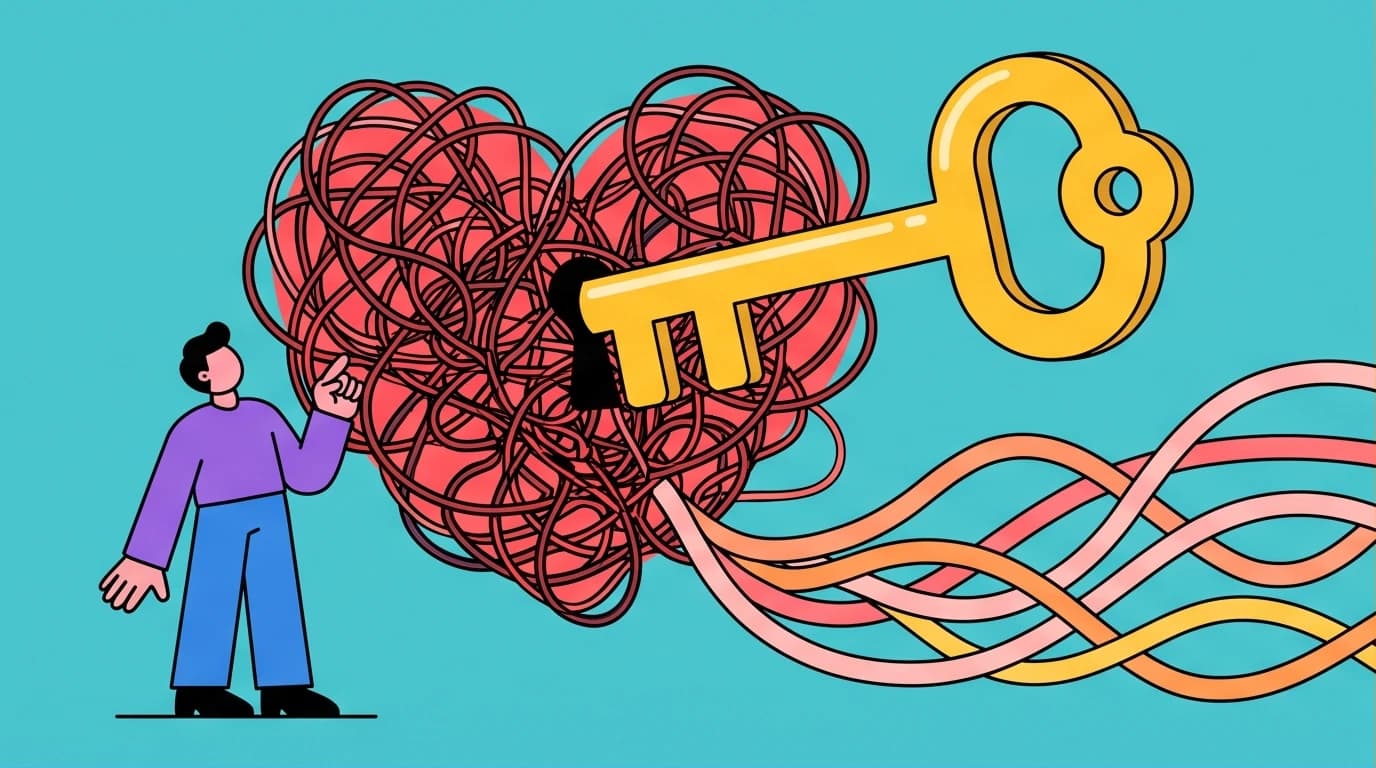
If these scenarios hit too close to home, your biological attachment system is actively driving your behavior. You are not broken, and you are not crazy. You are simply operating from a specific psychological blueprint. If you are searching for a definitive attachment style quiz, Attached book principles provide the most accurate and clinically backed framework to understand exactly why you love the way you do.
The Foundation of the Attached Book Test
Psychiatrist Amir Levine and psychologist Rachel Heller brought adult attachment theory to the mainstream with their groundbreaking book, Attached. They translated decades of clinical research into a practical roadmap for everyday relationships.
At its core, adult attachment theory suggests that we are biologically programmed to depend on our significant others. However, the way we experience this dependence varies wildly. The attached book test evaluates your relationship behavior based on two distinct variables:
- Your comfort with intimacy and closeness: Do you naturally merge lives with a partner, or do you fiercely guard your independence?
- Your anxiety about abandonment: Do you constantly worry your partner will stop loving you, or do you rarely give it a second thought?
By measuring where you fall on these two scales, you can decode your relational operating system.
Since this entire article is built on the framework introduced by Amir Levine and Rachel Heller, reading their original work is an absolute must. If you want to dive deeper into the science of adult attachment and get the full, comprehensive assessment, this book is your ultimate starting point. It offers a wealth of clinical research translated into practical, everyday advice for your love life.
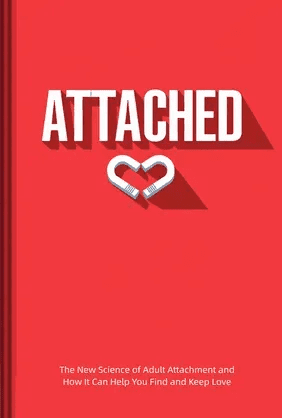
Attached
Amir Levine, PhD, Rachel Heller, MA
 48 Duration
 9 Key Points
 4.5 Rate
If your reading list is already overflowing or you just struggle to find time for full books, there's a much faster way to absorb these powerful concepts.


Absorb the key insights from *Attached* and other essential relationship psychology books in 15-minute summaries, perfect for learning on the go.
 LeapAhead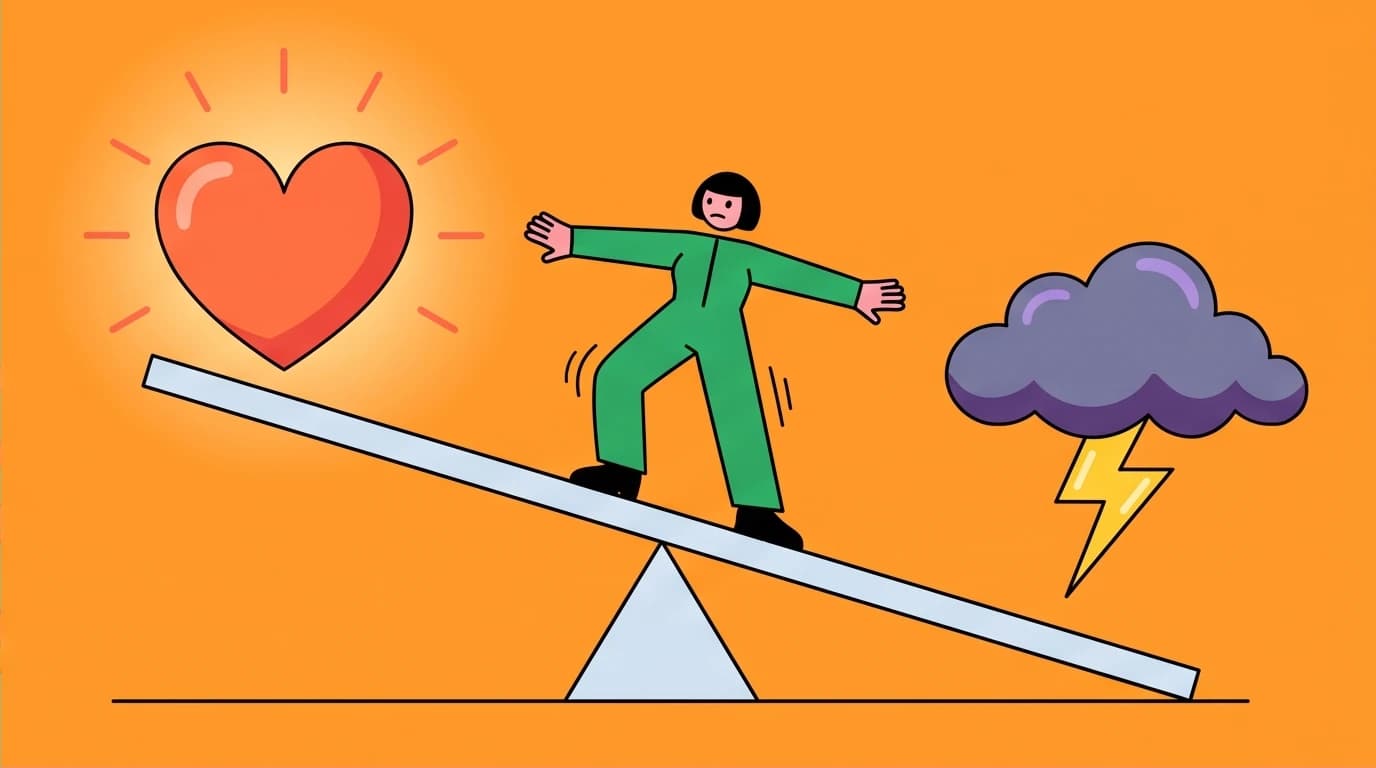
Self-Assessment: What Is My Attachment Style?
People constantly ask, "what is my attachment style?" To get an accurate reading without needing a clinical psychologist, you must brutally and honestly observe your default reactions in romantic situations. Read through the following three statements and identify which one resonates most deeply with your lived experience.
Category A: The Need for Constant Reassurance
- I often worry that my partner does not love me enough.
- I want to be completely emotionally merged with my partner, but they often seem to pull away.
- When a partner is distant, I cannot focus on my work or daily tasks. I become consumed by the relationship.
- I act out, pick fights, or use passive-aggressive behavior just to get my partner's attention.
Category B: The Need for Absolute Autonomy
- I value my independence heavily and feel nervous when a partner gets too close.
- I often find myself missing a partner when we are apart, but feeling suffocated when we are actually together.
- I keep secrets or withhold information to maintain a sense of personal boundaries.
- When a partner demands more intimacy or commitment, my instinct is to retreat and shut down.
Category C: The Comfort of Consistent Connection
- I find it relatively easy to get close to others and am comfortable depending on them.
- I do not worry much about being abandoned or about someone getting too close to me.
- When there is a conflict, I can discuss it openly without feeling threatened or defensive.
- I do not play games; I clearly communicate my needs and respond well to my partner's needs.
If you selected mostly A, you lean toward an anxious style. If you selected mostly B, you have an avoidant style. If C sounds like your baseline, you possess a secure style.
Decoding the Styles: Psychological Drivers and Reality
Labeling yourself is only the first step. To actually improve your dating life or marriage, you must understand the mechanics of your specific style.
The Anxious Attachment Style
Individuals with an anxious attachment style possess a highly sensitive attachment system. Think of it as an overly sensitive smoke detector. It catches the slightest hint of distance in a partner—a shift in tone, a delayed text, a distracted glance—and sounds a blaring alarm.
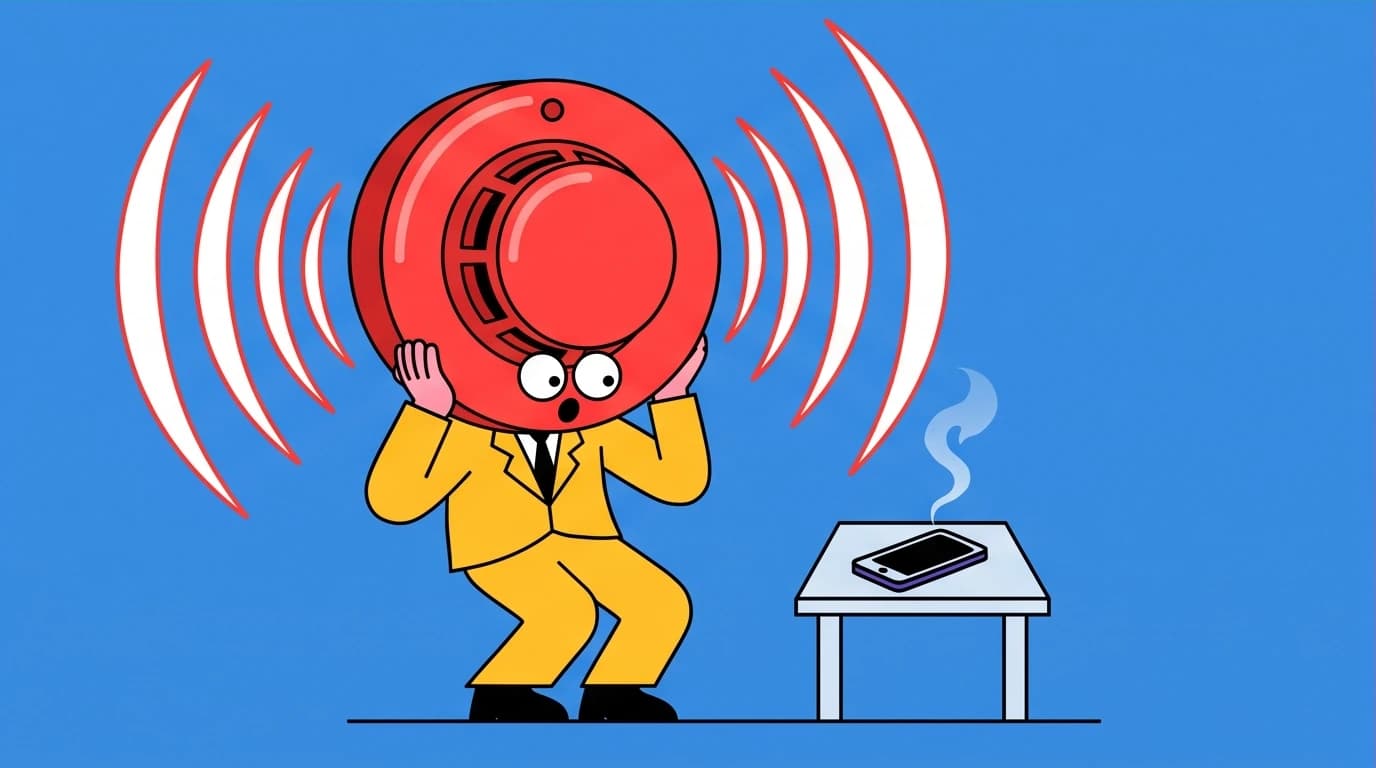
Common anxious attachment style signs include:
- Activating Strategies: When you feel disconnected, your brain forces you to re-establish contact. You might call multiple times, text incessantly, or show up at their house.
- Protest Behavior: If you cannot get their attention through direct means, you will try to make them jealous, give them the silent treatment, or threaten to leave. The goal is never actually to leave; the goal is to force the partner to prove they care.
- Hypervigilance: You are exceptional at reading micro-expressions. You know exactly when your partner's mood shifts, but you incorrectly assume the shift is always your fault.
If you are anxious, your core challenge is learning to self-soothe rather than relying entirely on your partner to regulate your nervous system.
The Avoidant Attachment Style
Avoidants equate intimacy with a loss of independence. They are not heartless, nor do they hate love. In fact, research shows they have the same biological need for connection as anyone else. However, they suppress this need to protect themselves from feeling controlled or engulfed.
Avoidants use "deactivating strategies" to keep partners at arm's length. These include:
- Focusing obsessively on small flaws (the way a partner eats, talks, or dresses) to justify distancing.
- Pining for the "phantom ex" or waiting for "the one" as a way to remain unavailable to current, viable partners.
- Pulling away immediately after a moment of intense emotional or physical closeness.
- Preferring superficial interactions or keeping relationships casual to avoid heavy emotional demands.
If you are avoidant, your core challenge is recognizing that dependence is a biological fact, not a personal weakness. True independence actually stems from having a secure home base.
The Secure Attachment Style
Secures make up slightly more than half the population. They act as the anchor in the dating pool.
Core secure attachment traits include:
- Effective Communication: They do not expect you to read their minds. If something bothers them, they say it directly without hostility.
- Emotional Resilience: They do not view relationship bumps as catastrophic failures. They assume their partner has good intentions.
- Lack of Game-Playing: They respond to texts when they see them. They do not calculate how long to wait before calling back.
- Supportive Independence: They are happy to see you succeed and pursue your own hobbies. They do not view your outside interests as a threat to the relationship.
Secures naturally buffer the extremes of both anxious and avoidant partners, but they are not immune to bad behavior. A secure person paired with a highly toxic partner can still experience intense emotional distress, but they are generally faster to recognize a bad situation and walk away.
Moving toward a secure attachment style means learning how to handle emotional triggers without reverting to childhood defense mechanisms. If you are looking to build that deep, secure anchor within yourself, David Richo's work is incredibly insightful. He provides a mindful approach to loving that helps you process your fears of abandonment or engulfment, allowing you to show up as a fully realized adult in your romantic life.
How to Be an Adult in Relationships
David Richo, Ph.D.
38 Duration8 Key Points4.6 RateThe Anxious-Avoidant Trap
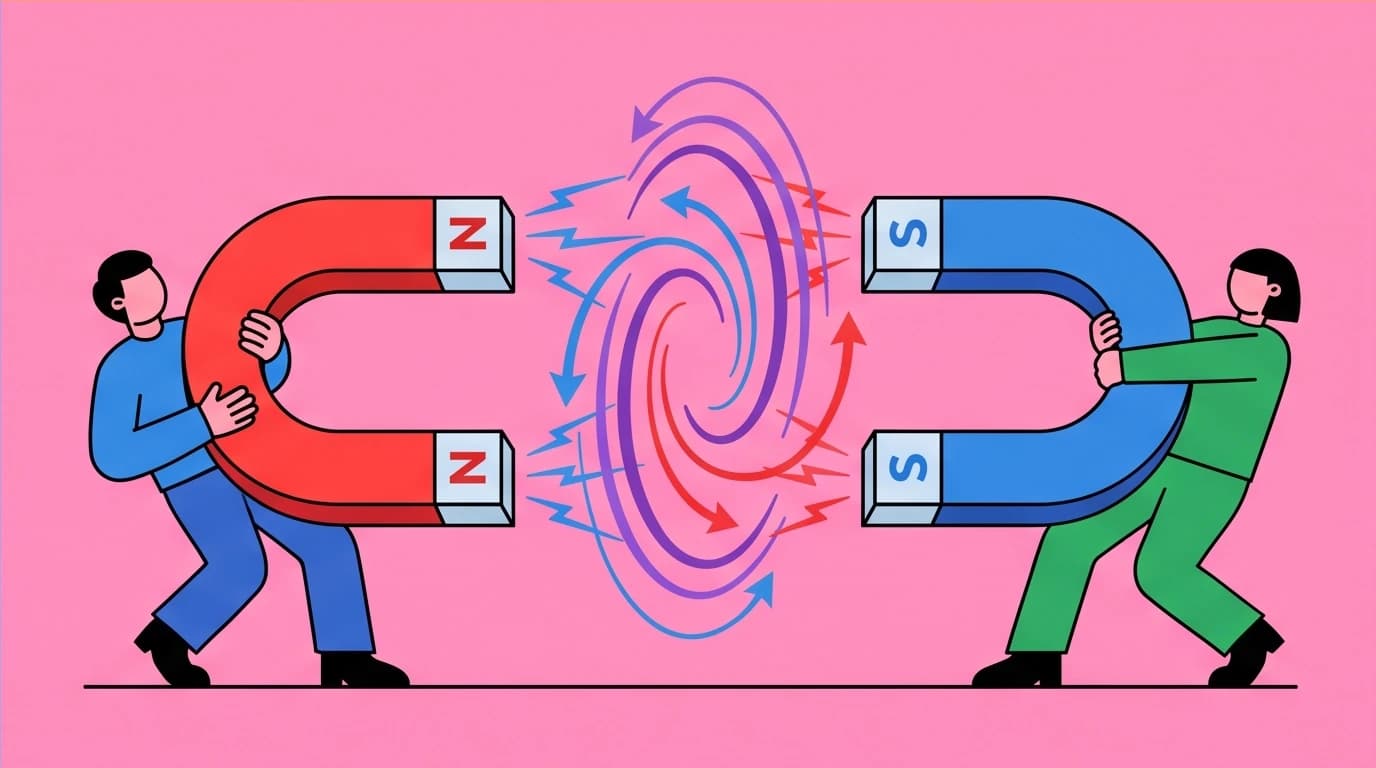
You cannot discuss the Attached book without addressing the most notorious relationship dynamic: the anxious-avoidant trap.
Anxious and avoidant individuals are magnetically drawn to each other. The avoidant's need for distance triggers the anxious partner's need for closeness. The anxious partner pushes for more intimacy, which triggers the avoidant's fear of engulfment, causing them to pull further away.
This creates a brutal rollercoaster of highs and lows. The anxious partner mistakes the anxiety of the chase for "passion." They confuse a stable, secure relationship with "boredom." If you constantly find yourself in chaotic, on-and-off relationships, you are likely caught in this exact trap. The solution is not to try harder; the solution is to drastically change the type of person you allow into your life.
Breaking free from the anxious-avoidant rollercoaster often requires a total overhaul of your dating habits. If you find yourself repeatedly drawn to the wrong partners because you mistake anxiety for chemistry, it is time to look at the behavioral science behind your choices. Logan Ury offers a fantastic, research-backed guide to recognizing your blind spots, stopping self-sabotage, and finally designing a dating life that leads to a healthy, secure partnership.
How To Not Die Alone
Logan Ury
25 Duration10 Key Points4.7 RateHow to Apply These Insights Today
Knowing your attachment style is useless if you do not change your behavior. Here is your operational playbook.
If you are Anxious:
- Acknowledge your need for a partner who is available. Do not date someone who is "mysterious" or hard to read. You need consistency.
- Before you fire off a double-text or start a fight, pause for 30 minutes. Let your biological alarm bell quiet down.
- Stop dating avoidants. Look for people who offer clear, boring, predictable communication.
If you are Avoidant:
- Recognize your deactivating strategies. When you suddenly feel the urge to run away after a great weekend together, call it what it is: a defense mechanism, not a sign that the relationship is doomed.
- Communicate your need for space explicitly. Say, "I need a few hours to decompress alone, but I am excited to see you tonight." This prevents your partner from panicking.
- Focus on the positives of your partner instead of zeroing in on their flaws.
If you are Secure:
- Maintain your boundaries. Do not let an anxious partner's demands or an avoidant partner's distance erode your baseline of healthy communication.
- Be a role model. You have the power to elevate an anxious or avoidant partner by providing a safe, consistent environment.
For more practical ways to apply this knowledge to your love life, including how to spot red flags and find a secure partner, explore our dedicated guide.
As you start applying these attachment insights, you will quickly realize that lasting change requires setting firm limits—especially if you are prone to anxious people-pleasing or avoidant distancing. Learning to say "no" and clearly communicating your needs without guilt is the bedrock of a secure relationship. Cloud and Townsend’s classic guide will teach you exactly how to protect your emotional space while still remaining open to true intimacy.
Boundaries
Dr. Henry Cloud and Dr. John Townsend
47 Duration10 Key Points4.7 RatePutting all this into practice requires continuous learning, but it can be hard to fit more reading into an already packed schedule.
Turn your commute or workout into learning time with 15-minute audio summaries of the books mentioned here and thousands more on personal growth.
LeapAheadFAQ
Can my attachment style change over time?
Yes. Attachment styles are not permanent personality traits; they are learned adaptations. Research shows that roughly 25% of people change their attachment style over a four-year period. An anxious or avoidant person can earn security (become "earned secure") through deep self-awareness, therapy, or simply by being in a long-term relationship with a secure partner. Conversely, a severe trauma or a highly toxic relationship can push a secure person into anxious or avoidant behaviors.
Yes. Attachment styles are not permanent personality traits; they are learned adaptations. Research shows that roughly 25% of people change their attachment style over a four-year period. An anxious or avoidant person can earn security (become "earned secure") through deep self-awareness, therapy, or simply by being in a long-term relationship with a secure partner. Conversely, a severe trauma or a highly toxic relationship can push a secure person into anxious or avoidant behaviors.
Where can I find the official test from the book?
You can find the official, comprehensive self-assessment directly inside the book Attached by Amir Levine and Rachel Heller, usually available at major retailers like Amazon or Barnes & Noble. There are also authorized abbreviated versions of their quiz on their official websites and academic psychology platforms that focus on adult attachment theory.
You can find the official, comprehensive self-assessment directly inside the book Attached by Amir Levine and Rachel Heller, usually available at major retailers like Amazon or Barnes & Noble. There are also authorized abbreviated versions of their quiz on their official websites and academic psychology platforms that focus on adult attachment theory.
I am anxious and my partner is avoidant. Are we doomed?
You are not doomed, but you have a difficult road ahead. The relationship can only survive if both parties are deeply aware of their styles and actively willing to compromise. The avoidant partner must actively work to provide reassurance, and the anxious partner must actively work to self-soothe and give space. If one person refuses to acknowledge the dynamic, the relationship will likely remain toxic and exhausting.
You are not doomed, but you have a difficult road ahead. The relationship can only survive if both parties are deeply aware of their styles and actively willing to compromise. The avoidant partner must actively work to provide reassurance, and the anxious partner must actively work to self-soothe and give space. If one person refuses to acknowledge the dynamic, the relationship will likely remain toxic and exhausting.
Why do I feel secure with friends but anxious in romantic relationships?
Attachment styles are context-dependent. The biological attachment system is triggered most intensely by romantic partners because they represent our primary survival bond in adulthood. Friends do not trigger the same deep-seated fears of abandonment or engulfment. It is completely normal to exhibit secure traits in your platonic life while struggling with anxious or avoidant patterns in your dating life.
Attachment styles are context-dependent. The biological attachment system is triggered most intensely by romantic partners because they represent our primary survival bond in adulthood. Friends do not trigger the same deep-seated fears of abandonment or engulfment. It is completely normal to exhibit secure traits in your platonic life while struggling with anxious or avoidant patterns in your dating life.