

You already know the feeling. You read a self-improvement book, highlighted half the pages, and swore you would never skip a morning workout or doom-scroll in bed again. You felt invincible. Then, three weeks later, life happened. You got tired, missed a day, and suddenly your old routines crept right back into your schedule.
Motivation is notoriously unreliable. When the initial excitement of a new goal fades, you don't need another 300-page lecture. You need a mental anchor. A specific, powerful reminder that snaps you out of your slump and re-centers your focus.
James Clear’s bestselling book didn't just sell millions of copies because it offered habit-tracking templates. It resonated because it fundamentally broke down the psychology of human behavior into digestible, hard-hitting truths.
Instead of randomly scrolling through Goodreads or turning your bedroom inside out looking for your old Kindle highlights, use this guide. We have categorized the absolute best Atomic Habits quotes by the specific mental roadblocks they solve. Read them, write them down, and use them to rebuild your momentum today.
While these quotes are powerful on their own, they represent pillars within a larger, interconnected system. For a complete overview of how each concept builds on the next, our detailed summary provides a comprehensive roadmap.
The Math of Success: The 1 Percent Better Every Day Quote
Most people fail at building habits because they expect a massive overnight transformation. We are conditioned by movies and social media to look for the defining moment of success. Clear argues the exact opposite. Real change is boring, slow, and almost invisible on a day-to-day basis.
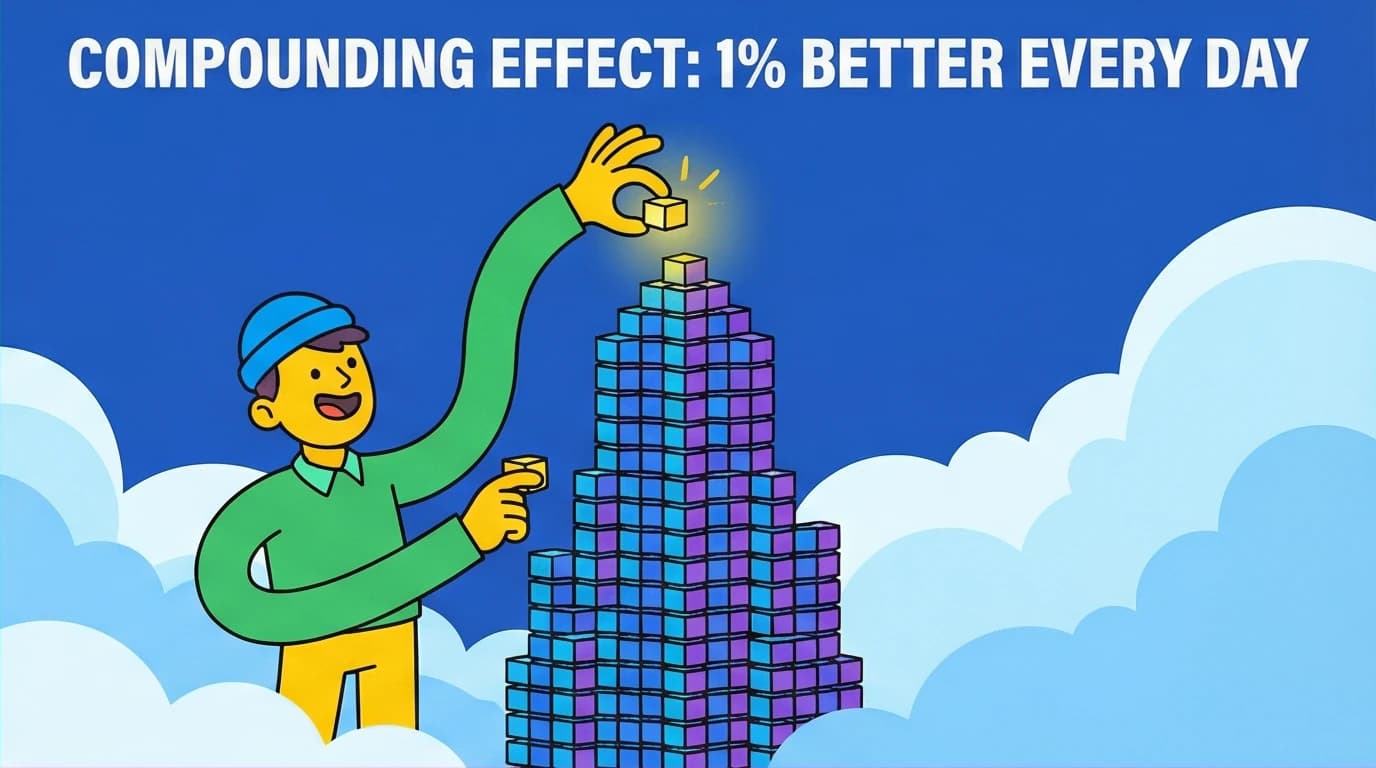
When you feel like your daily efforts at the gym or in your business aren't yielding results, you need to remember the math behind continuous improvement.
- "Habits are the compound interest of self-improvement. The same way that money multiplies through compound interest, the effects of your habits multiply as you repeat them."
- "If you can get 1 percent better each day for one year, you’ll end up thirty-seven times better by the time you’re done. Conversely, if you get 1 percent worse each day for one year, you’ll decline nearly down to zero." (This is the famous 1 percent better every day quote that serves as the foundation of the entire book.)
- "Success is the product of daily habits—not once-in-a-lifetime transformations."
- "Time magnifies the margin between success and failure. It will multiply whatever you feed it. Good habits make time your ally. Bad habits make time your enemy."
How to Apply This Mindset
Stop worrying about the finish line. If you want to write a novel, stop obsessing over the bestseller list and focus on writing 200 words today. The human brain struggles to comprehend compounding. You won't see the physical changes in the mirror after three days of lifting weights. You have to trust the math. Your only job today is to avoid a zero-day. Just do 1 percent.
If you want to dive deeper into the exact mechanics behind this compounding effect, reading the full source material is a must. While quotes are great for a quick spark of motivation, James Clear’s complete framework provides the practical blueprints for making those one-percent daily shifts actually stick. If you haven't picked up a copy yet, this is the foundational playbook for rewiring your daily routine.

Atomic Habits
James Clear
 26 Duration
 8 Key Points
 4.7 Rate
Of course, finding the time to read everything on your self-improvement list can be a challenge in itself, especially after a long day.


LeapAhead

Absorb the core principles from books like *Atomic Habits* in 15-minute audio or text summaries, perfect for reinforcing these ideas during your commute or workout.
Redesigning Your Strategy: The Systems vs Goals Quote
We live in a culture obsessed with goal-setting. We set New Year's resolutions to lose 20 pounds, save $10,000, or read 50 books. But if setting goals was the key to success, everyone would be successful. Both winners and losers have the exact same goals. Every Olympian wants the gold medal. The goal isn't what separates them.
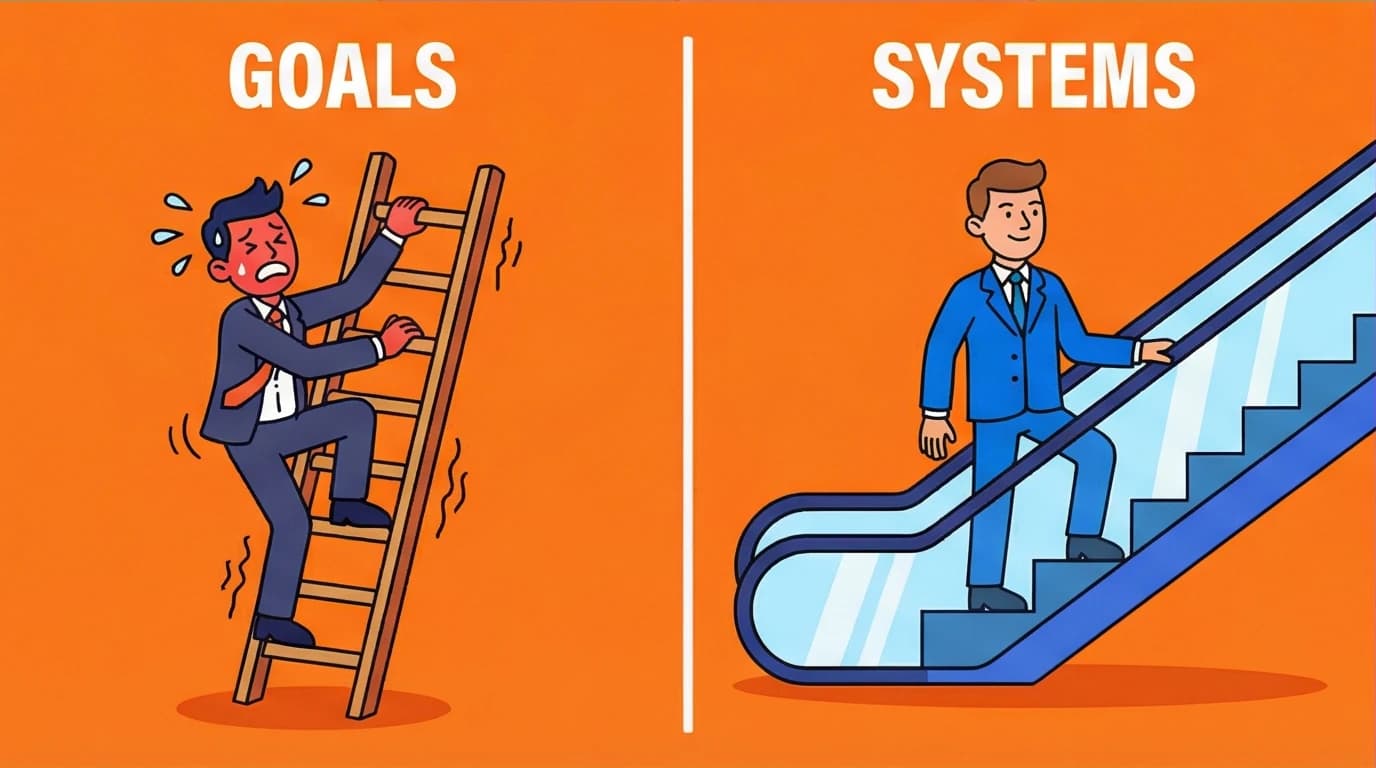
When you feel burnt out by chasing a massive milestone, revisit these quotes to shift your focus from the outcome to the process.
- "You do not rise to the level of your goals. You fall to the level of your systems." (If you only memorize one systems vs goals quote, make it this one.)
- "Goals are good for setting a direction, but systems are best for making progress. A handful of problems arise when you spend too much time thinking about your goals and not enough time designing your systems."
- "Achieving a goal only changes your life for the moment. We think we need to change our results, but the results are not the problem. What we really need to change are the systems that cause those results."
- "The purpose of setting goals is to win the game. The purpose of building systems is to continue playing the game. True long-term thinking is goal-less thinking."
How to Apply This Mindset
Take a hard look at your current objectives. Drop the goal and build the system. If your goal is to keep a clean house, the system is spending 10 minutes every night putting things back in their place before going to bed. The goal is a one-time event; the system is the machinery that guarantees the event happens automatically.
Understanding how to build these automatic systems is a game-changer, but sometimes it helps to see how habits function on a neurological level. If you're fascinated by the science of why we do what we do—and how major American companies and successful individuals engineer their systems to trigger automatic routines—Charles Duhigg's exploration of the habit loop is the perfect companion read. It will completely shift how you view your daily behaviors.
The Power of Habit
Charles Duhigg
31 Duration10 Key Points4.6 RateChanging Your Self-Image: Identity-Based Habits
Behavior change usually fails because we try to change the wrong thing. We focus on the outcome (what we want to get) or the process (what we do), but we ignore our identity (what we believe). You can force yourself to eat salads for a month, but if you still fundamentally view yourself as an out-of-shape person who loves junk food, you will eventually self-sabotage.
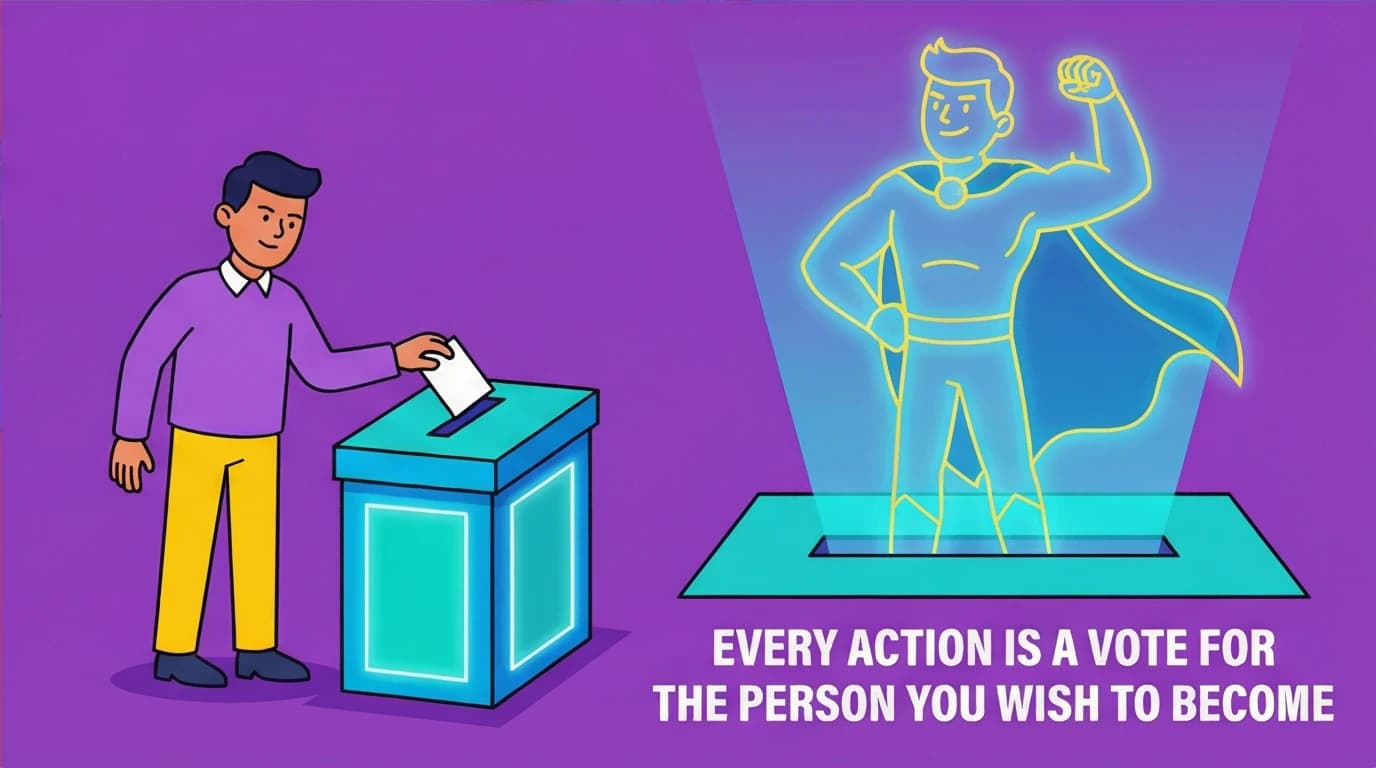
These are widely considered the atomic habits best quotes because they tackle the deepest layer of human psychology: who you believe you are.
- "Every action you take is a vote for the type of person you wish to become. No single instance will transform your beliefs, but as the votes build up, so does the evidence of your new identity."
- "True behavior change is identity change. You might start a habit because of motivation, but the only reason you’ll stick with one is that it becomes part of your identity."
- "The ultimate form of intrinsic motivation is when a habit becomes part of your identity. It’s one thing to say I’m the type of person who wants this. It’s something very different to say I’m the type of person who is this."
- "Your habits shape your identity, and your identity shapes your habits."
How to Apply This Mindset
Change your internal vocabulary. The next time someone offers you a cigarette, don't say, "No thanks, I'm trying to quit." Say, "No thanks, I'm not a smoker." It’s a subtle shift in phrasing, but a massive shift in psychology. Decide the type of person you want to be, and then prove it to yourself with small, daily wins.
Pushing Through the Dip: The Plateau of Latent Potential
Have you ever worked incredibly hard at a new diet, a new business venture, or a new skill for a month, only to see zero tangible results? This is the exact moment 90% of people quit. They assume the effort was wasted. James Clear calls this phase the "Valley of Disappointment."
Keep these specific james clear quotes nearby for those days when you feel like giving up because "it's not working."
- "Complaining about not achieving success despite working hard is like complaining about an ice cube not melting when you heated it from twenty-five to thirty-one degrees. Your work was not wasted; it is just being stored. All the action happens at thirty-two degrees."
- "Breakthrough moments are often the result of many previous actions, which build up the potential required to unleash a major change."
- "When nothing seems to help, I go and look at a stonecutter hammering away at his rock, perhaps a hundred times without as much as a crack showing in it. Yet at the hundred and first blow it will split in two, and I know it was not that last blow that did it—but all that had gone before."
How to Apply This Mindset
Normalize the lack of immediate results. When you start a new habit, expect to see nothing for weeks or even months. Think of your effort like saving money in a piggy bank. You can't see the wealth accumulating on the outside, but every single coin counts. Don't stop hammering the rock.
Hitting that plateau where your efforts feel invisible is the hardest part of any journey. It’s exactly what separates those who succeed from those who abandon their resolutions by February. If you frequently find yourself losing steam and wondering whether to quit or keep pushing through that valley of disappointment, Seth Godin wrote a brilliant, bite-sized book entirely dedicated to navigating this exact frustrating phase.
The Dip
Seth Godin
20 Duration9 Key Points4.6 RateControlling Your Space: The Power of Environment
Willpower is highly overrated. We love to think that highly disciplined people just have better self-control than the rest of us. The reality is that people with the best self-control simply spend less time in tempting situations. They don't fight their environment; they design it.
- "Environment is the invisible hand that shapes human behavior."
- "If you want to make a habit a big part of your life, make the cue a big part of your environment."
- "You don’t have to be the victim of your environment. You can also be the architect of it."
- "It’s easy to not read a book when the bookshelf is in the corner of the guest room. It’s easy to not take your vitamins when they are out of sight in the pantry. When the cues that spark a habit are subtle or hidden, they are easy to ignore."
How to Apply This Mindset
Stop trying to rely on discipline. Redesign your space to make good habits the path of least resistance. If you want to read before bed, put the book directly on your pillow in the morning. If you want to drink more water, leave a full glass on your desk. If you want to stop checking your phone while working, put it in another room. Make the good habits obvious and the bad habits difficult.
Making good habits obvious by redesigning your environment is just one of the core principles. To truly make change stick, you need a practical guide for implementing all four of James Clear's famous frameworks for behavior change.
Environment design is incredibly effective, especially when paired with microscopic behavior changes. If you want to take this concept even further and explore how human psychology reacts to the smallest possible environmental prompts, BJ Fogg’s research at Stanford University is eye-opening. His methodology perfectly complements Clear's work, showing you how to anchor brand-new behaviors to things you are already doing around the house every single day.
Tiny Habits
BJ Fogg, Ph.D.
40 Duration8 Key Points4.7 RateTurning Words Into Action
Reading Atomic Habits quotes won't change your life on its own. Action is the only metric that matters.
Pick exactly one quote from the lists above that targets your current biggest weakness. If you are impatient, pick the ice cube quote. If you rely too much on motivation, pick the systems over goals quote.
Write it on a Post-it note and stick it to your bathroom mirror. Make it your phone lock screen. Put it at the top of your daily planner. Let these frameworks serve as your daily operating system, reminding you that massive success is just the byproduct of tiny, relentless, and compounding daily choices.
FAQ
What is the most famous quote from Atomic Habits?
The most widely recognized quote is about the compound effect of habits: "If you can get 1 percent better each day for one year, you’ll end up thirty-seven times better by the time you’re done." It perfectly encapsulates the book's core philosophy that massive transformations are the result of tiny, daily improvements rather than sudden, dramatic shifts.
The most widely recognized quote is about the compound effect of habits: "If you can get 1 percent better each day for one year, you’ll end up thirty-seven times better by the time you’re done." It perfectly encapsulates the book's core philosophy that massive transformations are the result of tiny, daily improvements rather than sudden, dramatic shifts.
What does "You fall to the level of your systems" actually mean?
This means that setting a high, ambitious goal is not enough to guarantee success. When stress hits, motivation drops, or life gets chaotic, your willpower will fail. In those moments, you will default to your daily routines and habits (your systems). If your daily systems are poorly designed, you will fail, regardless of how badly you want to achieve your goal.
This means that setting a high, ambitious goal is not enough to guarantee success. When stress hits, motivation drops, or life gets chaotic, your willpower will fail. In those moments, you will default to your daily routines and habits (your systems). If your daily systems are poorly designed, you will fail, regardless of how badly you want to achieve your goal.
How do I apply these quotes to my daily routine?
Do not try to memorize all of them. Select one quote that addresses your specific current struggle—like procrastination, bad environment, or lack of patience. Place that quote somewhere you will see it during the exact moment you usually fail. If you struggle to get out of bed, tape the quote to your alarm clock. Use it as a pattern-interrupt to stop bad habits before they start.
Do not try to memorize all of them. Select one quote that addresses your specific current struggle—like procrastination, bad environment, or lack of patience. Place that quote somewhere you will see it during the exact moment you usually fail. If you struggle to get out of bed, tape the quote to your alarm clock. Use it as a pattern-interrupt to stop bad habits before they start.
Why does James Clear say to focus on identity instead of outcomes?
Outcomes are about what you get (like losing 10 pounds), while identity is about who you believe you are (like being an athlete). Clear emphasizes that true, permanent behavior change only happens when the new habit becomes part of your self-image. Once you genuinely view yourself as a healthy person, making healthy choices requires less willpower because you are simply acting in alignment with who you are.
Outcomes are about what you get (like losing 10 pounds), while identity is about who you believe you are (like being an athlete). Clear emphasizes that true, permanent behavior change only happens when the new habit becomes part of your self-image. Once you genuinely view yourself as a healthy person, making healthy choices requires less willpower because you are simply acting in alignment with who you are.