


You walk into a Barnes & Noble, check the Goodreads charts, or browse Amazon, and there it is. Atomic Habits has dominated bestseller lists for years. But if you have read enough self-help literature, your skepticism is entirely justified. You know the drill: an author takes a concept that could have been a single blog post and pads it with 250 pages of anecdotal filler.
You do not need another motivational speech. You need to know if investing hours of your time—or an Audible credit—into this specific book will yield tangible improvements in your personal or professional life. This objective Atomic Habits review strips away the marketing hype to examine the actual mechanics of James Clear's framework, evaluating whether it truly stands out in a crowded market of productivity advice.
The Core Philosophy: Systems Over Goals
The most fundamental shift Clear introduces happens in the first few chapters. Most self-help advice fixates on goal setting. You want to lose 20 pounds, write a book, or save a specific amount of money. Clear argues that winners and losers often have the exact same goals. The differentiation lies in the system.
Goals are about the results you want to achieve. Systems are about the processes that lead to those results.
If you completely ignored your goal and focused only on your system, would you still succeed? Clear argues you would. By focusing on a 1% daily improvement—the compounding interest of self-improvement—the trajectory of your life changes entirely. A 1% improvement every day for a year makes you 37 times better by the time you are done. It is a simple mathematical reality applied to human behavior, removing the pressure of massive, overnight transformations.

This shift from goals to systems is one of the book's most powerful lessons. For a complete chapter-by-chapter look at all the key takeaways, a detailed summary can be an excellent resource.
If this philosophy of focusing on daily, 1% improvements resonates with you, there is no better time to dive into the source material. While summaries are great, owning the actual book gives you direct access to Clear’s visual charts, habit-tracking templates, and deeper psychological insights. Whether you prefer keeping a hardcover on your nightstand or listening to the audiobook during your morning commute, picking up the official guide is the first step toward building a system that actually sticks.

Atomic Habits
James Clear
 26 Duration
 8 Key Points
 4.7 Rate
Dissecting the Framework: The Four Laws of Behavior Change
A proper james clear book review must examine the engine driving the book: The Four Laws of Behavior Change. Clear essentially reverse-engineers human habit formation into a practical checklist.
1. Make It Obvious (Cue)
You cannot change a habit you are unaware of. Clear emphasizes "Habit Stacking," a method of tying a new habit to a current, established routine. Instead of saying, "I will exercise more," you say, "After I pour my morning coffee, I will do 10 pushups." You also manipulate your environment. If you want to practice guitar, do not hide it in the closet. Put it right in the middle of your living room.
2. Make It Attractive (Craving)
Dopamine drives behavior. Clear suggests "Temptation Bundling," linking an action you want to do with an action you need to do. If you love watching a specific show on Netflix, only allow yourself to watch it while walking on the treadmill. You are making the difficult habit immediately rewarding.
3. Make It Easy (Response)
This is where the book shines. Human beings are biologically wired to conserve energy. If a habit requires high friction, you will fail on days you feel tired. Clear introduces the "Two-Minute Rule." Scale down any new habit so it takes less than two minutes to complete. Do not commit to reading a chapter; commit to reading one page. Do not commit to driving 5 miles to the gym; commit to putting on your workout shoes. Master the art of showing up first. You can optimize the output later.

4. Make It Satisfying (Reward)
What is immediately rewarded is repeated. What is immediately punished is avoided. Because the benefits of good habits (like eating a healthy salad) are delayed, you need to manufacture immediate gratification. Using a habit tracker, marking an "X" on a calendar, or moving a paperclip from one jar to another provides visual evidence of your progress, giving your brain the instant feedback it craves.
Understanding these four laws is the first step. The real magic happens when you start implementing them with specific strategies like habit stacking and temptation bundling.


LeapAhead

Inspired by Clear's framework but struggling to find time to read? LeapAhead delivers the core ideas from books like Atomic Habits in 15-minute audio or text summaries, helping you learn on the go.
Atomic Habits vs Power of Habit: Which Should You Read?
If you are researching this topic, you will inevitably hit the atomic habits vs power of habit debate. Charles Duhigg published The Power of Habit in 2012, and it remains a massive cultural touchstone. Do you need both?
The Power of Habit is an investigative, journalistic deep dive into the neuroscience and sociology of habits. Duhigg explains the "Habit Loop" (Cue, Routine, Reward) and explores how corporations like Target use habit data to manipulate consumer behavior, or how Tony Dungy transformed the Indianapolis Colts. It is fascinating, deeply researched, and highly theoretical.
Atomic Habits, published in 2018, stands on the shoulders of Duhigg's work. Clear acknowledges the Cue, Routine, Reward loop but expands it into Cue, Craving, Response, Reward.
The distinction is purely practical. Duhigg explains the science of why habits exist. Clear provides the blueprint on how to build them. If you want to understand the neurological underpinnings of human behavior, read Duhigg. If you want a step-by-step manual to organize your life, hit the gym consistently, and stop scrolling on your phone, read Clear. For sheer actionable utility, Clear wins.

Even though Clear wins on actionable steps, Duhigg's investigative dive into the neuroscience of habits is absolutely phenomenal for anyone fascinated by behavioral psychology. It shows exactly how Fortune 500 companies and NFL teams harness the Habit Loop to drive massive, scalable success. If you want to understand the profound "why" behind the "how," this is a must-read companion for your bookshelf.
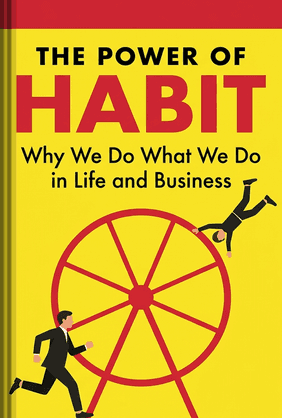
The Power of Habit
Charles Duhigg
31 Duration10 Key Points4.6 RateIs Atomic Habits Worth Reading?
Evaluating if is atomic habits worth reading comes down to your current friction points. This book is not a magic pill. It will not do the work for you. However, it is an exceptional diagnostic tool.
Who will benefit most?
- Chronic Procrastinators: If you suffer from perfectionism and wait for the "right time" to start, the Two-Minute Rule will destroy your excuses.
- Inconsistent Performers: If you go hard at the gym for two weeks and then quit for three months, Clear’s emphasis on systems over outcomes will stabilize your routine.
- Overwhelmed Professionals: The concept of environment design—making good habits the path of least resistance—is a game-changer for people suffering from decision fatigue.
Who can skip it?
If you already possess ironclad discipline, operate on strict routines, and have no trouble executing your daily tasks, you might find the text redundant. Furthermore, if you are looking for profound philosophical insights into the human condition, this is not the right genre. It is a tactical manual, nothing more and nothing less.
If you already possess ironclad discipline, operate on strict routines, and have no trouble executing your daily tasks, you might find the text redundant. Furthermore, if you are looking for profound philosophical insights into the human condition, this is not the right genre. It is a tactical manual, nothing more and nothing less.
An Alternative for the Time-Crunched: Getting the Core Ideas in Minutes
Let's be realistic: even with the best intentions, committing to a 300-page book can feel like a huge hurdle when you're already overworked. If the core principles of Atomic Habits appeal to you but the idea of "reading debt" is all too real, a microlearning app like LeapAhead can be an effective bridge. It’s designed for people who want the knowledge without the time commitment.
LeapAhead distills the key insights from over 30,000 bestselling non-fiction books, including many in the productivity space, into 15-minute summaries available in both audio and text. This approach directly tackles the "Make It Easy" law; instead of committing to reading a full chapter, you can absorb the main takeaways during a commute, workout, or coffee break. The app’s focus on daily goals and personalized recommendations helps you build a consistent learning habit, even on your busiest days.
However, it’s important to acknowledge the trade-off. Summaries can't replace the narrative depth, detailed examples, and authorial voice of the full book. For users seeking a comprehensive, academic understanding, a summary might feel too simplified. But for those who struggle to start or want to absorb core concepts quickly to apply them immediately, it’s a highly practical tool that lowers the barrier to entry for self-improvement.
LeapAhead
Overwhelmed by your reading list? LeapAhead helps you absorb the core wisdom from top non-fiction books in just 15 minutes a day, turning your spare moments into productive learning sessions.
Once you have mastered the basics of habit formation, you might want to channel those new routines into achieving absolute peak performance in your career. If you are an overwhelmed professional looking to eliminate distractions and focus on high-impact projects, pairing Clear's routine-building framework with a strategy for intense concentration is a massive game-changer. Learning how to tune out the noise of overflowing inboxes and social media will help you maximize the time you’ve just freed up.
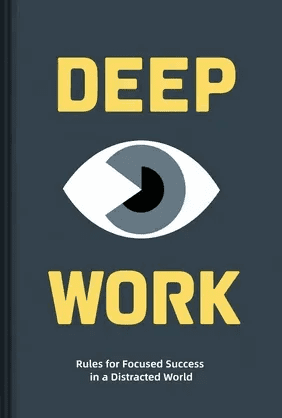
Deep Work
Cal Newport
47 Duration8 Key Points4.6 RateWhere It Fits Among the Best Books on Habit Formation
When ranking the best books on habit formation, Atomic Habits secures the top spot for pragmatism. While titles like B.J. Fogg's Tiny Habits offer similar behavioral models (Fogg actually pioneered many of these concepts at Stanford), Clear's presentation is arguably more accessible. He synthesizes complex psychological research into a highly readable, tightly organized format.
You do not have to guess what to do after finishing the last chapter. The framework is entirely mapped out. You simply have to plug your own behaviors into his four-step formula. In a genre plagued by vague platitudes, that specific utility makes the book a highly valuable asset for your personal growth library.
As mentioned above, B.J. Fogg's groundbreaking work at Stanford University laid the foundation for much of today's behavioral design. If you appreciate Clear's "Two-Minute Rule" but want to explore the academic origins of starting small, Fogg’s methodology is incredibly insightful. His approach focuses specifically on using tiny, painless adjustments and emotional celebration to rewire your brain, making it a fantastic follow-up read once you finish Clear's manual.
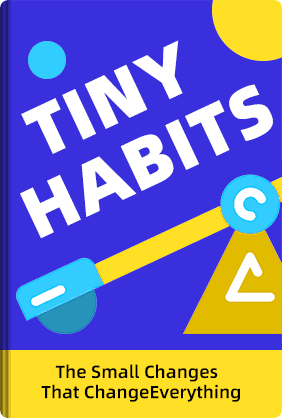
Tiny Habits
BJ Fogg, Ph.D.
40 Duration8 Key Points4.7 RateFAQ
Can I just listen to the audiobook on Audible, or do I need the physical copy?
The audiobook, narrated by James Clear himself, is excellent and very easy to digest during a commute. However, the book contains several charts, graphs, and "habit contract" templates. If you are a visual learner or want to actively take notes and reference the frameworks, a physical copy from Amazon or your local bookstore is highly recommended.
The audiobook, narrated by James Clear himself, is excellent and very easy to digest during a commute. However, the book contains several charts, graphs, and "habit contract" templates. If you are a visual learner or want to actively take notes and reference the frameworks, a physical copy from Amazon or your local bookstore is highly recommended.
How long does it take to see results using this method?
Clear challenges the myth that a habit takes exactly 21 days to form. He argues that habits are formed based on frequency, not time. The more repetitions you complete, the faster the behavior becomes automatic. You will see immediate results in your actions by using the Two-Minute Rule, but the compounding benefits (like weight loss or mastering an instrument) will take months.
Clear challenges the myth that a habit takes exactly 21 days to form. He argues that habits are formed based on frequency, not time. The more repetitions you complete, the faster the behavior becomes automatic. You will see immediate results in your actions by using the Two-Minute Rule, but the compounding benefits (like weight loss or mastering an instrument) will take months.
Does this book help with breaking bad habits, or just building new ones?
It does both. The book features an "Inversion" of the Four Laws designed specifically to break bad habits: Make it invisible, Make it unattractive, Make it difficult, and Make it unsatisfying. If you want to stop eating junk food, making it invisible (keeping it out of the house) and difficult (having to drive to the store to get it) is far more effective than relying on willpower alone.
It does both. The book features an "Inversion" of the Four Laws designed specifically to break bad habits: Make it invisible, Make it unattractive, Make it difficult, and Make it unsatisfying. If you want to stop eating junk food, making it invisible (keeping it out of the house) and difficult (having to drive to the store to get it) is far more effective than relying on willpower alone.