

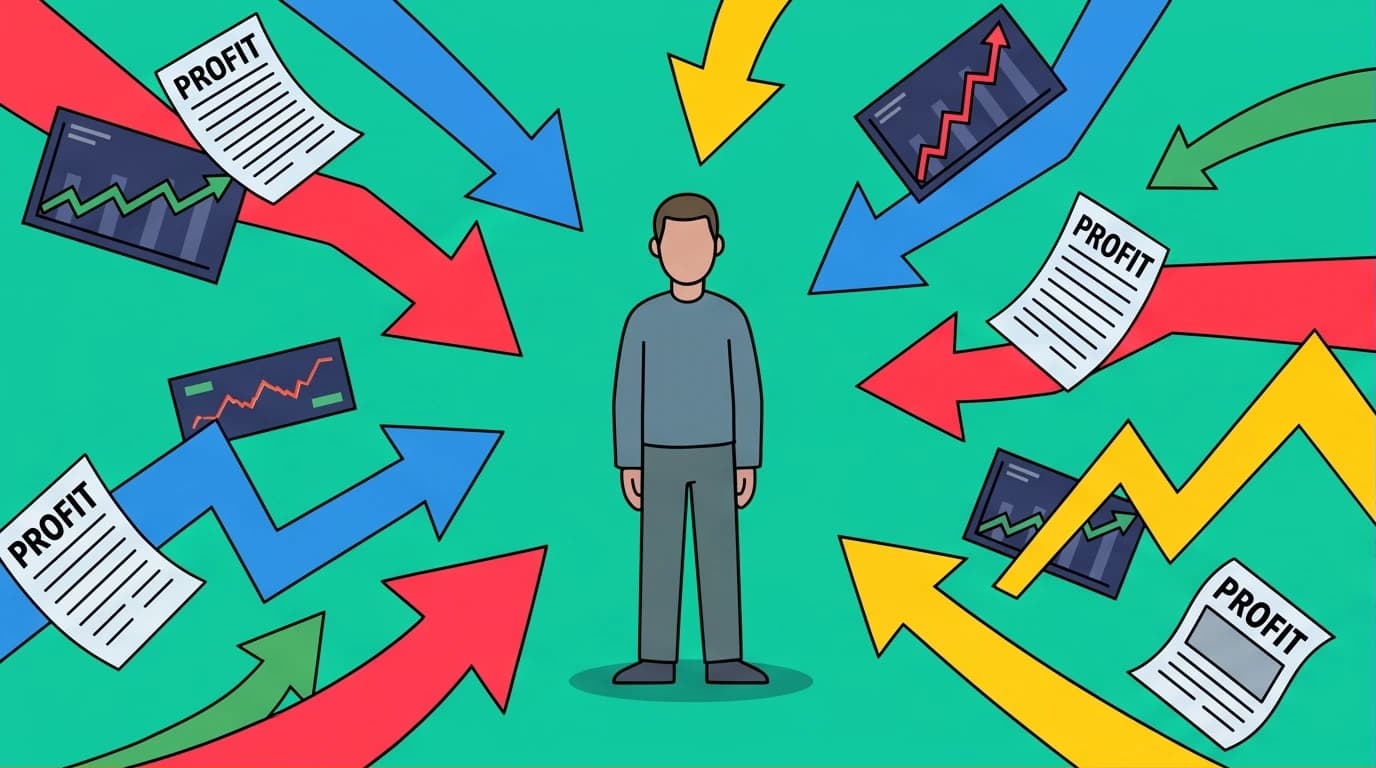
You just finished reading Herman Melville’s 1853 masterpiece, and you are left staring at the page. A man is hired to copy legal documents. He works diligently for a few days, then suddenly stops. He refuses to work, refuses to leave the office, and eventually refuses to eat, responding to every command with the exact same cryptic phrase.
If you are trying to write a paper or simply trying to wrap your head around why this short story is so haunting, you already know that summarizing the plot gets you nowhere. The genius of the story lies in what Melville leaves unsaid. To build a robust bartleby the scrivener analysis, you have to look past the ink and paper. You have to look at the systems of power, the psychological architecture of the characters, and the terrifying void of human isolation.
Before diving into the story's larger themes, it helps to have a firm grasp of the individuals who drive the narrative.
Here is a definitive breakdown of the core themes, philosophical frameworks, and symbolic structures driving the story.
The Wall Street Machine: Capitalism and Worker Alienation
Melville gave his story a highly specific subtitle: A Story of Wall-Street. This is not an accident. The setting is the engine of the narrative.
In the mid-19th century, before copy machines or digital databases, "scriveners" were human photocopiers. Their job was to hand-copy dense legal documents word for word. It was the ultimate form of monotonous, soul-crushing labor.
The Erasure of Humanity in the Workplace
The story serves as a fierce critique of capitalism and the alienation of labor. The Lawyer (the narrator) operates a thriving practice on Wall Street. He views his employees not as full humans, but as mechanical parts of a machine. Notice how the other scriveners are stripped of their real names. They go by nicknames related to their quirks or appearance: Turkey, Nippers, and Ginger Nut.
They are allowed to have flaws—Turkey is useless in the afternoon, Nippers is irritable in the morning—because the Lawyer can still extract productive value from them by balancing their schedules. Bartleby shatters this capitalistic equation. By refusing to produce, he becomes useless to the machine. Melville forces the reader to confront an uncomfortable reality: in a strictly capitalist society, a person's right to exist is entirely tied to their economic utility. When Bartleby stops working, society literally does not know what to do with him, eventually discarding him into prison (the Tombs) to die.
Related Reading: Melville's critique of the worker-as-machine is central to the story's message.
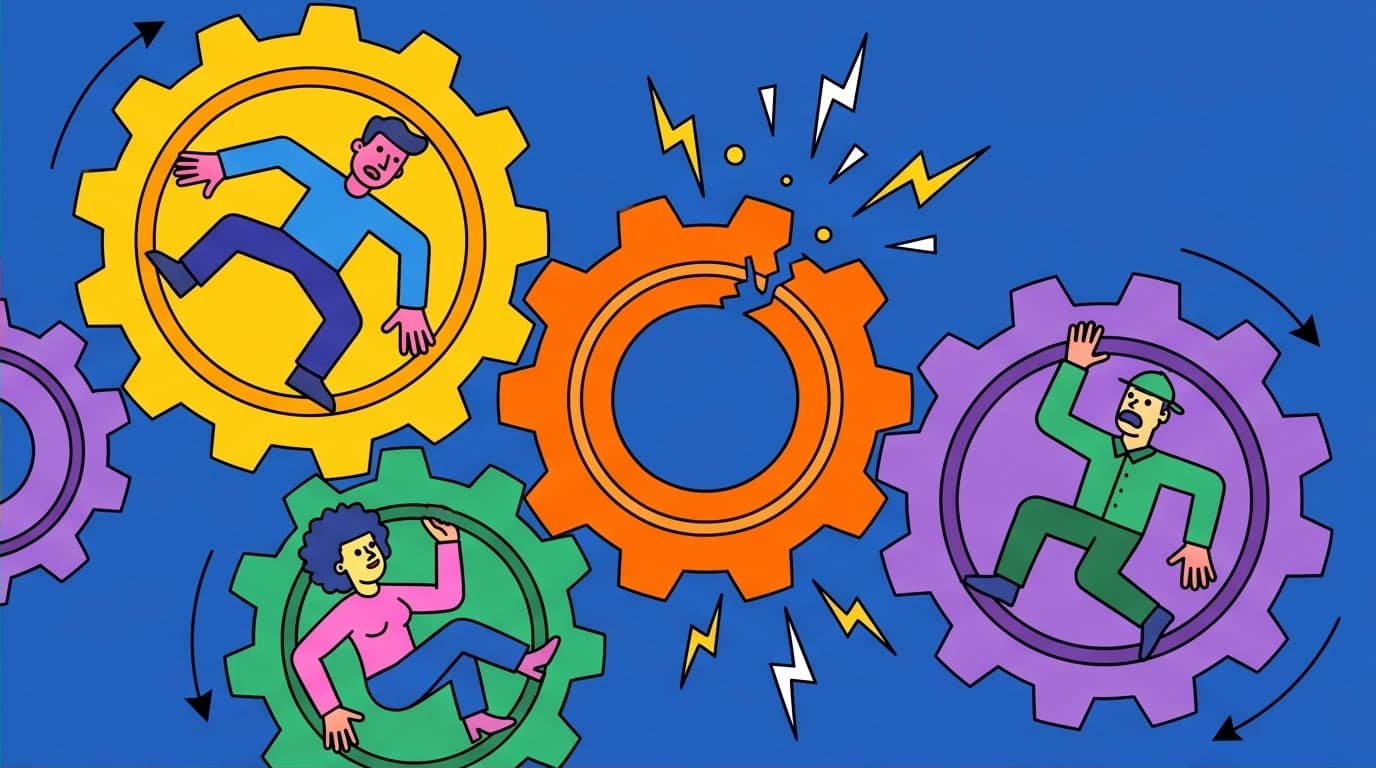
Melville’s critique of the worker-as-machine feels incredibly modern, echoing other masterpieces that explore the loss of humanity in a capitalist system. If you're fascinated by fiction that exposes the soul-crushing nature of labor, you might want to explore the spiritual successor to Bartleby’s passive resistance. Written decades later, this classic novella takes the alienation of the modern worker to a literal, surreal extreme, showing what happens when an employee is no longer useful to his family or his boss.
The Metamorphosis
Franz Kafka
 13 Duration
 6 Key Points
 4.5 Rate
The Meaning of "I Would Prefer Not To"
If there is one aspect of the story that demands immediate untangling, it is the exact meaning of "I would prefer not to." It is one of the most famous sentences in American literature, and its power lies entirely in its syntax.
The Weaponization of Politeness
Why does this specific phrase paralyze the Lawyer?
If Bartleby had said, "I will not do it," he would be actively rebelling. Active rebellion gives an employer the immediate authority to retaliate. You break a rule, you get fired. If Bartleby had said, "I cannot do it," he would be citing an inability. This invites either pity or medical intervention.
"I would prefer not to" is entirely different. It is a statement of agency. It indicates that Bartleby has the physical capability to do the work, but exercises his free will to decline it. By framing his refusal as a mere "preference," Bartleby short-circuits the power dynamic of the employer-employee relationship. There is no corporate protocol for an employee who politely declines a direct order without anger or justification.
This phrase is an act of total passive resistance. It strips the Lawyer of his moral high ground. The Lawyer cannot fly into a rage because Bartleby is perfectly calm. He cannot fire him immediately because Bartleby has not technically staged a violent insurrection; he has simply voiced a preference. It is the ultimate intellectual checkmate against authority.

Bartleby Existentialism: The Absurdity of Choice
Decades before Albert Camus or Jean-Paul Sartre formalized existentialism as a philosophical movement, Melville wrote a profoundly existential text. Bartleby existentialism centers on the terrifying realization of the void.
The Collapse of Meaning
Existentialism suggests that the universe is inherently meaningless, and individuals must create their own purpose. Most people distract themselves from this terrifying freedom through routine: going to work, earning money, participating in society. The Lawyer, Turkey, and Nippers are fully insulated by their routines.
Bartleby seemingly stares into the void and realizes the sheer absurdity of copying legal documents—documents that dictate the transfer of wealth and property among rich men who will eventually die anyway. Once he sees the meaninglessness of the task, he opts out.
His preference "not to" gradually expands from proofreading, to copying, to running errands, to leaving the office, to speaking, and finally, to eating. It is a slow, methodical withdrawal from existence itself. Bartleby asserts his ultimate free will by choosing nothingness. He refuses to participate in the absurd game of life.
To understand how Bartleby's series of refusals drive the narrative forward, it can be useful to have a clear timeline of events.
As mentioned, Melville was playing with existential concepts long before the philosophical movement officially had a name. To fully grasp the terrifying freedom and absurdity that Bartleby confronts, it helps to read the very foundational texts of existentialism. If Bartleby’s refusal to participate in the "absurd game of life" caught your intellectual curiosity, exploring Albert Camus’s definitive essay on the subject will give you the perfect framework for a deeper analysis.
The Myth of Sisyphus
Albert Camus
49 Duration8 Key Points4.5 RateIf you’re intrigued by these philosophical concepts but find dense texts like Camus's hard to get through, a great way to start is by grasping the main arguments first.


LeapAhead

Quickly absorb the core ideas from challenging philosophical and non-fiction books, turning complex concepts like Camus's into accessible insights in just 15 minutes.
The Complicity of the Narrator
It is a common mistake to focus exclusively on Bartleby. The story is told from the perspective of the Lawyer. In many ways, this is his story, and his internal moral conflict is the true battleground of the text.
Charity as a Self-Serving Act
The Lawyer describes himself as a man who prefers the "cool tranquility of a snug retreat." He is risk-averse, pragmatic, and safe. When Bartleby begins his passive resistance, the Lawyer tries to handle it with reason, then with charity.
However, a close reading reveals that the Lawyer’s charity is deeply self-serving. He tolerates Bartleby because it makes him feel like a good Christian. He thinks, “Here I can cheaply purchase a delicious self-approval. To befriend Bartleby... will cost me little or nothing, while I lay up in my soul what will eventually prove a sweet morsel for my conscience.”
When Bartleby’s presence begins to threaten the Lawyer's business reputation—when his professional colleagues start asking uncomfortable questions—the Lawyer abandons him. He literally moves his entire office to another building to escape the responsibility of dealing with Bartleby. The Lawyer represents the limits of liberal humanism in a capitalist society. Charity only extends as far as it is convenient and profitable.
The Lawyer’s Wall Street office—where men spend their entire lives endlessly copying meaningless financial documents—might feel like a relic of the 1850s, but the core issue is more relevant than ever. Melville was simply observing the early stages of a modern labor crisis. If you want to understand how Bartleby’s exhaustion evolved into today's corporate culture, consider reading up on the modern phenomenon of pointless labor. It is a brilliant, eye-opening look at why we still find ourselves trapped in jobs that feel fundamentally devoid of meaning.
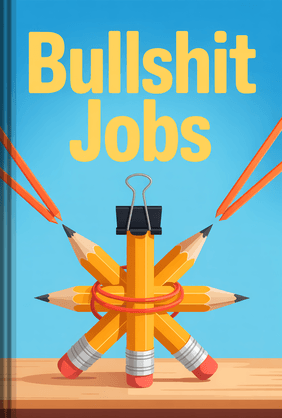
Bullshit Jobs
David Graeber
16 Duration6 Key Points4 RateBartleby the Scrivener Symbolism: Walls, Letters, and Food
Melville embeds dense visual and thematic motifs throughout the text. Any comprehensive bartleby the scrivener analysis must decode these three specific symbols.
1. Walls and Confinement
The word "wall" is inescapable. The office is located on Wall Street. Look at Bartleby’s desk: it is positioned behind a folding screen (a literal wall between him and the Lawyer). When Bartleby looks out his small window, he does not see the sky; he looks at a blank brick wall. He spends hours locked in "dead-wall reveries."
Walls represent the absolute isolation of the modern individual. They are the physical and psychological barriers that prevent true human connection. Society builds walls to compartmentalize people into productive units. Ultimately, Bartleby dies at the base of a massive wall in the Tombs courtyard, trapped by the physical manifestation of the society that failed him.

2. The Dead Letter Office
In the story's epilogue, the Lawyer reveals a rumor: before coming to Wall Street, Bartleby worked in the Dead Letter Office in Washington. This is the place where undelivered mail is gathered and eventually burned.
Think about what a "dead letter" is. It is a message meant for someone, containing money, hope, love, or vital news, that never reaches its destination. It represents the ultimate failure of human communication. If Bartleby spent years sorting through the failed connections of humanity, it explains his profound psychological collapse. He realized that human attempts to connect are ultimately futile. The dead letters symbolize the inevitability of death and the breakdown of empathy.
3. Food and Consumption
Food acts as a marker of conformity. Turkey and Nippers are deeply tied to their physical appetites. Ginger Nut is named after the cheap cakes he fetches.
Bartleby, however, eventually refuses to eat. In a society defined by consumption—where workers consume food to produce labor, and capitalists consume labor to produce wealth—refusing to eat is the final rejection of the system. He refuses to consume, and he refuses to be consumed.
Bartleby’s ultimate tragedy is his total severance from human connection. The dead walls and the dead letters are potent symbols of a society that has forgotten how to nurture empathy and community. This theme of profound, systemic isolation is something we still grapple with today. For a modern perspective on how our environment and societal structures contribute to the kind of profound psychological collapse we see in Bartleby, there is incredible value in exploring the real root causes of our modern epidemic of loneliness.

Lost Connections
Johann Hari
53 Duration11 Key Points4.7 RateExecution and Takeaways for Your Analysis
When formulating your argument or writing your thesis on this text, avoid treating Bartleby merely as a medical case study of clinical depression. While modern readers can easily map symptoms of depression onto Bartleby’s behavior, treating the story purely as a diagnostic exercise strips it of its literary and philosophical power.
Focus on the friction between Bartleby's passive resistance and the Lawyer's pragmatic worldview. Use the primary text to prove that Bartleby is acting as a mirror. He reflects the absurdity, the coldness, and the spiritual bankruptcy of the society around him. The tragedy is not just that Bartleby dies; the tragedy is that the society that killed him (represented by the Lawyer) fundamentally learns nothing, ending only with the mournful, helpless cry: "Ah, Bartleby! Ah, humanity!"
This analysis connects Bartleby's story to several important books, and if your reading list is starting to feel overwhelming, there's a practical way to explore their key ideas without the pressure of reading each one cover-to-cover.
LeapAhead
Tackle your growing reading list by listening to the key insights from these books and thousands more, helping you clear that 'reading debt' during your commute or workout.
FAQ
What is the main message of Bartleby the Scrivener?
The story serves as a critique of the dehumanizing nature of the modern, profit-driven workplace. It highlights the profound isolation of the individual and exposes the limits of societal charity. It suggests that a capitalist system cannot accommodate a human being who refuses to be economically productive.
The story serves as a critique of the dehumanizing nature of the modern, profit-driven workplace. It highlights the profound isolation of the individual and exposes the limits of societal charity. It suggests that a capitalist system cannot accommodate a human being who refuses to be economically productive.
Was Bartleby suffering from depression?
While modern psychological frameworks would likely diagnose Bartleby with severe clinical depression or catatonia, Melville wrote the story decades before these terms existed. Literarily and philosophically, his "depression" functions as a symptom of existential awakening. His withdrawal is a rational, albeit fatal, response to an absurd and alienating world.
While modern psychological frameworks would likely diagnose Bartleby with severe clinical depression or catatonia, Melville wrote the story decades before these terms existed. Literarily and philosophically, his "depression" functions as a symptom of existential awakening. His withdrawal is a rational, albeit fatal, response to an absurd and alienating world.
Why does the Lawyer tolerate Bartleby for so long?
The Lawyer tolerates Bartleby out of a complex mix of pity, guilt, and ego. He views his own patience as a testament to his Christian morality. Tolerating Bartleby allows the Lawyer to feel morally superior, right up until the moment Bartleby begins to negatively impact his business and reputation.
The Lawyer tolerates Bartleby out of a complex mix of pity, guilt, and ego. He views his own patience as a testament to his Christian morality. Tolerating Bartleby allows the Lawyer to feel morally superior, right up until the moment Bartleby begins to negatively impact his business and reputation.
What do the "Dead Letters" symbolize at the end of the story?
The Dead Letters represent the ultimate failure of human connection and communication. They are physical manifestations of lost hope, missed opportunities, and the inevitability of death. Discovering that Bartleby worked in an environment entirely defined by futility provides a retrospective justification for his absolute withdrawal from life.
The Dead Letters represent the ultimate failure of human connection and communication. They are physical manifestations of lost hope, missed opportunities, and the inevitability of death. Discovering that Bartleby worked in an environment entirely defined by futility provides a retrospective justification for his absolute withdrawal from life.