

You buy the latest business bestsellers on Amazon, stack them on your nightstand, and watch them collect dust. Your schedule is packed, but your drive to learn, adapt, and stay ahead of the curve hasn't faded. You just don't have ten spare hours a week to sit down and read.
This is the exact problem the modern knowledge worker faces daily. The friction between the desire to grow and the reality of a packed calendar creates massive reading guilt. You do not need to read every single page of a 400-page business book to extract its value. You need the core frameworks, the actionable data, and the paradigm shifts.
Here is exactly how to navigate the crowded market of apps that summarize books, so you can stop scrolling and start learning.
Why High-Performers Rely on Nonfiction Book Summaries
The traditional model of reading is often inefficient for pure information extraction. Authors and publishers frequently pad a single brilliant concept with 300 pages of repetitive anecdotes to justify the price of a hardcover at Barnes & Noble.
For entrepreneurs and executives, time is the ultimate currency. Nonfiction book summaries act as a high-efficiency filter. They allow you to test-drive an author's thesis. If a specific framework resonates with your current business challenges, you can then purchase the full book or audiobook on Audible. If not, you saved yourself hours of wasted effort.
By integrating 15 minute book summaries into your daily routine—whether you are commuting miles down the interstate, waiting in an airport lounge, or walking the dog—you turn dead time into a massive competitive advantage.
If you love the idea of learning on the go but often prefer listening to full-length books instead of summaries, exploring a dedicated audiobook platform is a great next step. For a complete guide to the top options for listening to books on your phone, check out our review of the best audiobook apps for iPhone.

Time is the ultimate currency for high-performers, and filtering out the noise is exactly what summary apps do best. If this idea of ruthless prioritization resonates with you, you will want to dive into Essentialism. Just like these apps help you filter your reading list, Greg McKeown's framework teaches you how to streamline your life and career in a fast-paced corporate culture. If you are looking to reclaim your calendar and focus only on the projects that truly move the needle, adding this title to your immediate reading queue is a smart investment.
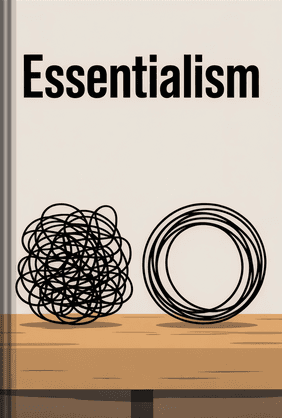
Essentialism
Greg McKeown
 32 Duration
 10 Key Points
 4.6 Rate

Turn your commute into a learning opportunity. LeapAhead delivers key insights from bestselling nonfiction books in just 15 minutes, perfectly designed for a busy schedule.
 LeapAhead
The Core Breakdown: Top Book Summary Apps Evaluated
To find the best book summary apps, we must look past flashy marketing and evaluate the substance. The criteria are straightforward: the accuracy of the summary, the quality of the audio narration, the depth of the library, and the overall user experience.
1. Blinkist: The Industry Standard for Breadth and Audio
Blinkist pioneered the modern summary format. With a library exceeding 6,500 titles, it is the undisputed heavyweight in the market. They break down books into short audio and text segments called "Blinks," designed to be consumed in roughly 15 minutes.
Why it works:
Blinkist relies heavily on human readers and writers rather than pure AI extraction. The audio quality is phenomenal, feeling more like a premium podcast than a robotic text-to-speech engine. If you want to explore a massive variety of topics—from psychology and management to history and health—Blinkist has the deepest bench.
Blinkist relies heavily on human readers and writers rather than pure AI extraction. The audio quality is phenomenal, feeling more like a premium podcast than a robotic text-to-speech engine. If you want to explore a massive variety of topics—from psychology and management to history and health—Blinkist has the deepest bench.
The ideal user:
The audio-first learner who wants to knock out a summary during a short morning commute or a quick session on the treadmill.
The audio-first learner who wants to knock out a summary during a short morning commute or a quick session on the treadmill.
2. Shortform: The Masterclass for Deep Comprehension
Most summary apps suffer from being too shallow. They give you the bullet points but strip away the context required to actually understand the material. Shortform completely flips this model.
Why it works:
Shortform does not just summarize; it analyzes. For a book like James Clear’s Atomic Habits, Shortform provides a high-level one-page overview, followed by a comprehensive, chapter-by-chapter breakdown. More importantly, their editors add distinct commentary. They point out flaws in the author's arguments, compare the ideas to other books, and provide interactive exercises at the end of every section.
Shortform does not just summarize; it analyzes. For a book like James Clear’s Atomic Habits, Shortform provides a high-level one-page overview, followed by a comprehensive, chapter-by-chapter breakdown. More importantly, their editors add distinct commentary. They point out flaws in the author's arguments, compare the ideas to other books, and provide interactive exercises at the end of every section.
The ideal user:
The deep thinker, the consultant, and the intense self-improvement enthusiast. If you want to actually master the material and apply it to your life, Shortform is the most robust tool available.
The deep thinker, the consultant, and the intense self-improvement enthusiast. If you want to actually master the material and apply it to your life, Shortform is the most robust tool available.
Since we just highlighted how powerful it is to analyze a book like Atomic Habits, it is only right to recommend the full text. While a summary app gives you a fantastic 15-minute overview of James Clear's methodology, the complete book is a worldwide staple for a reason. If you want the definitive guide on building micro-behaviors that yield compounding results over the long haul, you owe it to yourself to experience the original unabridged version. It is the ultimate playbook for making tiny changes that deliver massive outcomes.

Atomic Habits
James Clear
26 Duration8 Key Points4.7 Rate3. Headway: The Gamified, Visual Learner's Choice
Headway burst onto the scene by targeting the friction of building a learning habit. It uses heavy gamification—streaks, challenges, and colorful progress bars—to keep you coming back every single day.
Why it works:
Headway excels in visual design. Their summaries often include custom illustrations and flashcards designed to utilize spaced repetition. If you are someone who struggles to focus on pure text or audio, Headway’s highly interactive interface provides the necessary dopamine hits to keep you engaged. Their library is smaller than Blinkist's, heavily focusing on self-help, wealth building, and productivity.
Headway excels in visual design. Their summaries often include custom illustrations and flashcards designed to utilize spaced repetition. If you are someone who struggles to focus on pure text or audio, Headway’s highly interactive interface provides the necessary dopamine hits to keep you engaged. Their library is smaller than Blinkist's, heavily focusing on self-help, wealth building, and productivity.
The ideal user:
The visual learner who needs extra motivation to maintain a daily reading habit and prefers bite-sized, actionable insights.
The visual learner who needs extra motivation to maintain a daily reading habit and prefers bite-sized, actionable insights.
4. LeapAhead: The Habit-Building Microlearning Tool
LeapAhead is designed to tackle "reading debt" for busy people who want to improve but struggle with consistency. It combines a massive library of over 30,000 book summaries with tools engineered to help you build a sustainable learning habit in just 15 minutes a day.
Why it works:
LeapAhead focuses on solving the retention problem. It goes beyond simple text and audio with visual infographics, mind maps, and highlighted "Insight Cards" to help key ideas stick. Its real strength lies in its structured approach to learning; it uses daily check-ins, study goals, and curated "learning albums" on topics like career growth or mindfulness to guide users toward specific outcomes instead of random reading.
LeapAhead focuses on solving the retention problem. It goes beyond simple text and audio with visual infographics, mind maps, and highlighted "Insight Cards" to help key ideas stick. Its real strength lies in its structured approach to learning; it uses daily check-ins, study goals, and curated "learning albums" on topics like career growth or mindfulness to guide users toward specific outcomes instead of random reading.
The ideal user:
The goal-oriented learner who wants to build a consistent daily habit but feels overwhelmed. It’s also great for users who appreciate both audio and visual learning aids to reinforce concepts. However, its focus on core ideas may not satisfy academics seeking deep analysis, and the mobile-first experience may feel limiting for those who prefer desktop study sessions.
The goal-oriented learner who wants to build a consistent daily habit but feels overwhelmed. It’s also great for users who appreciate both audio and visual learning aids to reinforce concepts. However, its focus on core ideas may not satisfy academics seeking deep analysis, and the mobile-first experience may feel limiting for those who prefer desktop study sessions.
5. getAbstract: The Corporate Executive's Library
While the other apps target the individual consumer, getAbstract is heavily geared toward the B2B and enterprise market.
Why it works:
They provide highly structured 10-minute summaries formatted specifically for corporate utility. You will not find much mainstream pop psychology here. Instead, you get dense, no-nonsense reports on economic trends, leadership strategy, and technical business frameworks. The tone is highly professional, and the structure is rigid: a rating, a short takeaway, and structured bullet points.
They provide highly structured 10-minute summaries formatted specifically for corporate utility. You will not find much mainstream pop psychology here. Instead, you get dense, no-nonsense reports on economic trends, leadership strategy, and technical business frameworks. The tone is highly professional, and the structure is rigid: a rating, a short takeaway, and structured bullet points.
The ideal user:
C-suite executives, corporate managers, and professionals who need to brief themselves on industry-specific literature before high-stakes meetings.
C-suite executives, corporate managers, and professionals who need to brief themselves on industry-specific literature before high-stakes meetings.
Speaking of corporate executives and navigating high-stakes work environments, the ability to focus without distraction is rapidly becoming the modern knowledge worker's ultimate superpower. For professionals who want to push past surface-level emails, Slack notifications, and quick summaries into highly valuable, concentrated cognitive efforts, Cal Newport's paradigm-shifting approach is absolutely essential. It pairs perfectly with the high-level strategy briefings you might consume on your commute, teaching you how to lock in and execute those big ideas.
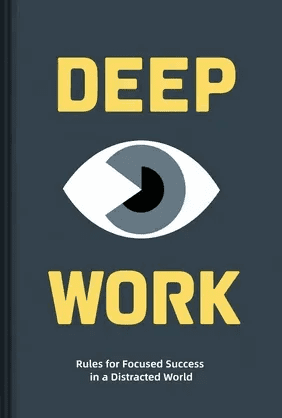
Deep Work
Cal Newport
47 Duration8 Key Points4.6 RateBlinkist vs Headway: The Ultimate Showdown
When deciding on a tool to download from the App Store, the most common debate comes down to Blinkist vs Headway. Both target the same core demographic and offer similar basic functionalities, but their approaches are fundamentally different.

Library Depth and Variety
Blinkist wins this category effortlessly. With over 6,500 titles compared to Headway's roughly 1,500, Blinkist covers a much wider array of genres. If you want to read about quantum physics, ancient history, or niche political theory, Blinkist has it. Headway sticks fiercely to the highest-performing categories: self-growth, business, and personal finance.
Blinkist wins this category effortlessly. With over 6,500 titles compared to Headway's roughly 1,500, Blinkist covers a much wider array of genres. If you want to read about quantum physics, ancient history, or niche political theory, Blinkist has it. Headway sticks fiercely to the highest-performing categories: self-growth, business, and personal finance.
Audio Experience
Blinkist invests heavily in professional voice actors. The narration is smooth, well-paced, and highly engaging. Headway's audio has improved significantly, but it still occasionally feels slightly more mechanical compared to the premium studio polish of Blinkist.
Blinkist invests heavily in professional voice actors. The narration is smooth, well-paced, and highly engaging. Headway's audio has improved significantly, but it still occasionally feels slightly more mechanical compared to the premium studio polish of Blinkist.
User Interface and Retention
This is where Headway fights back. Headway is visually stunning. It uses bright colors, interactive widgets, and spaced-repetition flashcards to ensure you actually memorize the key concepts. Blinkist’s interface is clean and minimalist, but it lacks the addictive, gamified elements that Headway uses to build daily habits.
This is where Headway fights back. Headway is visually stunning. It uses bright colors, interactive widgets, and spaced-repetition flashcards to ensure you actually memorize the key concepts. Blinkist’s interface is clean and minimalist, but it lacks the addictive, gamified elements that Headway uses to build daily habits.
The Verdict
Choose Blinkist if you value audio quality, a massive library, and listen primarily while driving or walking. Choose Headway if you are highly visual, struggle to maintain habits, and want an interactive, flashcard-style learning experience.
Choose Blinkist if you value audio quality, a massive library, and listen primarily while driving or walking. Choose Headway if you are highly visual, struggle to maintain habits, and want an interactive, flashcard-style learning experience.
While summary apps fill an important niche, they're just one piece of your digital reading ecosystem. To handle full-length ebooks you discover, you'll need a powerful reader. See our top recommendations for the best reading apps for iPhone to manage your entire library.
Looking for an app that blends a massive library with features to build a real learning habit? LeapAhead combines the best of both worlds, with 30,000+ titles and daily goal-setting.
LeapAheadHow to Maximize the Value of 15 Minute Book Summaries
Downloading an app will not make you smarter. Passively listening to a summary while scrolling social media is a waste of your time. To actually extract ROI from these platforms, you must build a system around them.
1. Use summaries as a discovery filter.
Never let a summary be the final destination for a truly great idea. Use these apps to aggressively filter out mediocre books. When a 15-minute summary blows your mind and forces you to rethink a business strategy, open Apple Books or Amazon immediately and buy the full version.
Never let a summary be the final destination for a truly great idea. Use these apps to aggressively filter out mediocre books. When a 15-minute summary blows your mind and forces you to rethink a business strategy, open Apple Books or Amazon immediately and buy the full version.
2. Focus on action over consumption.
Binge-listening to ten summaries in a row gives you the illusion of competence. In reality, you will forget 90% of it by tomorrow. Listen to one summary. Identify one single actionable takeaway. Implement that takeaway into your workflow before moving on to the next book.
Binge-listening to ten summaries in a row gives you the illusion of competence. In reality, you will forget 90% of it by tomorrow. Listen to one summary. Identify one single actionable takeaway. Implement that takeaway into your workflow before moving on to the next book.
3. Export and organize your notes.
The real power of nonfiction book summaries lies in building a personal knowledge base. Apps like Shortform and Blinkist allow you to highlight text. Export those highlights into a note-taking system like Notion, Evernote, or Apple Notes. Organize them by tag. When you face a specific management crisis or marketing challenge, you can instantly search your database for the exact frameworks you saved months ago.
The real power of nonfiction book summaries lies in building a personal knowledge base. Apps like Shortform and Blinkist allow you to highlight text. Export those highlights into a note-taking system like Notion, Evernote, or Apple Notes. Organize them by tag. When you face a specific management crisis or marketing challenge, you can instantly search your database for the exact frameworks you saved months ago.

Building a reliable system to house your book highlights and actionable notes is just the first step in maximizing your personal ROI. If you are ready to take that organization to the next level and completely revamp how you handle your tasks, projects, and daily workflow, there is no better resource than David Allen's legendary productivity framework. It serves as the perfect companion for any busy professional looking to organize their digital workspace and personal life into a completely stress-free system.
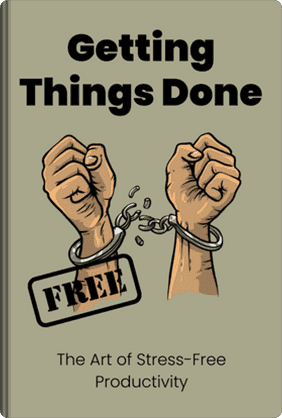
Getting Things Done
David Allen
43 Duration7 Key Points4.5 RateFor readers who want to supplement their book summary habit with full-length titles without the cost, leveraging your local library's digital collection is a game-changer. Learn how you can borrow ebooks and audiobooks for free with the best library apps for your iPhone.
FAQ
Do book summary apps replace reading full books?
No. They serve an entirely different purpose. Summary apps are for discovery, filtering, and rapid information acquisition. Full books are for deep immersion, nuance, and emotional resonance. Use summaries to find the 5% of books that are actually worth your dedicated time to read cover-to-cover.
Are the core ideas in these summaries accurate?
Top-tier apps use human editors and subject matter experts to distill the content, ensuring a high level of accuracy. However, summaries inherently lack the author's original nuance and supporting evidence. If an idea seems highly controversial or complex in the summary, it is always best to verify the context by reading the source material.
Is audio or text better for retaining the information?
This depends entirely on your learning style. Audio is unbeatable for efficiency because you can stack it with driving, cooking, or exercising. Text is superior for retention and note-taking. The best approach is a hybrid: listen to the audio while on the move, and briefly review the text highlights later that evening to lock in the concepts.
Are these subscriptions worth the money?
The average business hardcover costs around $25. If an app costs $80 to $100 for an entire year, it pays for itself if it helps you avoid buying just four bad books—or if it delivers one single insight that helps you close a deal, optimize your team, or save an hour of your week. For busy professionals, the ROI is overwhelmingly positive.