

You just got the promotion. Your calendar is suddenly filled with 1-on-1s, performance alignments, and strategy syncs. The skills that made you a top performer—executing tasks, hitting quotas, or writing flawless code—are no longer enough. You are now responsible for the output of others. The shift from individual contributor to team leader is jarring, and the fear of messing up is real. You need a survival guide to stop second-guessing every decision and start building trust.

Leading a team does not require innate talent; it requires a new set of tools. The right books act as mentors, offering frameworks to handle uncomfortable conversations, delegate without micromanaging, and measure success differently.
The Mindset Shift: From Executing to Leading
When looking for first time manager books, the immediate priority is rewiring how you view your daily job. You can no longer measure your productivity by how many tasks you personally cross off a list. Your value is now measured by the success and growth of your team.

1. The Making of a Manager by Julie Zhuo
Julie Zhuo became a manager at Facebook at age 25. She felt entirely unqualified and made every mistake in the book. This book is essentially the field manual she wished she had. It strips away the academic jargon and focuses on the messy, human reality of managing people for the first time.
- The Core Problem It Solves: Imposter syndrome and the confusion of what a manager actually does day-to-day.
- Key Takeaway: Management is a learned skill, not an innate trait. Zhuo breaks down the mechanics of everyday management: how to run a meeting that isn't a waste of time, how to hire well, and how to tell the difference between a manager and a leader.
- Actionable Advice: Start treating your 1-on-1 meetings as the most important events on your calendar. They are not status updates. They are dedicated time for coaching, unblocking obstacles, and building rapport.
If you're feeling that familiar wave of imposter syndrome stepping into your new leadership role, you're not alone. Julie Zhuo’s incredibly relatable journey from an overwhelmed rookie to a confident executive is exactly what you need to read. Grab a cup of coffee, a highlighter, and dive into this essential guide to learn the real-world ropes of organizing your team and calendar without the heavy corporate jargon.
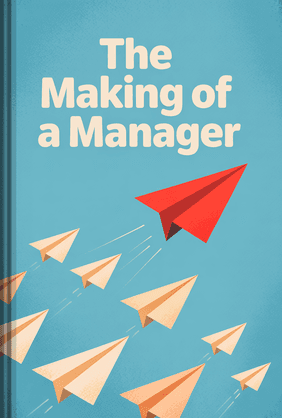
The Making of a Manager
Julie Zhuo
 47 Duration
 9 Key Points
 4.6 Rate
2. The First 90 Days by Michael D. Watkins
This is a heavyweight corporate classic. Whether you are promoted internally or hired into a new management role, the first three months dictate your long-term success. Watkins focuses on strategy, alignment, and securing early wins to build momentum.
- The Core Problem It Solves: Feeling overwhelmed by the sheer volume of new responsibilities and lacking a strategic roadmap.
- Key Takeaway: The "Breakeven Point." As a new manager, you initially consume more value from the organization than you create. Your goal in the first 90 days is to reach the point where you start contributing a net positive value.
- Actionable Advice: Match your strategy to your situation. Are you managing a turnaround team, or are you sustaining success? The leadership style required for a team in crisis is drastically different from one that is already running smoothly.
Hitting the ground running is critical, and winging it simply won't cut it when the stakes are high. If you want to guarantee your transition is smooth and clearly demonstrate your value to higher-ups before that three-month mark hits, this playbook is a must-have for your desk. It’s like having a top-tier executive coach in your corner, helping you map out a bulletproof strategy for your specific business environment.

The First 90 Days
Michael D. Watkins
32 Duration11 Key Points4.8 RateNavigating Difficult Conversations
Most new managers fail because they avoid difficult conversations. They want to be liked, so they let poor performance slide, or they swing to the opposite extreme and dictate orders aggressively. Excellent leadership books for beginners focus heavily on finding your voice and delivering feedback.

For a deeper exploration of vision and inspiration, check out our guide to the top leadership books.
3. Radical Candor by Kim Scott
Kim Scott, a former executive at Google and Apple, created a framework that completely changes how managers approach feedback. The premise is simple: you have to "Care Personally" and "Challenge Directly" at the same time.
- The Core Problem It Solves: The fear of giving negative feedback and the trap of "ruinous empathy" (being so nice that you let people fail).
- Key Takeaway: Honesty without empathy is obnoxious aggression. Empathy without honesty is ruinous empathy. Radical candor hits the sweet spot where you care enough about your direct report to tell them the truth about their performance.
- Actionable Advice: When delivering feedback, focus on the behavior, not the person. Instead of saying, "You are sloppy," say, "There were three typos in the report you submitted today. Walk me through your review process."
Giving feedback doesn't have to feel like a root canal, and being the "nice boss" shouldn't mean sacrificing your team's growth. Kim Scott’s transformative approach has become a staple in Silicon Valley and across the United States because it genuinely works. If you're ready to stop sugarcoating issues and start building a culture of trust and high performance, adding this to your reading list is the perfect next step.
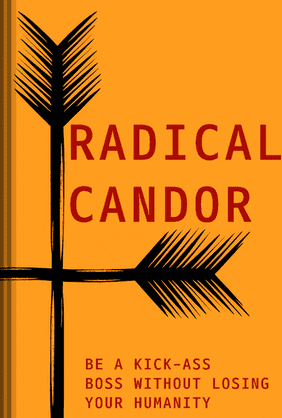
Radical Candor
Kim Scott
19 Duration7 Key Points4.6 Rate4. Crucial Conversations by Kerry Patterson, Joseph Grenny, Ron McMillan, and Al Switzler
Management is a series of high-stakes conversations. Whether negotiating a budget, discussing a missed deadline, or handling an interpersonal conflict between team members, emotions will run high.
- The Core Problem It Solves: Losing control of your emotions or shutting down when discussions become tense.
- Key Takeaway: When safety is at risk in a conversation, people either resort to silence (withholding meaning) or violence (trying to force meaning).
- Actionable Advice: Learn to step out of the content of the conversation and rebuild safety. If a direct report becomes defensive during a performance review, pause the feedback. Reassure them of your mutual purpose: "My goal here isn't to criticize your abilities; it's to help you position this project for approval from the VP."
Workplace conflicts and high-stress negotiations are inevitable, whether you're working out of a high-rise in Manhattan or managing a remote team across different time zones. Instead of dreading these tense interactions, you can master the art of keeping things productive and respectful. This book provides a brilliant, step-by-step psychological framework that will give you the confidence to handle any team dispute or budget pushback without breaking a sweat.

Crucial Conversations
Kerry Patterson, Joseph Grenny, Ron McMillan, Al Switzer
20 Duration9 Key Points4.7 Rate

Overwhelmed by your reading list? Get the core insights from top management books in just 15 minutes with LeapAhead.
 LeapAhead
Operations and Team Efficiency
Once you have your mindset right and your communication channels open, you need to build systems. The best management basics books treat a team like an engine, focusing on output, leverage, and efficiency.

5. LeapAhead App for Microlearning
This isn't a single book, but a tool that helps you absorb the key ideas from thousands of them. For a new manager, the biggest constraint is time. LeapAhead is a microlearning app that provides 15-minute summaries of bestselling nonfiction books in both audio and text formats. It’s designed to help you clear your "reading debt" and keep learning during a commute, workout, or lunch break.
- The Core Problem It Solves: A lack of time to read full-length books and the guilt of a growing to-read pile.
- Key Takeaway: Consistent learning in small doses is more effective than binge-reading once a quarter. The app's daily goal-setting features help you build a sustainable learning habit that compounds over time.
- Actionable Advice: Use the app to get the core frameworks from all the books on this list without the multi-hour commitment. Start by setting a daily 15-minute goal to listen to a summary on your way to work.
For managers struggling to find even 30 minutes of quiet time, LeapAhead offers a practical solution. While summaries can't replace the full depth of a book, they provide the essential frameworks and actionable advice you need right now. However, it's a mobile-first experience, so if you prefer learning on a desktop, it may feel limiting.
6. High Output Management by Andrew S. Grove
Written by the former CEO of Intel, this is often considered the holy grail of management books in Silicon Valley. It is dense, highly practical, and treats management as an engineering discipline.
- The Core Problem It Solves: Wasting time on low-impact tasks and failing to scale your influence.
- Key Takeaway: Managerial Leverage. A manager's output equals the output of their organization plus the output of the neighboring organizations under their influence.
- Actionable Advice: Identify your highly leveraged activities. Spending 60 minutes preparing for a weekly team meeting can positively impact the workflow of ten people for the next forty hours. That is high leverage. Conversely, stepping in to write a report yourself because it's "faster" is negative leverage.
Scaling your impact is the ultimate hallmark of a great leader. Once you have the basics down, Andrew Grove’s legendary insights will teach you how to treat your team's workflow like a finely tuned machine. If you're looking to maximize your team's efficiency and figure out exactly where to spend your limited hours for the highest return on investment, you absolutely need to pick up a copy of this timeless masterpiece.
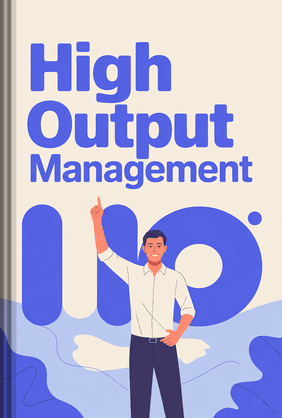
High Output Management
Andrew S. Grove
30 Duration13 Key Points4.8 RateStructuring Your Reading: New Manager Book Recommendations
You likely do not have the time to sit down and read all the books on this list cover-to-cover right now. The pressure is on, and your primary constraint is time. Here is a tactical approach to consuming these new manager book recommendations without burning out:
- Diagnose Your Immediate Fire: Look at the challenges you face this week. If you are terrified of an upcoming performance review, buy Radical Candor and read chapters two and three immediately. If your calendar is a disaster and your team is confused about goals, jump straight into High Output Management.
- Use Audio and Summaries: If your commute involves driving 20 miles or riding the subway, get an Audible subscription. Listening to Julie Zhuo at 1.5x speed on your way to the office primes your brain for the day.
- Treat Books as Reference Manuals, Not Novels: You do not need to read these linearly. Use the index. Check Goodreads for community notes or look up Kindle highlights on Amazon to quickly grasp the core frameworks.
Turn your commute into a leadership seminar. Listen to key ideas from books like these with the LeapAhead app.
LeapAheadCommon Pitfalls to Avoid in Your First 90 Days
Reading the right books will help you recognize the traps most first-time leaders fall into. Keep these red flags in mind as you transition:
- Micromanaging: You used to control the exact quality of the output. Now, you have to accept that your team might do things differently than you would. Focus on the outcome, not the exact process.
- Trying to Be the "Cool Boss": Transitioning from peer to boss is awkward. You will damage your team's respect if you prioritize being liked over setting clear boundaries and holding people accountable.
- Skipping 1-on-1s: When things get busy, 1-on-1s are usually the first meetings to be canceled. Never cancel them. Reschedule if you must, but canceling sends a direct signal to your employee that they are your lowest priority.
FAQ
Do I need an MBA or extensive training to be a good manager?
No. Most effective management skills—empathy, clear communication, delegation, and strategic planning—are learned on the job and through self-education. While an MBA offers excellent business and financial acumen, the daily reality of managing human beings is better served by reading targeted management books and applying their frameworks directly to your team.
No. Most effective management skills—empathy, clear communication, delegation, and strategic planning—are learned on the job and through self-education. While an MBA offers excellent business and financial acumen, the daily reality of managing human beings is better served by reading targeted management books and applying their frameworks directly to your team.
I don't have time to read. How can I consume these insights?
Time constraints are the reality of middle management. Leverage audiobooks on Audible during your commute, or use summary apps like LeapAhead or Blinkist to extract the core frameworks. Alternatively, read just 10 pages a day before opening your email in the morning. Focus heavily on the tactical chapters (like how to run a meeting or deliver feedback) rather than the personal anecdotes.
Time constraints are the reality of middle management. Leverage audiobooks on Audible during your commute, or use summary apps like LeapAhead or Blinkist to extract the core frameworks. Alternatively, read just 10 pages a day before opening your email in the morning. Focus heavily on the tactical chapters (like how to run a meeting or deliver feedback) rather than the personal anecdotes.
Should I read leadership theory or practical management books first?
Start with practical management books. Leadership theory (inspiring a vision, driving cultural change) is critical later, but right now, you need to operational tactics. You need to know how to approve time off, how to handle an underperforming employee, and how to structure a weekly sync. Master the basics of management before attempting to become a visionary leader.
Start with practical management books. Leadership theory (inspiring a vision, driving cultural change) is critical later, but right now, you need to operational tactics. You need to know how to approve time off, how to handle an underperforming employee, and how to structure a weekly sync. Master the basics of management before attempting to become a visionary leader.