

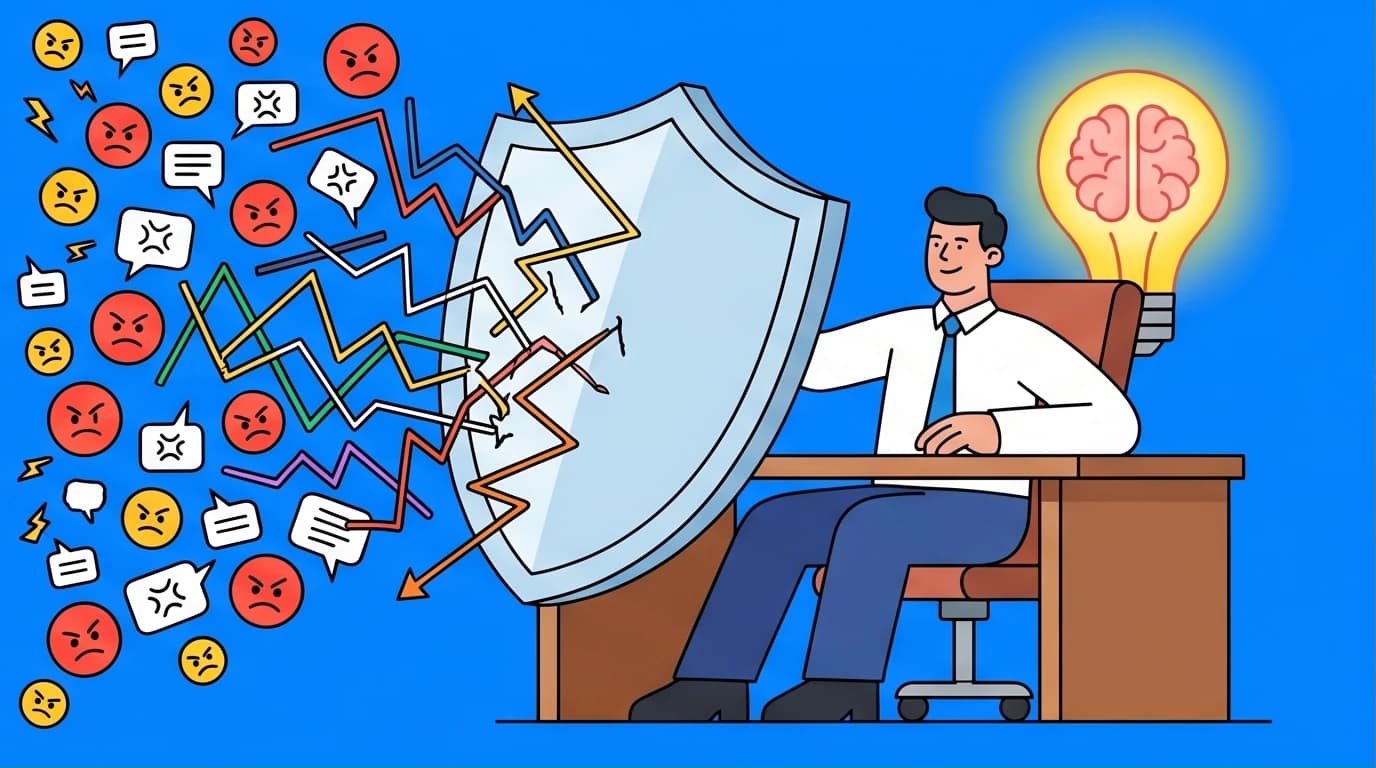
You are dreading the next one-on-one meeting with that notoriously difficult team member. Instead of focusing on quarterly strategy, you are wasting hours playing referee for minor team conflicts or walking on eggshells to avoid triggering a toxic reaction from an underperformer. You do not need theoretical leadership philosophy right now. You need tested, actionable frameworks to handle messy human dynamics, protect your top performers, and maintain your own sanity.
To solve these specific challenges, we have categorized the most effective frameworks from top industry literature. These are not just inspiring reads; they are tactical manuals for HR professionals and supervisors dealing with the harsh realities of team management.
Navigating High-Stakes Conflicts and Confrontations
When emotions run high and opinions vary, standard communication fails. If you manage diverse personalities, you will eventually face a scenario where delivering bad news or correcting poor performance threatens to damage a working relationship.
Crucial Conversations by Kerry Patterson, Joseph Grenny, et al.
When a simple discussion about missed deadlines turns into a shouting match or sullen silence, you are in a crucial conversation. This book is the ultimate operating manual for keeping dialogue open when stakes are high.
- The Core Framework (The STATE Path): When you need to confront an employee about toxic behavior, do not start with accusations.
- Share your facts (Start with undeniable data: "You arrived 30 minutes late to the last three client meetings.")
- Tell your story (Explain the impact: "When this happens, it makes the client feel undervalued and forces the team to cover for you.")
- Ask for their paths (Invite their perspective: "Can you help me understand what is going on?")
- Talk tentatively (Avoid absolutes like "You always...")
- Encourage testing (Make it safe for them to express a differing view).
- Immediate Application: Use this exact framework for your next performance improvement plan (PIP) meeting. It prevents the employee from going into a defensive "fight or flight" mode, which is the primary reason feedback fails.
If you want to dive deeper into the exact phrasing and psychology behind the STATE path, studying the full text of this leadership classic is an absolute must. The authors provide numerous real-world corporate case studies, demonstrating exactly how to navigate explosive disagreements and defensive colleagues without burning professional bridges. It is a highly practical resource that will help you keep your composure when the stakes are at their highest.
Crucial Conversations
Kerry Patterson, Joseph Grenny, Ron McMillan, Al Switzer
 20 Duration
 9 Key Points
 4.7 Rate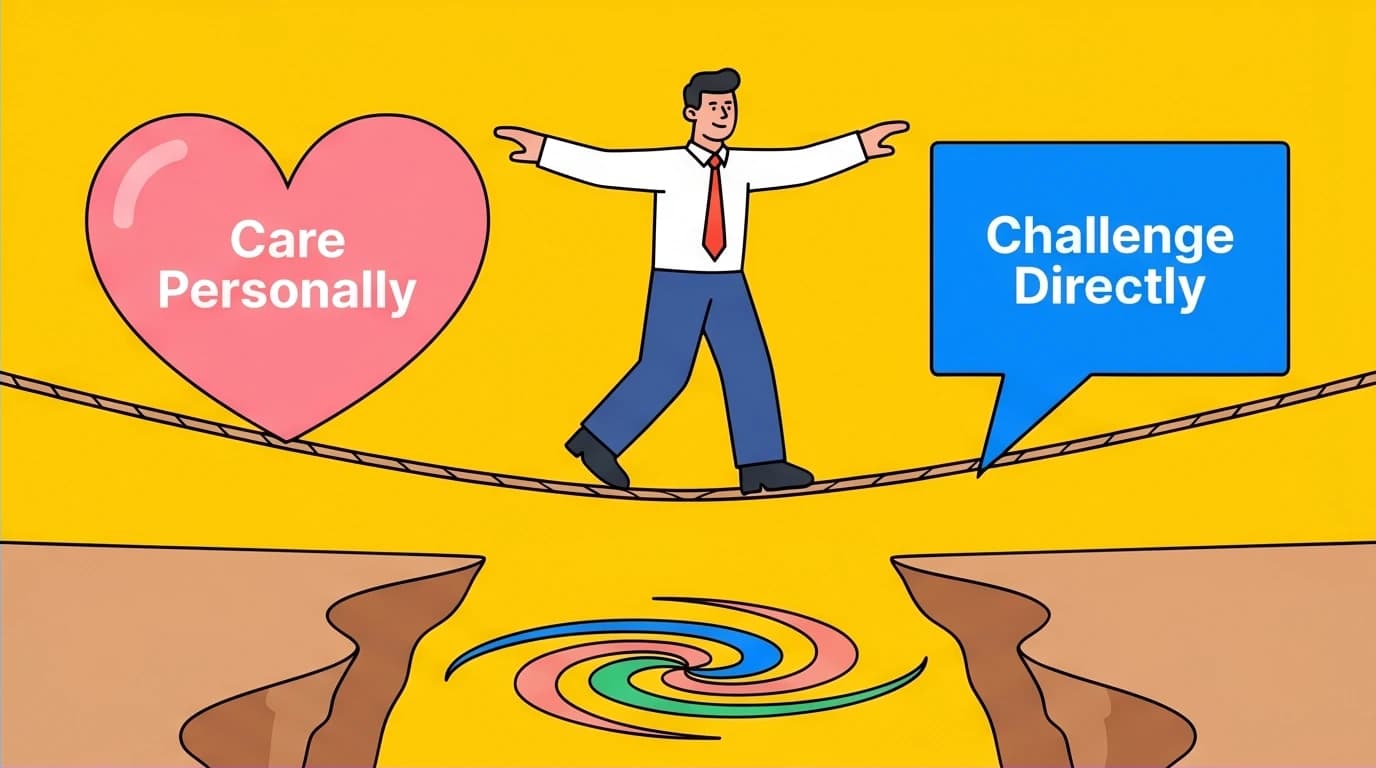
Radical Candor by Kim Scott
Many supervisors fall into the trap of being "too nice," which eventually leads to disastrous performance reviews because the employee never knew they were failing. If you are looking for a how to manage people book that perfectly balances empathy with strict performance standards, this is your baseline.
- The Core Framework: Scott divides management styles into a four-quadrant matrix based on two axes: Care Personally and Challenge Directly.
- Ruinous Empathy: Caring but not challenging. You avoid giving tough feedback to spare their feelings, ultimately getting them fired.
- Obnoxious Aggression: Challenging but not caring. The classic "brilliant jerk" manager approach.
- Manipulative Insincerity: Neither caring nor challenging. Backstabbing and political maneuvering.
- Radical Candor: Caring personally while challenging directly.
- Immediate Application: Stop sandwiching negative feedback between two empty compliments. Next time an employee submits subpar work, say: "I am telling you this because I know what you are capable of, and this draft does not meet that standard. Let's look at the data discrepancies on page four."
To truly master the delicate balance between caring personally and challenging directly, you will want to grab a copy of Kim Scott's comprehensive guide. It is packed with actionable advice on building authentic trust with your direct reports, ensuring that your critiques land as helpful guidance rather than personal attacks. Adding this to your reading list will completely transform how you approach your quarterly performance reviews and daily feedback sessions.
Radical Candor
Kim Scott
19 Duration7 Key Points4.6 RateHandling Toxic Behaviors and Underperformers
HR professionals and frontline managers share a common nightmare: the toxic employee who performs just well enough to avoid automatic termination but poisons the workplace culture. You need scripts and legal boundaries, not just theory.

101 Tough Conversations to Have with Employees by Paul Falcone
If you are searching for a specific managing difficult employees book, this is the most practical tool you can keep on your desk. Falcone provides exact dialogue templates for situations that most managers pray they never have to face.
- The Core Framework (Scripting and Compliance): The book shifts the burden of responsibility back to the employee. It provides word-for-word scripts for addressing issues like inappropriate workplace attire, chronic absenteeism, offensive jokes, or a severe drop in motivation.
- Immediate Application: If an employee constantly challenges your authority in team meetings, use Falcone’s template for insubordination. Instead of arguing in public, pull them aside and state: "When you roll your eyes and interrupt me during the weekly sync, it disrupts the agenda and undermines the team's focus. I need your commitment right now that you will bring your concerns to me in private rather than derailing the group." Document this conversation immediately for HR compliance.
The No Asshole Rule by Robert I. Sutton
Sometimes, the highest-performing salesperson is also the person driving your turnover rate through the roof. Sutton’s book provides the analytical justification supervisors need to fire brilliant jerks.
- The Core Framework (Total Cost of Ownership): Sutton teaches managers how to calculate the actual financial and emotional cost of keeping a toxic employee. This includes the time spent managing their conflicts, the cost of replacing staff who quit because of them, and the legal risks of their behavior.
- Immediate Application: If your executive team is hesitant to let go of a high-revenue earner who bullies junior staff, use Sutton’s framework. Calculate the "Total Cost of Jerk" (TCJ) and present it as a financial metric to leadership. Prove that the toxic employee is actually a net negative to the company's bottom line.


LeapAhead

Overwhelmed by management challenges? Get 15-minute summaries of books like Crucial Conversations and Radical Candor to find actionable solutions fast.
Building Resilient Team Dynamics from Scratch
Once you have stopped the bleeding by handling the immediate conflicts, you must build a structure that prevents these issues from recurring. Great people management books focus on architecting an environment where peer-to-peer accountability replaces top-down micromanagement.
The Five Dysfunctions of a Team by Patrick Lencioni
For supervisors trying to unify a fractured group, typical team management books often suggest trust-falls and happy hours. Lencioni correctly identifies that real teamwork requires structural vulnerability and a willingness to engage in productive conflict.
- The Core Framework (The Pyramid): Teams fail sequentially from the bottom up:
- Absence of Trust: Team members hide their weaknesses and mistakes.
- Fear of Conflict: Without trust, people avoid passionate debate, leading to "artificial harmony."
- Lack of Commitment: Because they did not argue their case, they do not buy into decisions.
- Avoidance of Accountability: Without commitment, peers will not call out each other's poor performance.
- Inattention to Results: Ego and individual status replace team success.
- Immediate Application: Attack the "Fear of Conflict." In your next meeting, intentionally mine for conflict. When a new process is proposed and everyone nods silently, do not move on. Say, "I know there are downsides to this approach. We are not leaving this room until we identify at least three major risks." Force the team to break the artificial harmony.
Lencioni's unique, fable-based storytelling approach makes diagnosing your team's specific vulnerabilities incredibly intuitive. If you want a step-by-step roadmap for moving your group past the pitfalls of artificial harmony and into a phase of true accountability and commitment, this business bestseller deserves a permanent spot on your office shelf. It is the perfect playbook for aligning a fractured group around shared, high-stakes goals.

The Five Dysfunctions of a Team
Patrick Lencioni
33 Duration8 Key Points4.5 Rate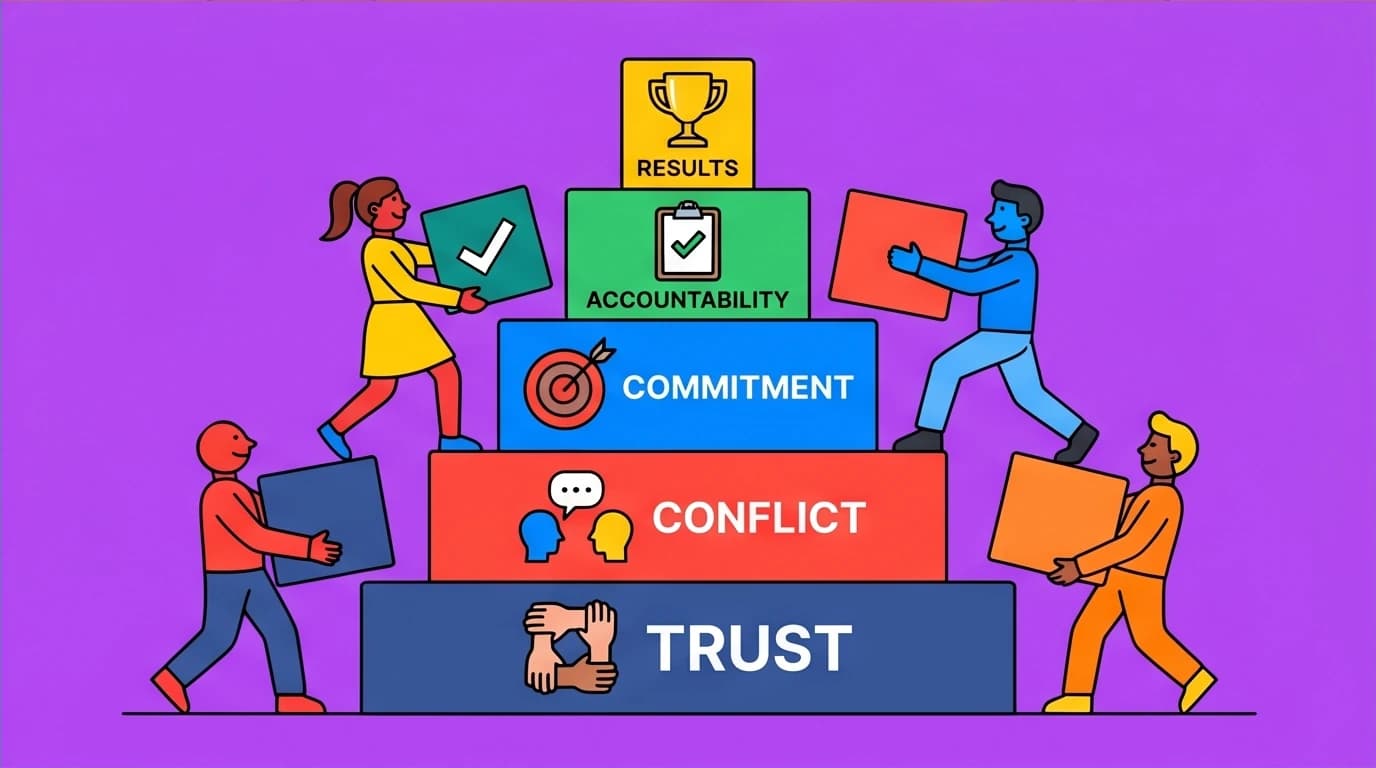
LeapAhead: Key Insights from Management Classics
For managers who feel the pressure to implement the frameworks in these books but lack the time for deep reading, a different approach is needed. LeapAhead is a microlearning app that distills the core ideas of bestselling nonfiction into 15-minute audio and text summaries. It is designed for absorbing critical knowledge during a commute or a short break, turning fragmented time into a powerful learning habit.
- The Core Framework (The Microlearning Method): Rather than presenting one static framework, LeapAhead offers a method for continuous learning.
- Actionable Summaries: Get the key frameworks from books like The Five Dysfunctions of a Team and Radical Candor without the fluff, allowing for rapid review before a critical meeting.
- Audio and Visual Learning: Listen to summaries during your commute or use visual infographics to grasp complex ideas at a glance, catering to different learning styles.
- Habit Formation Tools: Build consistency with daily learning goals and check-ins, helping to clear your "reading debt" of management books piling up on your desk.
- Personalized Recommendations: The app suggests titles from its 30,000+ book library based on your goals, whether that’s improving communication, leadership, or productivity.
- Immediate Application: Facing a difficult performance review this afternoon? Instead of trying to skim a 300-page book, use LeapAhead to listen to a 15-minute summary of Crucial Conversations. You will walk into the meeting with the core 'STATE' framework fresh in your mind, ready to lead a constructive dialogue.
It’s important to note the trade-offs. Summaries cannot replace the deep-dive case studies and nuanced storytelling in the original books. Furthermore, the experience is mobile-first, which may feel limiting for those who prefer to study on a desktop. However, for busy managers needing to grasp essential tactics quickly, it’s an exceptionally practical tool.
The Making of a Manager by Julie Zhuo
Promoting top individual contributors to management roles without training is the leading cause of toxic teams. Zhuo’s guide is critical for anyone transitioning from peer to boss, offering a grounded, highly relatable perspective on the daily mechanics of management.
- The Core Framework (Multiplier Effect): A manager's job is not to do the work; it is to build an environment where the team can achieve a better outcome than the manager could alone. Zhuo breaks down the mechanics of effective 1-on-1s, not as status updates, but as unblocking sessions.
- Immediate Application: Restructure your weekly 1-on-1s. Stop asking "What did you get done this week?" Instead, mandate that the employee brings the agenda. Your only questions should be: "What is the biggest bottleneck slowing you down right now?" and "How can I use my authority to remove that roadblock for you?"
Navigating the messy transition from an individual contributor to a leadership role can often feel isolating, but Zhuo’s field-tested insights act like having a personal mentor in your pocket. If you are serious about refining your weekly one-on-one meetings and actively unblocking your team's true potential, picking up this practical handbook is a smart investment. It will help you build the confidence required to lead a thriving, highly motivated department.
The Making of a Manager
Julie Zhuo
47 Duration9 Key Points4.6 RateFor those just starting their leadership journey, finding the right resources is crucial.
LeapAhead
Build a powerful learning habit in just 15 minutes a day. Download LeapAhead to turn your commute into a leadership masterclass.
Creating a Culture That Rejects Toxicity
The ultimate goal of studying the best books on managing people is not to become a permanent conflict-mediator, but to build a self-correcting culture. When you implement Radical Candor, the STATE path from Crucial Conversations, and eliminate artificial harmony, your team will start managing themselves.
Top-tier supervisors do not waste their time playing office politics. They rely on these established frameworks to strip the emotion out of performance management, relying on objective data, direct communication, and unyielding boundaries. Whether you download the audiobooks on Audible for your commute or keep physical copies from Barnes & Noble on your office shelf, these resources are non-negotiable assets for your professional toolkit.
While the books listed here are tactical tools for managing difficult team dynamics, strengthening your core leadership philosophy is equally important.
FAQ
What is the best book for a first-time manager dealing with an older, experienced team?
The Making of a Manager by Julie Zhuo is highly recommended for this scenario. It directly addresses the impostor syndrome new managers face and provides frameworks for shifting your mindset from "giving orders" to "unblocking obstacles." By focusing on how you can facilitate their work rather than micromanaging their tasks, you build respect with seasoned veterans quickly.
The Making of a Manager by Julie Zhuo is highly recommended for this scenario. It directly addresses the impostor syndrome new managers face and provides frameworks for shifting your mindset from "giving orders" to "unblocking obstacles." By focusing on how you can facilitate their work rather than micromanaging their tasks, you build respect with seasoned veterans quickly.
Are there specific books that provide exact scripts for warning or firing someone?
Yes. 101 Tough Conversations to Have with Employees by Paul Falcone is exactly what you need. It is written with a strong understanding of HR compliance and labor practices in the US. It gives you precise wording to ensure your feedback is documented, legally sound, and leaves no room for misunderstanding when placing someone on a Performance Improvement Plan or executing a termination.
Yes. 101 Tough Conversations to Have with Employees by Paul Falcone is exactly what you need. It is written with a strong understanding of HR compliance and labor practices in the US. It gives you precise wording to ensure your feedback is documented, legally sound, and leaves no room for misunderstanding when placing someone on a Performance Improvement Plan or executing a termination.
How do I find time to read management books when I'm constantly dealing with team crises?
You do not need to read these books cover-to-cover to get value. Identify your immediate crisis and read the relevant chapter. If you are dealing with an outburst, jump straight to the "STATE path" chapter in Crucial Conversations. Additionally, utilizing platforms like Audible during your commute allows you to absorb these frameworks without dedicating extra hours of your day.
You do not need to read these books cover-to-cover to get value. Identify your immediate crisis and read the relevant chapter. If you are dealing with an outburst, jump straight to the "STATE path" chapter in Crucial Conversations. Additionally, utilizing platforms like Audible during your commute allows you to absorb these frameworks without dedicating extra hours of your day.
Can these frameworks work on a genuinely toxic employee, or are they only for normal conflicts?
Frameworks like Crucial Conversations and Radical Candor are excellent for miscommunications and defensive employees. However, if an employee is actively malicious, bullying others, or manipulating data, you need to pivot to the strategies found in The No Asshole Rule and Falcone’s scripting. Your goal shifts from "repairing the relationship" to "documenting the behavior for immediate, risk-free termination."
Frameworks like Crucial Conversations and Radical Candor are excellent for miscommunications and defensive employees. However, if an employee is actively malicious, bullying others, or manipulating data, you need to pivot to the strategies found in The No Asshole Rule and Falcone’s scripting. Your goal shifts from "repairing the relationship" to "documenting the behavior for immediate, risk-free termination."