


You buy a new book, feel a massive surge of inspiration, and swear your daily routine is about to change forever. Two weeks later, you are back on the couch scrolling through your phone, feeling even more stuck than before.
Relying on fleeting inspiration is a losing game. Motivation without a system is just an emotion. If you want to stop starting over, you need to understand the actual mechanics of human drive.
Finding the right resources means filtering out the fluff. We compiled a list of the top motivational books that skip the cheap clichés and deliver practical, science-backed frameworks to get you moving.
Why You Keep Losing Your Spark
Most people fundamentally misunderstand how human drive works. They wait to feel inspired before they take action. This is entirely backward.
Action produces results, and results produce motivation. When you read the right material, you realize that high achievers do not possess a magical, limitless supply of energy. They simply build better systems, design environments that minimize friction, and understand their intrinsic psychological triggers.
Before diving into specific systems, it's helpful to understand the root causes of that lost spark.
If you are tired of empty hype, you need practical guides. Here are the standout titles that actually move the needle.

The Core Library: 5 Books to Rewire Your Drive
1. Atomic Habits by James Clear
When people look for books about self discipline, they usually expect rigid schedules and harsh military-style advice. James Clear takes the exact opposite approach.
Atomic Habits argues that you do not rise to the level of your goals; you fall to the level of your systems. Clear explains how tiny, one-percent improvements compound over time into massive results. He breaks down the psychology of habit formation into a simple loop: cue, craving, response, and reward.
- The Core Concept: Stop focusing on the end goal and start optimizing the daily system. Make good habits obvious, attractive, easy, and satisfying.
- Best For: Anyone who struggles with procrastination and needs a highly actionable, step-by-step method to change their daily routines.
- Actionable Takeaway: Implement "habit stacking." Tie a new habit you want to start to a current habit you already do every single day.
Reading a quick summary of James Clear’s framework is a great starting point, but immersing yourself in the full text will completely change how you view your daily routines. If you want to master the art of habit stacking, design an environment that sets you up for success, and finally break free from the cycle of procrastination, grabbing your own copy of this modern classic is highly recommended. It provides the exact blueprint you need to make good habits inevitable and bad habits impossible.

Atomic Habits
James Clear
 26 Duration
 8 Key Points
 4.7 Rate
2. The Motivation Myth by Jeff Haden
If you only read one of the many self help books to get motivated, make it this one. Jeff Haden shatters the idea that motivation is a lightning bolt that strikes you from above.
Haden proves that motivation is actually a byproduct. You do the work, you see a tiny sliver of success, you feel good about that success, and that feeling gives you the motivation to keep going. It is a continuous loop fueled by execution, not positive thinking.
- The Core Concept: Action precedes motivation. Success is a process, and you can engineer it by focusing purely on the daily tasks rather than the distant finish line.
- Best For: Dreamers who have huge ambitions but struggle to take the very first step.
- Actionable Takeaway: Create a strict process for your goal and measure your success by whether you completed today's process, entirely ignoring the end goal for now.
The concept that action must come before motivation is incredibly powerful, and sometimes you need a practical, immediate tool to force that initial action. If you struggle with chronic overthinking and need a dead-simple strategy to bypass your brain's excuses and take that crucial first step, there is another brilliant resource that pairs perfectly with this action-first philosophy. It teaches a foolproof, science-backed countdown method to help you beat hesitation and instantly launch yourself into a productive state.
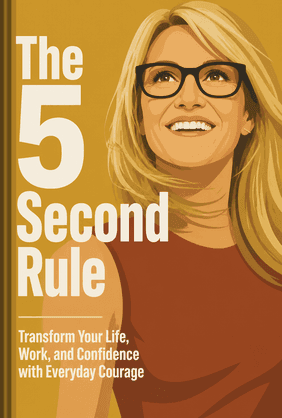
The 5 Second Rule
Mel Robbins
36 Duration8 Key Points4.6 Rate3. Drive: The Surprising Truth About What Motivates Us by Daniel H. Pink
Daniel Pink dives deep into the behavioral science of what makes humans tick. He exposes why the traditional "carrot and stick" approach—rewarding good behavior and punishing bad behavior—completely fails in the modern world.
Pink identifies three elements of true intrinsic motivation: Autonomy (the desire to direct our own lives), Mastery (the urge to get better at something that matters), and Purpose (the yearning to do what we do in the service of something larger than ourselves).
- The Core Concept: External rewards destroy long-term drive. You must build your work and goals around internal fulfillment.
- Best For: Leaders, managers, and independent creators trying to find a deeper reason to push through difficult projects.
- Actionable Takeaway: Audit your current goals. If you are only chasing a paycheck or external validation, pivot your focus to mastering a specific skill within that job.
It is one thing to know that autonomy, mastery, and purpose are the true engines of motivation, but it is another to see the fascinating behavioral science that proves it. If you are ready to stop relying on cheap external rewards and want to discover the deep, intrinsic drivers that will keep you engaged in your work for the long haul, diving into Pink's full research is an absolute must. His insights will revolutionize how you manage your own time, energy, and ambitious career goals.

Drive
Daniel H. Pink
24 Duration11 Key Points4.5 RateThese insights into intrinsic motivation are especially powerful for those in leadership roles.
4. Can't Hurt Me by David Goggins
Sometimes, you do not need a gentle system. Sometimes you need a brutal reality check. David Goggins went from an overweight, depressed young man to a Navy SEAL and ultra-endurance athlete.
This book is less about building neat little habits and more about callousing your mind to handle severe discomfort. Goggins introduces the "40% Rule," which states that when your mind tells you that you are completely exhausted, you have only tapped into 40% of your actual capacity.
- The Core Concept: You are capable of significantly more than your brain tells you. Pain and discomfort are the exact tools required for growth.
- Best For: Individuals facing severe physical or mental roadblocks who need to radically increase their mental toughness.
- Actionable Takeaway: Start an "Accountability Mirror." Be brutally honest with yourself about your flaws and excuses, write them on sticky notes, and post them on your mirror to face them every morning.

Goggins’ story is a masterclass in the sheer, unfiltered power of the human will. If you are currently facing massive mental roadblocks, feeling stuck in a rut, or simply want to discover what you are truly capable of when you stop making excuses, experiencing his raw journey firsthand will permanently redefine your limits. It is the ultimate reality check for anyone who needs to build unbreakable mental toughness and push past the artificial barriers created by their own mind.
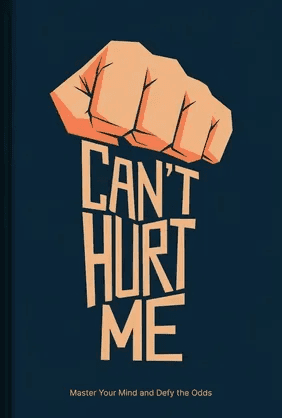
Can't Hurt Me
David Goggins, Adam Skolnick, et al.
26 Duration10 Key Points4.6 Rate5. Willpower Doesn't Work by Benjamin Hardy
Benjamin Hardy challenges the very foundation of self-discipline. He argues that trying to force yourself to do difficult things in a distracting environment is a guaranteed recipe for failure.
Instead of fighting distractions with pure willpower, Hardy teaches you how to design your environment to make failure impossible. If you want to eat healthy, remove all junk food from your house. If you want to read more, put your phone in another room and place a book on your pillow.
- The Core Concept: Outsource your self-control to your environment.
- Best For: People who feel incredibly distracted by their phones, workspaces, or social circles.
- Actionable Takeaway: Engineer "forcing functions" into your life. Pay upfront for a fitness class so you lose money if you skip it, or block distracting websites on your computer during work hours.
How to Actually Apply What You Read
Reading a book releases dopamine. It tricks your brain into feeling like you actually accomplished something just because you read about someone else doing it. To avoid the trap of passive consumption, you need a strategy.

1. Digest Before You Commit
If you are incredibly busy, do not buy five hardcover books from Barnes & Noble and let them gather dust on your nightstand. Start by listening to high-quality book summaries on motivation. Apps and platforms that compress non-fiction ideas allow you to test a concept. If the framework clicks with your current life situation, buy the full version to study the nuances.
If you are incredibly busy, do not buy five hardcover books from Barnes & Noble and let them gather dust on your nightstand. Start by listening to high-quality book summaries on motivation. Apps and platforms that compress non-fiction ideas allow you to test a concept. If the framework clicks with your current life situation, buy the full version to study the nuances.
For a focused approach to this, an app designed to distill these powerful ideas can be a game-changer.

Get high-quality summaries of these motivational books and more, helping you test the concepts and clear your 'to-read' list on a busy schedule.

Download LeapAhead App now
2. Switch Your Format
If you struggle to sit down and read, switch to audio. Platforms like Audible or Apple Books allow you to consume hours of high-level concepts while driving, walking the dog, or at the gym. Pairing physical movement with self-improvement content often helps cement the ideas in your brain.
If you struggle to sit down and read, switch to audio. Platforms like Audible or Apple Books allow you to consume hours of high-level concepts while driving, walking the dog, or at the gym. Pairing physical movement with self-improvement content often helps cement the ideas in your brain.
Even if you only have a few minutes during your commute, listening to the core ideas from a book can be enough to spark real change.
Turn your commute into a powerful learning session with 15-minute audio summaries of the world's best motivational and self-help books.
Download LeapAhead App now
3. Implement One Concept at a Time
Do not try to change your entire life on a Sunday night. Pick one single framework from one book. If you choose Atomic Habits, spend the next 30 days doing nothing but habit stacking. Track your progress on Goodreads or in a physical journal. Ignore everything else until that one habit is locked in.
Do not try to change your entire life on a Sunday night. Pick one single framework from one book. If you choose Atomic Habits, spend the next 30 days doing nothing but habit stacking. Track your progress on Goodreads or in a physical journal. Ignore everything else until that one habit is locked in.
Applying these frameworks requires patience, and the way you view your own progress will dictate whether you stick with them or quit. If you want to ensure that your new habits actually stick, you must fundamentally shift how you perceive failure and success. To dive deeper into why some people push through setbacks while others give up, understanding the underlying psychology of your own potential is crucial. This foundational read explores how adopting a growth-oriented framework can completely transform your long-term trajectory.
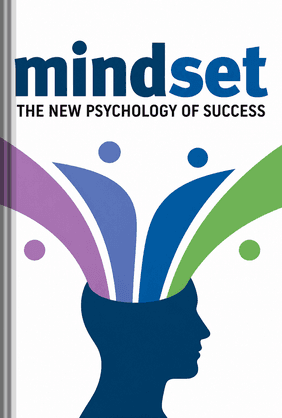
Mindset
Carol S. Dweck
51 Duration8 Key Points4.6 RateOnce you have the right mindset and a system in place, the next challenge is consistency. Maintaining drive over the long term requires a different set of skills.
FAQ
What is the difference between motivation and discipline?
Motivation is a temporary emotional state; it is the desire to do something. Discipline is a trained behavioral system; it is the act of doing something regardless of how you feel. The books listed above teach you how to use initial motivation to build permanent discipline.
Motivation is a temporary emotional state; it is the desire to do something. Discipline is a trained behavioral system; it is the act of doing something regardless of how you feel. The books listed above teach you how to use initial motivation to build permanent discipline.
Should I read these books or listen to the audiobooks?
It depends entirely on your lifestyle. If you need to highlight passages and take notes to learn, buy a physical copy from Amazon or a local bookstore. If you have a long daily commute, an audiobook is a highly efficient way to absorb the material. Many readers actually buy both formats for their absolute favorite titles.
It depends entirely on your lifestyle. If you need to highlight passages and take notes to learn, buy a physical copy from Amazon or a local bookstore. If you have a long daily commute, an audiobook is a highly efficient way to absorb the material. Many readers actually buy both formats for their absolute favorite titles.
I have read dozens of motivational books but nothing changes. What is wrong with me?
You are trapped in a consumption loop. You are using the act of reading as a substitute for doing the actual work. Stop reading new books. Pick the one framework that resonated with you the most, close the book, and force yourself to execute just one small action step for the next 14 days.
You are trapped in a consumption loop. You are using the act of reading as a substitute for doing the actual work. Stop reading new books. Pick the one framework that resonated with you the most, close the book, and force yourself to execute just one small action step for the next 14 days.