

You are tired of generic advice telling you to take a deep breath, drink chamomile tea, or just think positive. Your mind is racing, your schedule is packed, and you need to understand exactly what is happening in your nervous system. You want expert-backed solutions to regain control, but sifting through thousands of psychology titles on Amazon or Barnes & Noble takes time you simply do not have.

To conquer chronic anxiety, you must first understand the machinery behind it. This means looking past superficial tips and focusing on foundational mechanisms. Below is a highly curated, analytical breakdown of the most effective literature available to help you decode and dismantle your stress response.
Why Standard Advice Fails (And What to Read Instead)
Most standard stress and anxiety self-help books fail because they treat the symptom instead of the system. They offer coping mechanisms—like bubble baths or positive affirmations—without explaining the underlying biology of why your brain perceives a missed email as a life-or-death threat.
You do not need another list of 10 quick tips. You need to understand allostatic load, the amygdala's hijack process, and how to complete the biological stress cycle. The following recommendations are categorized by the exact type of psychological or physiological hurdle you are facing.
The Core Library: Top Stress Relief Books by Category
1. For the Science Geek: Understanding the Biology of Stress
If you want to know why your heart pounds when your boss asks for a meeting, you must understand your evolutionary hardware.
The Book: Why Zebras Don't Get Ulcers by Robert M. Sapolsky
Sapolsky, a Stanford biologist and neurologist, explains how the human body is perfectly adapted to handle short-term physical emergencies (like running from a predator) but poorly equipped for chronic, long-term psychological stress (like a 30-year mortgage or a toxic workplace).
Sapolsky, a Stanford biologist and neurologist, explains how the human body is perfectly adapted to handle short-term physical emergencies (like running from a predator) but poorly equipped for chronic, long-term psychological stress (like a 30-year mortgage or a toxic workplace).
- Core Insight: Zebras experience intense stress when chased by a lion. Once they escape, the stress response completely shuts off. Humans, however, turn on the exact same physiological response just by thinking about taxes.
- Actionable Takeaway: You must learn to separate psychological stressors from physical threats. The book gives you the biological framework to realize when you are unnecessarily flooding your system with cortisol.
If you are ready to stop letting everyday inconveniences send your nervous system into overdrive, this foundational read by Robert Sapolsky is a must-have. It is incredibly witty, deeply scientific, and will completely change how you view your body's stress response. Grab a copy to start rewiring how you react to modern-day pressures.
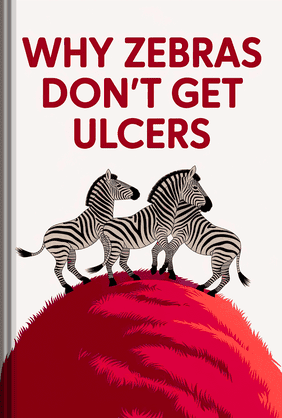
Why Zebras Don't Get Ulcers
Robert M. Sapolsky
 20 Duration
 8 Key Points
 4.8 Rate
2. For the Over-Thinker: Breaking Mental Loops
Your physical environment might be safe, but your internal dialogue is driving you into the ground.
The Book: Chatter: The Voice in Our Head, Why It Matters, and How to Harness It by Ethan Kross
Kross, an award-winning psychologist, explores the silent conversations we have with ourselves. When looking for books about stress, readers often ignore the fact that they are their own primary stressor. Kross explains how introspection can quickly turn into rumination.
Kross, an award-winning psychologist, explores the silent conversations we have with ourselves. When looking for books about stress, readers often ignore the fact that they are their own primary stressor. Kross explains how introspection can quickly turn into rumination.
- Core Insight: Distance is the antidote to rumination.
- Actionable Takeaway: Implement "distanced self-talk." Instead of thinking, "Why am I so stressed?", use your own name: "Why is John so stressed?" This slight linguistic shift moves your brain out of the emotional center and into the prefrontal cortex, giving you objective clarity.
For anyone who lies awake at 2 AM replaying conversations or worrying about tomorrow's to-do list, Ethan Kross offers a genuine lifeline. Chatter doesn't just tell you to meditate; it gives you concrete, science-backed tools to step outside your own mental noise. Add this to your nightstand if you want to turn your inner critic into a helpful coach.
While Kross provides powerful tools to reframe your inner dialogue, other techniques can help quiet the noise altogether. For a deeper look into building a calmer mindset, explore other practical exercises.
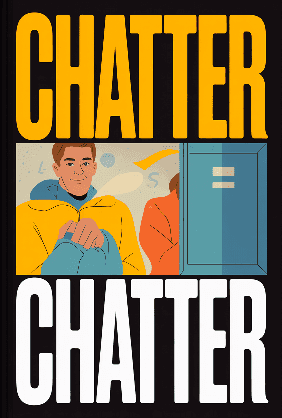
Chatter
Ethan Kross, Ph.D.
23 Duration10 Key Points4.3 Rate
3. For the Time-Crunched Learner: Building a Consistent Habit
For many, the idea of adding a 300-page book to an already overflowing schedule is a source of stress in itself.
The App: LeapAhead
LeapAhead addresses this "reading debt" by distilling the core ideas of bestselling nonfiction books into 15-minute audio and text summaries. It's designed for absorbing knowledge during a commute, workout, or coffee break, turning fragmented time into a powerful learning habit without the pressure.
LeapAhead addresses this "reading debt" by distilling the core ideas of bestselling nonfiction books into 15-minute audio and text summaries. It's designed for absorbing knowledge during a commute, workout, or coffee break, turning fragmented time into a powerful learning habit without the pressure.
- Core Insight: Consistent, small steps are more effective for long-term growth than occasional, overwhelming efforts. With a library of over 30,000 titles, LeapAhead allows you to absorb key psychological frameworks from top authors in manageable bites, helping you build resilience without burnout.
- Actionable Takeaway: Set a daily goal in the app to listen to one summary per day. This simple action turns idle time into a structured learning routine, reinforcing key concepts about stress management and helping you build a mental toolkit that compounds over time.
LeapAhead is an excellent tool for anyone who wants to learn but feels they lack the time and energy for traditional reading. Its focus on micro-habits makes personal growth feel achievable. However, those seeking deep, academic nuance will find the summaries a starting point rather than a replacement for full texts. The mobile-first design is perfect for on-the-go learning but may feel less suited for long desktop study sessions.
Beyond using summaries to save time, structuring your schedule itself can be a powerful tool for preventing overwhelm.
4. For the Exhausted Professional: Completing the Cycle
You know how to manage a project, but you do not know how to turn your brain off when the project is done.
The Book: Burnout: The Secret to Unlocking the Stress Cycle by Emily Nagoski and Amelia Nagoski
Burnout is not just a feeling; it is a biological backlog. The authors argue that dealing with the stressor (the thing causing the stress) is entirely different from dealing with the stress (the neurological and physical shift happening in your body).
Burnout is not just a feeling; it is a biological backlog. The authors argue that dealing with the stressor (the thing causing the stress) is entirely different from dealing with the stress (the neurological and physical shift happening in your body).
- Core Insight: Your body needs a physical signal that the threat has passed to complete the stress cycle.
- Actionable Takeaway: You cannot just think your way out of stress. You must move it through your body. A 20-minute run, a deep creative activity, or even a genuine belly laugh signals to your nervous system that you are finally safe.
When you are running on fumes, generic self-care tips like taking a bubble bath just don't cut it. The Nagoski sisters provide a brilliant, compassionate roadmap for actually releasing the exhaustion trapped in your body. If you have been feeling perpetually drained no matter how much you sleep, this book will be an absolute game-changer for your daily energy levels.
Completing the stress cycle is crucial, especially when the source of your exhaustion is professional pressure. For more specific strategies, it helps to understand the unique challenges of job-related strain.
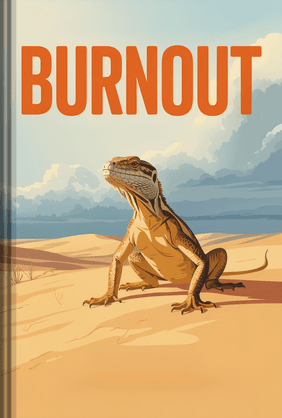
Burnout
Emily Nagoski, Ph.D., Amelia Nagoski, DMA
25 Duration9 Key Points4.5 RateHow to Choose the Right Book for Your Current State
Not all stress is created equal. Your reading list should match your specific friction point:
- If you are dealing with past trauma driving current anxiety: Read The Body Keeps the Score by Bessel van der Kolk. It is dense but necessary for understanding how unresolved trauma stores physical tension in the nervous system.
- If your stress stems from a lack of focus and digital overload: Read Stolen Focus by Johann Hari. It frames modern stress as a systemic issue regarding attention, rather than just an individual failing.
- If you need immediate mental frameworks to push through hard tasks: Read Meditations by Marcus Aurelius. Ancient Stoicism remains one of the most effective cognitive behavioral tools for separating what you can control from what you cannot.
If your stress feels heavier than just a busy schedule—perhaps rooted in past experiences or lingering trauma—Bessel van der Kolk's masterpiece is essential reading. It beautifully bridges the gap between neuroscience and healing, explaining exactly why our bodies hold onto physical tension. Picking up this book is a profound first step toward reclaiming your overall well-being.
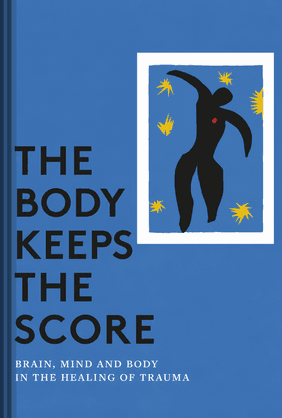
The Body Keeps The Score
Bessel Van Der Kolk
32 Duration10 Key Points4.5 RateShort on Time? How to Use Book Summaries on Stress
If you are commuting 40 miles a day or your schedule is packed with back-to-back meetings, sitting down with a 400-page hardcover is not going to happen. In fact, adding another task to your to-do list might just create more anxiety.
This is where book summaries on stress become highly strategic assets. Services like Blinkist, Shortform, or highly curated YouTube summaries allow you to extract the core frameworks of the best books on stress management in under 20 minutes.
The Strategy:
- Filter First: Listen to a summary of Sapolsky or Kross while driving.
- Test the Framework: Pick one actionable concept from the summary—like Kross's distanced self-talk—and apply it for three days.
- Go Deep Later: If the technique works, buy the full audiobook on Audible or the physical copy to dig into the nuance. Use summaries as an executive brief, not a complete replacement for deep learning.

Overwhelmed by your reading list? Get key insights from the best stress management books in just 15 minutes with LeapAhead.
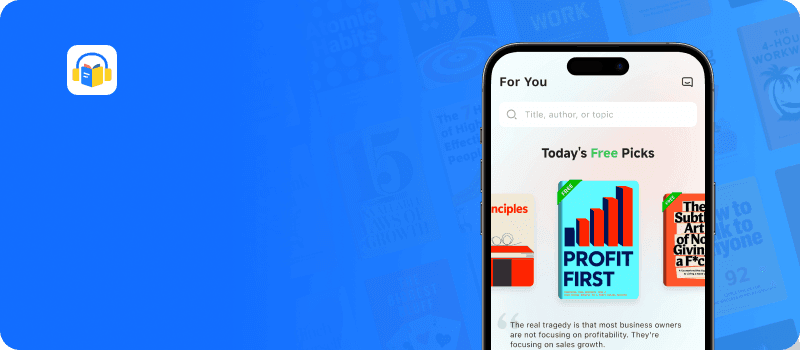
Download LeapAhead App now
Common Pitfalls When Reading About Anxiety
The Knowledge Trap

The biggest mistake high-performers make is assuming that understanding a problem is the same as solving it. You can read the top stress relief books in the world, memorize the function of the amygdala, and still have a panic attack. Reading releases dopamine, which makes you feel productive. But if you do not actively practice the interventions—like completing the stress cycle through exercise—the knowledge is useless.
Reading the Wrong Tone
If you are already overwhelmed, do not pick up a dense, academic textbook. Start with something highly narrative and engaging. Match the density of the book to your current mental bandwidth.
If you are already overwhelmed, do not pick up a dense, academic textbook. Start with something highly narrative and engaging. Match the density of the book to your current mental bandwidth.
Over-identifying with the Diagnosis
Sometimes, reading too many books about stress causes you to hyper-fixate on your symptoms. You start analyzing every minor heart flutter. Read for solutions and frameworks, not to obsess over the pathology.
Sometimes, reading too many books about stress causes you to hyper-fixate on your symptoms. You start analyzing every minor heart flutter. Read for solutions and frameworks, not to obsess over the pathology.
Turn your commute into a masterclass on resilience. Listen to summaries of books like *Chatter* and *Burnout* with LeapAhead.
Download LeapAhead App now
FAQ
What if I am too stressed to sit down and read a book?
Start with audiobooks. Listen to them on Audible or Apple Books while doing low-stakes physical tasks like walking the dog or doing the dishes. Physical movement combined with listening helps burn off excess adrenaline, making it easier to absorb the information without feeling restless.
Start with audiobooks. Listen to them on Audible or Apple Books while doing low-stakes physical tasks like walking the dog or doing the dishes. Physical movement combined with listening helps burn off excess adrenaline, making it easier to absorb the information without feeling restless.
Are standard productivity books helpful for stress management?
Sometimes, but often they backfire. If your stress comes from a disorganized system, a book like Getting Things Done might help reduce cognitive load. However, if your stress is emotional or physiological, forcing yourself to be more "productive" will simply accelerate burnout. Focus on nervous system regulation first, productivity second.
Sometimes, but often they backfire. If your stress comes from a disorganized system, a book like Getting Things Done might help reduce cognitive load. However, if your stress is emotional or physiological, forcing yourself to be more "productive" will simply accelerate burnout. Focus on nervous system regulation first, productivity second.
Do I need to read these books front to back?
Absolutely not. Non-fiction is a tool, not a novel. Look at the table of contents, find the chapter that directly addresses your current bottleneck, and read that first. Extract the value you need right now and leave the rest for later.
Absolutely not. Non-fiction is a tool, not a novel. Look at the table of contents, find the chapter that directly addresses your current bottleneck, and read that first. Extract the value you need right now and leave the rest for later.