


You stare at a major decision. You have the spreadsheets, the market data, and the 50-page reports. Yet, your gut tells you something entirely different. Should you trust that two-second instinct, or should you dig deeper into the numbers?
Malcolm Gladwell tackles this exact dilemma in his massive bestseller, Blink: The Power of Thinking Without Thinking. If you do not have the time to digest the full 300-page book currently sitting in your Amazon cart, this comprehensive Blink Malcolm Gladwell summary delivers the precise theories, case studies, and actionable advice you need.
We will strip away the fluff and dive straight into how your brain processes rapid cognition, why less information is sometimes better, and the dangerous traps your unconscious mind sets for you.
This summary is a great starting point, but if you’re trying to absorb the core ideas of dozens of books like Blink without adding to your 'to-read' pile, there's a smarter way to learn.

Digest the core lessons from thought-provoking books like Blink in just 15 minutes, turning your commute or downtime into valuable learning.
Download LeapAhead App now
The Core Concept: What is "Thin-Slicing"?
At the heart of any accurate Blink synopsis is the concept of "thin-slicing."
Thin-slicing refers to the ability of our unconscious mind to find patterns in situations and behavior based on very narrow slices of experience. When you meet someone new, interview a job candidate, or evaluate a new product, your brain computes a massive amount of data in milliseconds. It filters out distractions and focuses on the underlying signature of the situation.
Gladwell argues that snap judgments are not just careless guesses. When honed by experience, a two-second thin-slice can deliver the exact same, or even better, results than months of rational analysis.
However, Blink is not a blind defense of intuition. It is an investigation into when our instincts succeed and when they betray us.
Gladwell’s exploration of thin-slicing reveals the incredible power of our unconscious minds. To better understand the science behind these snap judgments, it’s helpful to look at the core psychological principles at play.
While this summary gives you a great high-level overview, nothing beats reading Gladwell's original work to fully grasp the nuances of rapid cognition. If you are fascinated by how your brain processes these split-second judgments and want to dive deeper into his captivating storytelling and real-world examples, grabbing a copy of the actual book is a no-brainer. It is an engaging, fast-paced read that will permanently change how you view your own decision-making process.
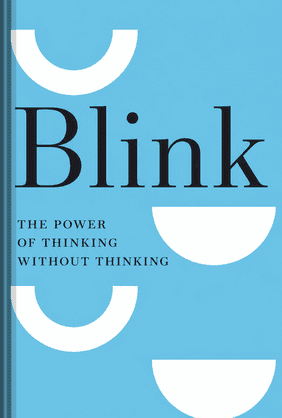
Blink
Malcolm Gladwell
 19 Duration
 9 Key Points
 4.5 Rate
Blink Chapter Summary: The Science of Snap Judgments
To truly grasp Gladwell’s framework, we need to break down the narrative step-by-step. This Blink chapter summary highlights the pivotal case studies that prove how rapid cognition works in the real world.
Chapter 1: The Theory of Thin Slices
The book opens with the famous case of the Getty Kouros. The J. Paul Getty Museum acquired a rare Greek statue for millions of dollars. A team of scientists spent months running core samples and analyzing the marble with electron microscopes, concluding the statue was genuine.
Yet, when world-class art historians looked at it, they experienced a sudden "chill." Within two seconds, their gut told them it was a fake. They could not immediately articulate why, but their unconscious mind had thin-sliced the statue's details and spotted anomalies the lab tests missed. The experts were right; the statue was a modern forgery.
The Lesson: True experts possess an unconscious database of knowledge. Their split-second reactions often bypass logical articulation but are highly accurate.
Chapter 2: The Locked Door
Why can't we explain our snap judgments? Gladwell calls the unconscious mind a "locked door."
He highlights the work of psychologist John Gottman, who can predict with 90% accuracy whether a married couple will divorce just by watching a 15-minute video of them talking. Gottman thin-slices the conversation, ignoring most of what is said and focusing purely on non-verbal cues. He looks specifically for the presence of "contempt," a reliable death knell for relationships.
The Lesson: We do not need to know everything to make a good prediction. We just need to identify the exact right data points and ignore the rest.
John Gottman’s ability to predict divorce with astonishing accuracy isn't just a fascinating anecdote about thin-slicing; it is a profound insight into human relationships. If you want to understand the underlying mechanics of what actually makes a marriage succeed or fail—and learn how to avoid the "contempt" trap mentioned here—Gottman has distilled his decades of clinical research into a highly practical guide. It's an essential read for anyone looking to strengthen their romantic partnerships using proven, science-backed methods.
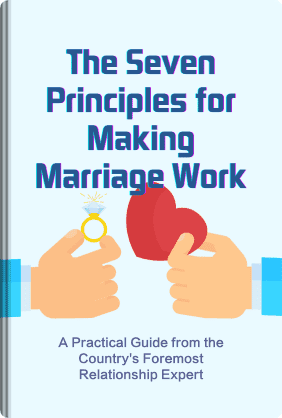
The Seven Principles for Making Marriage Work
John Gottman, Ph.D., Silver Nan
17 Duration7 Key Points4.3 RateChapter 3: The Warren Harding Error
This chapter exposes the dark side of rapid cognition: unconscious bias.
Warren Harding is widely considered one of the worst presidents in United States history. Why was he elected? Because he looked like a president. He was tall, handsome, and possessed a booming voice. Voters' unconscious minds thin-sliced his physical appearance and incorrectly equated it with leadership and competence.

Gladwell introduces the Implicit Association Test (IAT), which measures unconscious biases related to race, gender, and age. Even people who consciously believe in equality often harbor deep-seated biases that heavily influence their split-second decisions.
The Lesson: Your gut instinct is only as good as the environment that programmed it. If society feeds you stereotypes, your thin-slicing will be fundamentally flawed.
This example of bias is one of the key points often discussed in critical analyses of Gladwell's work. While his storytelling is compelling, some question the scientific rigor behind his conclusions.
The Warren Harding Error highlights a crucial flaw in how our brains process information: we are highly susceptible to hidden biases. If you want to explore the deeper mechanics of why our minds take these flawed shortcuts, you should look into the groundbreaking research of Nobel laureate Daniel Kahneman. His work meticulously maps out the battle between our fast, intuitive instincts and our slow, deliberate logic. It is the ultimate companion piece to understanding the psychological traps that lead to poor snap judgments.
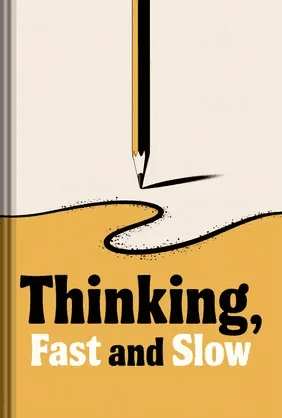
Thinking, Fast and Slow
Daniel Kahneman
53 Duration9 Key Points4.5 RateChapter 4: Paul Van Riper’s Big Victory
More information does not equal better decisions.
In the Millennium Challenge, a massive US military war game, the Pentagon deployed a highly sophisticated Blue Team with unlimited satellite data, supercomputers, and systemic analysis. They fought a rogue Middle Eastern commander played by retired Marine General Paul Van Riper.
Van Riper used rapid, instinctive decision-making. He relied on motorcycle messengers to evade wiretaps and launched sudden, unpredictable strikes. He destroyed the multi-billion-dollar Blue Team fleet in a matter of days. The Pentagon's team was paralyzed by "analysis paralysis," drowning in data while Van Riper acted on clear, thin-sliced intelligence.

The Lesson: In highly complex, fast-moving situations, stripping away excess information and relying on the rapid cognition of seasoned experts beats massive datasets.
Chapter 5: Kenna’s Dilemma
Market research is often totally wrong because it forces people to think consciously about things they decide unconsciously.
Gladwell explores the infamous Pepsi Challenge. In blind "sip tests," consumers consistently preferred the sweeter taste of Pepsi over Coca-Cola. Panicked, Coca-Cola changed its recipe to create "New Coke." It was a historic disaster. Why? Because a sip test measures a completely different reaction than drinking an entire can sitting on your couch.
Similarly, focus groups hated the Aeron chair when it first debuted because it looked weird. But once people sat in it for weeks, it became the best-selling office chair in history.
The Lesson: Be careful how you measure instinct. Forcing people to explain a snap judgment can completely alter the judgment itself.
The failure of "New Coke" perfectly illustrates how human behavior often defies logical market research. We don't always know why we like what we like, and forcing a rational explanation can lead to terrible business decisions. If you are intrigued by the hidden forces that drive our purchasing choices and daily behaviors, exploring behavioral economics will give you a massive advantage. There are fantastic resources that dive into why we consistently make illogical choices, proving that our irrationality is actually quite predictable.

Predictably Irrational
Dan Ariely
23 Duration10 Key Points4.6 RateChapter 6: Seven Seconds in the Bronx
When does thin-slicing fail catastrophically? Under extreme stress.
Gladwell details the tragic shooting of Amadou Diallo, an unarmed immigrant killed by four New York City police officers. When the officers approached Diallo, their stress levels spiked.
Research shows that when the human heart rate exceeds 145 beats per minute, complex motor skills break down, and "mind-reading" (the ability to accurately read facial expressions and intent) turns off. We become temporarily autistic. The officers panicked, misread Diallo pulling out his wallet as him pulling a gun, and fired 41 shots.

The Lesson: Rapid cognition requires a calm environment to function correctly. Extreme arousal and stress destroy the brain's ability to thin-slice accurately.
The fascinating case studies in Blink provide a foundation for improving our own judgment. By understanding when to trust our gut and when to be wary of bias, we can make smarter choices.
After seeing recommendations for books by Gladwell, Gottman, Kahneman, and Ariely, it's easy to feel like you have a mountain of reading ahead. If you want to tackle the big ideas from these authors without the time commitment, there's a more efficient way to learn.
Clear your 'reading debt' by listening to the key takeaways from these influential books and thousands more while you're commuting or at the gym.
Download LeapAhead App now
Blink Key Takeaways: How to Use Rapid Cognition
Understanding the theory is only half the battle. If you want to apply these concepts to your career, investing, or daily life, here are the Blink key takeaways you need to implement.
1. Respect the Power of Expertise
Gut feelings are not magic; they are the result of thousands of hours of practice. If you are a seasoned software engineer, trust your immediate suspicion about a flawed piece of code. If you are a novice real estate investor, do not trust your "gut" on a property. Your unconscious mind has not built the necessary database to thin-slice correctly. Intuition is earned.
2. Practice "Less is More"
When making a high-stakes decision, limit your variables. If you are hiring a manager, looking at 50 different metrics might blind you to the three that actually matter (e.g., past project success, communication style, emotional intelligence). Filter out the noise. Screen out factors like gender, age, or where they went to college, as these trigger the Warren Harding Error.
3. Audit Your Environment and Biases
You cannot entirely erase your unconscious biases, but you can manage them. Symphony orchestras revolutionized their hiring by implementing "blind auditions," where musicians play behind a screen. By removing visual cues, judges could only thin-slice the music itself. The result? A massive increase in the hiring of female musicians. Find ways to build "screens" in your own decision-making processes.
4. Rehearse for High-Stress Situations
If you know you will be in a high-stress environment—a tough negotiation, public speaking, or emergency response—you must practice until your reactions become automatic. Lowering your heart rate through preparation prevents the temporary "blindness" that leads to tragic mistakes.
FAQ
Is Blink worth reading if I already know the main idea?
Yes. While this summary gives you the core framework, Gladwell’s brilliance lies in his storytelling. The nuanced details of the psychological experiments and historical events he covers provide deeper context that helps cement these lessons in your mind. It is a fast, engaging read.
Yes. While this summary gives you the core framework, Gladwell’s brilliance lies in his storytelling. The nuanced details of the psychological experiments and historical events he covers provide deeper context that helps cement these lessons in your mind. It is a fast, engaging read.
How does Blink differ from Daniel Kahneman's Thinking, Fast and Slow?
Kahneman’s book is an academic, comprehensive look at System 1 (fast, emotional) and System 2 (slow, logical) thinking, often emphasizing how our fast thinking leads to cognitive errors. Gladwell’s Blink is more optimistic. He focuses heavily on the conditions under which System 1 (thin-slicing) is actually superior and how experts harness it.
Kahneman’s book is an academic, comprehensive look at System 1 (fast, emotional) and System 2 (slow, logical) thinking, often emphasizing how our fast thinking leads to cognitive errors. Gladwell’s Blink is more optimistic. He focuses heavily on the conditions under which System 1 (thin-slicing) is actually superior and how experts harness it.
Can I train my unconscious mind to make better snap judgments?
Absolutely. Your unconscious mind trains on the data you feed it. By deliberately immersing yourself in a specific field—whether that is looking at hundreds of data charts, reading thousands of lines of code, or analyzing consumer behavior—you build a robust mental database. The more diverse and accurate your experiences, the sharper your snap judgments become.
Absolutely. Your unconscious mind trains on the data you feed it. By deliberately immersing yourself in a specific field—whether that is looking at hundreds of data charts, reading thousands of lines of code, or analyzing consumer behavior—you build a robust mental database. The more diverse and accurate your experiences, the sharper your snap judgments become.
Why do focus groups often reject successful products?
Focus groups ask people to rationally explain decisions they normally make unconsciously. When consumers are forced to intellectualize a feeling, they tend to favor the familiar and reject true innovation (like the Aeron chair). True preferences are often observed in actual behavior, not in answering a survey.
Focus groups ask people to rationally explain decisions they normally make unconsciously. When consumers are forced to intellectualize a feeling, they tend to favor the familiar and reject true innovation (like the Aeron chair). True preferences are often observed in actual behavior, not in answering a survey.