


You are standing in the aisle at Barnes & Noble, or maybe scrolling through Amazon reviews, staring at the minimalist cover of Blink: The Power of Thinking Without Thinking. You already know Malcolm Gladwell is a phenomenal storyteller. But if you are a skeptical reader, a lingering question holds you back: Are these claims grounded in hard science, or is this just another collection of cherry-picked anecdotes?
When investing your time—or an Audible credit—you want to know if the underlying framework survives real scrutiny. Let’s break down exactly what works, what fails, and whether the book deserves a spot on your shelf.
The Core Premise: Understanding "Thin-Slicing"
To evaluate the book, you first need to grasp its central mechanic. Gladwell introduces the concept of "thin-slicing"—the ability of our unconscious mind to find patterns in situations and behavior based on very narrow slices of experience.
The book opens with a famous example: the Getty Museum purchased a Greek kouros statue that multiple scientific tests confirmed as authentic. Yet, several art historians took one look at it and instantly felt a wave of "intuitive repulsion." They could not immediately articulate why, but they knew it was a fake. (Spoiler: The experts were right).

Gladwell uses this to argue that snap judgments made in the blink of an eye can be just as accurate, if not more so, than months of careful analysis. He argues that too much information can actually paralyze our decision-making.
The Good: A Masterclass in Malcolm Gladwell Pop Psychology
There is a reason Blink sold millions of copies and remains a staple in book clubs across the United States. Gladwell knows how to hold an audience.
Unmatched Storytelling
Gladwell translates dense behavioral science into gripping narratives. Whether he is dissecting how a marriage counselor can predict divorce with 95% accuracy by watching a three-minute video clip, or explaining how military commanders use intuition to outmaneuver supercomputers in war games, the pacing is relentless. You are never bored.
Accessible Frameworks
He successfully democratizes psychology. He gives readers a vocabulary to describe phenomena they experience every day but cannot quite explain. The idea that our "adaptive unconscious" acts like a giant computer quietly processing data in the background is a powerful, highly relatable metaphor.
If you appreciate how Malcolm Gladwell breaks down dense psychological concepts into easily digestible, highly entertaining narratives, you should absolutely explore his other work. Before Blink became a massive hit, his debut book revolutionized how we understand the spread of trends and ideas in American culture. It features the same captivating storytelling and accessible frameworks, focusing on the tiny, everyday moments that trigger massive societal shifts. If you want another page-turner that will completely change how you view the world around you, this is the perfect addition to your reading list.
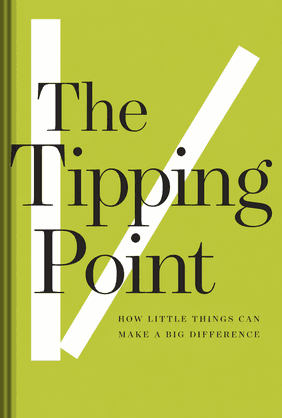
The Tipping Point
Malcolm Gladwell
 17 Duration
 7 Key Points
 4.7 Rate
Building a reading list of fascinating books like these is easy, but finding the time to get through them all can feel like a challenge.

Conquer your reading list by getting the core ideas from bestsellers like Gladwell's in 15-minute audio or text summaries, perfect for a busy schedule.
 LeapAhead
The Flaws: Diving Into Blink Book Criticism
If you are reading this Blink Malcolm Gladwell review to find out if the book is an airtight scientific document, prepare for disappointment. The primary critique from scientists and academics centers on how Gladwell bends data to fit a narrative arc.
The Problem with Blink Scientific Accuracy
Gladwell relies heavily on isolated case studies. The art experts who spotted the fake statue had spent decades studying Greek antiquities. Their "snap judgment" was actually the result of thousands of hours of intense, prior analytical work. Gladwell acknowledges this, but often blurs the line between the hard-earned intuition of an expert and the everyday gut feelings of a layperson. This distinction is crucial, yet the book treats them with a hazardous equivalence.
While Blink focuses heavily on the mystical power of expert intuition, it often ignores how deeply flawed our everyday decision-making can be. If you are fascinated by the hidden forces that drive our choices but want a slightly more empirical approach, you will love exploring behavioral economics. There is a whole genre of psychology dedicated to proving that our "gut feelings" frequently lead us into highly predictable traps. For a fascinating, research-backed look at why we make illogical decisions—from how much we pay for coffee to why we procrastinate—this next recommendation is a must-read.
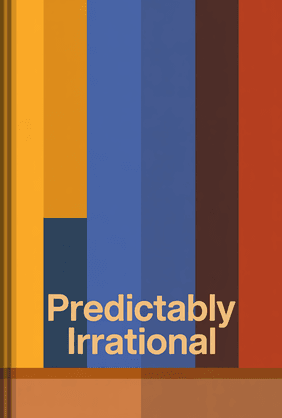
Predictably Irrational
Dan Ariely
23 Duration10 Key Points4.6 RateThe Replication Crisis Collision
Many of the studies cited in Blink have since crashed into psychology's replication crisis. For example, Gladwell heavily features "social priming"—the idea that subtle cues can dramatically alter human behavior. He cites a famous study where college students walked slower down a hallway after unscrambling sentences containing words associated with old age (like "Florida," "bingo," or "wrinkles").
In the years since Blink was published, independent labs across the globe have tried and failed to replicate those specific priming results. The foundational science underneath several of Gladwell’s favorite anecdotes has severely crumbled.

Anecdote Over Empirical Data
Critics argue that Gladwell commits the cardinal sin of scientific journalism: cherry-picking. He finds a fascinating anomaly, builds a sweeping rule around it, and ignores the mountain of statistical noise that contradicts his thesis. He focuses entirely on the hits and conveniently forgets the misses. When intuition fails—when police officers make tragic split-second errors, which he does discuss—he attributes it to specific environmental stresses rather than questioning the reliability of thin-slicing itself.
The tendency to focus on the "hits" and ignore the "misses" is not just a journalistic flaw; it is a fundamental human bias. We constantly look for clean narratives in a messy, chaotic world, often mistaking sheer luck for brilliant intuition. If you are intrigued by this exact critique of Gladwell's work, you should dive into the science of probability and uncertainty. Understanding how easily we are tricked by statistical noise will completely transform how you evaluate success, both in business and in everyday life. Here is an eye-opening read on the subject.

Fooled by Randomness
Nassim Nicholas Taleb
17 Duration7 Key Points4.4 Rate
The Verdict: Is Blink a Good Book?
The answer depends entirely on your expectations and your intent.
Read it if:
- You want a highly entertaining, thought-provoking book for your morning commute or a long flight.
- You are looking for a great conversation starter for your next book club.
- You enjoy exploring how the human mind operates in high-pressure situations, provided you treat the stories as illustrations rather than hard rules.
Skip it if:
- You are looking for actionable, evidence-based strategies to improve your own decision-making.
- You have a low tolerance for oversimplified data and demand rigorous, peer-reviewed methodology.
- You are trying to learn actual cognitive science. If that is your goal, you are better off picking up Daniel Kahneman’s Thinking, Fast and Slow, which serves as a much more rigorous (though denser) counterweight to Blink.
Blink is a beautifully written exploration of human nature. Just remember to read it with your critical faculties fully engaged. Trust your gut, but verify the data.
As mentioned above, if you want to graduate from pop psychology to rigorous cognitive science, Nobel laureate Daniel Kahneman is the gold standard. His groundbreaking research on the dual systems of the human mind directly tackles the same themes as Blink, but with decades of peer-reviewed data to back it up. He explores the exact mechanisms of when we should trust our fast, intuitive thinking, and when we need to slow down and rely on analytical logic. If you are serious about understanding behavioral science, this foundational text absolutely belongs on your bookshelf.
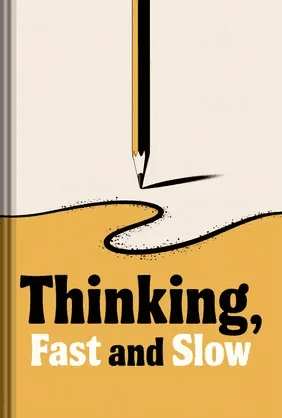
Thinking, Fast and Slow
Daniel Kahneman
53 Duration9 Key Points4.5 RateWhile a deep dive into a dense book like Thinking, Fast and Slow is incredibly rewarding, it can also be a major time commitment. If you want to grasp its foundational concepts without dedicating weeks to reading, there's a more efficient way.
Understand the core arguments of dense but essential books like Kahneman's in just 15 minutes, making complex cognitive science feel much more accessible.
LeapAheadFAQ
Does Blink offer practical advice on how to improve my intuition?
Not really. While Gladwell explains how the unconscious mind works, the book lacks a structured, actionable framework for improving your own snap judgments. It is observational rather than instructional.
Not really. While Gladwell explains how the unconscious mind works, the book lacks a structured, actionable framework for improving your own snap judgments. It is observational rather than instructional.
Are the psychological tests mentioned in Blink still valid?
It is a mixed bag. The Implicit Association Test (IAT), which Gladwell uses to discuss unconscious bias, is still widely used but faces heavy debate among modern psychologists regarding its ability to predict actual discriminatory behavior. Other concepts, like John Gottman's marriage prediction models, hold up better, while social priming studies have largely failed to replicate.
It is a mixed bag. The Implicit Association Test (IAT), which Gladwell uses to discuss unconscious bias, is still widely used but faces heavy debate among modern psychologists regarding its ability to predict actual discriminatory behavior. Other concepts, like John Gottman's marriage prediction models, hold up better, while social priming studies have largely failed to replicate.
Should I read Blink or The Tipping Point first?
If you are interested in sociology, trends, and how ideas spread, start with The Tipping Point. If you are more fascinated by individual psychology, rapid cognition, and decision-making, start with Blink. Both follow the same engaging, anecdote-heavy format.
If you are interested in sociology, trends, and how ideas spread, start with The Tipping Point. If you are more fascinated by individual psychology, rapid cognition, and decision-making, start with Blink. Both follow the same engaging, anecdote-heavy format.