

You read Bessel van der Kolk’s groundbreaking book. It shifted how you view your nervous system, your reactions, and your past. You finally realize you aren't broken; your body is simply doing what it was designed to do to survive.

But then you hit the last page and thought, "Now what?"
The Body Keeps the Score is an absolute masterpiece of neuroscience and psychiatric history. It explains exactly why your body holds onto trauma. However, it lacks a step-by-step roadmap for personal recovery. Furthermore, many readers find the graphic clinical case studies deeply triggering or the academic tone too dense.
If you are browsing Amazon or Goodreads looking for the next step in your healing journey, you need books that move you out of the theory and into the practice. Here is a curated guide to the best body keeps the score alternatives, categorized by exactly what you need to heal.

The Body Keeps the Score vs Complex PTSD: Which Should You Read?
When readers dive into trauma literature, the biggest debate usually centers around the body keeps the score vs complex ptsd. If you can only afford to buy one book at Barnes & Noble today, understanding the difference between these two heavyweights is critical.
Bessel van der Kolk’s book is the undisputed king of explaining the biology of trauma. It proves that trauma physically alters the brain and immune system. It gives you the validation you need.
Pete Walker’s Complex PTSD: From Surviving to Thriving, on the other hand, is the ultimate survival guide. Walker is a therapist who also suffers from CPTSD. While van der Kolk spends chapters discussing brain scans, Walker hands you a laminated checklist on how to stop an emotional flashback in its tracks.
- Read Van der Kolk if: You need scientific validation that your symptoms are real. You want a broad overview of different therapies like EMDR, neurofeedback, and yoga.
- Read Pete Walker if: You grew up in an abusive or neglectful household. You struggle with a harsh inner critic, toxic shame, or feeling stuck in the "4Fs" (Fight, Flight, Freeze, Fawn). You want specific, actionable steps to manage daily emotional dysregulation.
Many therapists suggest reading Van der Kolk to understand the machinery of your brain, and then keeping Pete Walker's book on your nightstand as a daily operational manual.

Top Books on Somatic Healing
Van der Kolk heavily emphasizes that talk therapy alone rarely cures trauma. You have to involve the body. If you want to dive deeper into books on somatic healing, these are the foundational texts that teach you how to discharge trapped survival energy.
1. Waking the Tiger: Healing Trauma by Peter A. Levine
If the concept of somatic experiencing in The Body Keeps the Score fascinated you, this is your mandatory next read. Peter Levine developed Somatic Experiencing (SE). He explores why wild animals, routinely threatened in the wild, rarely develop trauma, while humans do. Levine teaches you how to recognize your body's subtle sensations and safely release trapped "fight or flight" energy. It is far less triggering than van der Kolk’s work and heavily focused on the physical release of trauma.
2. Anchored: How to Befriend Your Nervous System Using Polyvagal Theory by Deb Dana
Polyvagal theory is a massive component of modern trauma recovery. While Stephen Porges created the theory (and his books read like dense medical journals), Deb Dana translates his work into plain English. Anchored provides practical exercises to map your nervous system and organize your daily routines around moving out of "dorsal vagal" (shutdown) and into a state of safety and connection.
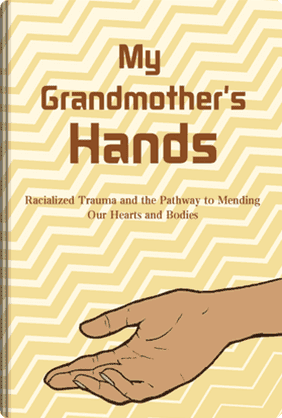
3. My Grandmother's Hands by Resmaa Menakem
This book is a revolutionary take on trauma, specifically focusing on racialized trauma and how it is passed down through generations in the physical body. Menakem provides excellent body-centered exercises designed to settle the nervous system. It is a brilliant expansion on somatic healing that addresses systemic and generational wounds.
If you want to explore somatic practices that consider historical and cultural impacts, this is an essential addition to your library. Resmaa Menakem offers incredible, actionable body-centered exercises specifically designed to help you settle your nervous system and process systemic trauma. It is a profound, life-changing alternative for anyone looking to go beyond the clinical scope of standard psychology.
My Grandmother's Hands
Resmaa Menakem
 26 Duration
 10 Key Points
 4.8 Rate
Best Books on Trauma and Healing (Accessible & Non-Triggering)


Overwhelmed by dense trauma books? Try absorbing the key ideas from bestselling authors in just 15-minute audio summaries with the LeapAhead app.
 LeapAhead
Not everyone wants to read a 400-page clinical breakdown of trauma. If you found The Body Keeps the Score too heavy, triggering, or difficult to digest, these are the best books on trauma and healing for approachability. They are highly rated on Goodreads and make for excellent listening on Audible during your daily commute.
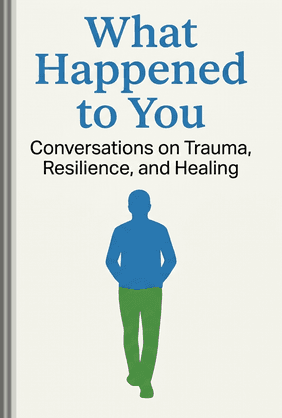
1. What Happened to You? by Bruce D. Perry and Oprah Winfrey
This book reframes the foundational question of mental health. Instead of asking, "What's wrong with you?" it asks, "What happened to you?" Formatted as a conversation between Dr. Perry (a childhood trauma expert) and Oprah, the tone is incredibly warm, accessible, and conversational. It digests complex neuroscience into easily understandable metaphors. If you want the science of The Body Keeps the Score but with a softer, more compassionate delivery, start here.
Ready to shift your perspective on trauma from self-blame to self-compassion? Dr. Perry and Oprah Winfrey have created an incredibly approachable guide that reframes the entire conversation around mental health. It's a fantastic starting point if you want the deep neurobiological insights of traditional trauma literature, but delivered with warmth and without the overwhelming clinical jargon.
What Happened to You
Bruce D. Perry, M.D., Ph.D., and Oprah Winfrey
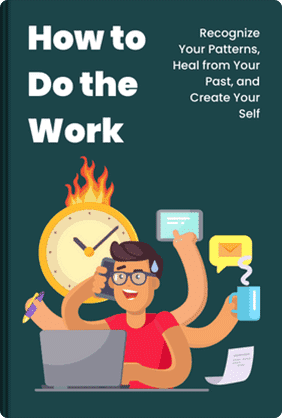
39 Duration8 Key Points4.5 Rate2. How to Do the Work by Dr. Nicole LePera
Dr. LePera (known online as The Holistic Psychologist) bridges the gap between traditional psychology and holistic, somatic practices. This book is fiercely practical. It teaches you how to recognize your trauma bonds, reparent your inner child, and establish boundaries. It is less focused on clinical disorders and more focused on the everyday patterns of self-sabotage that stem from early childhood conditioning.
For readers eager to take their healing into their own hands, Dr. Nicole LePera provides a phenomenal holistic framework that emphasizes actionable change. This book gives you the exact tools you need to break free from daily self-sabotage, set healthy boundaries, and start actively reparenting your inner child. It is the perfect roadmap for turning trauma theory into everyday practice.
How to Do the Work
Dr. Nicole LePera
47 Duration10 Key Points4.6 Rate3. LeapAhead App: Microlearning for Healing Concepts
For many trauma survivors, the cognitive load of reading a 400-page book is simply too much, especially on days when energy is low. LeapAhead offers a modern alternative: a microlearning app that condenses bestselling nonfiction books into 15-minute audio and text summaries. This can be a gentle entry point, allowing you to absorb the core ideas from psychology and self-help authors without the heavy commitment. It's particularly useful for "scaffolding" your learning—getting the main takeaways from a book to see if it resonates before buying the full text. However, while it's excellent for broad understanding and building a consistent learning habit, its summarized format won't replace the deep, nuanced exercises found in dedicated workbooks or the narrative depth of a full-length book. Consider it a powerful supplement for your healing library, not a replacement for deep therapeutic work.
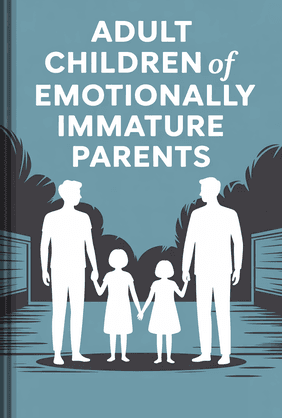
4. Adult Children of Emotionally Immature Parents by Lindsay C. Gibson
If your trauma stems from emotional neglect rather than overt physical abuse, this book is a revelation. Many readers who feel The Body Keeps the Score doesn't exactly match their experience—because they didn't experience a major "Big T" trauma—find their answers here. Gibson helps you categorize the emotionally immature parents in your life and gives you firm strategies to protect your own energy and stop hoping for a connection that will never come.
Recognizing the invisible wounds of childhood emotional neglect can be a completely life-changing experience. If you resonate with the idea of "Little T" trauma and want concrete strategies to handle difficult family dynamics while protecting your own peace, Dr. Gibson’s groundbreaking book is exactly what you need. It offers profound validation for those who grew up feeling unseen or unheard.
Adult Children of Emotionally Immature Parents
Lindsay C. Gibson, Psy.D.
39 Duration8 Key Points4.6 RateHow to Choose Your Next Read
Organize your reading list based on your immediate needs. Do not buy five books at once; trauma recovery requires pacing.
- If you are actively in crisis or having daily flashbacks: Buy Pete Walker's Complex PTSD. Turn straight to Chapter 8 on managing emotional flashbacks.
- If you want to heal the physical symptoms (chronic pain, tension, digestive issues): Order Waking the Tiger by Peter Levine and start practicing basic pendulation exercises.
- If you want an easier, conversational read to understand your childhood: Download the audiobook of What Happened to You?
- If you want homework and exercises: Pick up The Complex PTSD Workbook by Arielle Schwartz, which condenses somatic psychology and CBT into written prompts.
If you want to build a consistent learning habit without the pressure, try LeapAhead. Listen to key insights from healing books on your commute.
LeapAheadReading about trauma is hard work. Pace yourself, take breaks when you feel your heart rate spike, and remember that intellectualizing your trauma is only the first step. The real healing happens when you drop out of your head and into your body.
Sometimes, the absolute best way to process complex trauma is by putting pen to paper and actively engaging with the material. If you thrive on structured homework, targeted cognitive behavioral exercises, and guided somatic practices, this workbook is an invaluable tool. It acts as a highly recommended companion guide, giving you a safe, structured space to practice the coping skills you need to reclaim your life.
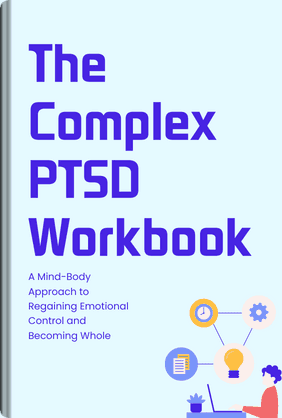
The Complex PTSD Workbook
Arielle Schwartz and Jim Knipe
21 Duration7 Key Points4.8 RateFAQ
Is "The Body Keeps the Score" too triggering to read?
For many, yes. The book opens with graphic descriptions of Vietnam veterans and includes detailed accounts of sexual assault and childhood abuse throughout the case studies. If you are currently emotionally dysregulated, you might want to start with a gentler alternative like What Happened to You? or Pete Walker’s work.
For many, yes. The book opens with graphic descriptions of Vietnam veterans and includes detailed accounts of sexual assault and childhood abuse throughout the case studies. If you are currently emotionally dysregulated, you might want to start with a gentler alternative like What Happened to You? or Pete Walker’s work.
Do I need a therapist to work through these somatic healing books?
While you can learn the basics of nervous system regulation from books like Anchored or Waking the Tiger, working through deep, entrenched trauma is best done alongside a trauma-informed therapist. Somatic exercises can sometimes bring up repressed emotions, and having a professional guide ensures you don't exceed your window of tolerance.
While you can learn the basics of nervous system regulation from books like Anchored or Waking the Tiger, working through deep, entrenched trauma is best done alongside a trauma-informed therapist. Somatic exercises can sometimes bring up repressed emotions, and having a professional guide ensures you don't exceed your window of tolerance.
I didn’t have a terrible childhood, but I still relate to trauma symptoms. Which book is best?
Pick up Adult Children of Emotionally Immature Parents by Lindsay C. Gibson. It perfectly addresses "Little T" trauma—the chronic, subtle emotional neglect that doesn't look like movie-style abuse but still leaves lasting impacts on your nervous system and adult relationships.
Pick up Adult Children of Emotionally Immature Parents by Lindsay C. Gibson. It perfectly addresses "Little T" trauma—the chronic, subtle emotional neglect that doesn't look like movie-style abuse but still leaves lasting impacts on your nervous system and adult relationships.