


You set a massive target, buy a premium planner from Barnes & Noble, and start with explosive energy. Two weeks later, exhaustion hits, unexpected projects drop on your desk, and your grand vision gets buried under a mountain of unread emails. You do not lack ambition or intelligence. You simply lack a daily routine that operates independently of your motivation levels.
Motivation is fickle. Willpower is a finite resource that drains with every decision you make throughout the day. If your strategy for success relies on hyping yourself up every morning, you will eventually burn out. You need an architecture of behavior that pulls you forward automatically.
The Core Shift: Systems vs Goals
Look closely at any highly productive professional. They do not obsess over their goals every waking second. They obsess over their processes.
Goals set your direction. Systems dictate your progress. Everyone has goals. Both the successful applicant and the rejected applicant wanted the same job. The differentiator is never the goal; it is the system they ran to prepare. When you understand the dynamics of systems vs goals, you stop focusing on the distant mountaintop and start focusing on where to place your foot next.

A goal is reading 50 books this year. A system is leaving your Kindle on your pillow every morning and reading 10 pages before you check your phone at night.
A goal is losing 15 pounds. A system is meal-prepping on Sundays and packing your gym bag before you go to sleep.
When you fixate entirely on the goal, you live in a constant state of failure until you cross the finish line. When you fall in love with the system, you succeed every single time you execute your daily routine.
Of course, a powerful system is only as good as the goal it's aimed at. Before you build your habits, ensuring your targets are well-defined and achievable is the first step to success.
For many, the goal of "reading more" feels inspiring, but the system of finishing entire books takes too long. If you want to absorb key ideas from bestsellers to meet your learning goals without the heavy time commitment, a microlearning approach can be a game-changer.


LeapAhead

Get the core insights from bestselling non-fiction books in just 15-minute reads or listens, helping you clear your reading list on busy days.
The Architecture of Building Habits to Achieve Goals
You cannot simply wish a new behavior into existence. Habits operate on a fundamental neurological loop: Cue, Craving, Response, and Reward. To master building habits to achieve goals, you must manipulate these four elements in your favor.
Design Your Environment
Willpower is overrated; environment design is everything. If you want to eat healthier, do not stock junk food in the pantry. If you want to study for the GMAT, do not study in the living room where your Xbox is staring at you.
Make the cue for your good habit obvious and the cue for your bad habit invisible. If your goal is to run 3 miles every morning, put your running shoes directly in front of your bedroom door. If your goal is to stop mindlessly scrolling, delete the social media apps from your phone and force yourself to log in through a web browser.
Scale Down the Action
Most people fail because they try to change their entire identity in a single weekend. They go from zero exercise to attempting a massive cross-fit routine.
Use the Two-Minute Rule. Scale your desired habit down until it takes less than two minutes to execute.

- "Read before bed" becomes "Read one page."
- "Do yoga for 45 minutes" becomes "Take out my yoga mat."
A habit must be established before it can be improved. You are casting a vote for your new identity. Master the art of showing up first. You can optimize the output later.
If you recognize the concept of the Two-Minute Rule or the four-step loop of cue, craving, response, and reward, it is because these ideas have revolutionized how we think about human behavior. For anyone serious about mastering this systematic approach to self-improvement, diving into the definitive guide on the subject is an absolute must. It breaks down the psychology of why we fail and offers a foolproof, science-backed framework for building phenomenal daily routines without relying on sheer motivation.

Atomic Habits
James Clear
 26 Duration
 8 Key Points
 4.7 Rate
Daily Habits for Success: The Non-Negotiables
Highly effective people do not have complex routines. They have simple, unbreakable ones. Implementing specific daily habits for success creates a protective barrier around your time and energy.
The Night-Before Preparation
Decision fatigue ruins mornings. By the time you decide what to wear, what to eat for breakfast, and which task to tackle first, your brain is already tired.
Spend 10 minutes every evening organizing the next day. Write down the single most important task you must complete. Lay out your clothes. Pack your lunch. When you wake up, you do not think; you just execute.
Ruthless Time Blocking
Stop working out of a reactive inbox. Open your calendar and block out specific, uninterrupted chunks of time for your primary projects. Treat a scheduled appointment with yourself with the same respect you would give a meeting with your CEO. Turn on "Do Not Disturb" mode. Shut down Slack. Deep work requires total focus.
Speaking of turning off notifications and shutting down Slack, mastering the art of distraction-free concentration is arguably the most valuable skill in today's knowledge economy. If you struggle with the constant ping of emails and want to learn how to cultivate laser-focused blocks of time that actually move the needle on your major projects, there is a fantastic resource that explores this exact philosophy. It offers actionable strategies to help you reclaim your cognitive bandwidth and achieve peak productivity.
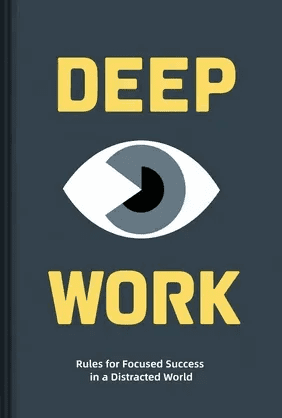
Deep Work
Cal Newport
47 Duration8 Key Points4.6 RateThe Shutdown Ritual
Your brain needs a clear signal that the workday is over. Close your tabs, check your task list, and physically walk away from your desk. This prevents work stress from bleeding into your recovery time, ensuring you wake up the next day fully recharged.
Overcoming Procrastination in the Real World
Procrastination is not a time-management flaw. It is an emotion-regulation problem. You procrastinate because the task in front of you triggers stress, boredom, or self-doubt. Your brain seeks immediate relief, usually in the form of opening a new tab or checking your phone.
Understanding this emotional component is key. If you often find yourself derailed by self-doubt or a lack of motivation, digging into the mental side of success can provide the breakthrough you need.
Overcoming procrastination requires lowering the emotional barrier to entry.
First, disconnect from the outcome. Give yourself permission to do a terrible job. If you need to write a proposal, tell yourself you are just going to write a garbage first draft. The pressure vanishes, and once you start typing, momentum takes over.
Second, use the Pomodoro technique to create artificial urgency. Set a timer for 25 minutes. Commit to doing nothing but the task at hand until the timer goes off. You can endure almost anything for 25 minutes. Once the timer rings, you will often find that the dread is gone and you actually want to keep going.
The 25-minute timer strategy is incredibly effective because it forces you to focus on the process rather than an overwhelming final product. If you have found this method helpful and want to maximize its potential to cure your worst procrastination habits, consider reading the original guide created by the inventor of the method himself. It goes far beyond simply setting a kitchen timer, teaching you how to track your productivity, manage interruptions, and completely transform your relationship with time.

The Pomodoro Technique
Francesco Cirillo
19 Duration8 Key Points4.4 RateHow to Stick to Your Goals When Reality Hits
Life will disrupt your perfectly planned systems. You will get sick, emergencies will happen, and you will miss a day. The hallmark of high achievers is not perfection; it is how quickly they recover from a lapse.
Figuring out how to stick to your goals during chaotic weeks comes down to one absolute rule: Never miss twice.

If you miss one workout, it is a scheduling conflict. If you miss two, it is the start of a new, negative habit. If you eat a terrible lunch, you do not throw away the whole day and order a massive pizza for dinner. You make sure your next meal is perfectly aligned with your system.
Track your progress visually. Buy a large wall calendar. Every day you complete your core habit, draw a massive red 'X' over that date. After a few days, you will have a chain. Your only job is to not break the chain. Seeing a visual representation of your consistency provides an immense psychological boost that keeps you locked in on days when motivation is completely gone.
Ultimately, sticking to your goals on the days you feel completely depleted requires a deeper understanding of your own mental endurance. Willpower isn't just a vague concept; it is a measurable biological response that can be trained and strengthened over time. If you want to dive deeper into the science of self-control and discover proven ways to bounce back from failure without the heavy burden of guilt, this final recommendation will fundamentally change how you approach personal setbacks.
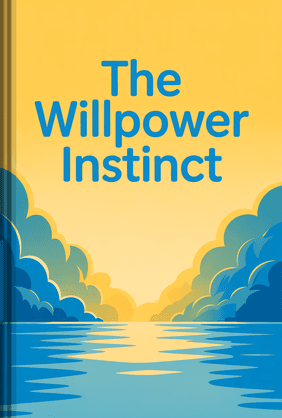
The Willpower Instinct
Kelly McGonigal, Ph.D.
23 Duration11 Key Points4.6 RateAnd for those days when your energy is completely drained, but you still want to make progress, listening to key ideas can be a more effective system than forcing yourself to read.
LeapAhead
Turn your commute or workout into productive learning time with audio summaries of books that help you grow, even when you're too tired to read.
FAQ
How long does it actually take to form a new habit?
Forget the popular myth that it takes exactly 21 days. The reality depends on the complexity of the habit and your environment. Studies show it can take anywhere from 18 to 254 days for a new behavior to become fully automatic. Focus on frequency, not time. It is the number of repetitions that wires the habit into your brain, not the number of days on a calendar.
What should I do if I slip up for a few days?
Acknowledge it without guilt and immediately apply the "Never Miss Twice" rule. Guilt drains your energy and makes you want to avoid the task further. Treat a missed habit as a simple data point. Adjust your environment if necessary, and execute the smallest possible version of your habit today to get back on track.
I have too many goals. How do I prioritize them?
You cannot build five new habits simultaneously. You will spread your willpower too thin and fail at all of them. Pick one "keystone habit" first—a habit that naturally causes a ripple effect in other areas of your life. For many, this is daily exercise or waking up an hour earlier. Lock that single habit in for 30 days before introducing a new one.
Should I track my habits every single day?
Yes. Visual tracking provides immediate evidence of your progress, which is crucial when the actual results of your goals (like weight loss or career advancement) are months away. Use an app on your phone or a physical journal. The simple act of checking off a box releases a small hit of dopamine, reinforcing the behavior for the next day.