

You set a target. You buy a new planner from Barnes & Noble, sketch out a strict timeline, and feel a massive surge of inspiration. For the first two weeks, you are unstoppable. Then, life happens. Work gets stressful, the temperature drops to 30 degrees Fahrenheit, and your 5 AM alarm sounds like a punishment. You hit snooze. You skip a day, then a week, and suddenly the momentum vanishes completely.
You look back at your abandoned plan and blame your lack of discipline. You wonder if there is a fundamental flaw in your character.
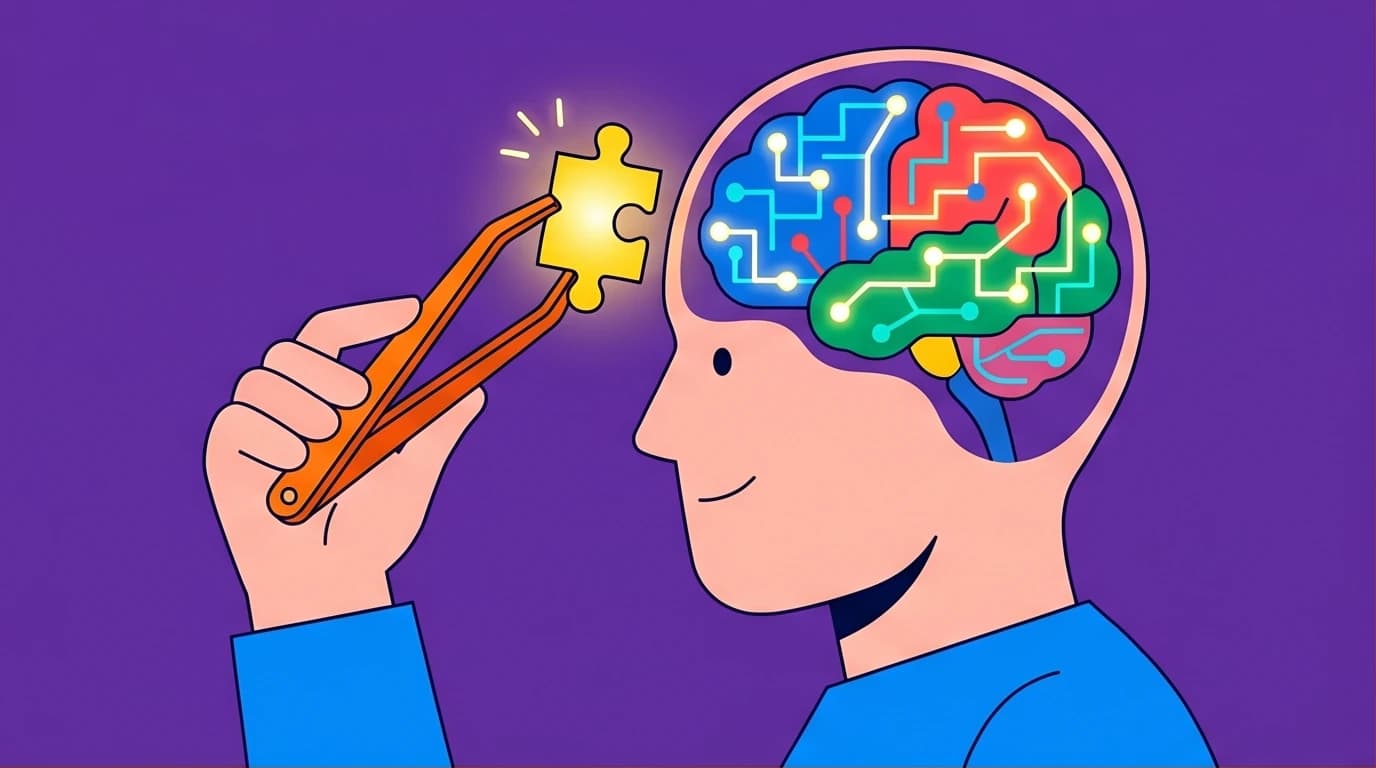
There isn't. You are simply fighting millions of years of human evolution. Your brain is quite literally wired to keep you safe, comfortable, and expending as little energy as possible. Understanding the psychology of goal achievement allows you to stop fighting your own neurology and start using it to your advantage.
The Illusion of Motivation
When we think about hitting a target, we usually focus on the concept of motivation. We treat it like fuel—assuming that if we don't have it, the engine won't start. This is the first trap.
The Dopamine Trap
Most people completely misunderstand the motivation for goal achievement. They believe motivation is a prerequisite for action. You think you need to feel like going for a 3-mile run before you actually lace up your shoes.
In reality, motivation is driven by dopamine. When you first set a goal, your brain gives you a dopamine spike just for visualizing the success. You get the neurochemical reward before you've done any of the actual work. Once that initial rush fades and the reality of the daily grind sets in, your dopamine levels plummet. Your brain realizes that the reward is far away, but the effort is required right now.

Motivation is an emotion, and emotions are inherently volatile. Relying on motivation to carry you through a six-month project is like relying on the weather to be perfectly sunny every day of the year. It works well when it’s there, but you need a shelter for when it storms.
If you find yourself endlessly chasing that initial high of setting a new goal but losing steam when the real work begins, it helps to understand exactly what your brain chemicals are doing. The Molecule of More brilliantly explains how dopamine is designed to keep you craving the future rather than enjoying the present. It is a fascinating read that will completely change how you view your own motivation, helping you shift from chasing an emotional rush to building sustainable, long-term momentum.

The Molecule of More
Daniel Z. Lieberman, MD, Michael E. Long
 16 Duration
 7 Key Points
 4.4 Rate
The Core Reasons: Why We Fail at Goals
To stop the cycle of starting and stopping, you have to look under the hood at the mechanics of self-sabotage. Failure rarely happens because of a lack of desire. It happens because of hidden cognitive conflicts.
Identity Dissonance
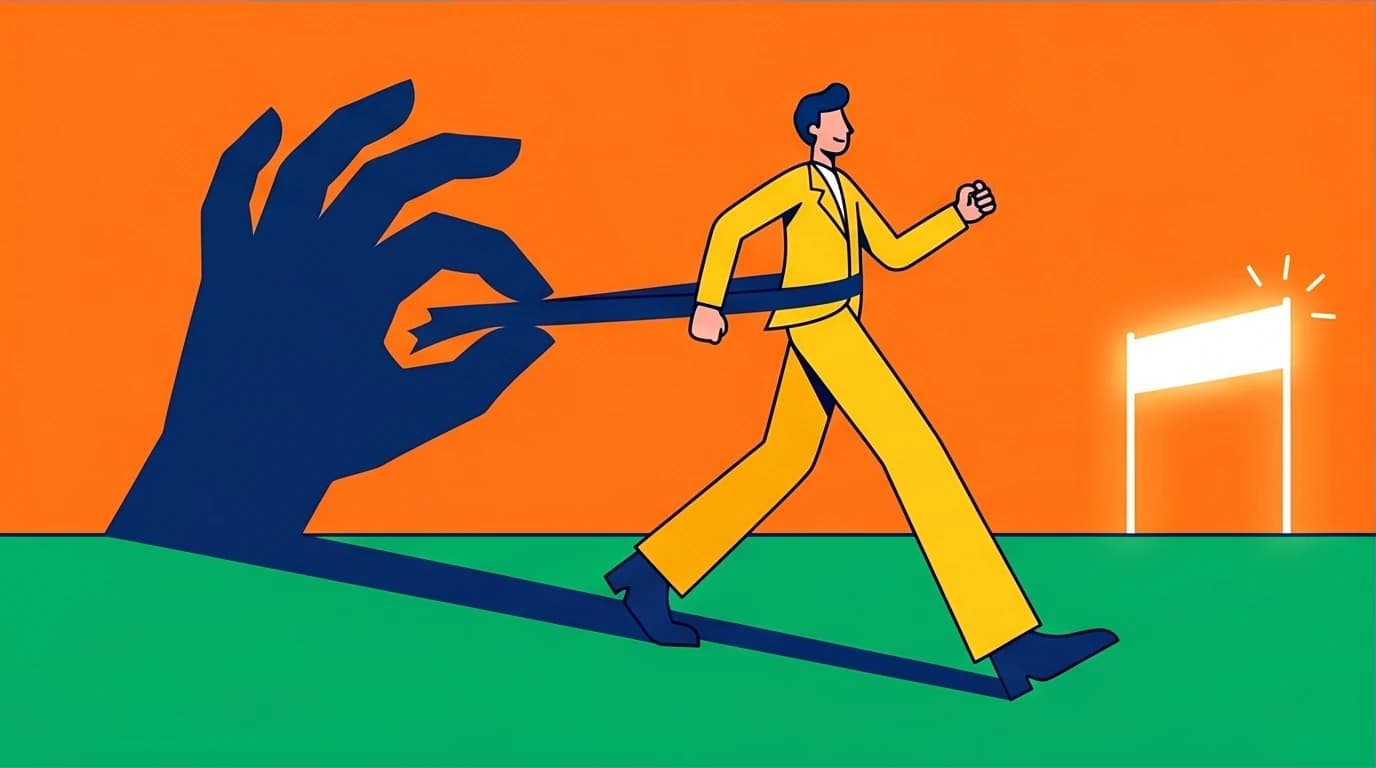
Your brain strives for internal consistency. If your core self-image does not match the goal you are trying to achieve, your subconscious will actively sabotage your efforts. If you view yourself as a "procrastinator trying to get organized" or a "couch potato trying to run a marathon," every action you take toward your goal feels like a violation of your identity. Your brain will eventually pull you back to your baseline behavior to resolve this cognitive dissonance.
The All-or-Nothing Distortion
Many high achievers fall victim to perfectionism. If you plan to read 50 pages a day and only have time for 10, your brain categorizes the day as a failure. This binary thinking triggers a "what the hell" effect. Since you already ruined your perfect streak, you abandon the effort entirely for the rest of the week. Progress requires consistency, not perfection, but the human ego prefers a dramatic failure over a mediocre success.
If this all-or-nothing thinking consistently sabotages your self-improvement goals, especially with reading, a more flexible approach can be a game-changer.

LeapAhead breaks down bestselling books into 15-minute reads, helping you stay consistent and avoid the perfectionist trap by making progress in small, manageable steps.

Download LeapAhead App now
Of course, preventing these psychological traps starts with setting your goals up for success from the very beginning. A well-defined target can make all the difference, giving you clarity and a path to follow when motivation wanes.
Diagnosing Your Psychological Barriers to Success
If you want to move forward, you have to accurately name the walls standing in your way. Most of what we call laziness is actually a defense mechanism.
Procrastination is an Emotion Regulation Problem
We treat procrastination like a time management issue. We buy new calendars, download productivity apps, and try the Pomodoro technique. None of it works long-term because procrastination is fundamentally about emotional regulation.
When a task makes you feel anxious, overwhelmed, incompetent, or bored, your amygdala senses a threat. Your brain seeks immediate emotional relief. You open a new tab, scroll through social media, or mindlessly browse Amazon because those actions provide instant soothing. You are avoiding the negative emotion associated with the task, not the task itself.
Recognizing that procrastination is rooted in anxiety rather than laziness is a massive breakthrough, but what do you do next? If you are tired of battling the guilt that comes with putting things off, The Now Habit offers a refreshing, guilt-free approach. Dr. Neil Fiore provides actionable strategies to lower your internal resistance, reframe how you look at intimidating projects, and break the cycle of self-blame so you can finally get to work and actually enjoy your downtime without that lingering sense of dread.
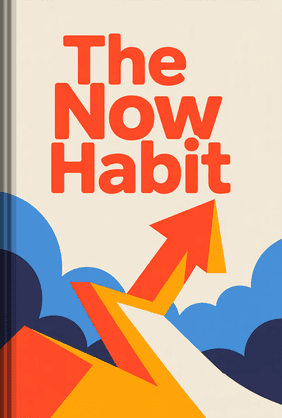
The Now Habit
Neil Fiore, Ph.D.
48 Duration8 Key Points4.6 RateThe Fear of Success and Visibility
We talk often about the fear of failure, but the fear of success is equally paralyzing. Hitting your goals changes your life. It brings new responsibilities, higher expectations, and increased visibility. If you secretly doubt your ability to handle the pressure of maintaining that success once you get there, your subconscious will put on the brakes before you ever arrive.
Reprogramming for Action: Self Discipline Strategies
Discipline is not a genetic trait you are either born with or lack forever. It is a trainable skill and, more importantly, a byproduct of intelligent system design. You can trick your brain into choosing the harder path by altering the environment and your perspective.
1. Lower the Activation Energy
In chemistry, activation energy is the minimum amount of energy required to start a reaction. The same principle applies to human behavior. If going to the gym requires you to find clean clothes, locate your keys, and drive 20 minutes in traffic, the activation energy is too high. Your brain will opt out.

Reduce the friction between you and the right choice. Lay out your workout gear the night before. Keep the book you want to read on your pillow. Delete the apps that drain your attention from your home screen. Make the desired behavior the absolute path of least resistance.
2. Decouple Action from Feeling
The most powerful cognitive shift you can make is realizing that you do not need to feel good to do something. Your feelings are just suggestions.
When your alarm goes off and you feel tired, acknowledge the feeling without letting it dictate your decision. "I feel tired, and I am going to get up anyway." This builds what psychologists call distress tolerance—the ability to sit with physical or emotional discomfort without immediately running away from it.
3. Shift to Identity-Based Action
Stop focusing entirely on the outcome and start focusing on the identity. Instead of saying, "I want to lose 15 pounds," ask yourself, "What would a healthy person do in this specific situation?"
When you frame your choices as a vote for the type of person you want to become, the daily actions carry more weight. Over time, these small votes shift your internal narrative. Once you genuinely see yourself as someone who finishes what they start, discipline becomes automatic. It is no longer something you force yourself to do; it is simply who you are.
The concept of identity-based habits is one of the most effective ways to create lasting change, and no modern book explains this better than James Clear's bestseller. In Atomic Habits, you will discover exactly how to design a daily environment that makes your desired behaviors the absolute path of least resistance. It is a brilliant masterclass in breaking down massive, intimidating goals into tiny, actionable votes for the person you want to become. If you want to stop relying on sheer willpower, this is an essential read.

Atomic Habits
James Clear
26 Duration8 Key Points4.7 Rate4. Implement the Minimum Viable Action
When overwhelmed by a massive goal, shrink the immediate requirement to a microscopic level. Commit to reading just one paragraph. Commit to doing just five push-ups. Commit to opening the laptop and typing a single sentence.
This directly bypasses the brain's threat detection system. A tiny task does not trigger anxiety. Once you start, you rely on the Zeigarnik effect—the psychological tendency to remember and want to complete interrupted or ongoing tasks. The hardest part is almost always the transition from doing nothing to doing something.
Sometimes, the biggest hurdle to taking that minimum viable action is simply understanding why we give in to our immediate impulses. If you constantly feel like you are battling your own mind, The Willpower Instinct is a game-changer. By combining psychology, neuroscience, and practical exercises, Dr. Kelly McGonigal explains exactly how self-control works and why it so often fails us. Her insights will teach you how to properly train your brain's self-discipline muscle, making it easier to follow through on those tiny commitments even when you feel depleted.
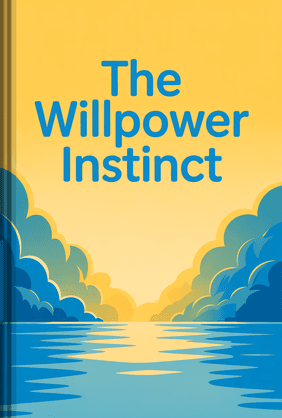
The Willpower Instinct
Kelly McGonigal, Ph.D.
23 Duration11 Key Points4.6 RateWith so many powerful ideas locked inside books like these, the biggest challenge is often finding the time to get through them all. If your reading list feels more like a source of guilt than inspiration, you can start by tackling the key insights first.
Use LeapAhead to absorb the core concepts from essential books on habits and discipline in just a few minutes a day, turning your commute or break into productive learning time.
Download LeapAhead App now
Ultimately, reprogramming your brain for success means shifting from one-off actions to consistent, daily systems. The strategies above are the psychological foundation for this shift, turning intent into reality.
FAQ
Why do I lose motivation so quickly after setting a goal?
When you set a goal, your brain releases dopamine, making you feel excited and capable. However, dopamine is designed to reward the seeking of a goal, not the sustained effort required to achieve it. Once the initial novelty wears off, your brain stops supplying the chemical rush, leaving you to rely on habits and discipline rather than motivation.
When you set a goal, your brain releases dopamine, making you feel excited and capable. However, dopamine is designed to reward the seeking of a goal, not the sustained effort required to achieve it. Once the initial novelty wears off, your brain stops supplying the chemical rush, leaving you to rely on habits and discipline rather than motivation.
How do I overcome the fear of failure?
You overcome the fear of failure by changing your relationship with the concept of failure itself. Stop viewing failure as an indictment of your character and start viewing it as data collection. Every time an approach doesn't work, you gather valuable feedback on what needs to be adjusted. Focus entirely on the process of execution rather than attaching your self-worth to the final outcome.
You overcome the fear of failure by changing your relationship with the concept of failure itself. Stop viewing failure as an indictment of your character and start viewing it as data collection. Every time an approach doesn't work, you gather valuable feedback on what needs to be adjusted. Focus entirely on the process of execution rather than attaching your self-worth to the final outcome.
Is self-discipline something you are born with?
No. While some people may naturally lean toward higher conscientiousness, self-discipline is fundamentally a learned skill and a result of good environmental design. People who appear highly disciplined usually don't have massive reserves of willpower; they have simply structured their lives in a way that minimizes temptation and makes the right choices easier to execute.
No. While some people may naturally lean toward higher conscientiousness, self-discipline is fundamentally a learned skill and a result of good environmental design. People who appear highly disciplined usually don't have massive reserves of willpower; they have simply structured their lives in a way that minimizes temptation and makes the right choices easier to execute.
How do I stop procrastinating when a task feels overwhelming?
Break the task down until it feels ridiculously easy, and focus only on the next physical action. If organizing your garage feels impossible, your only goal is to pick up one tool and put it in a box. By focusing on a microscopic action, you prevent your brain's threat response from triggering the anxiety that leads to avoidance.
Break the task down until it feels ridiculously easy, and focus only on the next physical action. If organizing your garage feels impossible, your only goal is to pick up one tool and put it in a box. By focusing on a microscopic action, you prevent your brain's threat response from triggering the anxiety that leads to avoidance.