

Your heart races, your mind spins with "what ifs," and suddenly, a minor inconvenience feels like a catastrophic event. When anxiety hits, logic often goes out the window. You feel stuck in a loop of panic, assuming the worst possible outcome is guaranteed. You do not need to wait weeks for a therapy appointment to start feeling better. You need practical tools you can use right now, at your desk, in your car, or in your living room.
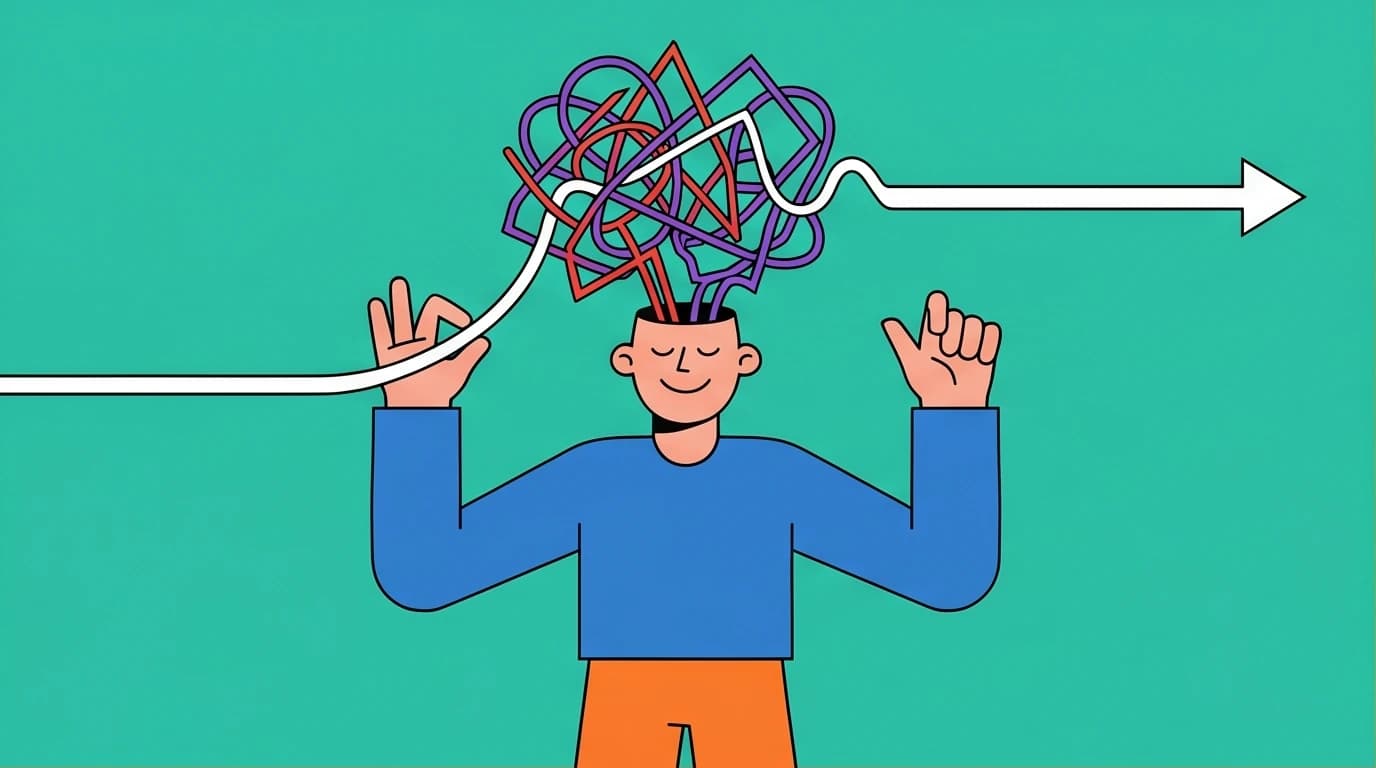
The core of DIY cognitive behavioral therapy is realizing that your thoughts, feelings, and behaviors are all connected. Change the thought, and the anxiety loses its grip. Here are the most effective, science-backed exercises you can use to stop anxiety in its tracks.
These exercises are the practical application of CBT's core principles. To better understand the psychological framework behind these techniques, it's helpful to explore how CBT fundamentally rewires our response to anxiety.
1. The "Catch It, Check It, Change It" Method
When you are anxious, your brain feeds you cognitive distortions—exaggerated or irrational thought patterns. You need reliable cognitive restructuring techniques to dismantle these thoughts before they spiral. The easiest way to do this is the three-step "Catch, Check, Change" framework.

Step 1: Catch It
Recognize the physical signs of anxiety (tight chest, shallow breathing) and write down the exact thought causing it.
Example: "My manager hasn't replied to my email yet. I'm definitely going to be fired."
Recognize the physical signs of anxiety (tight chest, shallow breathing) and write down the exact thought causing it.
Example: "My manager hasn't replied to my email yet. I'm definitely going to be fired."
Step 2: Check It
Put that thought on trial. Look for evidence supporting it and evidence against it.
Evidence for: She is usually quick to reply.
Evidence against: She mentioned she had back-to-back meetings today. I have received stellar performance reviews for the last two years. Firing someone over a delayed email makes zero sense.
Put that thought on trial. Look for evidence supporting it and evidence against it.
Evidence for: She is usually quick to reply.
Evidence against: She mentioned she had back-to-back meetings today. I have received stellar performance reviews for the last two years. Firing someone over a delayed email makes zero sense.
Step 3: Change It
Replace the original panic thought with a balanced, fact-based alternative.
New Thought: "My manager is busy with meetings today. Her lack of response has nothing to do with my job security. I will follow up tomorrow if I don't hear back."
Replace the original panic thought with a balanced, fact-based alternative.
New Thought: "My manager is busy with meetings today. Her lack of response has nothing to do with my job security. I will follow up tomorrow if I don't hear back."
The concept of identifying and dismantling cognitive distortions is at the very heart of cognitive behavioral therapy. If you find this three-step framework helpful and want a deeper understanding of how your mind bends reality, you might want to explore the foundational text that brought these techniques to the mainstream. It serves as an incredibly thorough manual for recognizing irrational thoughts, learning how to talk back to your inner critic, and ultimately rewiring your brain for a more balanced perspective.

Feeling Good
David D. Burns, M.D.
 41 Duration
 9 Key Points
 4.6 Rate
2. Decatastrophizing: The "What's Next?" Drill
Anxiety loves to catastrophize. It takes a small problem (e.g., being stuck in traffic on the interstate) and fast-forwards to the end of the world (e.g., "I'm going to miss this meeting, lose my client, go bankrupt, and lose my house").

To stop this snowball effect, force your brain to answer a logical sequence of questions. Grab a pen or open the notes app on your phone.
- What is the absolute worst-case scenario? (I lose the client.)
- What is the absolute best-case scenario? (The client is also running late, and we win a massive contract.)
- What is the most realistic outcome? (I am 15 minutes late. I will apologize, we will have a normal meeting, and life goes on.)
By forcing your brain to acknowledge the realistic outcome, you remove the emotional fuel powering the anxiety.
While the "What's Next?" drill is a powerful way to halt an active anxiety spiral, you might find that your brain defaults to catastrophizing the moment you wake up. If overthinking feels like a relentless habit, it helps to build a broader toolkit to quiet that constant mental chatter. Learning how to short-circuit the stress cycle and focus on actionable steps can make a massive difference. For a deeper dive into practical ways to clear your mental clutter and stay present, consider picking up this incredibly useful guide.
Stop Overthinking
Nick Trenton
50 Duration9 Key Points4.5 RateFor more strategies to tackle rumination and intrusive thoughts, these specialized techniques can be a game-changer.
3. Scheduled "Worry Time"
If you find yourself agonizing over problems while trying to work, cook dinner, or sleep, you need to compartmentalize. Telling yourself "stop worrying" never works. Instead, give yourself permission to worry—but only on your schedule.
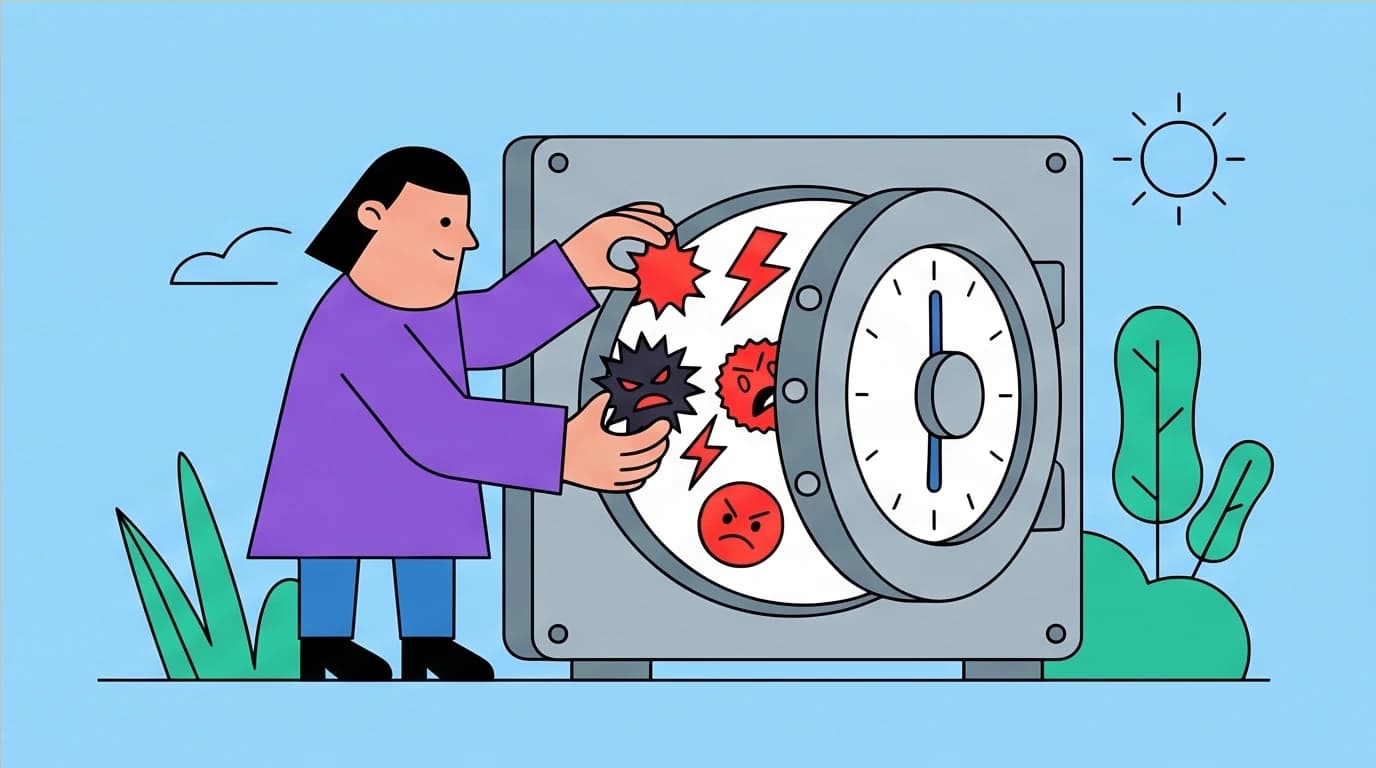
- Set a specific time: Pick a 15-minute window every day, like 4:30 PM. (Do not pick a time right before bed).
- Capture the worries: Throughout the day, when an anxious thought pops up, write it down on a notepad or your phone. Tell yourself, "I will deal with this at 4:30."
- Worry with purpose: When 4:30 PM hits, set a timer. Look at your list. Some worries will no longer matter. For the ones that do, use that time to problem-solve.
- Stop: When the timer goes off, get up, change your physical environment, and move on with your evening.
Setting boundaries for your anxiety is one of the most effective ways to reclaim your focus. Therapists often refer to this endless loop of "what-if" thoughts as the "monkey mind"—and the more you try to fight it, the louder it gets. If you struggle to stick to your designated worry time and find your brain constantly looking for new things to stress over, learning how to stop rewarding that anxiety cycle is crucial. This accessible read offers fantastic, CBT-based strategies to outsmart your own worry loop.
Don't Feed the Monkey Mind
Jennifer Shannon
21 Duration8 Key Points4.4 Rate4. Fact vs. Opinion Sorting
Anxiety blurs the line between what is actually happening and what you feel is happening. This exercise helps you separate reality from emotion.
Draw a line down the middle of a piece of paper. Label the left side "Facts" and the right side "Opinions/Feelings."
Let's say you feel awkward after a social event.
- Facts (provable in a court of law): I went to the party. I spoke to John for ten minutes. I left at 9 PM.
- Opinions (driven by anxiety): I sounded stupid. Everyone thought I was boring. John was desperate to get away from me.
Review the list. Notice how your anxiety is entirely based on the right side of the page. You cannot control opinions or assumptions, but grounding yourself in the verifiable facts dramatically lowers stress levels.
Separating verifiable facts from anxiety-driven opinions is an incredible skill, but it takes time to break those deeply ingrained mental habits. When you are used to letting your feelings dictate your reality, your thoughts can easily become toxic and overwhelming. If you want to get better at dismantling these unhelpful narratives before they ruin your afternoon, you need strategies that go beyond surface-level positivity. This insightful book provides practical, psychology-backed methods to recognize mental traps and genuinely clear out the negative thought patterns holding you back.
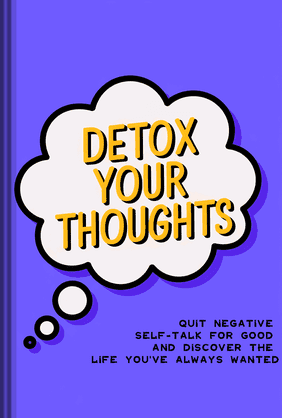
Detox Your Thoughts
Andrea Bonior, Ph.D.
18 Duration7 Key Points4.6 RateThese books offer life-changing perspectives, but when you're already struggling with anxiety, committing to reading them cover-to-cover can feel overwhelming. If you want to absorb the key lessons without the pressure, an app can help.


LeapAhead

Get the core insights from bestselling books on mental wellness and psychology in just 15 minutes, making it easier to build your mental toolkit on busy days.
Building Your Practice: Prompts and Tools
To make these habits stick, you need to organize your thoughts on paper. You don't need expensive equipment; a simple notebook from Amazon or Barnes & Noble works perfectly.
High-Impact CBT Journaling Prompts
Use these targeted CBT journaling prompts when you feel your anxiety rising but cannot pinpoint exactly why.
- What is the specific threat my brain is perceiving right now? Is it an immediate danger, or a hypothetical future event?
- If my best friend came to me with this exact same worry, what logical advice would I give them?
- What is one small, manageable action I can take in the next 5 minutes to improve this situation?
- Am I reading someone else's mind right now? What actual proof do I have of what they are thinking?
Utilizing CBT Worksheets for Anxiety
Structured forms take the guesswork out of these exercises. CBT worksheets for anxiety provide fill-in-the-blank templates for cognitive restructuring, mood tracking, and behavior experiments.
You can find hundreds of free, printable worksheets online from psychology resources, or easily draw your own grids in a notebook. Keep a printed "Catch It, Check It, Change It" worksheet on your desk. When panic hits, the blank boxes serve as a visual cue to slow down and process your thoughts logically, step-by-step.
Common Pitfalls to Avoid
Applying CBT exercises for anxiety requires practice. Avoid these common mistakes:
- Doing it only in your head: You cannot out-think an overthinking brain. You must write these exercises down. Writing engages a different part of your brain and forces logical processing.
- Expecting instant perfection: Your first few attempts at restructuring a thought might feel clunky or forced. Keep going. You are building a new neural pathway.
- Using CBT to suppress emotions: CBT is not about pretending everything is fine. It is about feeling your emotions without letting false narratives dictate your behavior.
Consistency is the ultimate key. By integrating these tools into your daily routine, you transition from feeling like a victim of your anxiety to an active manager of your mindset.
Understanding the proven effectiveness of this approach can provide even more motivation to stick with your practice.
FAQ
Do I need a therapist to do CBT?
No. While working with a licensed therapist is highly recommended and beneficial for deep-rooted issues, DIY cognitive behavioral therapy is incredibly effective for managing everyday stress and anxiety. The exercises are straightforward and designed for self-application.
No. While working with a licensed therapist is highly recommended and beneficial for deep-rooted issues, DIY cognitive behavioral therapy is incredibly effective for managing everyday stress and anxiety. The exercises are straightforward and designed for self-application.
How long does it take for CBT exercises to work?
You can feel immediate, temporary relief the very first time you successfully restructure a catastrophic thought. However, to see a lasting reduction in your baseline anxiety levels, you typically need to practice these techniques consistently for several weeks until they become a natural habit.
You can feel immediate, temporary relief the very first time you successfully restructure a catastrophic thought. However, to see a lasting reduction in your baseline anxiety levels, you typically need to practice these techniques consistently for several weeks until they become a natural habit.
What if my anxious thoughts are actually true?
CBT does not deny reality. If your worry is based on a true, difficult fact (like losing a job or a financial hurdle), CBT helps you shift from "panic mode" into "problem-solving mode." It stops the unnecessary mental suffering layered on top of the actual problem, allowing you to deal with the facts objectively.
CBT does not deny reality. If your worry is based on a true, difficult fact (like losing a job or a financial hurdle), CBT helps you shift from "panic mode" into "problem-solving mode." It stops the unnecessary mental suffering layered on top of the actual problem, allowing you to deal with the facts objectively.
Where can I find reliable CBT worksheets?
You can download free, evidence-based worksheets from reputable mental health organizations like the Anxiety & Depression Association of America (ADAA) or Psychology Tools. Alternatively, many CBT workbooks are available online or at local bookstores that provide comprehensive templates.
You can download free, evidence-based worksheets from reputable mental health organizations like the Anxiety & Depression Association of America (ADAA) or Psychology Tools. Alternatively, many CBT workbooks are available online or at local bookstores that provide comprehensive templates.