

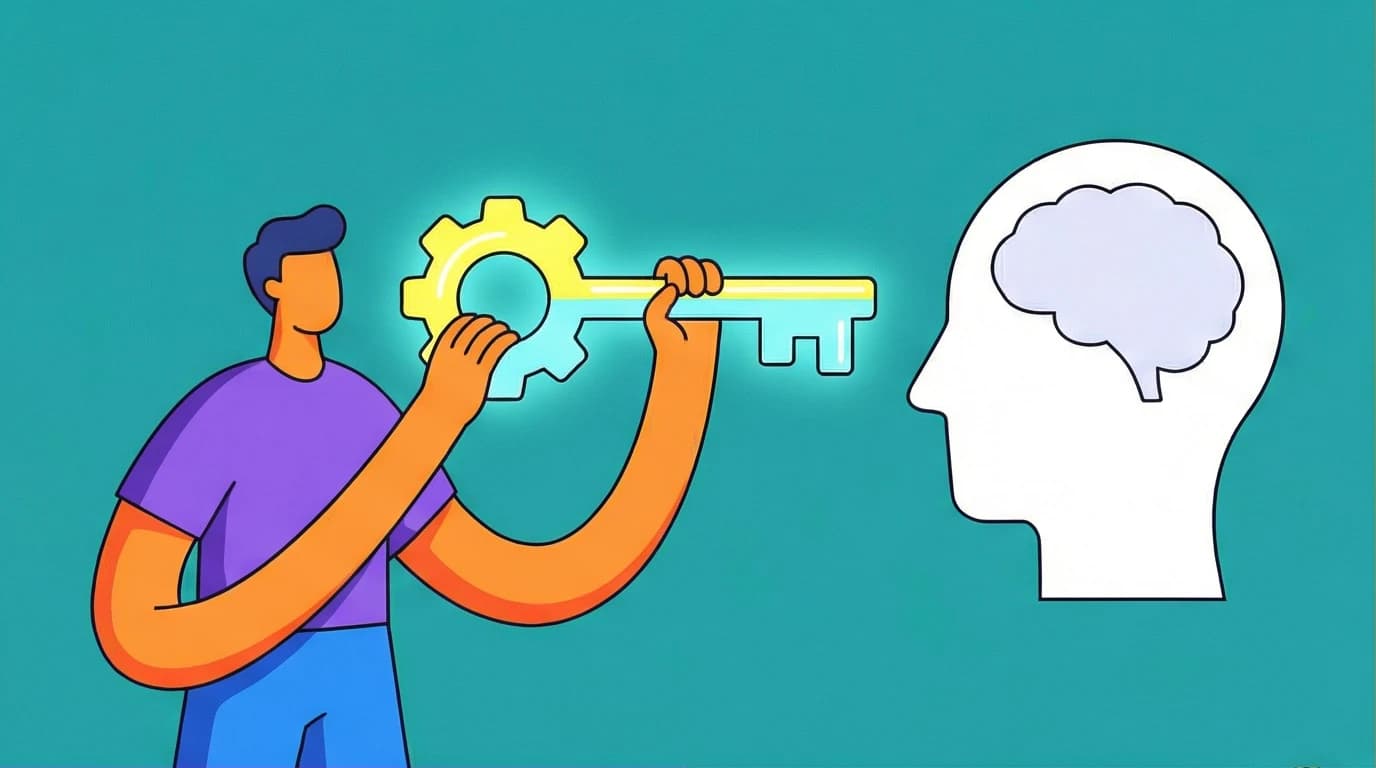
You already know what persuasion is. But spotting it in action is a different game. Reading textbook definitions of psychology won't help you figure out why you just bought a $150 jacket you didn't need, or why you agreed to a trial subscription you forgot to cancel. Abstract theories don't change behavior. Concrete recognition does.
If you want to understand these psychological triggers, studying cialdini 6 principles examples is the fastest path to bridging theory and reality. Let’s break down the exact levers pulling your strings, backed by historical data and modern brand mechanics.
While this article breaks down each principle with specific examples, it's also powerful to see how they are combined in comprehensive strategies. For savvy consumers and aspiring marketers, understanding the bigger picture is key.
1. Reciprocity: The Urge to Give Back
Human beings are wired to settle their debts. When someone gives us something, we feel a strong, almost physical obligation to give something back in return. This evolutionary trait kept early communities alive, but today, marketers use it to open your wallet.
The Classic Study
When looking at reciprocity principle examples real life provides, the restaurant mint study is legendary. Researchers found that a waiter giving a single mint to a customer with the check increased tips by 3%. If the waiter gave two mints, tips jumped by 14%. But the real magic happened when the waiter left one mint, started walking away, paused, turned back, and said, "For you nice people, here's an extra mint." Tips skyrocketed by 23%. The trigger wasn't the mint. It was the perceived personalized favor.
Modern Brand Application
- Costco Free Samples: Those pizza bites at the end of the aisle aren't just for tasting. They create a micro-debt. You take the food, you look the vendor in the eye, and suddenly walking away empty-handed feels rude.
- Non-Profit Mailers: Charities like the Disabled American Veterans send you free personalized address labels. The return rate on their donation requests jumps from 18% to 35% simply by including this unsolicited gift.
How to Handle It
Recognize the initial favor for what it is: a compliance tactic, not a genuine gift. You are free to eat the Costco sample and walk away. A commercial trick does not require a social obligation.
If you find yourself fascinated by these invisible social contracts, you might want to dive into the foundational text that started it all. Dr. Robert Cialdini’s groundbreaking work isn't just an academic textbook; it's a highly readable manual on human behavior. It expands on reciprocity and the other psychological triggers we encounter daily, giving you the ultimate defense manual against high-pressure sales tactics. Whether you're a marketer or just a smart consumer, this is essential reading.
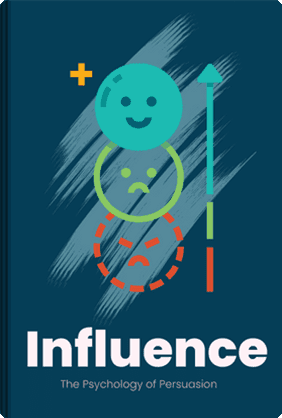
Influence
Robert Cialdini, Ph.D.
 50 Duration
 9 Key Points
 4.5 Rate
If you're eager to understand these principles but don't have time for a deep dive right now, you can get the core concepts from Cialdini’s work in a much shorter format.

Get the key ideas from *Influence* and other groundbreaking psychology books in 15-minute summaries, making it easy to learn powerful concepts on the go.
 LeapAhead
2. Commitment and Consistency: The Power of Sticking to It
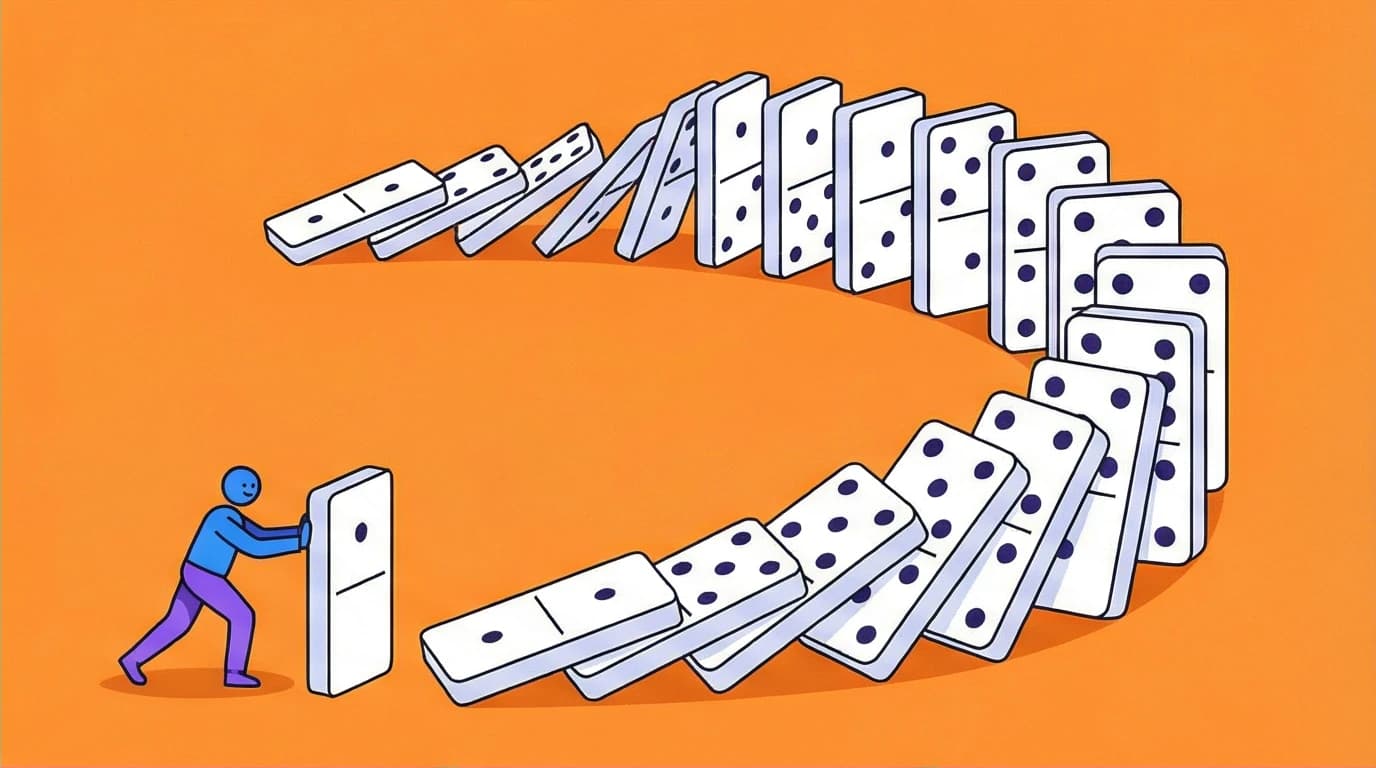
We have a deep psychological need to appear consistent in our words, beliefs, attitudes, and deeds. Once we make a choice or take a stand, we face personal and interpersonal pressures to behave consistently with that commitment.
The Classic Study
Among the best cialdini weapons of influence case studies, the safe driving billboard experiment stands out. Researchers asked homeowners in a California neighborhood to put a massive, ugly "Drive Carefully" billboard on their front lawns. Only 17% agreed.
In a different neighborhood, researchers first asked homeowners to put a tiny, three-inch "Be a Safe Driver" sticker in their window. Almost everyone agreed. Two weeks later, they asked these same people to install the massive, ugly billboard. This time, an astounding 76% agreed. The small initial commitment changed their self-identity into "safety-conscious citizens."
Modern Brand Application
- Free Trials: Apple Books or Amazon Prime offer a 30-day free trial. You commit to setting up the account and entering your credit card. By the end of the month, canceling feels like breaking a routine you've already committed to.
- The "Yes" Funnel: Software companies ask for your email first. Then your name. Then your preferences. By breaking the sign-up process into micro-commitments, you are far less likely to abandon the cart when they finally ask for your payment details.
How to Handle It
Pay attention to your gut. If you feel trapped by a past decision that no longer makes sense, recognize that consistency for the sake of consistency is foolish. You can change your mind.
Building those micro-commitments in software and digital products isn't accidental—it's heavily engineered into the design of our favorite apps. If you're curious about how tech companies build these incredibly sticky experiences that keep us coming back, understanding the psychology of habit-forming products is a game-changer. Discovering exactly how that initial "free trial" commitment evolves into a long-term, automatic routine is fascinating for anyone interested in product development or behavioral design.

Hooked
Nir Eyal
20 Duration8 Key Points4.5 Rate3. Social Proof: Following the Crowd
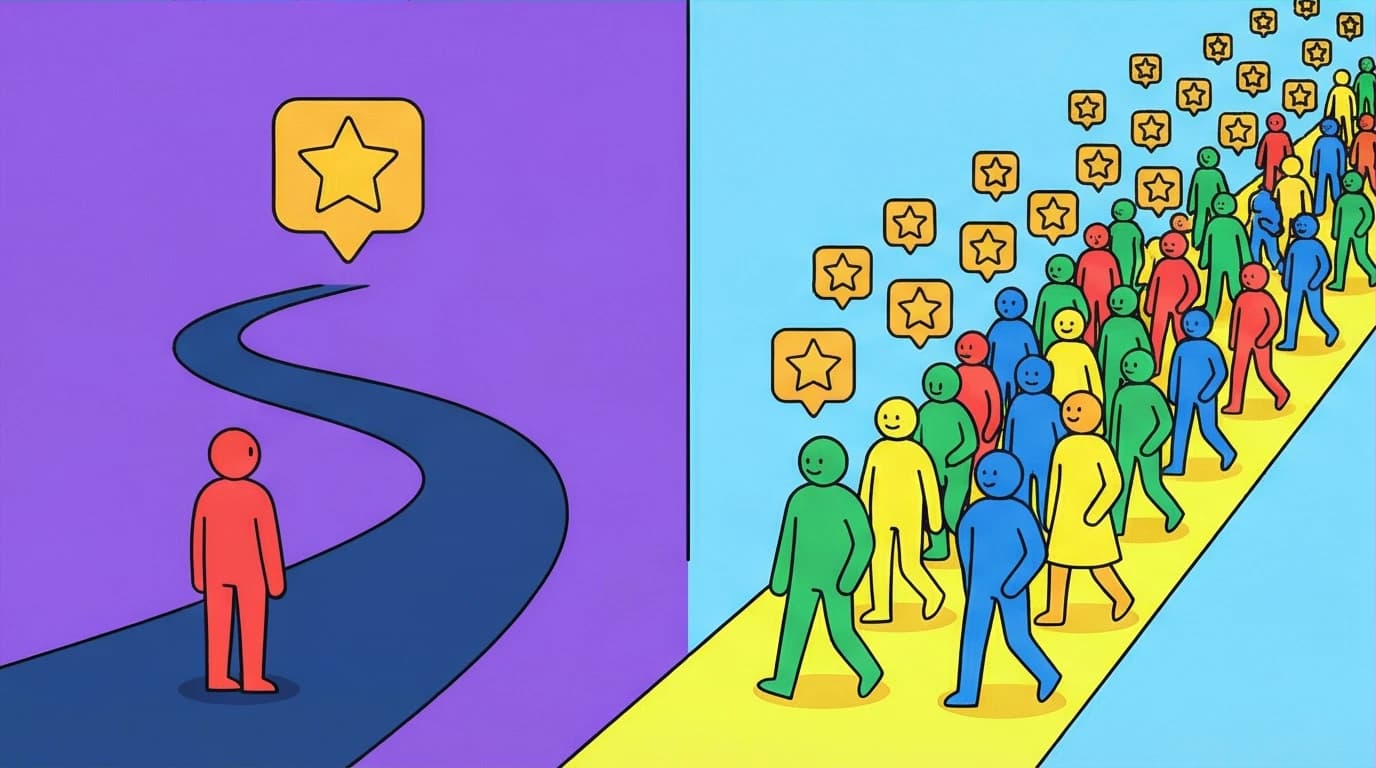
When we are uncertain, we look outward. We view a behavior as correct to the degree that we see others performing it. Safety in numbers is the ultimate shortcut for our brains.
The Classic Study
Cialdini partnered with a hotel chain to test towel reuse signs. The standard sign read: "Help save the environment." It had a 35% compliance rate.
Cialdini changed the sign to leverage social proof: "75% of our guests reuse their towels." Compliance jumped to 44%. He pushed it further by getting hyper-specific: "75% of guests who stayed in this specific room reused their towels." Compliance soared to 49.3%.
Modern Brand Application
For social proof examples everyday life exposes us to, look no further than modern digital platforms.
- Amazon & Goodreads: You are highly unlikely to buy a book with zero reviews. A product with 10,000 four-star reviews feels inherently safer than a product with 5 five-star reviews.
- Canned Laughter: Sitcoms use laugh tracks because studies prove they make audiences laugh longer and more often, even when the jokes are bad. Your brain hears laughter and assumes the material is funny.
How to Handle It
Disconnect the crowd's action from your own reality. Just because 10,000 people bought a specific blender doesn't mean it's the right model for your kitchen counter. Check the facts underneath the popularity.
The power of the crowd is exactly what makes certain products go viral while others completely flop. When we see our peers sharing or reviewing a product, it acts as a massive signal of value. If you want to understand the deeper mechanics behind why things catch on and how social proof drives word-of-mouth marketing in today's digital landscape, there is an excellent resource that breaks down the science of popularity with incredible real-world case studies.
Contagious
Jonah Berger
47 Duration8 Key Points4.4 Rate4. Authority: The Weight of the Uniform
People respect authority. We are conditioned from birth to obey teachers, doctors, and police officers. Our brains use titles, uniforms, and status symbols as shortcuts to determine who we should listen to.
The Classic Study
Effective authority persuasion examples reveal how superficial cues bypass our critical thinking. In a real estate agency case study, researchers altered how the receptionist transferred calls. Instead of simply saying, "Let me connect you to Peter," she said, "Let me connect you to Peter, our head of sales who has over 20 years of experience in this neighborhood."
This simple addition of authority credentials led to a 20% increase in appointments and a 15% increase in signed contracts. No money was spent. Just a display of authority.
Modern Brand Application
- Toothpaste Commercials: Brands feature actors wearing white lab coats and stethoscopes, stating "9 out of 10 dentists recommend." The actor is not a doctor, but the white coat triggers immediate compliance.
- Tech Geniuses: Go into an Apple Store. The support staff are called "Geniuses." They wear specialized lanyards and blue shirts. The environment establishes them as the absolute authority on your broken iPhone, making you less likely to question a $200 repair fee.
How to Handle It
Ask yourself two questions when confronted with authority: "Is this authority truly an expert?" and "How truthful can we expect this expert to be in this situation?" Separate the uniform from the actual competence.
5. Liking: The Halo Effect
We prefer to say yes to people we know and like. But what makes us like someone? Cialdini identifies physical attractiveness, similarity, compliments, and cooperative contact as the main drivers.
The Classic Study
Joe Girard is recognized by the Guinness Book of World Records as the greatest car salesman in history. His secret? He understood the principle of liking. Every month, he sent a greeting card to all 13,000 of his former customers. The card simply said, "I like you," followed by his name. It seems too obvious to work, but Girard proved that humans are absolute suckers for flattery.
Modern Brand Application
- Tupperware Parties: The entire business model relies on liking. You aren't buying plastic containers from a faceless corporation. You are buying them from your friend, neighbor, or sister who is hosting the party. Saying no means rejecting a friend.
- Influencer Marketing: Brands pay millions to YouTubers and Instagram influencers. You watch their daily vlogs, you know their dogs' names, and you feel like you are friends. When they drop a discount code for a skincare line, you buy it because you like them.
How to Handle It
Mentally separate the person selling the product from the product itself. If a friendly car salesman offers you a terrible deal, remember you are driving the car home, not the salesman.
The strategy of making people like you is arguably the oldest trick in the persuasion playbook. Car salesman Joe Girard mastered it, but the core concepts of likability have been studied for decades. If you want to genuinely improve your ability to connect with others—without coming off like you have a hidden agenda—brushing up on the timeless fundamentals of human relations can dramatically shift how you communicate in the office, at networking events, and at home.
How to Win Friends and Influence People
Dale Carnegie
21 Duration7 Key Points4.5 Rate6. Scarcity: The Fear of Missing Out
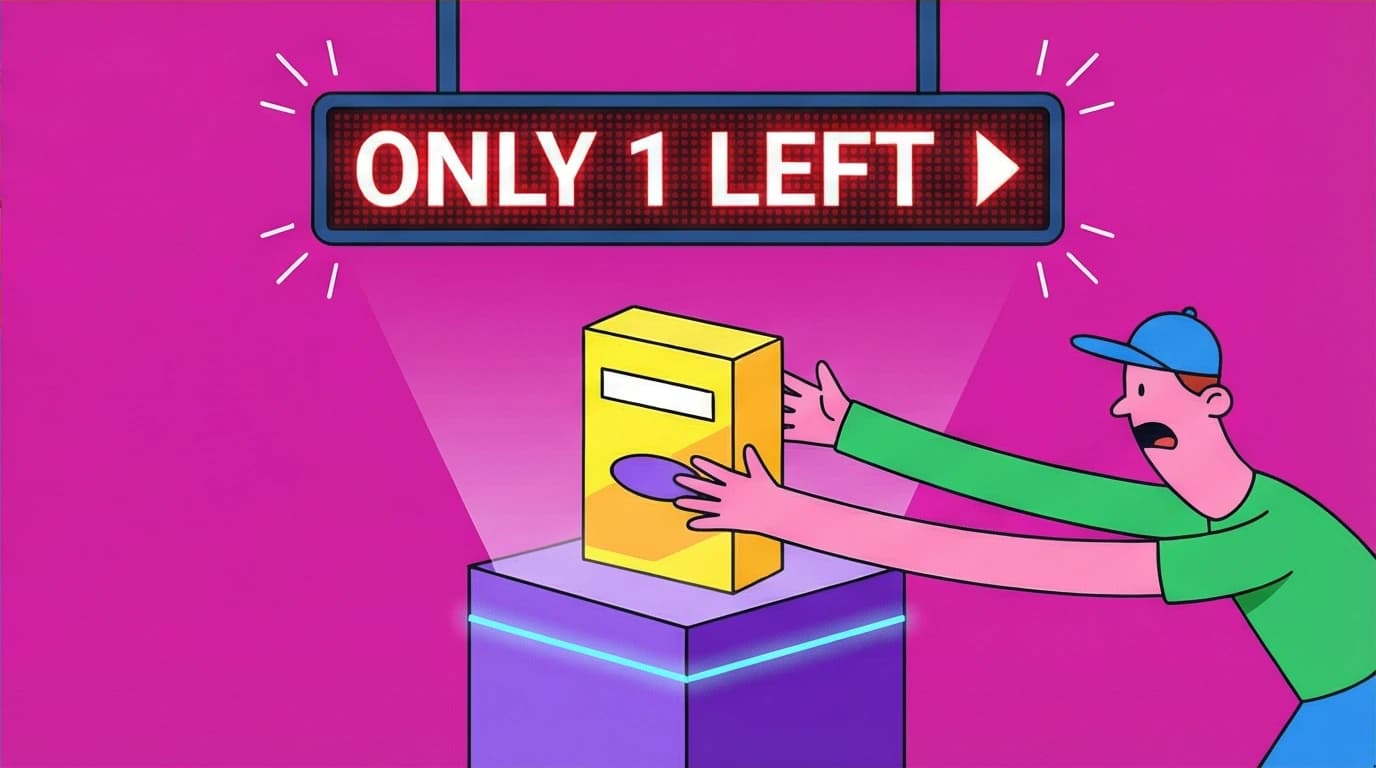
Opportunities seem more valuable to us when they are less available. The thought of losing something motivates us far more than the thought of gaining something of equal value. This is the foundation of FOMO (Fear Of Missing Out).
The Classic Study
In 2003, British Airways announced they would no longer operate the twice-daily Concorde flights from London to New York because it had become uneconomical. The very next day, sales for the flight took off. Nothing about the flight had changed. The planes weren't faster, the service wasn't better, and the price didn't drop. It simply became a scarce resource. People wanted it precisely because they soon wouldn't be able to get it.
Modern Brand Application
- Amazon Stock Count: Seeing "Only 2 left in stock - order soon" next to an item completely shifts your buying timeline. You stop comparing options and buy immediately to secure the asset.
- Seasonal Menus: Starbucks' Pumpkin Spice Latte generates massive revenue every fall. If it were available year-round, sales would flatten. The limited-time window creates artificial urgency.
How to Handle It
When you feel the sudden rush of urgency to buy something scarce, pause. Ask yourself: do I want this item for its actual utility, or do I just want to possess it because I might not get another chance? Scarcity makes things harder to get, but it does not make them perform better.
Being able to identify these triggers in isolation is the first step toward reclaiming your decision-making power. By developing a consistent defense against these common techniques, you can ensure your choices are guided by your own needs, not by carefully engineered psychological pressure.
Scarcity, like all these persuasion principles, highlights a fundamental truth: humans rarely make purely logical decisions. Whether it's rushing to buy a limited-time seasonal drink or overpaying for a flight, our brains are wired to act irrationally under the pressure of missing out. If you want a wildly entertaining look at the hidden forces that shape our everyday choices and lead us to make these predictable financial blunders, exploring the broader world of behavioral economics is the perfect next step.

Predictably Irrational
Dan Ariely
23 Duration10 Key Points4.6 RateNow you have a full reading list of books that can change the way you see the world. If you're wondering how to get through them all without a huge time commitment, an app can help you absorb the main ideas from each one in minutes.
Tackle your new reading list by listening to the key insights from all these books on persuasion and behavioral economics during your commute or gym time.
LeapAheadFAQ
Are Cialdini's 6 principles considered manipulative?
They are tools. Like a hammer, they can be used to build a house or break a window. When brands use these principles to highlight genuine value (like real limited stock or honest social proof), it is ethical persuasion. It crosses into manipulation when the triggers are fabricated—such as fake countdown timers or paid, fake Amazon reviews.
Did Cialdini add a 7th principle?
Yes. Years after publishing Influence, Cialdini introduced a seventh principle: Unity. This principle relies on shared identity. When a persuader convinces you that they are "one of us" (sharing a race, nationality, family tie, or even a deeply held hobby), you are significantly more likely to comply with their requests.
Which principle is the most effective?
There is no single "best" principle; effectiveness depends entirely on the context. If an audience is overwhelmed with choices, Social Proof cuts through the noise. If the audience is dragging their feet on a decision, Scarcity forces action. If you are building long-term B2B relationships, Liking and Reciprocity are your strongest foundations.