


You walked into a dealership just to look, but now you are sitting in a small office signing paperwork for a car with add-ons you never wanted. Or maybe you are staring at an Amazon shopping cart with a bright red countdown timer, feeling a sudden, anxious rush that you will miss out on a "lightning deal."
You aren't weak, and you aren't gullible. You are simply running into engineered psychological triggers designed to bypass your logical brain. Salespeople and digital marketers use specific formulas to make you feel obligated, rushed, or overly trusting. Learning how to resist persuasion tactics starts with understanding that these triggers target your emotions, not your logic. Once you can name the tactic, it loses its power.
Recognizing Sales Tactics in the Wild
Before you can build a defense, you need to understand the offense. Your brain is wired to take mental shortcuts. When we are busy, tired, or overwhelmed with information, we rely on automatic responses. Compliance professionals—marketers, salespeople, fundraisers, and negotiators—know exactly how to exploit these shortcuts.
They do this by creating an environment where saying "no" feels uncomfortable, illogical, or outright rude. Recognizing sales tactics early is the only way to stop your brain from shifting into autopilot. If a deal feels too good to be true, or if you feel a sudden tightness in your chest urging you to act right now, you are likely being managed.
To truly defend yourself against these manufactured environments, it helps to understand why our brains fall for them in the first place. We like to think of ourselves as highly logical shoppers, but the truth is that human decision-making is fundamentally flawed. If you want a fascinating look into the hidden forces that shape our choices—and why we so easily overpay for things we don't need—Dan Ariely’s exploration of behavioral economics is an absolute must-read. It will completely change the way you view your own buying habits.

Predictably Irrational
Dan Ariely
 23 Duration
 10 Key Points
 4.6 Rate
Protecting Against Cialdini Principles (The 6 Triggers)
In the 1980s, psychologist Robert Cialdini identified the universal principles of influence. Today, these principles are the standard playbook for every sales organization in the United States. Protecting against Cialdini principles requires a shift in mindset: you must learn to separate the emotional trigger from the actual value of the product.
1. Forced Reciprocity (The Free Gift Trap)
The rule of reciprocity states that if someone does something for us, we feel obligated to return the favor. In sales, this is weaponized as the "free gift." It is the unsolicited return address labels a charity mails to you. It is the free inspection a roofing contractor offers, or the extensive free samples at Costco.
How to Defend:
You must reframe the "gift." Recognize that a free sample or a complimentary inspection is not a personal favor; it is a calculated marketing expense. You did not ask for it. Therefore, you owe them nothing in return. Say to yourself, "This is a sales device, not a gift." Smile, say thank you, and walk away without guilt.
You must reframe the "gift." Recognize that a free sample or a complimentary inspection is not a personal favor; it is a calculated marketing expense. You did not ask for it. Therefore, you owe them nothing in return. Say to yourself, "This is a sales device, not a gift." Smile, say thank you, and walk away without guilt.

2. Artificial Scarcity (The "Only 1 Left!" Trick)
Scarcity triggers our deep-seated fear of missing out (FOMO). Marketers use this constantly. Think of hotel booking sites warning you that "4 people are looking at this room right now," or retail websites displaying "Only 2 items left in your size!" during a holiday sale. The goal is to induce panic so you buy without researching alternatives.
How to Defend:
Assume all urgency is manufactured until proven otherwise. Ask yourself: Would I buy this item right now if there were a thousand of them sitting in a warehouse? If the answer is no, you only want it because it's scarce. Never buy something just because it might be gone tomorrow.
Assume all urgency is manufactured until proven otherwise. Ask yourself: Would I buy this item right now if there were a thousand of them sitting in a warehouse? If the answer is no, you only want it because it's scarce. Never buy something just because it might be gone tomorrow.
3. Social Proof (The Illusion of the Crowd)
We naturally look to others to determine what is correct. If everyone else is doing it, it must be right. This is why you see "Best Seller" banners, hear laugh tracks on sitcoms, or see thousands of five-star reviews on products you have never heard of.
How to Defend:
Stop trusting the crowd blindly. When evaluating a product online, skip the 5-star and 1-star reviews. Go straight to the 3-star reviews. They are usually the most honest and balanced. Remember that many online reviews are manipulated, and a "Best Seller" badge often just means the company ran a massive discount campaign.
Stop trusting the crowd blindly. When evaluating a product online, skip the 5-star and 1-star reviews. Go straight to the 3-star reviews. They are usually the most honest and balanced. Remember that many online reviews are manipulated, and a "Best Seller" badge often just means the company ran a massive discount campaign.

4. Authority (The Lab Coat Effect)
We are conditioned to obey authority figures. Salespeople exploit this by using jargon, wearing uniforms, or displaying certificates on their walls. A financial advisor wearing a sharp suit in a high-rise office commands respect, making it harder for you to question the high fees associated with their mutual funds.
How to Defend:
Question their true expertise. Are they an objective expert, or do they stand to make a commission off your decision? Defending against compliance professionals means asking direct questions: "How exactly are you compensated if I buy this?" Strip away the suit and the jargon, and look only at the math.
Question their true expertise. Are they an objective expert, or do they stand to make a commission off your decision? Defending against compliance professionals means asking direct questions: "How exactly are you compensated if I buy this?" Strip away the suit and the jargon, and look only at the math.
5. Liking (The Fake Friend)
We prefer to say yes to people we know and like. A seasoned salesperson will immediately try to establish a bond. They will notice the local college bumper sticker on your car and suddenly claim to be a massive fan of that team. They will mirror your body language and act as if they are fighting the "evil manager" on your behalf to get you a lower price.
How to Defend:
Separate the salesperson from the transaction. You are not taking the salesperson home; you are taking the car, the software, or the insurance policy home. If you catch yourself liking a salesperson far more than you should after just ten minutes, a red flag should go up. Remind yourself: They are doing a job. They are not my friend.
Separate the salesperson from the transaction. You are not taking the salesperson home; you are taking the car, the software, or the insurance policy home. If you catch yourself liking a salesperson far more than you should after just ten minutes, a red flag should go up. Remind yourself: They are doing a job. They are not my friend.
6. Commitment and Consistency (The Foot in the Door)
Humans have a deep desire to appear consistent in their words and actions. If a salesperson can get you to agree to a small request, you are highly likely to agree to a larger one later. They might ask, "Do you consider yourself a person who cares about your family's safety?" Once you say yes, it becomes psychologically difficult to decline their overpriced home security system.
How to Defend:
Give yourself permission to change your mind. It is perfectly fine to say, "I know I said I was interested in upgrading earlier, but after seeing the final numbers, I have changed my mind." You do not owe anyone consistency when your financial well-being is on the line.
Give yourself permission to change your mind. It is perfectly fine to say, "I know I said I was interested in upgrading earlier, but after seeing the final numbers, I have changed my mind." You do not owe anyone consistency when your financial well-being is on the line.
Since Robert Cialdini is the godfather of modern persuasion, reading his original research is one of the best ways to armor yourself against these six psychological triggers. By understanding the exact science of how marketers, salespeople, and even politicians manufacture compliance, you can spot their traps from a mile away. If you want to dive deeper into the formulas used to get you to say "yes," going straight to the source is the smartest investment you can make.
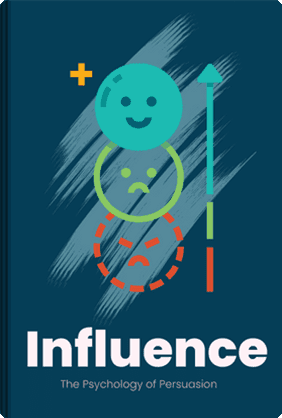
Influence
Robert Cialdini, Ph.D.
50 Duration9 Key Points4.5 RateIf your to-read list is suddenly full of dense but important books like Influence and Predictably Irrational, there's a practical way to get their core ideas without spending weeks reading.


Absorb the key lessons from essential psychology and behavioral economics books in just 15-minute audio or text summaries, helping you recognize and resist persuasion tactics on your commute or during a lunch break.
 LeapAhead
Practical Strategies: How to Avoid Being Manipulated
Understanding the theory is helpful, but you need a tactical plan when you are actually in the room (or on the website). Here is how to avoid being manipulated when the pressure is actively on.

Implement the 24-Hour Rule
The single most effective way to kill a persuasion tactic is to introduce time. Emotion fades over time; logic remains. Establish a personal rule that you never make a purchase over $100 (or any threshold you choose) on the same day you discover it. If a salesperson tells you the deal is "today only," accept that you will lose the deal. A good product at a fair price will still be a good product tomorrow.
The battle between your impulsive emotions and your logical brain is at the core of almost every regrettable purchase. When a salesperson pressures you, they are trying to activate your fast, instinctual thinking before your slow, deliberate logic can catch up. If you are curious about how these two separate systems operate within your mind, Nobel laureate Daniel Kahneman breaks down the science brilliantly. Learning how to master these systems will save you from countless financial mistakes.
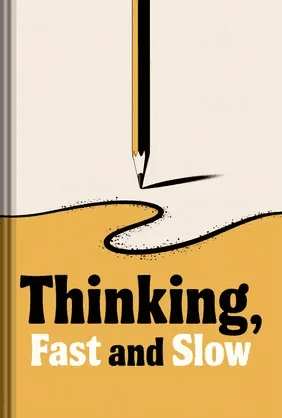
Thinking, Fast and Slow
Daniel Kahneman
53 Duration9 Key Points4.5 RateCreate Physical Distance
Persuasion requires proximity. If you feel cornered, break the spell by leaving the environment. Go to your car. Walk out of the store. Go to the restroom. Closing the browser tab works the same way online. Once you remove yourself from the high-pressure environment, your heart rate will drop, and your logical brain will come back online.
Use the "Broken Record" Technique
Compliance professionals are trained to handle objections. If you say, "It's too expensive," they will pivot to a payment plan. If you say, "I need to talk to my spouse," they will ask, "Doesn't your spouse trust you to make good decisions?"
Stop giving them new objections to overcome. Pick one boring, neutral phrase and repeat it exactly the same way, no matter what they say.
- Salesperson: "We can lower your monthly payment!"
- You: "No thank you, I am not buying today."
- Salesperson: "Are you sure? I can throw in the premium package."
- You: "No thank you, I am not buying today."
They will eventually run out of momentum and give up.
Scripts for Comfortably Saying "No"
Most people hate confrontation. You do not need to be aggressive to set a boundary. Memorize a few default responses so you don't have to think of them under pressure.
- To the pushy retail clerk: "I am on a strict budget this month, so I'm not making any purchases today. Thank you for your help."
- To the aggressive car dealer: "I never sign paperwork on the same day I test drive. I will review these numbers at home and email you tomorrow."
- To the online subscription trying to upsell you: Look for the smallest, grayest text on the screen. Do not engage with the brightly colored "Wait, I want this deal!" buttons.
- To the door-to-door salesperson: "I don't do business at my front door. If you have a flyer, leave it, and I will research your company online. Have a good day." (Then close the door).
Resisting persuasion is a learned skill. The more you practice recognizing the triggers and applying your scripts, the easier it becomes to protect your time, your peace of mind, and your bank account.
Even with the best scripts memorized, pushing back against aggressive salespeople can still feel incredibly intimidating if you are a natural people-pleaser. Learning to set firm boundaries without feeling guilty is a superpower that protects not just your wallet, but your time and energy as well. If you struggle with the anxiety of letting people down or fear coming across as rude, picking up a dedicated guide on assertiveness can help you finally reclaim your confidence.
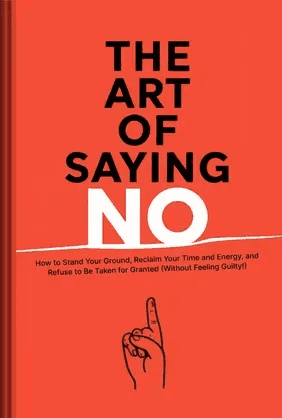
The Art of Saying NO
Damon Zahariades
16 Duration9 Key Points4.6 RateThe books mentioned here are fantastic starting points, but consistently building knowledge is the key to lasting confidence. If you're too busy or tired for full-length books after work, you can still make learning a daily habit.
Turn your commute or workout into learning time with 15-minute audio summaries of books on assertiveness, negotiation, and self-confidence, making it easy to build the skills you need to say 'no'.
LeapAheadFAQ
Is it rude to just walk away from a pushy salesperson?
No. A professional transaction requires mutual respect. If a salesperson is ignoring your boundaries, using manipulation, or refusing to take "no" for an answer, they have broken the social contract. You are entirely within your rights to say, "I am no longer interested, goodbye," and simply walk away. Your financial security is more important than a stranger's temporary discomfort.
No. A professional transaction requires mutual respect. If a salesperson is ignoring your boundaries, using manipulation, or refusing to take "no" for an answer, they have broken the social contract. You are entirely within your rights to say, "I am no longer interested, goodbye," and simply walk away. Your financial security is more important than a stranger's temporary discomfort.
How can I tell if an online deal is actual scarcity or just a dark pattern?
Assume it is a dark pattern. True scarcity usually only applies to unique, physical items (like a specific used car or a piece of original art) or highly anticipated concert tickets. Mass-produced goods on Amazon or digital courses are rarely truly scarce. If a website uses countdown timers that magically reset when you refresh the page in an incognito browser, it is a manipulated dark pattern.
Assume it is a dark pattern. True scarcity usually only applies to unique, physical items (like a specific used car or a piece of original art) or highly anticipated concert tickets. Mass-produced goods on Amazon or digital courses are rarely truly scarce. If a website uses countdown timers that magically reset when you refresh the page in an incognito browser, it is a manipulated dark pattern.
What do I do if I already agreed to something but now regret it?
Act quickly. If you are in the United States, the Federal Trade Commission (FTC) mandates a "Cooling-Off Rule" that gives you three days to cancel sales made at your home, workplace, or at a seller's temporary location (like a hotel room or convention center). For online purchases, check the return policy immediately. Do not let embarrassment stop you from getting your money back. Cancel the transaction, return the item, and treat the experience as a valuable lesson in recognizing sales tactics.
Act quickly. If you are in the United States, the Federal Trade Commission (FTC) mandates a "Cooling-Off Rule" that gives you three days to cancel sales made at your home, workplace, or at a seller's temporary location (like a hotel room or convention center). For online purchases, check the return policy immediately. Do not let embarrassment stop you from getting your money back. Cancel the transaction, return the item, and treat the experience as a valuable lesson in recognizing sales tactics.