

You map out a logical product launch, yet customers do the exact opposite of what the data predicted. You build a flawless marketing funnel, but users abandon carts at the final step. Humans are predictably irrational. We do not evaluate choices like supercomputers. We rely on mental shortcuts that save time but introduce severe flaws in judgment.
Understanding the cognitive biases thinking fast and slow details is not just an academic exercise. It is the foundation of high-converting marketing, frictionless user experience (UX), and sound business strategy. Relying on gut feelings leads to failed campaigns and poor product-market fit.
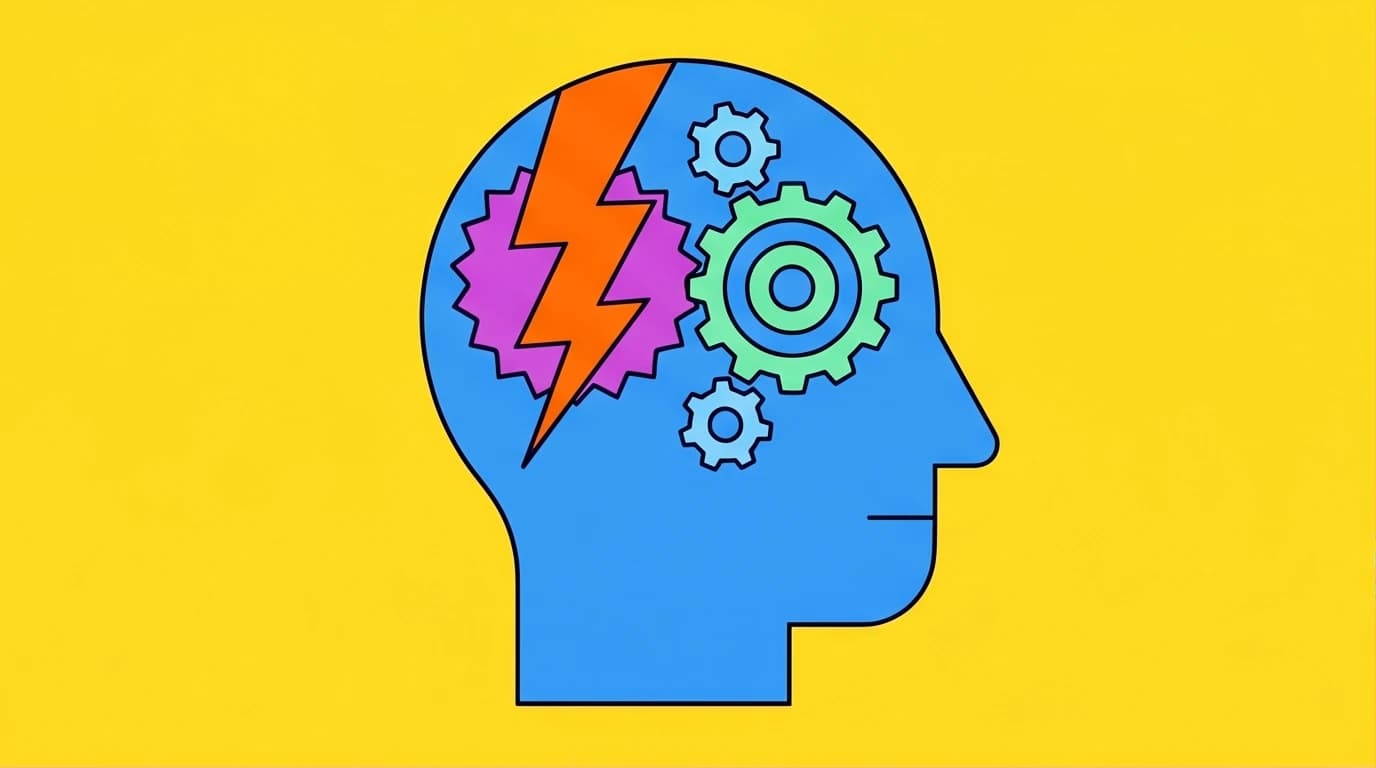
The Underlying Engine: System 1 and System 2
Before identifying specific traps, you must understand the two operating systems that drive human choice.
- System 1: Fast, automatic, emotional, and unconscious. It operates without effort. It is the system that instantly reads anger on a face or knows that 2 + 2 = 4.
- System 2: Slow, logical, deliberate, and lazy. It requires high mental effort, like calculating 17 x 24 or parking in a tight space.
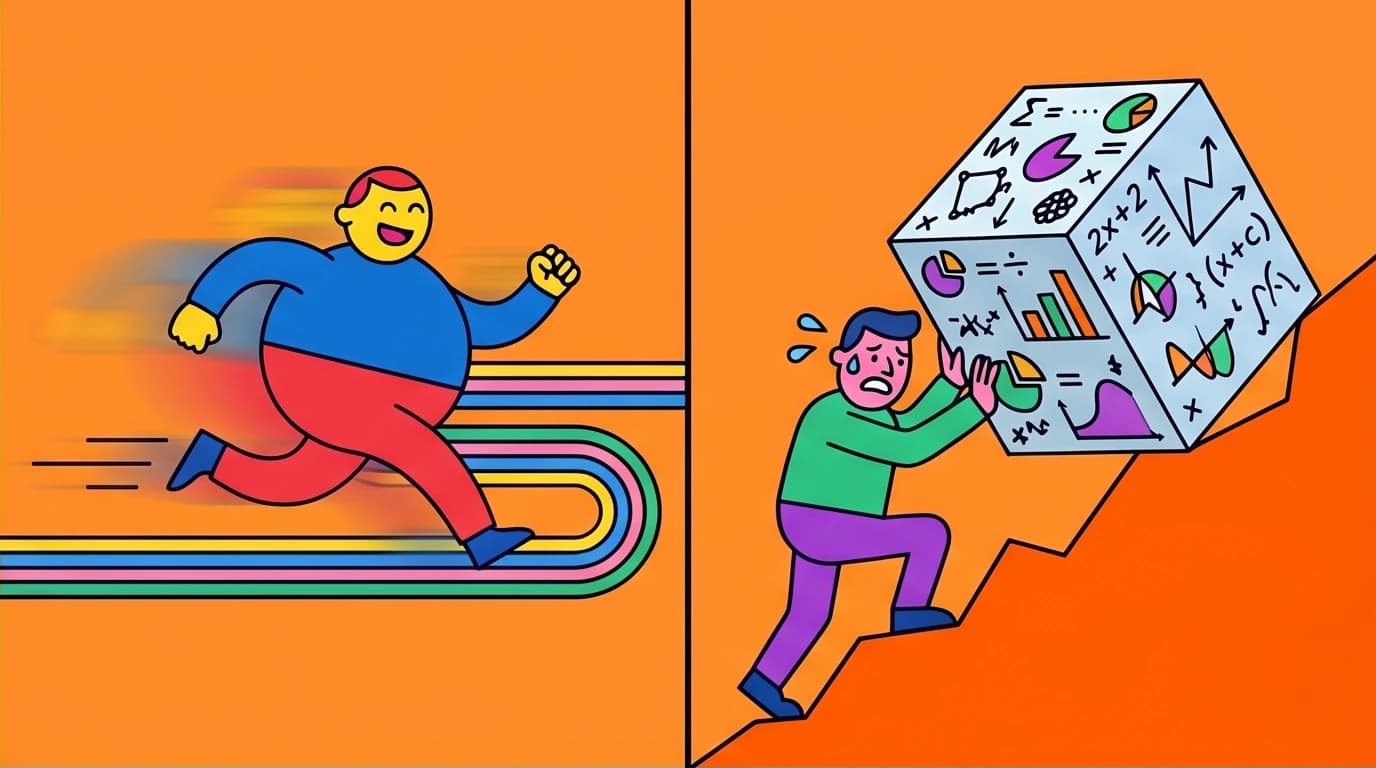
Most product managers and marketers try to sell to System 2 by using complex feature lists and dense specifications. But System 1 makes the actual buying decisions. System 1 relies on heuristics (mental shortcuts) to navigate thousands of daily choices. When these shortcuts fail, they produce cognitive biases.
The dynamic between these two systems is the core of Kahneman's entire framework. For a deeper dive into their individual roles and how they interact, see our complete guide.
If you want to truly master the underlying mechanics of how humans make choices, there is no better resource than the foundational text itself. Nobel laureate Daniel Kahneman’s groundbreaking work is essential reading for any marketer, product manager, or founder who wants to understand the invisible forces driving customer behavior. It dives deep into the dual-system framework and unpacks exactly why our brains are so prone to taking these mental shortcuts in the first place.
Thinking, Fast and Slow
Daniel Kahneman
 53 Duration
 9 Key Points
 4.5 Rate
But if a 500-page dive into behavioral economics feels daunting, you can get a head start on its core principles.

This app distills the key ideas from essential books like Thinking, Fast and Slow into 15-minute audio or text summaries, perfect for busy professionals.
Download LeapAhead App now
A Practical Thinking Fast and Slow Biases List
To protect your business decisions and optimize your user journeys, you need a functional map of these blind spots. Below is a targeted thinking fast and slow biases list adapted for professionals.
1. The Anchoring Effect
People rely too heavily on the first piece of information offered (the "anchor") when making decisions. Once an anchor is set, subsequent judgments are made by adjusting away from that initial number.
The anchoring effect thinking fast and slow illustrates is a cornerstone of modern retail and software pricing. When Steve Jobs introduced the original iPad, the screen displayed a massive "$999" price tag. He let the audience absorb that number, creating a high anchor. Then, he announced the actual price: "$499." Suddenly, $499 felt like an absolute steal.
Actionable Takeaway:
- For Pricing: Always present your highest-tier package first. If a user sees a $2,000/month Enterprise plan before scrolling down to the $99/month Pro plan, the Pro plan appears cheap.
- For Retail: Show the crossed-out Manufacturer's Suggested Retail Price (MSRP) next to the actual selling price, a tactic heavily utilized by Amazon.
2. Loss Aversion
The psychological pain of losing something is approximately twice as intense as the pleasure of gaining something of equal value.
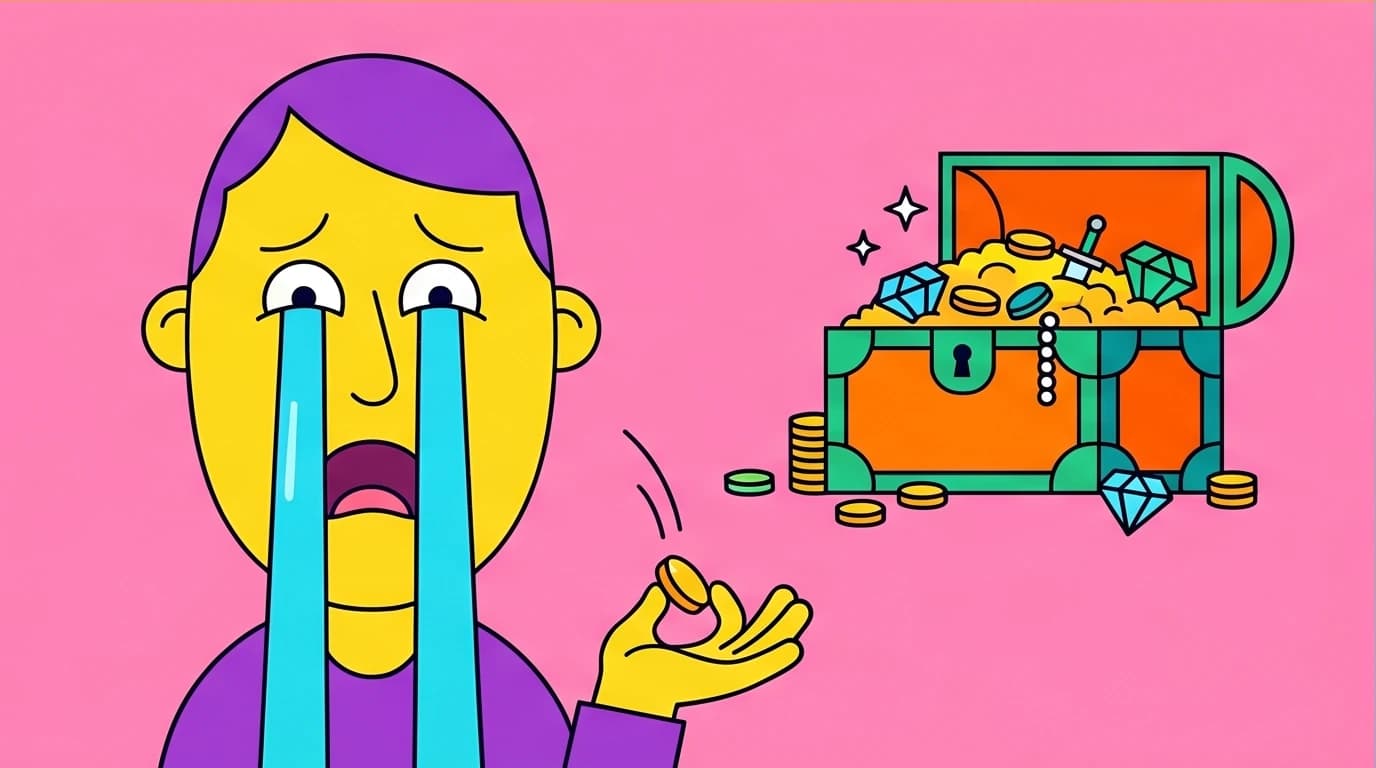
The concept of loss aversion Daniel Kahneman and Amos Tversky formalized explains why investors hold onto losing stocks too long and why consumers hesitate to switch brands. We are wired to protect what we already have.
Actionable Takeaway:
- For Marketing: Frame your copy around what the user stands to lose by not taking action, rather than just what they gain. Instead of saying, "Save $500 a year on car insurance," test "Stop losing $500 a year on expensive car insurance."
- For Product Trials: Give users full access to premium features during a trial period. When the trial ends, taking those features away triggers loss aversion. Companies like Audible use this by letting you keep your audiobooks even if you cancel, making the initial subscription commitment feel risk-free while building a library you do not want to abandon.
Our hardwired desire to avoid loss is just one of many ways our behavior defies standard economic logic. If you are fascinated by the idea that human beings are not calculating machines, Dan Ariely’s research is a fantastic next step. His work expands on these cognitive biases, demonstrating through clever experiments just how consistently we make illogical choices—and how businesses can anticipate these quirks to design better products and more compelling pricing models.

Predictably Irrational
Dan Ariely
23 Duration10 Key Points4.6 Rate3. The Availability Heuristic
People judge the frequency or likelihood of an event by the ease with which examples come to mind.
If you ask an American whether there are more words in the English language that start with the letter "K" or have "K" as the third letter, most will guess words starting with "K." It is simply easier to recall words like kangaroo or kitchen than to search memory for words like ask or acknowledge.
When studying the heuristics and biases Kahneman presents, the availability heuristic stands out because it dictates how consumers perceive risk and value. If news outlets constantly report on plane crashes, people refuse to fly, even though driving is statistically much more dangerous.
Actionable Takeaway:
- For PR & Brand: One highly visible negative review on Yelp or a viral complaint on X (formerly Twitter) can define your brand for prospects, regardless of thousands of silent, happy customers. You must proactively generate visible, vivid positive testimonials to replace the negative narratives in the user's immediate recall.
- For Sales: Use vivid, emotionally resonant case studies. Data points do not stick in System 1; stories do.
Since System 1 relies so heavily on vivid, easily recalled examples, your marketing campaigns need to be memorable to succeed. But why do certain stories spread like wildfire while others are instantly forgotten? Chip and Dan Heath break down the anatomy of ideas that endure, offering a practical framework for crafting messaging that captures attention and stays top of mind. It is a must-read for anyone trying to leverage the availability heuristic to build a stronger, more resonant brand narrative.
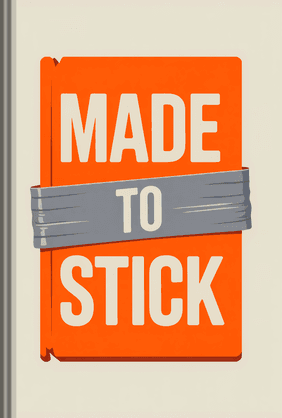
Made to Stick
Chip Heath, Dan Heath
52 Duration9 Key Points4.5 Rate4. WYSIATI (What You See Is All There Is)
System 1 jumps to conclusions based purely on the information directly in front of it. It does not pause to ask, "What data am I missing?"
If you read that a startup grew its revenue by 300% last quarter, System 1 automatically assumes it is a highly successful company. You do not naturally pause to realize that their revenue might have grown from $10 to $40.
Actionable Takeaway:
- For Leadership: Never make strategic decisions based on a single dashboard. If you only look at customer acquisition cost (CAC) without measuring lifetime value (LTV) or churn rate, you will burn your budget on cheap, low-quality leads.
- For Copywriting: Consumers will not research your competitors if your landing page answers all their immediate objections clearly. Present a complete, compelling narrative so System 1 feels confident hitting the "Buy" button without looking elsewhere.
5. The Peak-End Rule
People do not remember an experience by calculating an average of every moment. Instead, memory is dictated almost entirely by two points: the emotional peak (the most intense moment, positive or negative) and the end of the experience.
Actionable Takeaway:
- For UX/PM: Stop trying to make every single step of a user journey mildly pleasant. Focus your resources on creating one massive "wow" moment (the peak) and ensuring the final interaction (the end) is frictionless.
- Example: Consider the checkout process at a physical Apple Store. The peak is playing with the high-end hardware; the end is a seamless, zero-register checkout right where you stand. The customer leaves with a disproportionately positive memory of the brand.
6. The Framing Effect
The way information is presented dramatically alters the decision being made.
A doctor tells a patient a surgery has a "90% survival rate." The patient feels reassured and agrees to the operation. Another doctor tells a patient the exact same surgery has a "10% mortality rate." The patient is terrified and declines. The data is identical; the frame is different.
Actionable Takeaway:
- For B2B Sales: Frame your pricing models carefully. "Pay $30 a month" feels heavier than "Just $1 a day."
- For Product: Opt-out frames always beat opt-in frames. If you want employees to save for retirement, automatically enroll them in a 401(k) and force them to manually opt out. Participation rates will skyrocket.
The incredible power of using opt-out framing to boost retirement savings is actually a famous case study in behavioral economics, often referred to as "choice architecture." If you want to learn how to structure options to subtly guide user behavior without restricting their freedom, Richard Thaler and Cass Sunstein wrote the definitive guide. Their insights will teach you how small tweaks in how you present choices—whether in a software checkout flow or a corporate policy document—can yield massive improvements in conversion and compliance.

Nudge
Richard H. Thaler, Cass R. Sunstein
45 Duration8 Key Points4.6 RateWith so many foundational books to cover, finding the time to get through them all can be a major hurdle for any busy professional.
Clear your 'to-read' list faster by absorbing the main insights from these business classics during your commute or lunch break.
Download LeapAhead App now
7. The Sunk Cost Fallacy
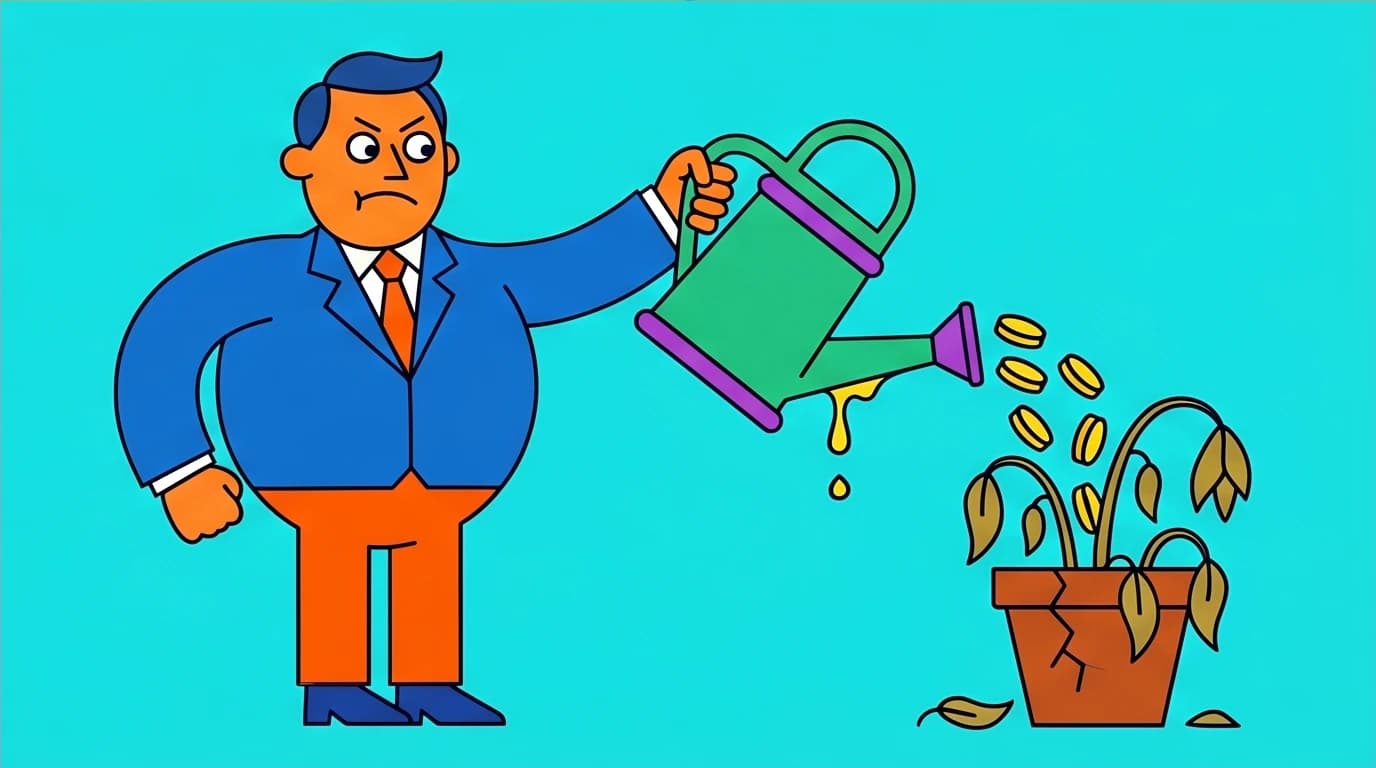
We continue investing time, money, or effort into a failing project simply because we have already invested heavily in it. System 1 hates admitting defeat.
Actionable Takeaway:
- For Decision Makers: Implement the "clean slate" rule. If you step into a project that has burned through $100,000 and is yielding zero results, ask yourself: "If I were starting fresh today with zero dollars spent, would I invest in this strategy?" If the answer is no, kill the project. The $100,000 is gone regardless of what you do next.
How to Outsmart Mental Traps
Recognizing cognitive biases is only half the battle. Because System 1 is automatic, you cannot simply "choose" not to be biased. You must build systems that act as guardrails.
1. Conduct Pre-Mortems
Before launching a major marketing campaign or shipping a new software update, gather your team and say: "Fast forward one year. This project failed miserably. Write down exactly why." This forces System 2 to activate, breaking WYSIATI and the availability heuristic.
Before launching a major marketing campaign or shipping a new software update, gather your team and say: "Fast forward one year. This project failed miserably. Write down exactly why." This forces System 2 to activate, breaking WYSIATI and the availability heuristic.
2. Use Standardized Rubrics
Whether hiring a new developer or selecting a vendor, use a strict, quantified checklist. Do not rely on "cultural fit" or gut feeling, which are massive breeding grounds for the Halo Effect (where one positive trait blinds you to red flags).
Whether hiring a new developer or selecting a vendor, use a strict, quantified checklist. Do not rely on "cultural fit" or gut feeling, which are massive breeding grounds for the Halo Effect (where one positive trait blinds you to red flags).
3. Embrace A/B Testing
Your intuition is flawed. You might assume users prefer a green button because it means "go," but data might show the red button converts 20% higher due to better contrast. Let the market decide through rigorous testing.
Your intuition is flawed. You might assume users prefer a green button because it means "go," but data might show the red button converts 20% higher due to better contrast. Let the market decide through rigorous testing.
4. Introduce Frictions Intentionally
While UX designers typically remove friction, sometimes you need to force users out of System 1 and into System 2. Adding a "Are you sure you want to delete this catalog?" prompt prevents accidental data loss caused by automatic clicking.
While UX designers typically remove friction, sometimes you need to force users out of System 1 and into System 2. Adding a "Are you sure you want to delete this catalog?" prompt prevents accidental data loss caused by automatic clicking.
Understanding these individual biases is crucial, but the real power comes from integrating this knowledge into a cohesive business strategy.
FAQ
What is the difference between a heuristic and a cognitive bias?
A heuristic is a mental shortcut or rule of thumb the brain uses to process information quickly (e.g., judging distance by clarity). A cognitive bias is the predictable error in judgment that occurs when a heuristic is applied in the wrong context. Heuristics are the tool; biases are the mistakes the tool sometimes causes.
A heuristic is a mental shortcut or rule of thumb the brain uses to process information quickly (e.g., judging distance by clarity). A cognitive bias is the predictable error in judgment that occurs when a heuristic is applied in the wrong context. Heuristics are the tool; biases are the mistakes the tool sometimes causes.
Can we completely train our brains to eliminate cognitive biases?
No. System 1 operates automatically and unconsciously. You cannot turn it off. Kahneman himself admitted that even after decades of studying biases, his own intuition remained highly flawed. The goal is not elimination, but recognition. You build external processes—like checklists, data reviews, and peer feedback—to catch the errors System 1 makes.
No. System 1 operates automatically and unconsciously. You cannot turn it off. Kahneman himself admitted that even after decades of studying biases, his own intuition remained highly flawed. The goal is not elimination, but recognition. You build external processes—like checklists, data reviews, and peer feedback—to catch the errors System 1 makes.
Which cognitive bias is most frequently exploited in e-commerce?
Loss aversion and the anchoring effect work together as the ultimate e-commerce engine. Retailers set a high anchor (MSRP) to make the current price look like a bargain, and then trigger loss aversion with a countdown timer ("Sale ends in 2 hours") to force immediate action.
Loss aversion and the anchoring effect work together as the ultimate e-commerce engine. Retailers set a high anchor (MSRP) to make the current price look like a bargain, and then trigger loss aversion with a countdown timer ("Sale ends in 2 hours") to force immediate action.
How does WYSIATI affect product development?
WYSIATI leads product teams to build features based purely on the feedback of their loudest, most demanding enterprise clients, ignoring the silent majority of standard users. Because the loud feedback is "all there is" in the PM's immediate view, they build a skewed product roadmap that fails the broader market.
WYSIATI leads product teams to build features based purely on the feedback of their loudest, most demanding enterprise clients, ignoring the silent majority of standard users. Because the loud feedback is "all there is" in the PM's immediate view, they build a skewed product roadmap that fails the broader market.