

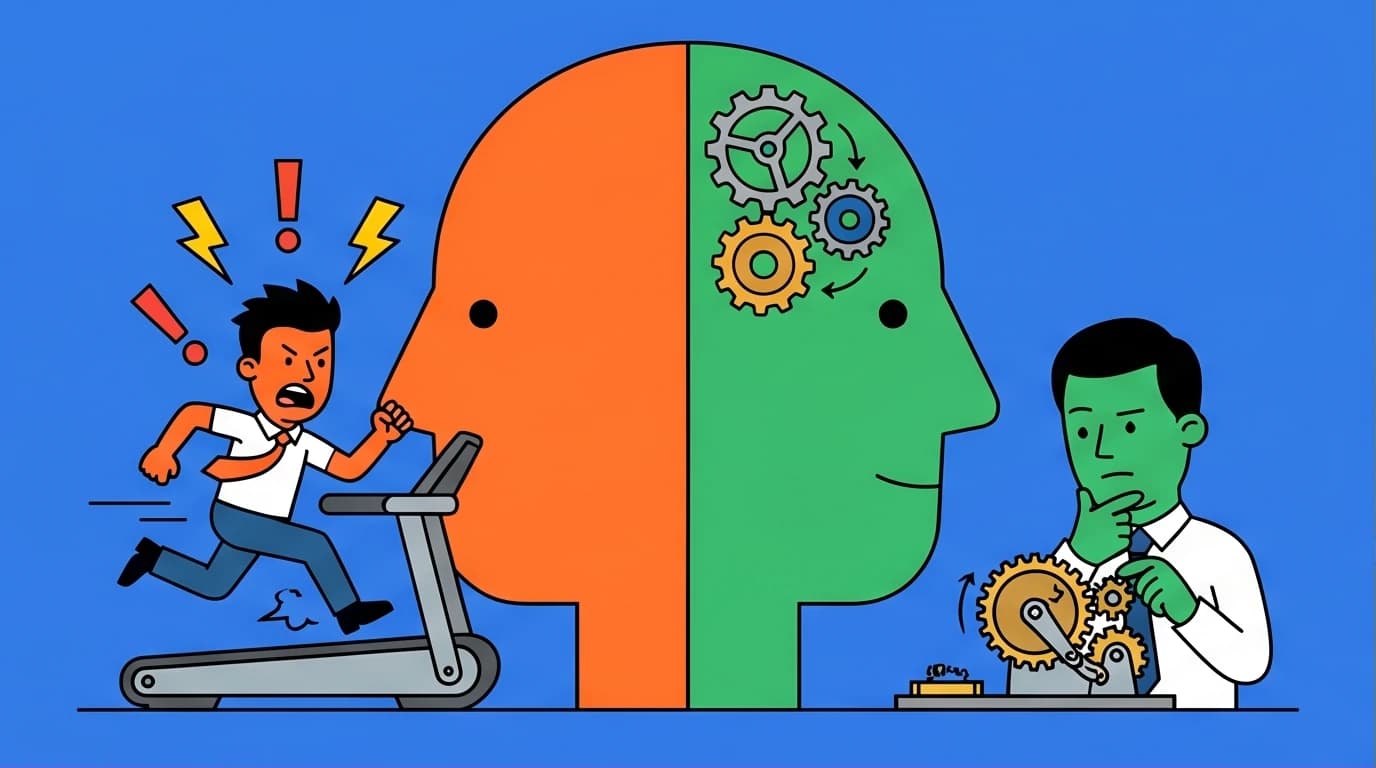
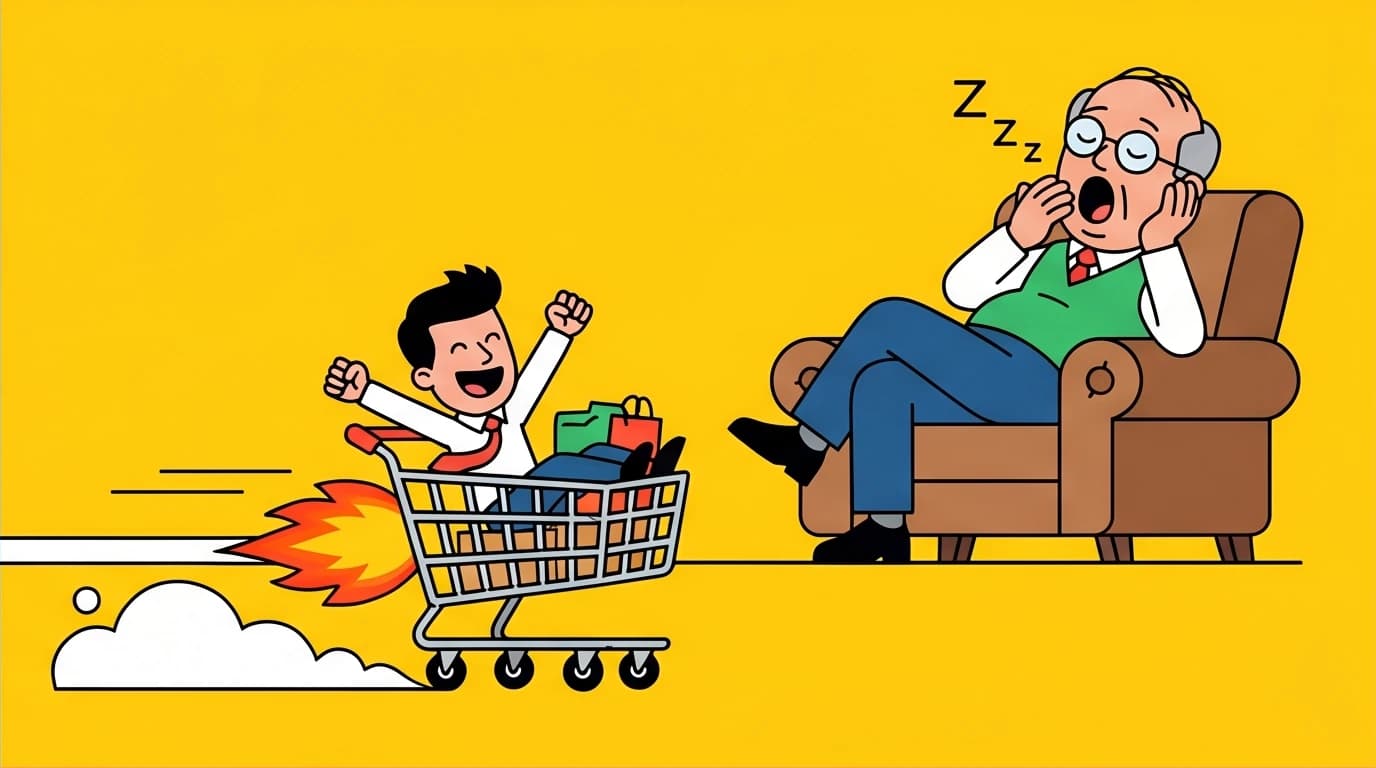
You are browsing Amazon, looking at a product you did not even know existed five minutes ago. Suddenly, you have a strong urge to click "Buy Now" for $150. A quieter voice in the back of your mind suggests checking your monthly budget first, but the urge to buy feels overwhelming. This internal tug-of-war is not a lack of discipline. It is a live battle between two fundamentally different operating systems in your brain fighting for control over your wallet.
Most people believe they are highly rational creatures who analyze facts to make choices. The reality is quite different. Your brain is split down the middle in how it processes reality, and understanding this split is the first step to reclaiming control over your habits, your purchases, and your life.
The Core Concept: Daniel Kahneman System 1 and 2
To understand why we make the choices we do, we look to the Daniel Kahneman System 1 and 2 framework. Nobel laureate Daniel Kahneman introduced this model to the mainstream in his landmark book, Thinking, Fast and Slow. He proposed a dual-process model of the brain to explain why human beings are predictably irrational.
Kahneman's model strips away complex neurobiology and replaces it with two distinct "characters" living inside your mind.
System 1: The Fast Autopilot
System 1 operates automatically and quickly, with little or no effort and no sense of voluntary control. It relies on intuition, pattern recognition, and emotion. It is the primitive part of your brain that kept your ancestors alive when a tiger jumped out of the bushes.
- Speed: Instantaneous.
- Energy cost: Extremely low.
- Trigger: Unconscious.
- Function: Handles routine tasks, generates immediate impressions, and creates initial impulses.
System 2: The Slow Pilot
System 2 allocates attention to the effortful mental activities that demand it, including complex computations. It is the voice of reason, logic, and self-control. When you focus intensely on a problem, you are engaging System 2.
- Speed: Slow and deliberate.
- Energy cost: Extremely high (burns actual glucose at a rapid rate).
- Trigger: Conscious effort.
- Function: Overrules impulses, solves difficult problems, and handles novelty.
The catch? System 2 is fundamentally lazy. Because it requires so much biological energy to run, your brain defaults to System 1 as often as possible to save calories. These fast and slow thinking systems dictate exactly how you navigate the world.
If you want to truly master the inner workings of your own mind, diving into the foundational text that started it all is a must. Daniel Kahneman’s groundbreaking work goes far beyond a simple psychological theory; it is a masterclass in behavioral economics that explains everything from why we play the lottery to how we perceive financial risk. For anyone looking to understand the hidden mechanics driving their daily habits, this book offers a fascinating, data-driven look under the hood of human cognition.
Thinking, Fast and Slow
Daniel Kahneman
 53 Duration
 9 Key Points
 4.5 Rate
If you want a detailed breakdown of the book's core ideas before committing to the full read, our chapter-by-chapter summary is a great place to start.
While Kahneman’s book is a deep dive, getting started with its core concepts doesn't have to take weeks. If you're looking for a faster way to absorb these powerful ideas, there's a more efficient approach.

Grasp the key insights from dense books like "Thinking, Fast and Slow" in just 15 minutes, making complex psychological concepts easy to digest on a busy schedule.

Download LeapAhead App now
Real-World Examples of System 1 and System 2 Thinking
Definitions only go so far. To spot these systems in action, you need to see how they manifest in daily life. Here are clear examples of system 1 and system 2 thinking.
Driving a Car
- System 1: Cruising down an empty interstate at 65 miles per hour. You can listen to an Audible audiobook, sip your coffee, and stay in your lane without actively thinking about the pedals or the steering wheel. Your brain recognizes the patterns effortlessly.
- System 2: Attempting to parallel park in a tight, crowded spot in downtown New York while it is raining. You turn off the radio, grip the steering wheel, and hyper-focus on your mirrors. The task requires your full mental capacity.
Consumer Behavior and Shopping
- System 1: Reaching for your favorite brand of toothpaste at the grocery store. You recognize the familiar color and logo. You do not check the ingredients or the price. The decision takes zero point five seconds.
- System 2: Standing in the electronics aisle trying to compare three different televisions. You pull out your phone to calculate the price per inch, check the refresh rates, and read reviews to ensure you are making a logical $800 investment.
Reading and Information Processing
- System 1: Seeing a massive, all-caps headline on social media that makes you instantly angry. You immediately hit the "share" button because the emotional hook triggered your outrage reflex.
- System 2: Reading a densely packed 20-page corporate financial report. You have to re-read paragraphs, check the data tables, and mentally synthesize the information to prepare for a meeting.
System 1 vs System 2 Psychology: Why We Make Bad Decisions
In the field of system 1 vs system 2 psychology, researchers often point out that most of our bad decisions happen when System 1 tries to solve a problem that requires System 2.
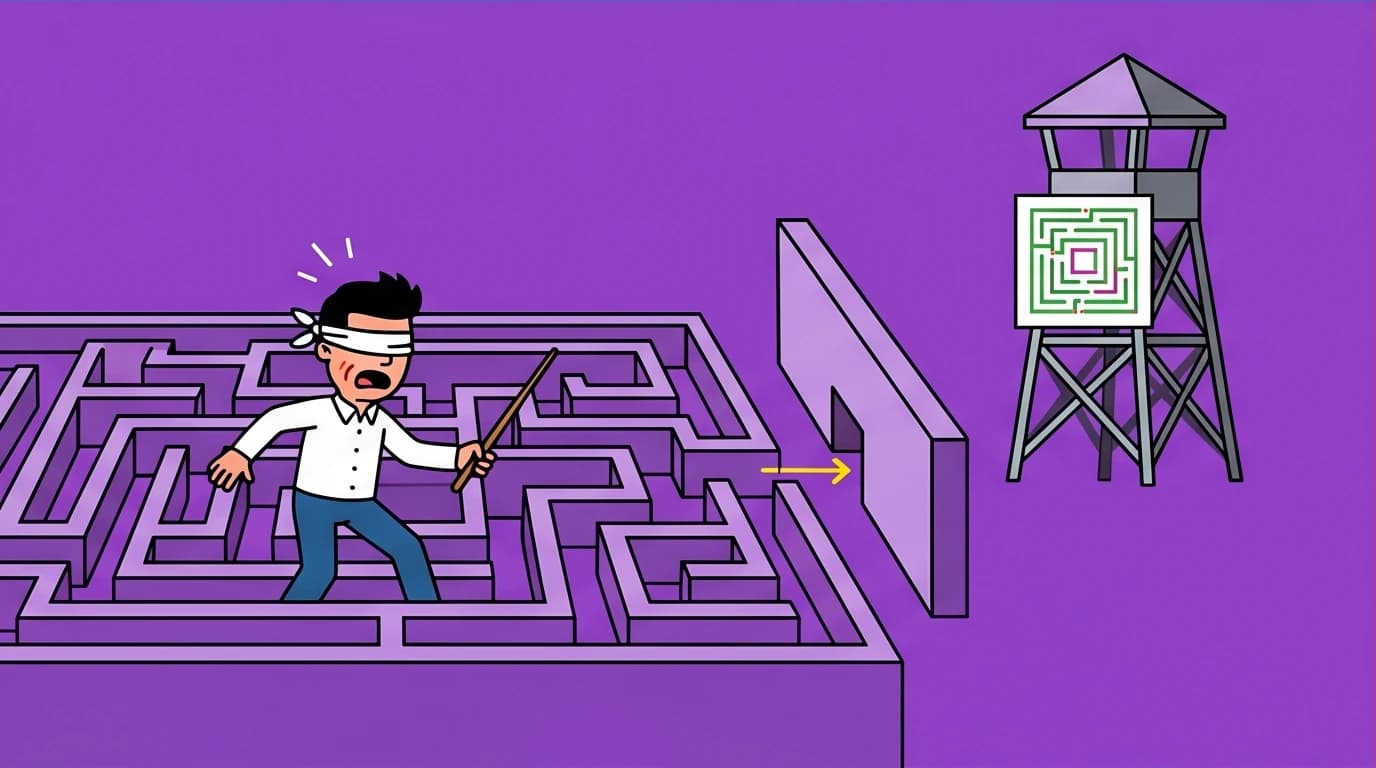
Because System 1 relies on heuristics (mental shortcuts), it is highly prone to cognitive biases. When you do not force System 2 to wake up and check the math, you fall into traps.
These mental shortcuts are a central theme in Kahneman's work. To fully appreciate how they can distort your judgment, it is useful to explore the specific biases he identified.
The Halo Effect
You meet a candidate in a job interview. They are incredibly articulate, well-dressed, and went to a prestigious university. System 1 immediately concludes: "This person is highly competent at everything." It ignores the fact that their actual portfolio is weak. You end up hiring them based on an emotional first impression rather than data.
Confirmation Bias
You have a theory about a political issue. When you scroll the news, System 1 quickly accepts articles that align with your belief and dismisses opposing articles as "fake" or "biased." System 2 is never engaged to critically evaluate the opposing arguments because doing so would require uncomfortable mental strain.
The Anchoring Effect
You walk into a car dealership, and the dealer tells you the car costs $35,000. System 1 locks onto that number as the "anchor." When the dealer later "lowers" the price to $31,000, System 1 perceives it as a massive discount and a great deal. If you engaged System 2, you might realize the car's actual market value is only $28,000.
Are you tired of falling for dealership markups or getting tricked by flashy marketing campaigns? Our tendency to rely on System 1 mental shortcuts makes us highly susceptible to manipulation, but recognizing these patterns is the first step toward better choices. If you want to explore the hidden forces that drive us to overpay for coffee or procrastinate on our goals, there is a phenomenal resource that breaks down the science of our daily illogical behaviors. It is an eye-opening read for anyone who wants to stop being outsmarted by their own instincts.

Predictably Irrational
Dan Ariely
23 Duration10 Key Points4.6 RateHow to Force Your Brain to Engage System 2
The goal of learning system 1 and system 2 thinking is not to shut down System 1. You would not survive a day without it. System 1 tells you to pull your hand away from a hot stove. It helps you recognize a friend's face in a crowd.
The goal is to know when to override it. Here are actionable ways to force your lazy System 2 into action when the stakes are high.
1. Introduce Friction
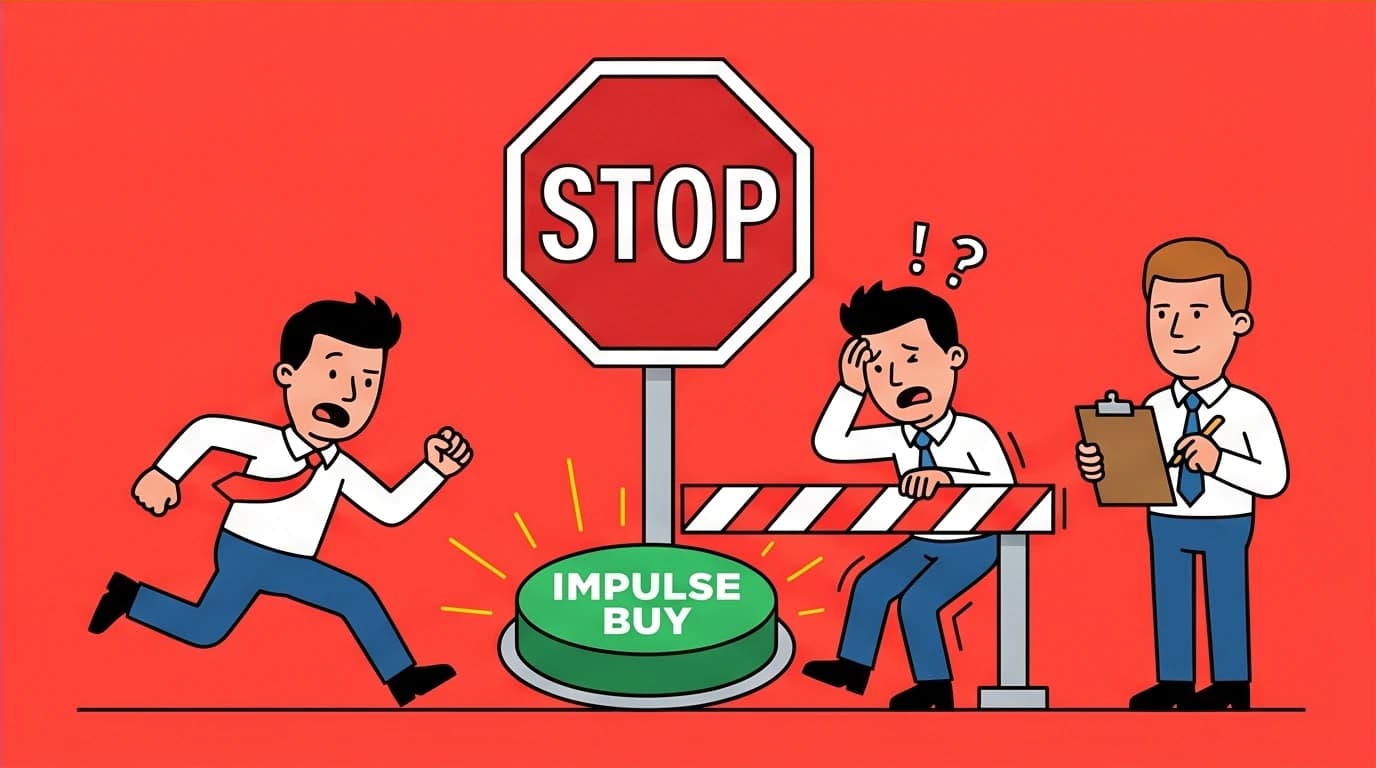
System 1 thrives on seamless, effortless experiences. To stop it, add physical or digital friction. If you struggle with impulse buying, remove your saved credit card information from online stores. Forcing yourself to get up, find your wallet, and manually type in 16 digits gives System 2 enough time to wake up and ask, "Do we actually need this?"
2. Implement the 24-Hour Rule
High-stakes decisions trigger strong emotional responses from System 1. Never sign a contract, make a major purchase, or send an angry email in the heat of the moment. Set a hard rule: Any decision involving over $500, or any conflict-driven communication, requires a 24-hour waiting period. Sleep clears the emotional load, allowing System 2 to review the situation objectively the next morning.
3. Use Checklists
Corporate trainers and aviation experts rely heavily on checklists for a reason. Stress and fatigue push the brain into System 1 mode, causing experts to skip critical steps. A physical checklist forces the brain out of automatic processing and demands deliberate, step-by-step verification. If you are hiring an employee, launching a product, or evaluating a stock, use a rigid checklist to grade the criteria.
4. Play Devil's Advocate
System 1 wants cognitive ease. It wants to agree with the first plausible answer it finds. Force System 2 to work by actively arguing against your own conclusion. Ask yourself: "If I found out a year from now that this decision was a complete disaster, what would be the most likely reason?" This simple question breaks the illusion of certainty and forces analytical thinking.
These strategies are a solid starting point, but applying these concepts in a professional context requires a more focused approach. For more examples related to business, marketing, and investing, you can explore further.
Even with checklists and the 24-hour rule, making high-stakes choices can still feel paralyzing. If you want to upgrade your System 2 toolkit, learning to view decisions through the lens of calculated risk can completely change your approach. Former professional poker champion Annie Duke offers a brilliant framework for navigating uncertainty, teaching you how to detach from emotional outcomes and evaluate your options with cold, hard logic. It is a fantastic guide for leaders, investors, and anyone who wants to place smarter bets in life.
Thinking in Bets
Annie Duke
36 Duration8 Key Points4.6 RatePutting these strategies into practice requires consistent learning. But if a long day leaves you too drained to pick up another book, there's a more modern way to keep building your mental toolkit.
Turn your commute or workout into a learning session by listening to key takeaways from books on decision-making, psychology, and avoiding cognitive biases.
Download LeapAhead App now
FAQ
Are some people naturally more "System 2" than others?
Everyone relies on System 1 for the vast majority of their daily choices. However, some individuals train themselves to have a higher "need for cognition." They habitually trigger System 2 when faced with complex information. It is a trained habit, not a permanent genetic trait.
Everyone relies on System 1 for the vast majority of their daily choices. However, some individuals train themselves to have a higher "need for cognition." They habitually trigger System 2 when faced with complex information. It is a trained habit, not a permanent genetic trait.
Can you train System 1 to be smarter?
Yes. Through intense, repetitive practice, actions that start in System 2 can migrate to System 1. When you first learn to play the guitar, finding the chords requires exhausting System 2 effort. After a year of practice, you can play a song perfectly while holding a conversation. The complex skill has been hardwired into the automatic System 1.
Yes. Through intense, repetitive practice, actions that start in System 2 can migrate to System 1. When you first learn to play the guitar, finding the chords requires exhausting System 2 effort. After a year of practice, you can play a song perfectly while holding a conversation. The complex skill has been hardwired into the automatic System 1.
How do I know which system I am using in the moment?
Check your physical state. System 2 requires biological effort. If you notice a slight elevation in your heart rate, a feeling of tension in your face, or a narrowing of your physical focus (like turning down the radio to park a car), you are using System 2. If the choice feels entirely effortless and instantaneous, you are using System 1.
Check your physical state. System 2 requires biological effort. If you notice a slight elevation in your heart rate, a feeling of tension in your face, or a narrowing of your physical focus (like turning down the radio to park a car), you are using System 2. If the choice feels entirely effortless and instantaneous, you are using System 1.
Why does my brain default to System 1 so often?
Survival and efficiency. The human brain makes up about 2% of your body weight but consumes 20% of your daily energy. Deep, analytical thinking burns heavy amounts of glucose. To prevent you from exhausting your energy reserves on minor choices (like what color socks to wear), evolution designed your brain to default to the low-energy autopilot whenever possible.
Survival and efficiency. The human brain makes up about 2% of your body weight but consumes 20% of your daily energy. Deep, analytical thinking burns heavy amounts of glucose. To prevent you from exhausting your energy reserves on minor choices (like what color socks to wear), evolution designed your brain to default to the low-energy autopilot whenever possible.