


You bought the book. You read a few chapters. You realized Daniel Kahneman's Nobel Prize-winning work is brilliant, but it is a dense academic text. As a founder, executive, or investor, you do not need a psychology lecture. You need a framework to stop making expensive, gut-driven mistakes.
Every day, you make calls on hiring, asset allocation, and product pricing. Relying entirely on intuition is a fast track to burned capital. Humans are wired for survival, not for calculating compound interest or running a supply chain. Your brain defaults to the path of least resistance.
To bridge the gap between theory and execution, you need to strip away the noise. Here is exactly how to weaponize Kahneman’s behavioral economics in the real world.
The Bare Minimum Theory You Need to Know
Kahneman divides the brain into two agents:
- System 1 (The Autopilot): Fast, automatic, emotional, stereotypic, and subconscious. It reads the tone in a client's voice or hits the brakes when a car swerves.
- System 2 (The Pilot): Slow, effortful, logical, calculating, and conscious. It compares two corporate tax strategies or calculates the lifetime value of a customer.
The problem? System 1 is always running. It feeds quick, confident, often flawed suggestions to System 2. If System 2 is tired, distracted, or lazy, it just accepts System 1's flawed pitch. You cannot turn off System 1. Your only strategic play is to build environments that force System 2 to wake up during critical moments.
This constant tug-of-war between your intuitive autopilot and your deliberate pilot is the central theme of Kahneman's work. Grasping the specific characteristics of each system is key to knowing when to trust your gut and when to hit the brakes.
Before you dive deeper into applying these concepts, it’s worth revisiting the source material that started the behavioral economics revolution. If you originally found the concepts dense or only read summaries, giving the full text a dedicated read with your new practical perspective can unlock entirely new strategies for your business. It is a masterclass in understanding the hidden forces that dictate human behavior, and reading it with execution in mind changes everything.
Thinking, Fast and Slow
Daniel Kahneman
 53 Duration
 9 Key Points
 4.5 Rate
If a 500-page academic text feels daunting, you're not alone. For busy leaders who need to absorb these crucial ideas without the heavy time investment, a more modern approach can be a game-changer.


LeapAhead

Grasp the core principles of dense books like Thinking, Fast and Slow in just 15 minutes, turning complex theories into actionable business insights on your commute.
Strategic Leadership: Thinking Fast and Slow for Business
CEOs and managers routinely fall victim to WYSIATI—"What You See Is All There Is." You look at the favorable data right in front of you, ignore the variables you cannot see, and confidently launch a new division. To effectively use thinking fast and slow for business, you have to institutionalize friction.
Implement the Pre-Mortem Protocol
Before pulling the trigger on a major initiative, like acquiring a competitor or launching a new product line, gather your executive team. Give them this prompt:
"It is exactly one year from today. We implemented the plan, and it was a complete disaster. Take 10 minutes and write down exactly why it failed."
"It is exactly one year from today. We implemented the plan, and it was a complete disaster. Take 10 minutes and write down exactly why it failed."
This exercise bypasses the corporate echo chamber. System 1 loves optimism and groupthink. A pre-mortem forces System 2 to actively hunt for blind spots and vulnerabilities before a single dollar is spent.

Keep a Decision Journal
Memory is a fiction rewritten by System 1 to make you look good. When an initiative succeeds, you claim you knew it all along. When it fails, you blame the market. This is hindsight bias.
To genuinely improve decision making kahneman style, you need a physical record of your logic. When making a critical choice, document the following:
- What is the decision?
- What do I expect to happen?
- What is the exact data driving this choice?
- How do I feel right now? (Tired, stressed, euphoric?)
Six months later, review the entry. This brutally honest feedback loop recalibrates your intuition and highlights your personal cognitive biases over time.
Separate Idea Generation from Evaluation
Brainstorming sessions often fail because the loudest person in the room creates an "anchor" that everyone else anchors to. Have your team write down their ideas independently before the meeting starts. Collect them, mix them up, and evaluate them anonymously. You remove the Halo Effect (agreeing with the boss because they are the boss) and evaluate the raw data using System 2.
The techniques above help counteract specific mental errors like hindsight bias and anchoring. These are just two examples of a much wider array of mental shortcuts that can sabotage business strategy.
If you are serious about improving your executive decision-making and want to further bulletproof your organization against cognitive biases, mastering how to evaluate choices under uncertainty is your next step. Former professional poker player Annie Duke offers a phenomenal framework for decoupling the quality of a decision from its final outcome. Her approach will teach you how to think in probabilities rather than absolutes, making it an essential read for any leader trying to tame their System 1 impulses.
Thinking in Bets
Annie Duke
36 Duration8 Key Points4.6 RateConsumer Behavior: Thinking Fast and Slow Marketing Examples
Your customers are navigating your website heavily relying on System 1. If your pricing models or landing pages demand too much System 2 processing, they get tired and leave. You must design for cognitive ease. Here are practical thinking fast and slow marketing examples you can deploy immediately.
Weaponize Price Anchoring
System 1 relies heavily on the first piece of information it receives. If you walk into a store and see a $2,000 suit, a $200 tie nearby suddenly seems reasonable.
Apply this to your SaaS pricing page. Always place your highest enterprise tier on the left side of the screen. When a user reads from left to right, the $999/month anchor sets their baseline. By the time they see your $99/month "Pro" tier, it registers as a massive bargain. Amazon uses this masterfully by displaying the crossed-out "List Price" next to the actual price.
Use the Endowment Effect via Free Trials
People place a higher value on things they already own. This is the Endowment Effect. When Apple Books or Audible offers a free, fully unlocked trial for 30 days, they are not just letting you test the software. They are letting you take ownership of the library. When day 30 arrives, canceling the subscription triggers loss aversion. Giving up the app feels like losing property.
Frame for Loss Aversion
We hate losing $100 twice as much as we love gaining $100. Stop telling customers what they stand to gain from your product. Flip the narrative to what they are losing every day they do not use it.
- Weak: "Use our software to save 10 hours a week."
- Strong: "Stop bleeding 10 hours of unbillable time every week."
Design for Cognitive Ease
System 1 associates simple, clear, and familiar things with the truth. If your marketing copy uses complex industry jargon or difficult-to-read fonts, you trigger System 2 suspicion. Use high-contrast colors, bold text for key benefits, and grade-school vocabulary. If it is easy to read, it feels inherently more trustworthy.
Want to dive deeper into why consumers make seemingly illogical choices, like overvaluing free items or falling for price anchors? The human brain's irrationality isn't just random; it's entirely systematic and predictable. Exploring these hidden motivations will give you a massive advantage in how you design your marketing funnels, structure your pricing pages, and present offers. Understanding these invisible behavioral triggers is the ultimate cheat code for skyrocketing your conversion rates.

Predictably Irrational
Dan Ariely
23 Duration10 Key Points4.6 RateCapital Allocation: Thinking Fast and Slow Investing
Wall Street is a graveyard of System 1 errors. If you want to master thinking fast and slow investing, you must decouple your ego from your portfolio. The market is exceptionally good at punishing emotional reactions.
Kill the Sunk Cost Fallacy
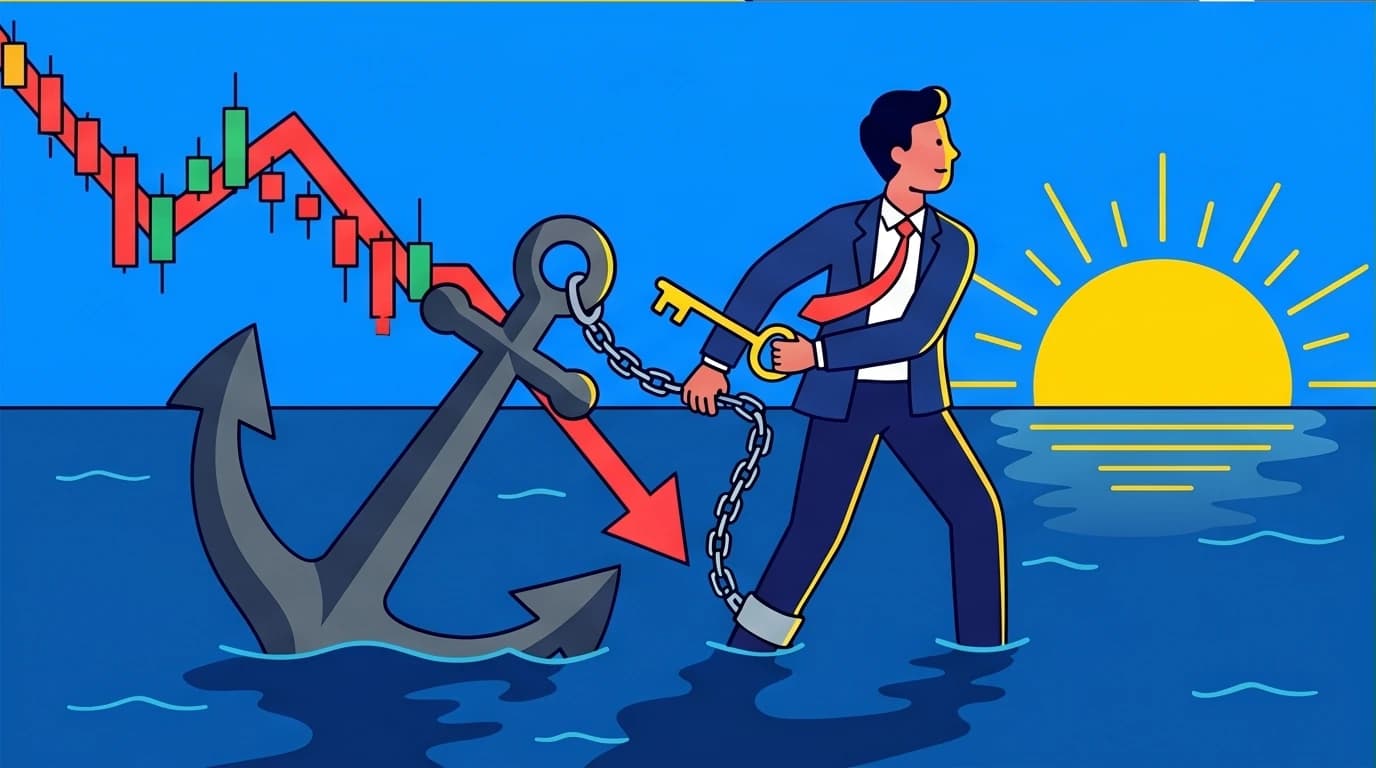
You bought a stock at $50 a share. It dropped to $30. The original thesis for the investment is broken, the management team is failing, and the sector is dying. Yet, you hold the position because selling means officially realizing the loss.
This is your System 1 trying to avoid the emotional pain of admitting defeat. To force System 2 logic, ask yourself a single question: "If I had the cash equivalent in my account today, would I buy this stock at $30?" If the answer is no, liquidate the position immediately and move the capital to a better opportunity.
Respect the Base Rate
Entrepreneurs and investors frequently suffer from base rate neglect. You decide to open a retail coffee shop. You assume you will succeed because you have a great work ethic and a unique roast.
You are using the "Inside View." System 2 requires you to use the "Outside View." What is the objective baseline statistic? The base rate is that roughly 60% of independent coffee shops fail in the first three years. You are not an exception until you prove it. Always start your financial models with the industry base rate of failure, then adjust slightly based on your specific advantages.
Defend Against the Availability Heuristic
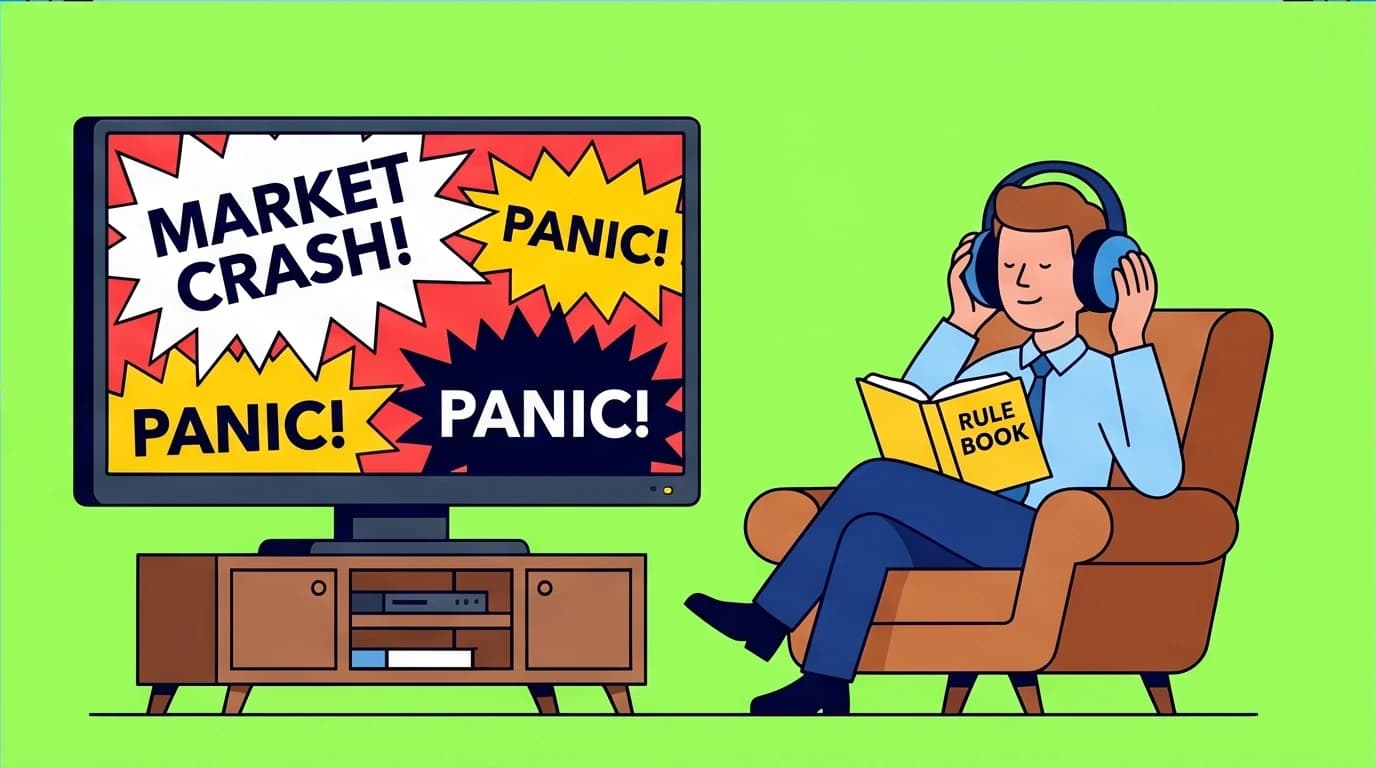
Investors consistently overweight risks that are heavily covered in the news. A recent bank collapse or an airline issue dominates the headlines, so System 1 assumes these events are highly probable across the board, prompting panic selling.
Turn off CNBC. Stop checking your brokerage app on your phone every day. Constant exposure to price fluctuations and sensationalist news directly feeds the Availability Heuristic. Set strict asset allocation rules and rebalance on a rigid calendar schedule, like once a quarter. Process over emotion.
Mastering capital allocation requires more than just financial modeling and understanding market base rates; it demands absolute control over your own behavioral blind spots. If you want to permanently detach your ego from your portfolio and stop letting cognitive biases erode your wealth, exploring the emotional side of personal finance is a game-changer. Learning how our unique backgrounds, fears, and pride influence our financial choices will completely transform the way you approach long-term investing.
The Psychology of Money
Morgan Housel
48 Duration7 Key Points4.6 RateApplying the principles from these essential books requires consistent learning, but finding the time can be the biggest hurdle. If your 'to-read' pile feels more like a source of guilt than inspiration, there's a smarter way to stay ahead.
LeapAhead
Clear your 'reading debt' by listening to key insights from these business and psychology books during your commute or workout, ensuring you continuously improve without the burnout.
FAQ
Can I turn off System 1 entirely to avoid making mistakes?
No. System 1 is vital for survival. It allows you to read facial expressions in a negotiation, dodge traffic on the highway, and perform routine tasks without mental exhaustion. Your objective is not to eliminate it, but to recognize high-stakes situations—like signing a multi-year lease, hiring a VP, or reallocating a portfolio—and deliberately pause so System 2 can evaluate the data.
How do I know when I should actually trust my gut instinct?
Kahneman notes that intuition is only reliable under very specific conditions: in highly predictable environments where you have had prolonged practice and rapid, clear feedback. A chess master or a veteran firefighter can trust their gut. A venture capitalist trying to predict the success of a new tech startup in a chaotic market cannot. In complex, unpredictable business scenarios, ignore your gut and look at the base rates.
What is the most effective way to teach these concepts to my team?
Lecturing your employees about cognitive biases rarely works because System 1 operates subconsciously. Instead of trying to change how individuals think, change the environment they work in. Build constraints into your workflows. Require a mandatory cooling-off period of 48 hours for any vendor contract over $50,000. Implement blind hiring practices to remove subconscious bias in HR. Change the rules of the game, and the behavior will follow.