

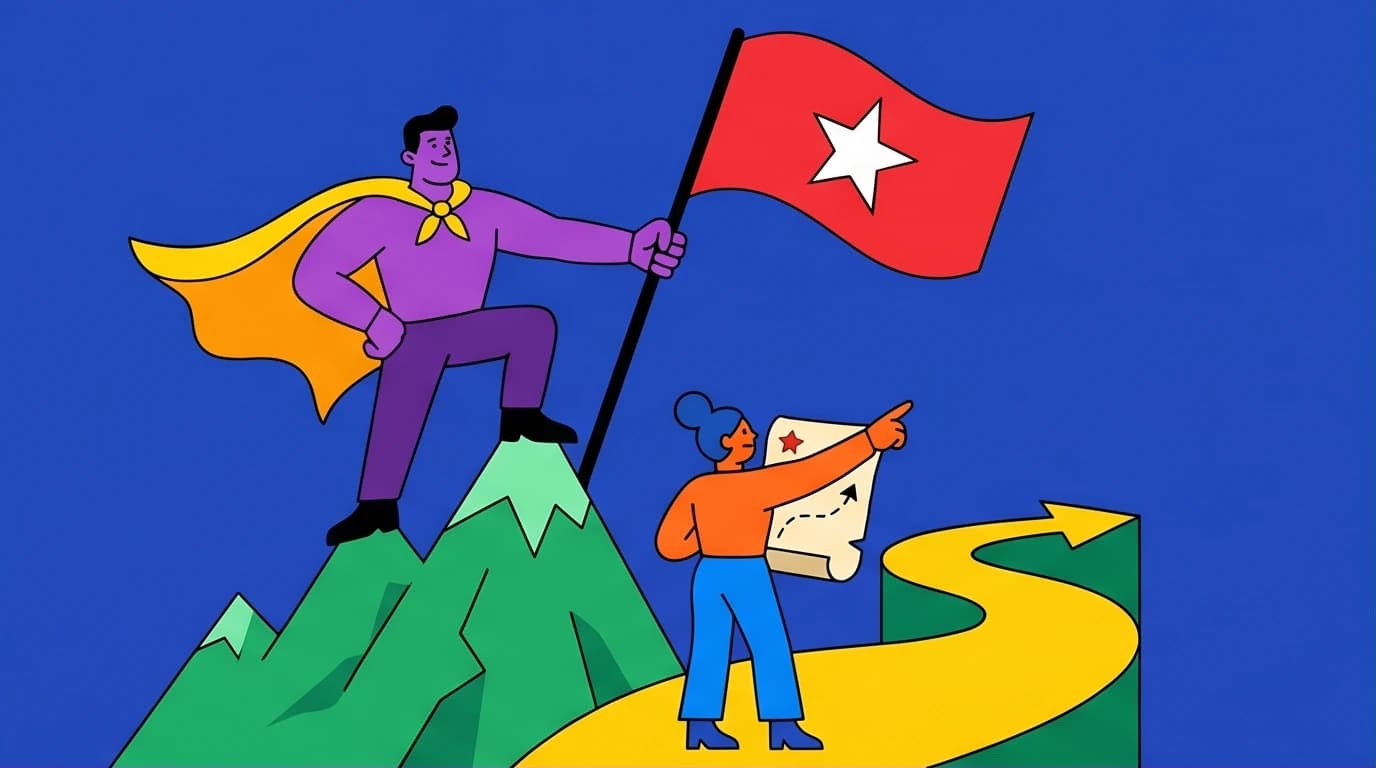
You look at your company homepage. It proudly displays the year you were founded. It lists your recent industry awards. It features a sprawling paragraph about your state-of-the-art facilities and your commitment to excellence.
But your bounce rate is high, and sales are flat.
You are bragging, and your customers are leaving. Every day, businesses waste millions of dollars on marketing that falls flat because they fundamentally misunderstand their role in the marketplace. They position themselves as the hero of the story.
When you adopt the principle that the customer is the hero storybrand framework teaches, everything shifts. Your marketing stops being a megaphone for your ego and starts becoming a magnet for your ideal clients.
The Core Problem with Traditional Marketing
Human beings process thousands of marketing messages every single day. To survive this massive influx of information, the human brain ruthlessly filters out anything that does not help it survive or thrive.
When your website talks endlessly about your own brand, you are asking your customer to burn mental calories to figure out how your story benefits them. Most won't bother. They will simply click away.
This is where the donald miller marketing paradigm changes the game. Miller identified that most companies make a fatal narrative mistake: they make themselves the center of the universe. They position their brand as the protagonist fighting the forces of bad software, poor accounting, or dirty carpets.
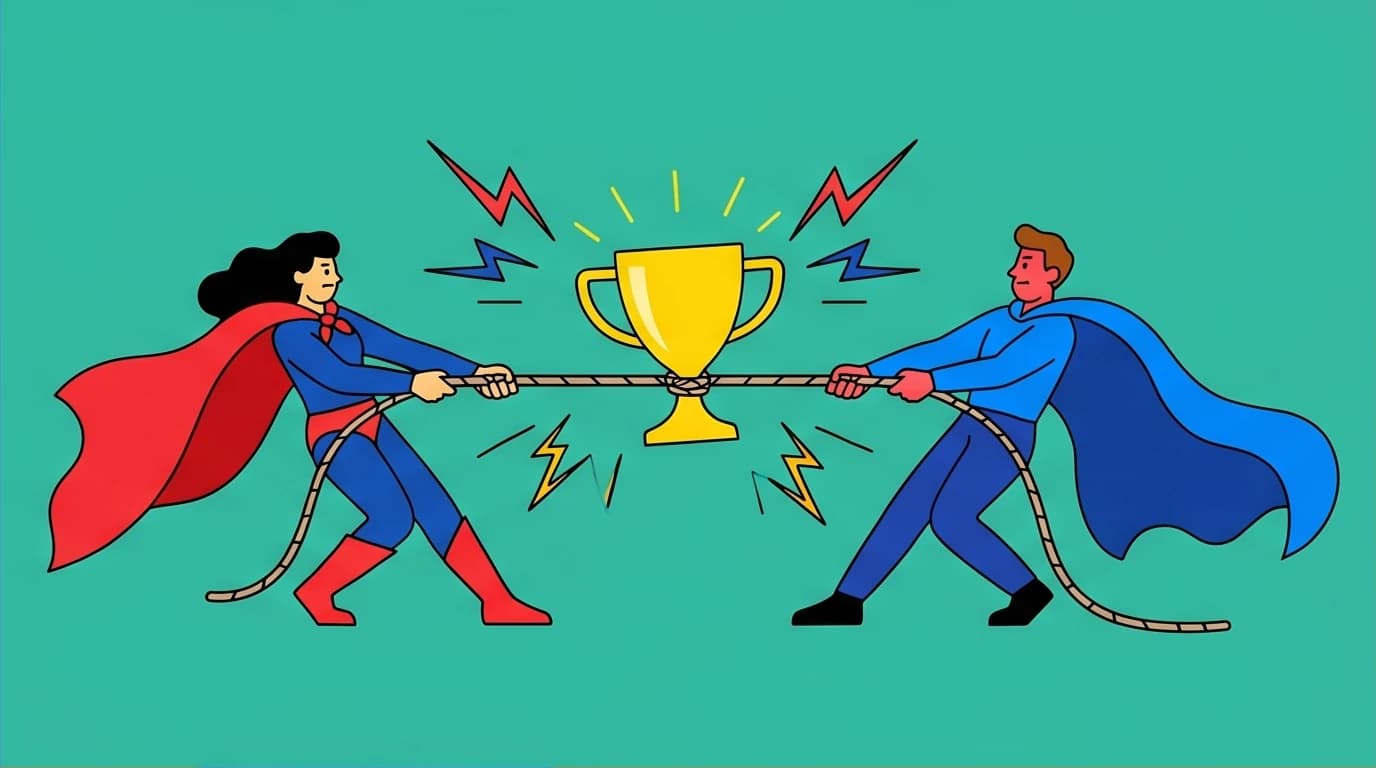
But your customer wakes up every morning as the protagonist of their own life. They are already the hero of their own story. When your brand steps into their life acting like another hero, you create narrative conflict. Two heroes in a story don't collaborate; they compete.
The concept of shifting your brand from the hero to the guide was famously popularized by Donald Miller. If you want to dive deeper into the exact mechanics of this paradigm shift, his definitive book on the subject is an absolute must-read. It breaks down the seven universal elements of powerful stories and shows you exactly how to apply them to your business so customers actually listen. It’s the ultimate playbook for clarifying your message and eliminating narrative confusion.
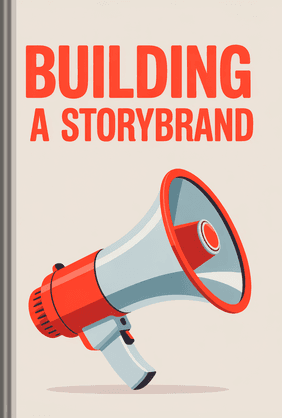
Building a StoryBrand
Donald Miller
 25 Duration
 11 Key Points
 4.5 Rate
But what if your to-read list is already packed? Finding time to get through essential marketing books can be a challenge for busy professionals.

LeapAhead

This app helps you absorb the core principles from business classics like 'Building a StoryBrand' in 15-minute audio or text summaries, perfect for learning on the go.
The Psychology of Hero's Journey Marketing
To fix your messaging, you have to understand the fundamental mechanics of storytelling. Every great story—from Star Wars to The Hunger Games—follows a predictable pattern.
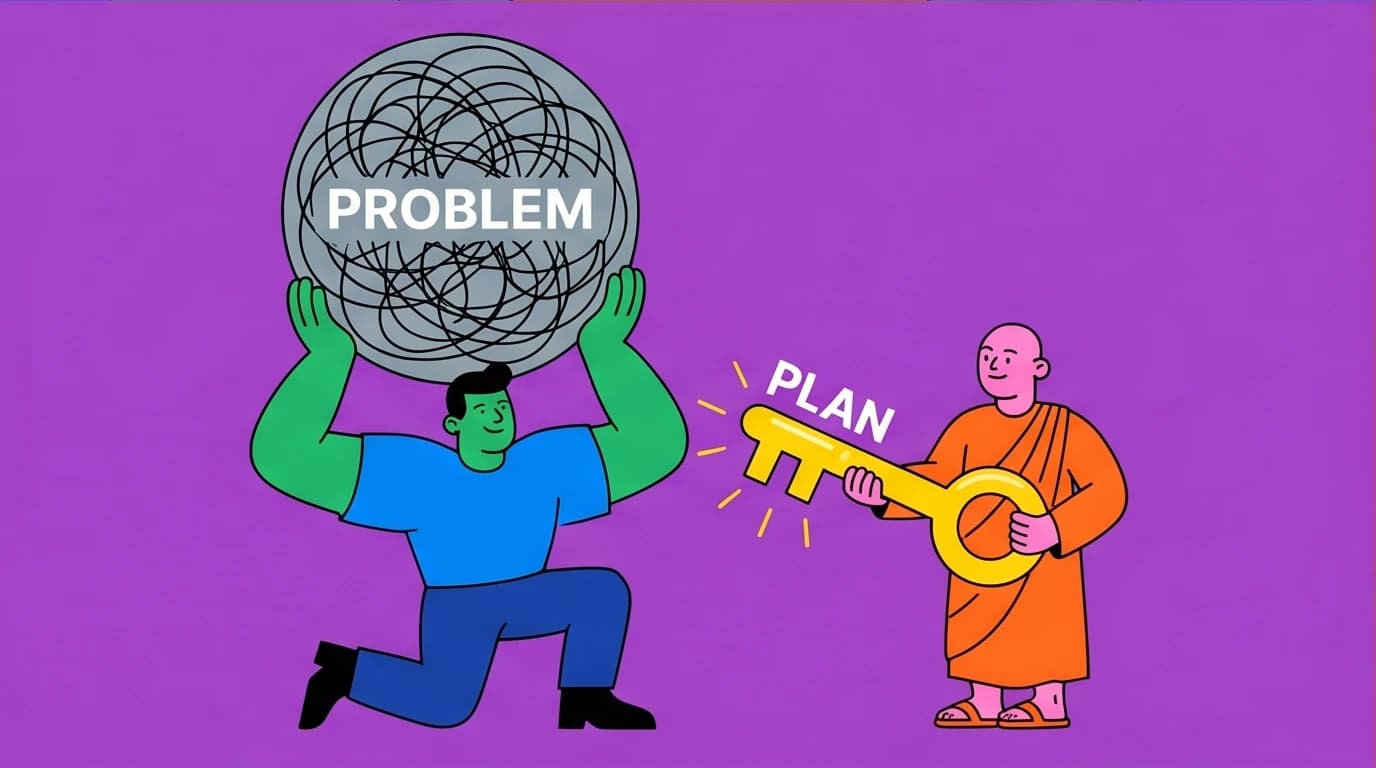
A character (the hero) has a problem. They are confused, weak, or ill-equipped to face the challenge alone. Before they are defeated, they meet a guide. The guide understands their fear, has been in their shoes, and gives them a clear plan. The guide calls them to action, which ends in either success or failure.
Hero's journey marketing takes this ancient narrative structure and applies it to your sales funnel.
Think about Luke Skywalker. He is a whiny farm boy on a desert planet. He wants to defeat the Empire, but he has no idea how. Enter Yoda. Yoda doesn't swing the lightsaber to defeat Darth Vader. Yoda has already fought his battles. Yoda is the guide. He provides the training, a wisdom, and the plan. Luke does the fighting. Luke gets the glory.
Your brand must be Yoda.
Understanding the hero's journey is just the beginning. To truly captivate your audience, you need to know how to consistently craft narratives that resonate on a deep psychological level. If you are looking to master the art of business storytelling, there are incredible resources that demystify the process. Learning how to leverage specific types of stories—like the value story or the founder story—can transform your brand from a forgettable commodity into a trusted guide that customers feel a genuine, emotional connection with.
Stories That Stick
Kindra Hall
29 Duration9 Key Points4.7 RateStoryBrand Guide vs Hero: The Ultimate Paradigm Shift
Understanding the storybrand guide vs hero dynamic is the most critical step in fixing your marketing strategy. Let's break down the distinct characteristics of both roles so you can see exactly where your current copy is failing.
Characteristics of the Hero (Your Customer)
- They are struggling: The hero always starts with a problem they cannot solve on their own.
- They are looking for a way out: They are actively seeking tools, resources, or wisdom to overcome their internal and external frustrations.
- They want to win: Ultimately, the hero wants a successful resolution to their story.
Characteristics of the Guide (Your Brand)
- They possess empathy: The guide understands the hero's pain. They can look at the customer and say, "We know how frustrating this is."
- They possess authority: The guide has competence. They have a track record of success. They have the map out of the woods.
- They provide a plan: The guide doesn't just offer sympathy; they offer a concrete, step-by-step path to victory.
When you position your brand as the guide, you stop trying to prove how awesome you are and start proving how helpful you are. Your marketing materials shift from "Look at what we can do" to "Look at what you can do with our help."
How to Make the Customer the Hero in Your Copy
Knowing the theory is one thing; executing it on your website, in your emails, and across your social media is another. Here is a practical, step-by-step framework to make the customer the hero across all your marketing assets.
1. Run the "We" vs. "You" Audit
Pull up your website's homepage. Count how many times you use the words "We," "Us," "Our," or your company name. Then count how many times you use the word "You" or "Your."
If your "We" count is higher than your "You" count, you are playing the hero.
Hero Copy (Bad): "We provide the most robust financial software in the industry. Our team of experts built this platform to handle complex data."
Guide Copy (Good): "Take control of your financial data without the headaches. You need a platform that scales with your business, so you can focus on growth."
Guide Copy (Good): "Take control of your financial data without the headaches. You need a platform that scales with your business, so you can focus on growth."
2. Define Their Problem, Not Your Solution
Guides don't start by talking about their tools; they start by acknowledging the hero's problem. You must articulate your customer's frustration better than they can. When you describe their problem with pinpoint accuracy, they automatically assume you have the solution.
Focus on three levels of problems:
- External Problem: The physical, tangible issue. (e.g., I need a new roof.)
- Internal Problem: How the external problem makes them feel. (e.g., I am worried my family isn't safe and water is damaging my home's value.)
- Philosophical Problem: Why it's just plain wrong that they have to deal with this. (e.g., You shouldn't have to stress about a leaky roof every time it rains.)
3. Express Empathy and Demonstrate Authority
To be trusted as a guide, you must display two specific traits.
First, empathy. Tell the customer you care. Phrases like "We understand how overwhelming it can be to..." or "Like you, we believe that..." build instant rapport.
Second, authority. Empathy without authority makes you a friend, but not a guide. You establish authority through subtle competence. You don't need a massive block of text explaining your history. You need logos of companies you've worked with, a few sharp testimonials, or a simple statistic (e.g., "Helping 10,000+ businesses scale").
4. Give Them a Clear, Three-Step Plan
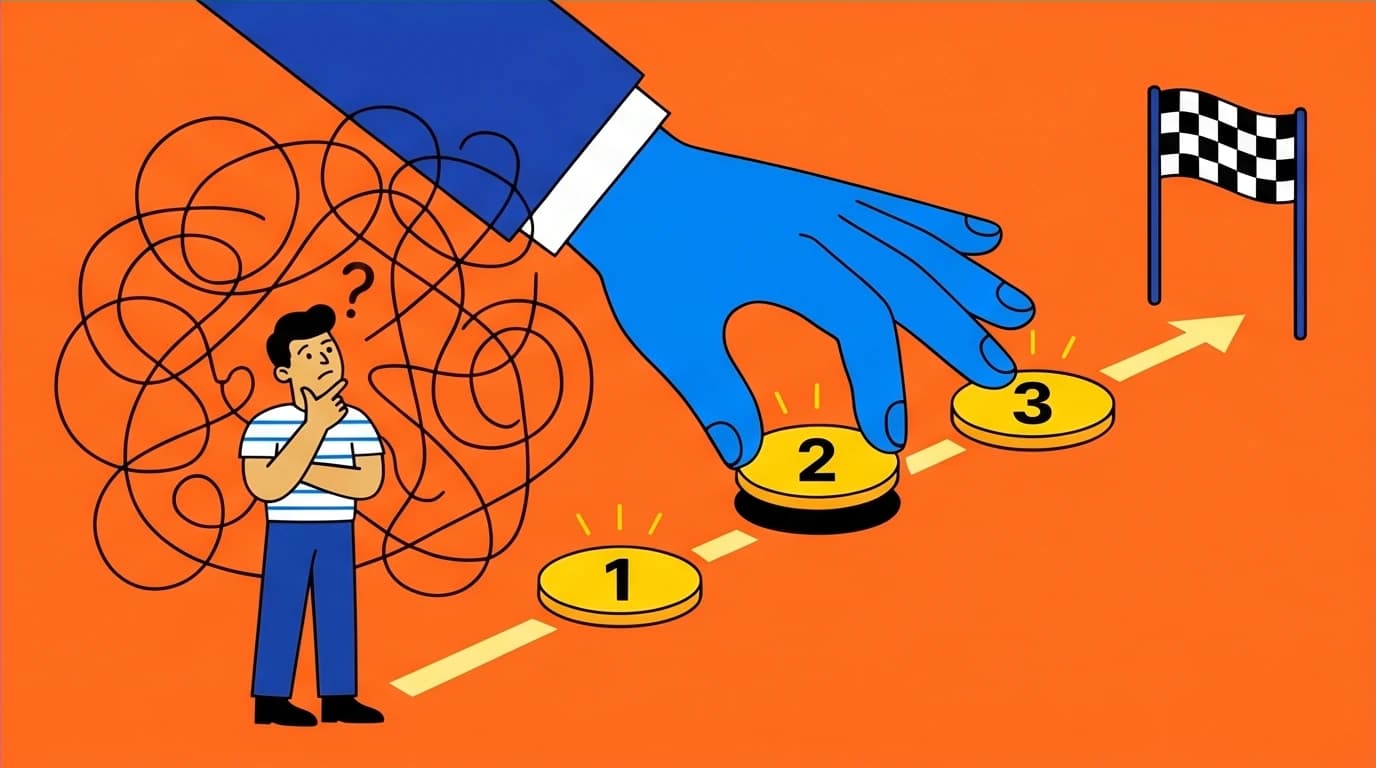
Heroes are confused. They are standing at the edge of the woods, and they don't know how to cross. If you just put a "Buy Now" button in front of them, it feels like too big of a leap.
A guide provides a simple plan that removes the fog. Break your process down into three easy steps.
- Schedule a call.
- Get a customized strategy.
- Watch your revenue grow.
This drastically reduces the cognitive friction required to do business with you.
Putting these principles into a structured format is the next step. The StoryBrand BrandScript is the official tool for this, organizing your message around the seven key parts of a story. Seeing how other businesses have filled it out can bring these concepts to life.
Shifting your perspective is one thing, but translating that empathy into high-converting website copy is an entirely different skill. Sometimes, even the best strategists need a practical reference guide to help them write headlines, bullet points, and calls to action that actually drive sales. If you want to sharpen your writing chops and ensure every single word on your homepage earns its keep, studying classic, proven copywriting techniques will give you the tactical edge you need to make your customer the undisputed hero.
The Copywriter's Handbook
Robert W. Bly
26 Duration9 Key Points4.3 RateExamples of Brands Winning as the Guide
Let's look at real-world applications where major brands successfully position the customer as the hero.
The Home Depot
For years, their slogan was "You can do it. We can help." This is the purest distillation of the guide/hero dynamic in modern advertising. Who does the work? You (the hero). Who provides the tools and the plan? The Home Depot (the guide).
For years, their slogan was "You can do it. We can help." This is the purest distillation of the guide/hero dynamic in modern advertising. Who does the work? You (the hero). Who provides the tools and the plan? The Home Depot (the guide).
Apple
When Apple launched the iPod, other tech companies were boasting about "5GB of storage and a 10,000 RPM hard drive." They were playing the hero, talking about their own technical specs. Apple played the guide. Their message? "1,000 songs in your pocket." They made the user the hero who gets to experience a life filled with a massive library of on-demand music.
When Apple launched the iPod, other tech companies were boasting about "5GB of storage and a 10,000 RPM hard drive." They were playing the hero, talking about their own technical specs. Apple played the guide. Their message? "1,000 songs in your pocket." They made the user the hero who gets to experience a life filled with a massive library of on-demand music.
Airbnb
Airbnb doesn't sell hotel rooms. They sell the experience of belonging anywhere. Their marketing focuses on the traveler (the hero) experiencing local culture, cooking in a real kitchen, and living a specific lifestyle. Airbnb simply provides the platform (the guide) to make that adventure possible.
Airbnb doesn't sell hotel rooms. They sell the experience of belonging anywhere. Their marketing focuses on the traveler (the hero) experiencing local culture, cooking in a real kitchen, and living a specific lifestyle. Airbnb simply provides the platform (the guide) to make that adventure possible.
These famous examples prove the model works on a grand scale. The great news is that these same principles can transform the website of any business, big or small.
Common Pitfalls to Avoid When Shifting Your Strategy
When companies first try to implement this framework, they often stumble. Watch out for these critical mistakes.
Don't Play the Victim
Sometimes, in an attempt to sound relatable or empathetic, brands accidentally play the victim. They talk too much about their own past struggles. While a brief mention of a shared struggle can build empathy, dwelling on it strips you of your authority. The hero needs a guide who has already conquered the mountain, not someone who is currently trapped in the avalanche with them.
Don't Overcomplicate the Problem
Keep your messaging focused on one core desire and one core problem. If you try to solve 15 different problems on your homepage, you lose clarity. The brain demands simplicity. Pick the most pressing pain point your ideal customer faces and build your narrative around that.
Don't Forget the Call to Action
A guide must challenge the hero to take action. Luke Skywalker wouldn't have left Dagobah if Yoda hadn't pushed him. Stop using passive buttons like "Learn More" or "Get Started" if you can be more direct. Use clear, transitional calls to action like "Buy Now," "Schedule a Consultation," or "Claim Your Free Audit." Make it painfully obvious what the hero needs to do next.
Reframing Your Future Marketing
The shift from hero to guide is not just a copywriting trick; it is a fundamental change in business philosophy. When you truly believe that the customer is the hero, your entire operational model improves. Customer service gets better. Product development becomes more aligned with user needs. Sales calls feel less like pitches and more like consulting sessions.
Take a hard look at your marketing collateral today. Are you asking your customers to applaud your achievements, or are you equipping them to achieve their own? Drop the corporate bragging. Step out of the spotlight. Become the guide, and watch your customers—and your business—win.
At its core, this shift from hero to guide isn't just about better copy—it's about fundamentally rethinking what it means to market a business today. The best modern brands win by showing up with a posture of service, seeking to solve real problems rather than just interrupting people with loud advertisements. If you are ready to completely reframe your approach to sales and build a brand based on trust, empathy, and genuine connection, immersing yourself in the philosophy of modern, customer-centric marketing will change the trajectory of your business forever.
This Is Marketing
Seth Godin
36 Duration8 Key Points4.5 RateTo truly become a trusted guide, you need to be constantly learning from the best minds in business and marketing. But if you’re too exhausted after a long day to pick up another book, there are smarter ways to stay sharp.
LeapAhead
Fit powerful business knowledge into your busiest days. Use your commute or workout to listen to key insights from authors like Seth Godin and Donald Miller in just 15 minutes.
FAQ
Does this mean I can't talk about my company's achievements or awards at all?
You can, but you must change the context. Place awards, years of experience, and logos in the "Authority" section of your marketing. They should serve as proof that you are a capable guide, not as the main headline of your brand's story. Keep it brief and visual.
You can, but you must change the context. Place awards, years of experience, and logos in the "Authority" section of your marketing. They should serve as proof that you are a capable guide, not as the main headline of your brand's story. Keep it brief and visual.
How do I apply the StoryBrand framework to B2B marketing?
B2B marketing is still human-to-human. The "business" doesn't buy your software; the Director of Operations buys your software. That Director is a hero who wants to look good to their boss, save time, and reduce stress. Position your B2B product as the tool that helps that specific person win the day at their office.
B2B marketing is still human-to-human. The "business" doesn't buy your software; the Director of Operations buys your software. That Director is a hero who wants to look good to their boss, save time, and reduce stress. Position your B2B product as the tool that helps that specific person win the day at their office.
What if my product solves multiple problems for entirely different types of customers?
Create different narrative paths. Your homepage should focus on the overarching umbrella problem that ties all your customers together. Then, use clear navigation buttons to segment your audience (e.g., "For Startups" vs. "For Enterprises"). Once they click into their specific silo, you can tailor the exact hero's journey to their unique pain points.
Create different narrative paths. Your homepage should focus on the overarching umbrella problem that ties all your customers together. Then, use clear navigation buttons to segment your audience (e.g., "For Startups" vs. "For Enterprises"). Once they click into their specific silo, you can tailor the exact hero's journey to their unique pain points.
Is making the customer the hero just about changing website copy?
Website copy is the easiest place to start, but the philosophy should extend everywhere. It impacts your email marketing sequences, your social media posts, your sales pitch decks, and even how your customer service team answers the phone. Every touchpoint should reinforce that the customer is the center of the story.
Website copy is the easiest place to start, but the philosophy should extend everywhere. It impacts your email marketing sequences, your social media posts, your sales pitch decks, and even how your customer service team answers the phone. Every touchpoint should reinforce that the customer is the center of the story.