

Your inbox is overflowing, Slack alerts won't stop ringing, and you haven't finished a single meaningful project all week. You know constant task-switching is destroying your productivity, but blocking out the modern workplace noise feels impossible. This deep work summary extracts the exact blueprint to rebuild your focus and multiply your output without requiring you to wade through 300 pages of theory.
Just as this summary helps you grasp the core of Deep Work quickly, you can apply the same principle to all the books on your reading list.

Absorb the key ideas from bestselling nonfiction like Deep Work in just 15-minute audio or text sessions, perfect for busy professionals.

Download LeapAhead App now

The Core Concept: Deep Work vs. Shallow Work
Any accurate deep work Cal Newport summary must start with his foundational distinction between two types of effort. Your daily professional life is split into these two categories:
Deep Work: Professional activities performed in a state of distraction-free concentration that push your cognitive capabilities to their limit. These efforts create new value, improve your skill, and are hard to replicate. Examples include writing code, drafting a legal brief, analyzing complex data, or outlining a business strategy.
Shallow Work: Non-cognitively demanding, logistical-style tasks, often performed while distracted. These efforts tend not to create much new value in the world and are easy to replicate. Examples include responding to routine emails, attending status meetings, filling out expense reports, or organizing your digital files.
Newport's core argument is simple: The modern economy rewards deep work. Yet, the modern workplace is designed to promote shallow work. If you can train yourself to do deep work, you will possess a massive competitive advantage.
This distinction is the cornerstone of Newport's entire philosophy. For more real-world examples and a closer look at the key differences, see our detailed breakdown of deep work vs. shallow work.

Deep Work Chapter Summary: The Foundation
Before diving into the exact rules, you need to understand why this matters. Part 1 of the book establishes the underlying philosophy. Newport makes three bold claims about deep work:
- Deep Work is Valuable: The economy is shifting. To thrive, you must be able to master hard things quickly and produce at an elite level, both in quality and speed. You cannot achieve elite production with a fractured attention span.
- Deep Work is Rare: Open-plan offices, instant messaging, and the expectation of immediate email replies have created an environment where deep work is nearly impossible. Companies prioritize the false proxy of "busyness" over actual meaningful output.
- Deep Work is Meaningful: Human beings are most fulfilled when immersed in a challenging task. Achieving a "flow state" builds a sense of craftsmanship and satisfaction that clearing an email inbox never will.
Deep Work Key Takeaways: The 4 Rules of Execution
Part 2 is the core of any effective deep work book summary. Knowing that focus is important changes nothing. You must change your daily systems. Newport provides four rules to transform your working life.
Rule 1: Work Deeply
You cannot just wait for inspiration to strike. Willpower is finite. To make deep work a reality, you need strict routines and rituals. You must choose a scheduling philosophy that fits your specific career and lifestyle.
Newport outlines four distinct approaches to integrating deep work into your life:
- The Monastic Philosophy: You eliminate all shallow work completely. You isolate yourself to focus entirely on a single, massive goal. This works for novelists or scientists but is highly impractical for most corporate professionals or startup founders.
- The Bimodal Philosophy: You divide your time clearly into deep and shallow stretches. You might spend Monday through Wednesday entirely disconnected in deep work, and Thursday and Friday handling emails and meetings.
- The Rhythmic Philosophy: You build a daily habit. You dedicate a specific block of time every single day to deep work (e.g., 6:00 AM to 8:00 AM). You use the "chain method"—crossing off days on a calendar to ensure you never break the streak. This is the most practical approach for busy professionals.
- The Journalistic Philosophy: You fit deep work in wherever you can. If you have 45 minutes between meetings, you instantly drop into deep focus. This requires intense practice and is usually only successful for seasoned experts who can switch contexts instantly.
How to execute: Pick your philosophy. Build a ritual around it. Decide exactly where you will work, how long you will work, and what metrics you will track. Bring your coffee, shut the door, and block all websites.
Choosing the right philosophy and executing it consistently are the first major hurdles. For a deeper look at creating routines and rituals that stick, explore our guide on building a practical deep work schedule.
If you're struggling to establish these deep work rituals, it often helps to look at the underlying mechanics of how human behavior actually changes. Building a bulletproof focus block isn't just about willpower; it's about designing an environment that makes doing the right thing automatic. If you want a step-by-step framework to cement your new scheduling philosophy and break the bad habit of constant context-switching, this guide on habit formation is an absolute must-read.

Atomic Habits
James Clear
 26 Duration
 8 Key Points
 4.7 Rate
Rule 2: Embrace Boredom
Your brain has been rewired by smartphones to expect constant novel stimuli. If you pull out your phone the second you hit a red light or stand in line at the grocery store, your brain loses its ability to tolerate boredom. When you sit down to do hard, deep work, your brain will revolt and crave a quick dopamine hit.
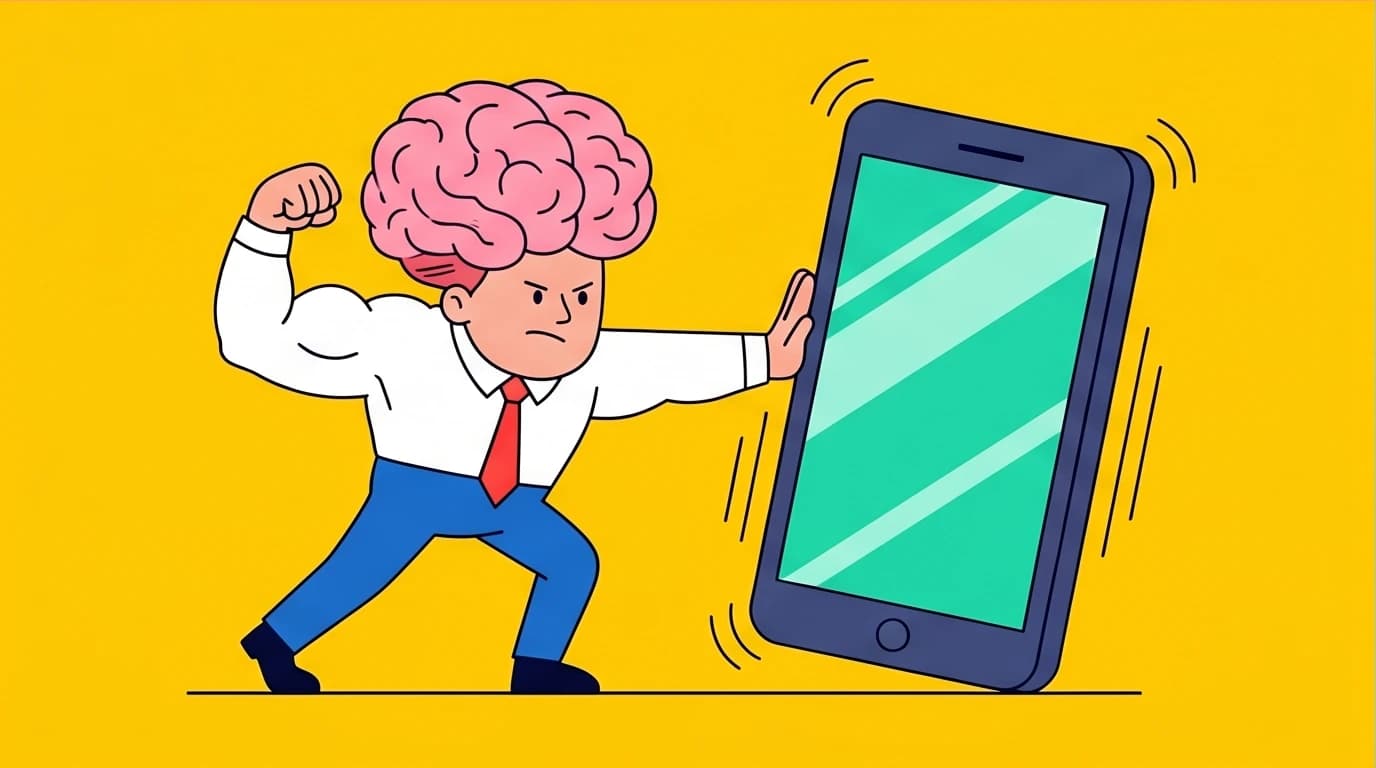
You must train your focus muscle.
- Schedule Distraction: Stop scheduling your focus blocks. Instead, schedule your internet blocks. Keep your phone away and only allow yourself to check email or browse the web at predetermined times. If you need information from the web during a focus block, skip that part of the task and move on. Do not break the rule.
- Productive Meditation: Take a period in which you are occupied physically but not mentally (like walking, jogging, or driving) and focus your attention entirely on a single professional problem. When your mind wanders, bring it back forcefully.
- Roosevelt Dashes: Identify a deep task that normally takes you two hours. Give yourself a hard deadline of one hour. Strip away all distractions and attack the work with blinding intensity. This forces your brain to operate at maximum capacity.
Training your brain to embrace boredom is incredibly difficult in a world engineered to steal your attention. To truly master this rule, you need to understand both the internal triggers that drive you to pick up your phone and the external pings that pull you out of the zone. For a practical, psychology-backed playbook on shielding your focus from the endless barrage of modern notifications, consider adding this insightful read to your toolkit.
Indistractable
Nir Eyal
23 Duration10 Key Points4.5 RateRule 3: Quit Social Media
Most professionals justify their use of Twitter, LinkedIn, or Facebook by citing minor benefits. Newport calls this the "Any-Benefit Approach" to network tools. You assume any potential benefit justifies the distraction.
Newport argues for the Craftsman Approach. A craftsman carefully weighs the pros and cons of every tool. You should only adopt a tool if its positive impacts on your core goals vastly outweigh its negative impacts.
- The 30-Day Experiment: Pack your social media in a digital box. Do not announce your departure. Simply stop using Facebook, Twitter, Instagram, or TikTok for 30 days. After a month, ask yourself two questions: Would my life have been notably better if I had used these tools? Did anyone actually care that I was gone?
- Reject FOMO: Fear Of Missing Out drives modern internet usage. Accept that you will miss out on minor trends or distant acquaintances' updates. The elite output you gain in return is worth far more.
Rule 4: Drain the Shallows
You cannot eliminate shallow work entirely. You still need to pay invoices, reply to your boss, and attend crucial meetings. But you must ruthlessly contain it.

- Schedule Every Minute of Your Day: Use time-blocking. At the start of the day, divide your schedule into blocks and assign a specific task to each block. If your schedule gets disrupted, take five minutes to rewrite the blocks for the rest of the day. This removes the friction of deciding what to do next.
- Quantify Depth: When evaluating a task, ask yourself: How many months would it take to train a smart recent college graduate to do this? If the answer is "a few days," it is shallow work. Minimize it.
- The Strict Shutdown Ritual: Work expands to fill the time available. Establish a strict end to your workday. At 5:00 PM, review your tasks, plan tomorrow's schedule, close your laptop, and say a set phrase (Newport uses "Schedule shutdown, complete"). Do not check email on your phone after this point. Your brain needs rest to perform deep work the next day.
Containing the shallow work in your schedule requires more than just time-blocking; it demands a fundamental shift in how you view your commitments. Draining the shallows means getting comfortable saying "no" to good opportunities so you can say "yes" to great ones. If you want to dive deeper into the mindset of ruthless prioritization and doing less but better, this phenomenal book is the perfect companion to Newport’s strategies.
Essentialism
Greg McKeown
32 Duration10 Key Points4.6 RateImplementing This Deep Work Book Summary Today
Reading a summary is easy. Changing your behavior is hard. Newport leverages the 4 Disciplines of Execution (4DX) framework to help bridge the gap between knowing and doing.
- Focus on the Wildly Important: Do not try to accomplish ten things during your deep work hours. Pick one massively important goal. For a startup founder, it might be "Finish the investor pitch deck." For a student, it might be "Complete the final thesis draft."
- Act on Lead Measures: Lag measures are your final results (e.g., getting an A on a paper, or closing a sales deal). Lead measures are the behaviors you control that drive the result. Your core lead measure should be: Hours spent in deep work. Track this ruthlessly.
- Keep a Compelling Scoreboard: Create a physical tracker in your workspace. Tally the hours you spend in deep work every day. Seeing the visual proof of your effort builds momentum.
- Create a Cadence of Accountability: Review your scoreboard weekly. Figure out what destroyed your focus last week and adjust your time blocks for the upcoming week.
As Newport points out, understanding the mechanics of deep work is entirely different from successfully executing them day after day. The framework he relies on for moving from theory to practice is famously used by top-tier organizations to achieve their most critical goals amid the whirlwind of daily operations. If you want to fully grasp how to set wildly important goals and leverage lead measures in your own career, you'll want to explore the source material directly.
The 4 Disciplines of Execution
Chris McChesney, Sean Covey, and Jim Huling
20 Duration9 Key Points4.6 RateIf you want the full philosophical argument, grab a physical copy on Amazon or listen to the audiobook on Audible. But if your goal is immediate transformation, start applying these four rules to your calendar right now.
While this summary gives you the tactical roadmap to start reclaiming your attention today, there is immense value in immersing yourself in the complete philosophy. Understanding the rich, underlying research on how focus literally shapes your brain and accelerates your career can provide the ultimate motivation to stick with these changes. For the complete, unabridged argument and all the fascinating case studies, nothing beats picking up the original masterpiece.
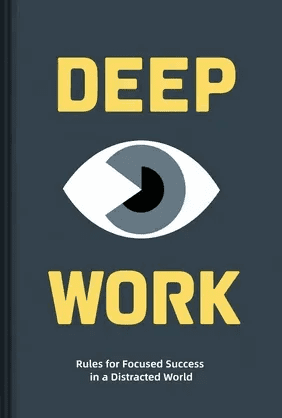
Deep Work
Cal Newport
47 Duration8 Key Points4.6 RateIf the thought of adding all these powerful books to your reading list feels overwhelming, there’s a smarter way to get the core insights without spending weeks on each title.
Get actionable summaries from essential books like Deep Work, Atomic Habits, and Essentialism to accelerate your learning and apply their principles faster.
Download LeapAhead App now
FAQ
How long does it take to get good at deep work?
Deep work is a skill, much like playing the guitar. If you have spent the last five years constantly multitasking, your focus muscle has atrophied. Expect it to take several weeks of consistent practice before you can sustain focus for more than 45 minutes without feeling immense mental fatigue.
Deep work is a skill, much like playing the guitar. If you have spent the last five years constantly multitasking, your focus muscle has atrophied. Expect it to take several weeks of consistent practice before you can sustain focus for more than 45 minutes without feeling immense mental fatigue.
How many hours of deep work can I realistically do in a day?
Newport notes that even absolute masters of their craft max out at around four hours of deep work per day. For beginners, the limit is often closer to one hour. Do not attempt to schedule eight hours of deep work; it is cognitively impossible. Aim for a solid 90 to 120 minutes to start.
Newport notes that even absolute masters of their craft max out at around four hours of deep work per day. For beginners, the limit is often closer to one hour. Do not attempt to schedule eight hours of deep work; it is cognitively impossible. Aim for a solid 90 to 120 minutes to start.
Can I do deep work if my boss expects immediate replies on Slack?
Yes, but you have to negotiate your shallows. You cannot simply ignore your boss, but you can manage expectations. Have a direct conversation. Frame it around the company's goals: "To get this data analysis done accurately, I need to go offline for 90 minutes every morning. I will check in immediately after." Most reasonable managers will value the output over the rapid response.
Yes, but you have to negotiate your shallows. You cannot simply ignore your boss, but you can manage expectations. Have a direct conversation. Frame it around the company's goals: "To get this data analysis done accurately, I need to go offline for 90 minutes every morning. I will check in immediately after." Most reasonable managers will value the output over the rapid response.
Is deep work just another version of the Pomodoro technique?
No. The Pomodoro technique focuses on 25-minute bursts of work followed by a 5-minute break. While Pomodoro is a good starting point for beginners, 25 minutes is rarely enough time to dive deep into a highly complex, cognitively demanding task. Deep work aims for unbroken blocks of 90 to 120 minutes.
No. The Pomodoro technique focuses on 25-minute bursts of work followed by a 5-minute break. While Pomodoro is a good starting point for beginners, 25 minutes is rarely enough time to dive deep into a highly complex, cognitively demanding task. Deep work aims for unbroken blocks of 90 to 120 minutes.