

You look at a modern visionary pitching an impossible product, or a radical artist demanding a societal overhaul, and you see a familiar dynamic. The tension between unyielding idealism and cold, hard reality dominates boardrooms, political arenas, and personal relationships. Figuring out how a dreamer disconnected from reality operates—and why they desperately need a realist to keep the lights on—is not just a literary exercise. It is a masterclass in human psychology.
Miguel de Cervantes wrote about a knight and his squire over 400 years ago, but he inadvertently created the ultimate psychological case study. To understand the friction and synergy in your own teams or relationships, we must analyze the minds of literature's most famous odd couple.
Demystifying Don Quixote Psychology
When we examine Don Quixote psychology, we are not just looking at madness. We are looking at extreme cognitive reframing. Quixote suffers from delusions, but his internal logic is remarkably consistent. He imposes his internal world onto the external environment. In modern psychological terms, this is top-down processing taken to an absolute extreme.
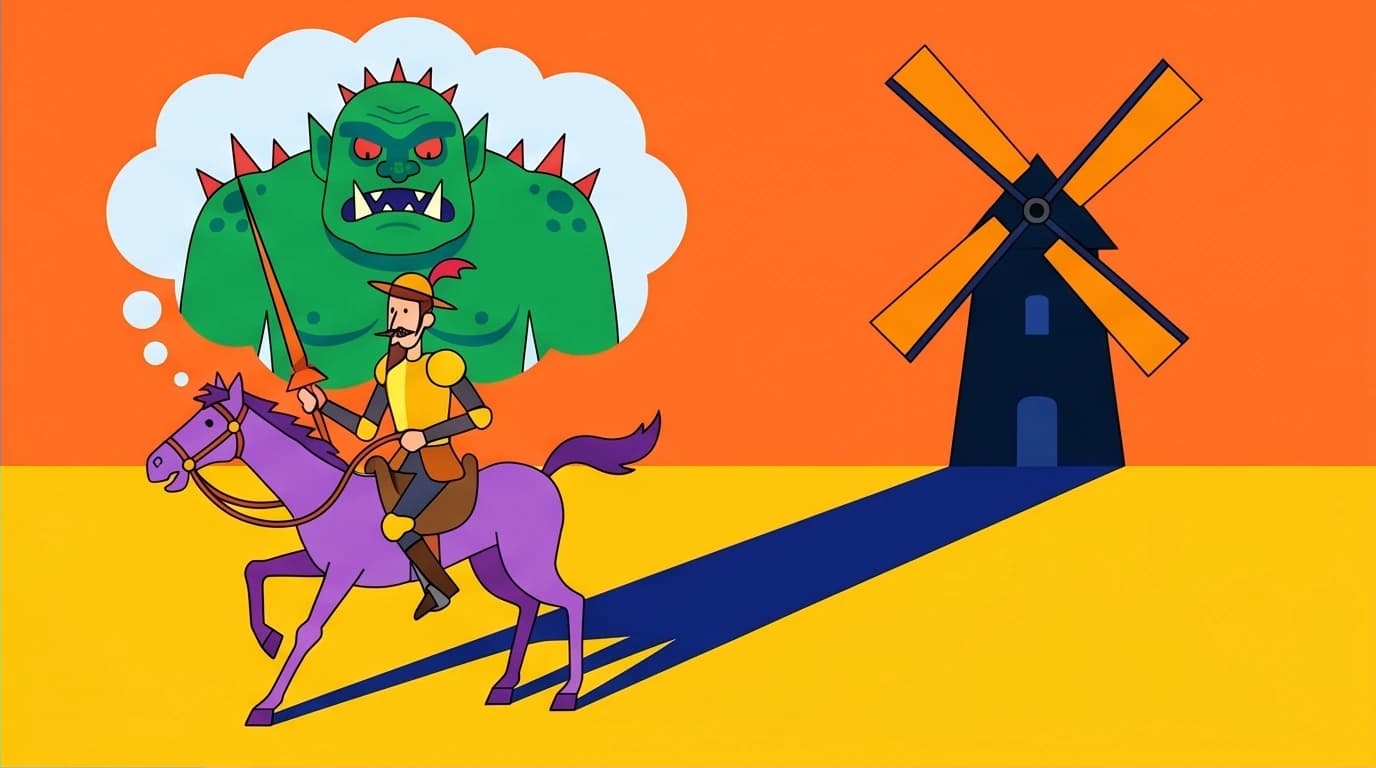
When Quixote sees windmills as giants, he is not suffering from a simple visual hallucination. He is experiencing confirmation bias on steroids. He has already decided that the world is filled with monsters and chivalry; therefore, his brain forces the visual data to match his preconceived narrative.
If you browse organizational psychology books on Amazon or check Goodreads reviews for biographies of famous innovators, you will spot this exact cognitive pattern. Visionaries often ignore the reality in front of them to build the reality they want. They distort the truth to fit a massive, overarching mission.
The Quixotic Personality Type in the Modern World
The quixotic personality type is characterized by grand idealism, impulsive action in the name of a higher cause, and a total disregard for practical constraints. In a clinical setting, this borders on a delusional disorder. In the real world, this archetype often surfaces in startup founders, activists, and paradigm-shifting artists.
People with this personality type share a few core psychological mechanisms:
- Hyper-Idealism: They are driven entirely by intrinsic motivation. Money, safety, and social norms mean nothing to them.
- Immunity to Negative Feedback: When a quixotic individual fails, they do not blame their strategy. They blame external forces (in Quixote's case, "evil enchanters").
- Infectious Conviction: Their belief in their own reality is so absolute that it creates a reality distortion field, drawing pragmatic people into their orbit.
If you are fascinated by the concept of a "reality distortion field," you do not have to look back to seventeenth-century literature to find it. You can see this exact Quixotic personality profile in one of the most famous tech founders in American history. Walter Isaacson’s masterful biography is arguably the definitive modern case study of a brilliant, hyper-idealistic leader who simply refused to accept reality as it was. It provides incredible insight into how an unwavering, almost delusional belief in a product can literally change the world.
Steve Jobs
Walter Isaacson
 39 Duration
 8 Key Points
 4.5 Rate
Core Don Quixote Character Traits
To execute a proper Don Quixote character analysis, we must isolate his primary traits and strip away the comedic elements of his armor and skinny horse. Beneath the surface, his psychological profile is built on three pillars.
Unwavering Intrinsic Motivation
Quixote does not seek wealth. He seeks honor and justice. His reward system is entirely internal. This makes him incredibly resilient. You cannot bribe him, and you cannot easily discourage him. When you manage or interact with someone who shares these Don Quixote character traits, you must realize that traditional incentives—like a bonus or a promotion—will not work. They are driven by purpose.
Quixote's complete reliance on internal rewards rather than external payoffs perfectly illustrates modern theories of workplace psychology. If you are a manager struggling to understand why traditional incentives—like a higher salary or a better corner office—fail to motivate the most visionary people on your team, Daniel H. Pink’s research is a must-read. It breaks down the science of human motivation, proving exactly why a sense of purpose and autonomy will always drive high-performing idealists much harder than a standard paycheck ever could.

Drive
Daniel H. Pink
24 Duration11 Key Points4.5 RateRadical Cognitive Dissonance
When Quixote is beaten up, mocked, or proven wrong by physical reality, he experiences cognitive dissonance. His brain resolves this discomfort not by admitting he is just an old man in a costume, but by rationalizing the defeat. He convinces himself that a wizard turned the giants back into windmills at the last second just to steal his glory. This trait allows visionaries to survive brutal failures without losing their self-esteem.
Moral Clarity and Empathy
Despite his delusions, Quixote's overarching goal is to protect the weak and right wrongs. His intent is universally pure. This moral clarity is exactly why readers—and other characters in the book—forgive his catastrophic mistakes. People will tolerate a massive amount of chaos if they believe the leader's heart is in the right place.
The Pragmatist’s Anchor: Sancho Panza’s Psychological Profile
You cannot analyze Quixote without analyzing his foil. Sancho Panza represents the baseline of reality. If Quixote operates entirely on top-down processing (imposing his mind on the world), Sancho operates on bottom-up processing (taking cues from the physical environment).
Sancho is driven by extrinsic motivation. He wants food, comfort, and the governorship of an island. He sees windmills as windmills. He feels the pain of a beating and does not rationalize it away as a wizard's curse.
Yet, Sancho is not a simpleton. He represents the highly competent operator. He manages the logistics. He talks his boss out of the most suicidal situations. He bridges the gap between Quixote's grand delusions and the physical requirements of survival. Without Sancho, Quixote dies of starvation in the first week.
The Don Quixote and Sancho Panza Relationship
The true value of this story lies in the Don Quixote and Sancho Panza relationship. It is the definitive study of interpersonal symbiosis.
The Push and Pull of Vision and Execution
Vision without execution is just a hallucination. Execution without vision is drudgery. Quixote provides the "Why" (the grand quest), and Sancho provides the "How" (finding food, navigating the roads).
In modern terms, think of an energetic CEO who wants to colonize Mars, paired with a Chief Operating Officer who figures out how to pay for the rocket fuel. The visionary creates the momentum; the pragmatist creates the structure. They irritate each other constantly. Quixote thinks Sancho is cowardly and materialistic. Sancho thinks Quixote is insane and reckless. But they stay together because, on a subconscious level, they know they are incomplete without each other.
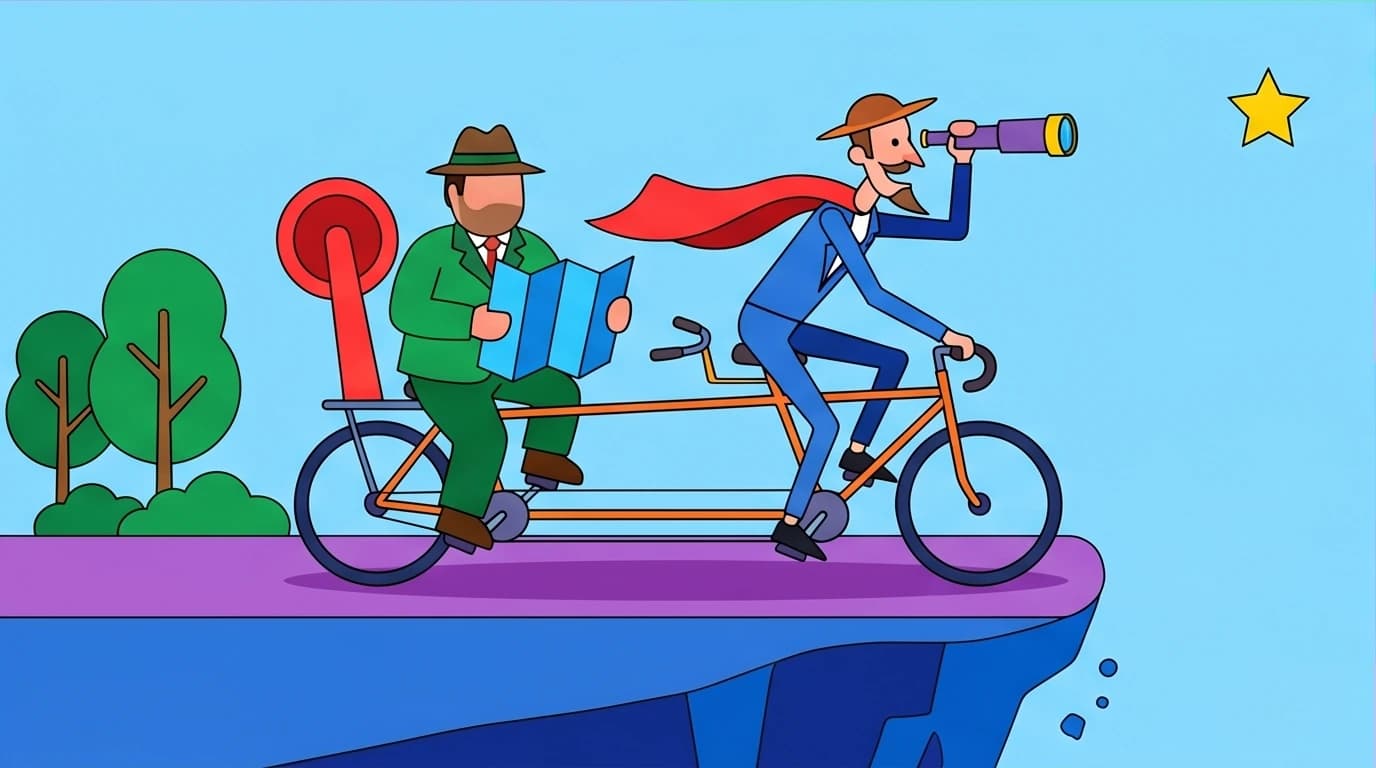
This exact dynamic between a limitless dreamer and a grounded operator is the secret sauce behind almost every successful American business. In the modern corporate ecosystem, this is often referred to as the "Visionary" and "Integrator" relationship. If you want to learn how to harness this specific tension and turn constant team friction into incredible organizational growth, Gino Wickman and Mark Winters offer a brilliant roadmap. Their framework will help you maximize the strengths of both your Quixotes and your Sanchos without letting them destroy each other.
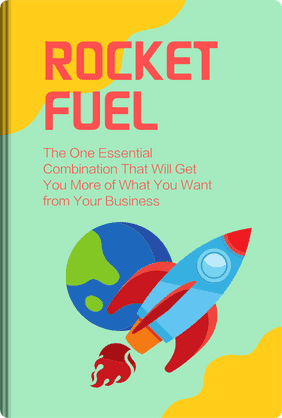
Rocket Fuel
Gino Wickman, Mark Winters
15 Duration7 Key Points4.2 RateMutual Assimilation (Quixotization and Sanchification)
As the relationship progresses, a psychological merging occurs. Literary critics call this "Quixotization" and "Sanchification."
Sancho slowly becomes infected by Quixote's idealism. By the end of their journey, the pragmatic squire actually believes in the beauty of the quest. Conversely, Quixote slowly becomes "Sanchified." He begins to recognize reality, ultimately shedding his delusions on his deathbed.
This psychological crossover is the ultimate goal of any strong partnership. Over time, the visionary learns to respect the budget and the physical limits of the team. The pragmatist learns to dream bigger and take calculated risks.

Applying This Archetype Analysis to Your Environment
Understanding these psychological profiles gives you a massive advantage in leadership, team building, and self-awareness. If you are building an organization or managing a project, you must audit your team for these archetypes.
Identify the Quixotes:
Look for the individuals who speak in absolutes and vision. They are your innovators. Do not bog them down with spreadsheets. Point them toward a massive problem and let their intrinsic motivation run wild. However, you must protect the company from their lack of risk assessment.
Look for the individuals who speak in absolutes and vision. They are your innovators. Do not bog them down with spreadsheets. Point them toward a massive problem and let their intrinsic motivation run wild. However, you must protect the company from their lack of risk assessment.
Identify the Sanchos:
Look for the people who ask "How much will this cost?" and "What is the timeline?" They are your operators. Give them the authority to pull the emergency brake when the visionary goes too far.
Look for the people who ask "How much will this cost?" and "What is the timeline?" They are your operators. Give them the authority to pull the emergency brake when the visionary goes too far.
Manage the Friction:
The friction in the Don Quixote and Sancho Panza relationship is a feature, not a bug. If you have a team with zero friction, you either have no visionaries or no pragmatists. Encourage the debate. Let the idealist push the boundaries, and let the realist ground the ideas in physical reality.
The friction in the Don Quixote and Sancho Panza relationship is a feature, not a bug. If you have a team with zero friction, you either have no visionaries or no pragmatists. Encourage the debate. Let the idealist push the boundaries, and let the realist ground the ideas in physical reality.
If you want to dive deeper into how these dual-personality dynamics play out in real life, you can find excellent organizational psychology audiobooks on Audible or grab leadership biographies at Barnes & Noble. Look for stories of co-founders. You will find a Quixote and a Sancho in almost every single successful venture.
To truly master the friction between vision and execution, you need to understand the underlying cognitive mechanics at play. Why does the pragmatic operator see the cold, hard facts while the visionary sees only potential? Nobel laureate Daniel Kahneman provides the ultimate explanation of these two distinct systems of thought. By understanding how the human brain processes information—either through rapid, intuitive leaps or slow, deliberate calculation—you will be far better equipped to manage both the dreamers and the realists within your own organization.
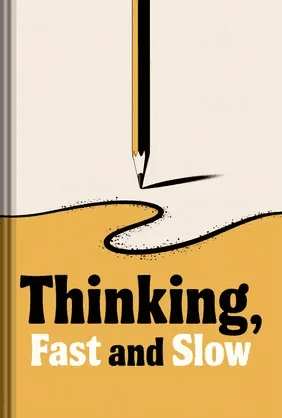
Thinking, Fast and Slow
Daniel Kahneman
53 Duration9 Key Points4.5 RateIf your reading list is suddenly full but your schedule isn't, you can get the core insights from these types of books in minutes, not months.


LeapAhead

Absorb the core lessons from essential leadership and psychology books, like the ones in this article, in just 15-minute audio or text summaries.
FAQ
Is Don Quixote a narcissist or a visionary?
From a psychological standpoint, Don Quixote lacks the malicious self-interest typical of narcissism. Narcissists tear others down to elevate themselves. Quixote is driven by an altruistic vision—to right wrongs and protect the innocent. His delusions are grand, but his underlying motivation is service, placing him closer to the extreme visionary archetype.
From a psychological standpoint, Don Quixote lacks the malicious self-interest typical of narcissism. Narcissists tear others down to elevate themselves. Quixote is driven by an altruistic vision—to right wrongs and protect the innocent. His delusions are grand, but his underlying motivation is service, placing him closer to the extreme visionary archetype.
Why does Sancho Panza stay with Don Quixote if he knows the man is delusional?
Sancho is initially motivated by the tangible promise of an island governorship. However, as the journey continues, his motivation shifts. He stays due to a deep psychological bond and the infectious nature of Quixote’s absolute conviction. Sancho finds meaning in the grand narrative that his otherwise mundane life lacked.
Sancho is initially motivated by the tangible promise of an island governorship. However, as the journey continues, his motivation shifts. He stays due to a deep psychological bond and the infectious nature of Quixote’s absolute conviction. Sancho finds meaning in the grand narrative that his otherwise mundane life lacked.
Can a single person possess both the Quixotic and Sancho personality types?
Yes, but they usually exist in a state of internal conflict. Highly effective leaders often develop the ability to toggle between the two states. They allow their "Quixote" brain to brainstorm without limits, then deliberately switch to their "Sancho" brain to ruthlessly audit those ideas for practical execution.
Yes, but they usually exist in a state of internal conflict. Highly effective leaders often develop the ability to toggle between the two states. They allow their "Quixote" brain to brainstorm without limits, then deliberately switch to their "Sancho" brain to ruthlessly audit those ideas for practical execution.
How do I deal with a Quixotic personality type in the workplace?
Do not attack their core vision, as this will only trigger their cognitive armor. Instead, channel their massive energy. Agree on the grand goal, but force them to delegate the execution to the grounded pragmatists. Ground them by consistently asking, "What is the very first physical step we need to take today to make this vision happen?"
Do not attack their core vision, as this will only trigger their cognitive armor. Instead, channel their massive energy. Agree on the grand goal, but force them to delegate the execution to the grounded pragmatists. Ground them by consistently asking, "What is the very first physical step we need to take today to make this vision happen?"