

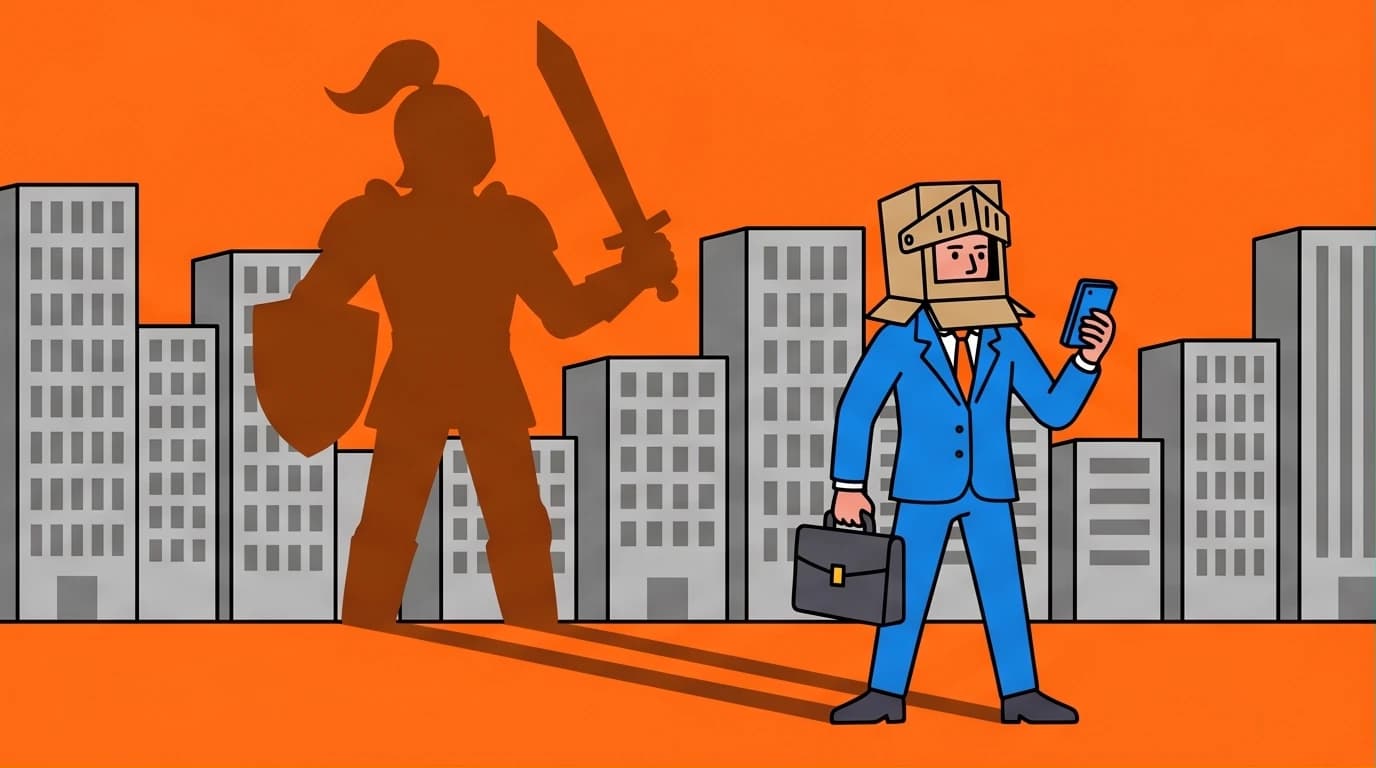
Modern life forces you into highly practical, predictable boxes. You clock in, pay bills, scroll through feeds, and often abandon your boldest ideas because society labels them unrealistic. It feels like you are tilting at windmills just trying to hold onto a basic sense of deeper purpose.
Miguel de Cervantes published Don Quixote over 400 years ago. On the surface, it is a comedic story about an old man who reads too many romance novels, loses his mind, and decides to become a knight-errant in a world that no longer needs them.
Look closer. You will find a masterclass in human psychology, resilience, and personal branding. The core don quixote life lessons are not about escaping reality. They are about having the sheer audacity to reshape it.
Here is how the madness of the Knight of the Sorrowful Face holds the exact blueprint modern dreamers need to navigate a hyper-rational world.
The Core Don Quixote Philosophy: You Are Who You Decide to Be
The most powerful element of the don quixote philosophy is the concept of radical self-authorship.
Before he became a legendary knight, Don Quixote was Alonso Quijano—a bored, aging country gentleman living a completely unremarkable life. He did not wait for permission to change his destiny. He did not wait for a king to knight him.
He renamed himself. He dragged an old, skinny horse out of the barn and named him Rocinante. He polished rusty family armor. He found a local peasant woman and elevated her in his mind to the noble Lady Dulcinea.
He spoke his new reality into existence.
Today, we call this "faking it until you make it" or "impostor syndrome." Quixote bypassed all of that. He simply decided his identity and acted in complete alignment with it. When people laughed at him, he did not flinch. His internal belief system was bulletproof.
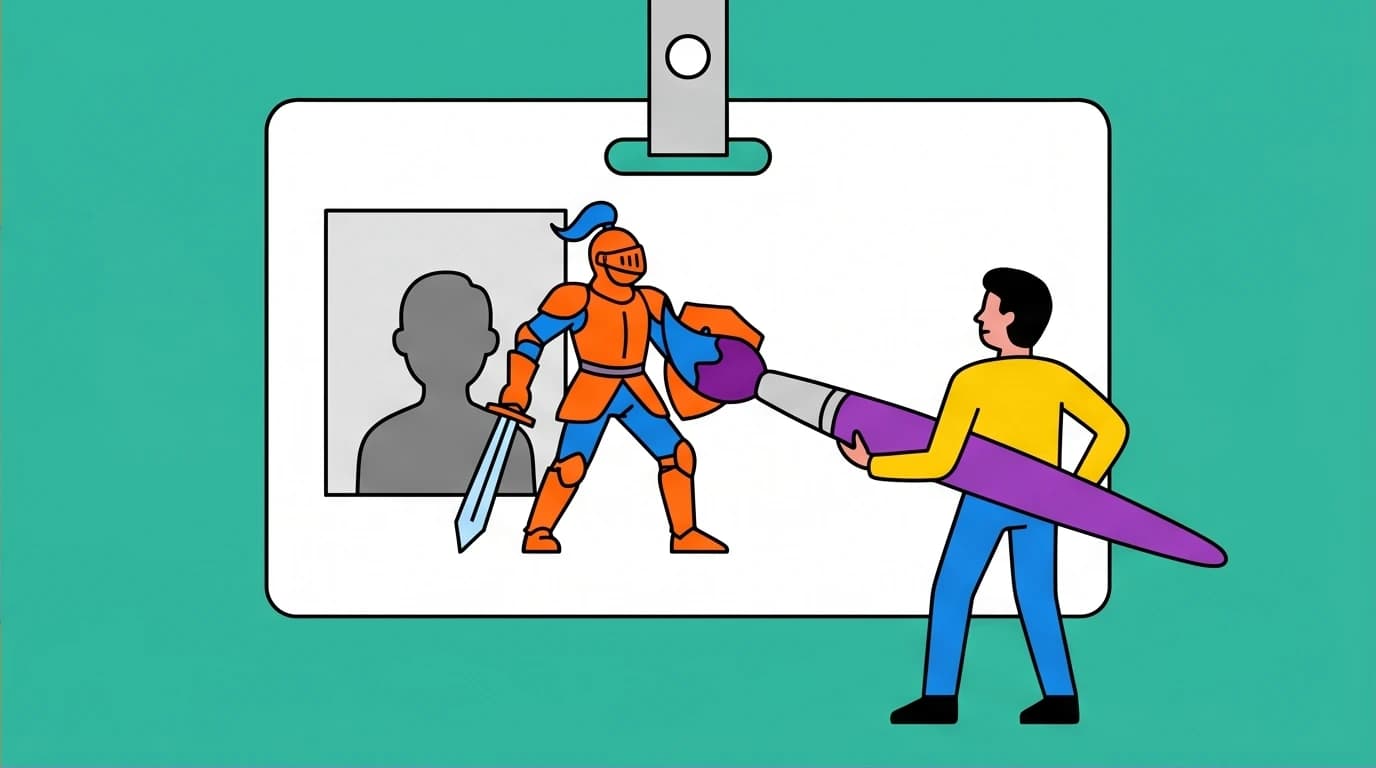
If you want to start a business, write a book, or change careers, the world will ask for your credentials. Society wants proof before it grants you permission. Quixote teaches us that permission is never granted. It is taken. You must view yourself as the person you want to become long before the physical evidence materializes.
If you want to start a business, write a book, or change careers, the world will ask for your credentials. Society wants proof before it grants you permission. Quixote teaches us that permission is never granted. It is taken. You must view yourself as the person you want to become long before the physical evidence materializes.
If you struggle with impostor syndrome or feel like you are constantly waiting for someone to validate your goals, you are not alone. Stepping into a new identity requires you to stop playing the amateur and make a definitive mental shift. If you are ready to stop waiting for permission and start acting like the professional you want to become, there is a fantastic read that acts as a powerful wake-up call. It will help you shed your old self and embrace the relentless work required to build your bold new reality.
Turning Pro
Steven Pressfield
 44 Duration
 9 Key Points
 4.5 Rate
Idealism vs Realism Don Quixote: The Genius of the Partnership
You cannot discuss this story without examining the famous dynamic between Don Quixote and his squire, Sancho Panza. This relationship perfectly captures the theme of idealism vs realism don quixote style.
Quixote is pure, unfiltered idealism. He looks at rundown inns and sees grand castles. He looks at windmills and sees towering giants. He lives entirely in his head, driven by vision, honor, and duty.
Sancho Panza is pure, unvarnished realism. He sees the inn as an inn. He sees the windmills as windmills. He cares about his next meal, physical safety, and getting paid.
At first glance, Sancho looks like the smart one. But as the story unfolds, a brilliant shift happens. Sancho becomes infected by Quixote’s dreams. He starts to believe in the island he was promised to govern. Conversely, Quixote needs Sancho to keep him grounded, bandage his wounds, and pull him out of ditches.
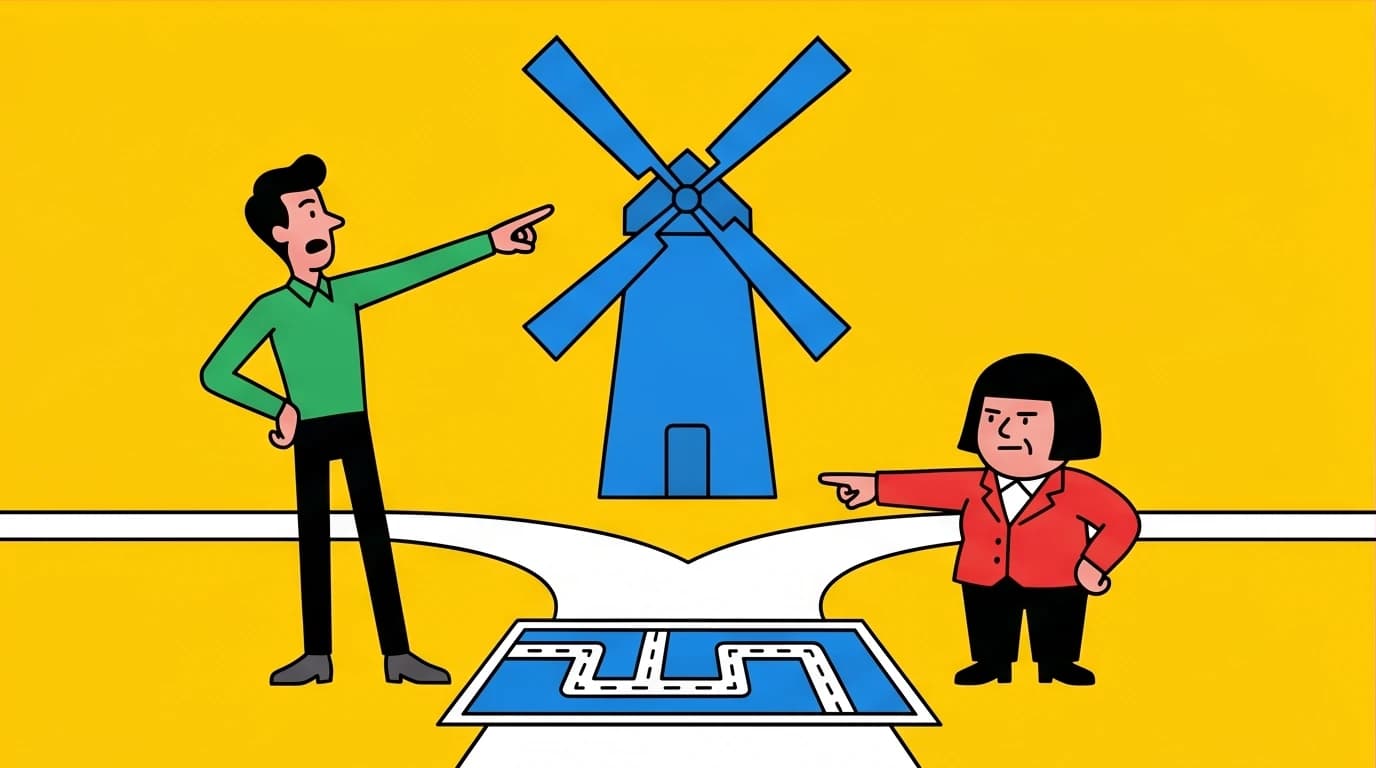
This is the ultimate lesson for any modern creator, entrepreneur, or thinker. You cannot survive on pure idealism. If you only look at the sky, you will fall into a ditch. But if you only look at the dirt like a pure realist, you will never go anywhere worth going.
This is the ultimate lesson for any modern creator, entrepreneur, or thinker. You cannot survive on pure idealism. If you only look at the sky, you will fall into a ditch. But if you only look at the dirt like a pure realist, you will never go anywhere worth going.
You need both. If you are the visionary "Quixote" in your startup or your personal life, you must find your "Sancho"—an accountant, a pragmatic partner, a grounded friend—who handles the logistics. If you are naturally a "Sancho," you need to attach yourself to a bold vision to give your hard work meaning. Greatness requires the friction between wild imagination and cold execution.
Recognizing whether you are a natural "Quixote" (the big-picture visionary) or a "Sancho" (the practical executor) can completely transform your career trajectory. In the business world, this dynamic is actually a well-documented framework for startup success. If you want to understand how to pair wild, idealistic thinking with grounded, operational discipline to build a thriving company, you might want to dive deeper into this concept. There is an excellent guide that explores how these two distinct personality types can join forces to create truly unstoppable momentum.
Rocket Fuel
Gino Wickman, Mark Winters
15 Duration7 Key Points4.2 RateThe True Meaning of Don Quixote: The Danger of the "Cure"
People often misinterpret the meaning of don quixote as a warning against chasing impossible dreams. The actual tragedy of the novel proves the exact opposite.
At the end of the story, Alonso Quijano is finally "cured" of his madness. His friends and family successfully break his delusions. He realizes he is not a knight. He realizes the giants were just windmills and his noble lady was just a peasant.
He regains his perfect, rational sanity. And then? He immediately falls ill and dies of melancholy.
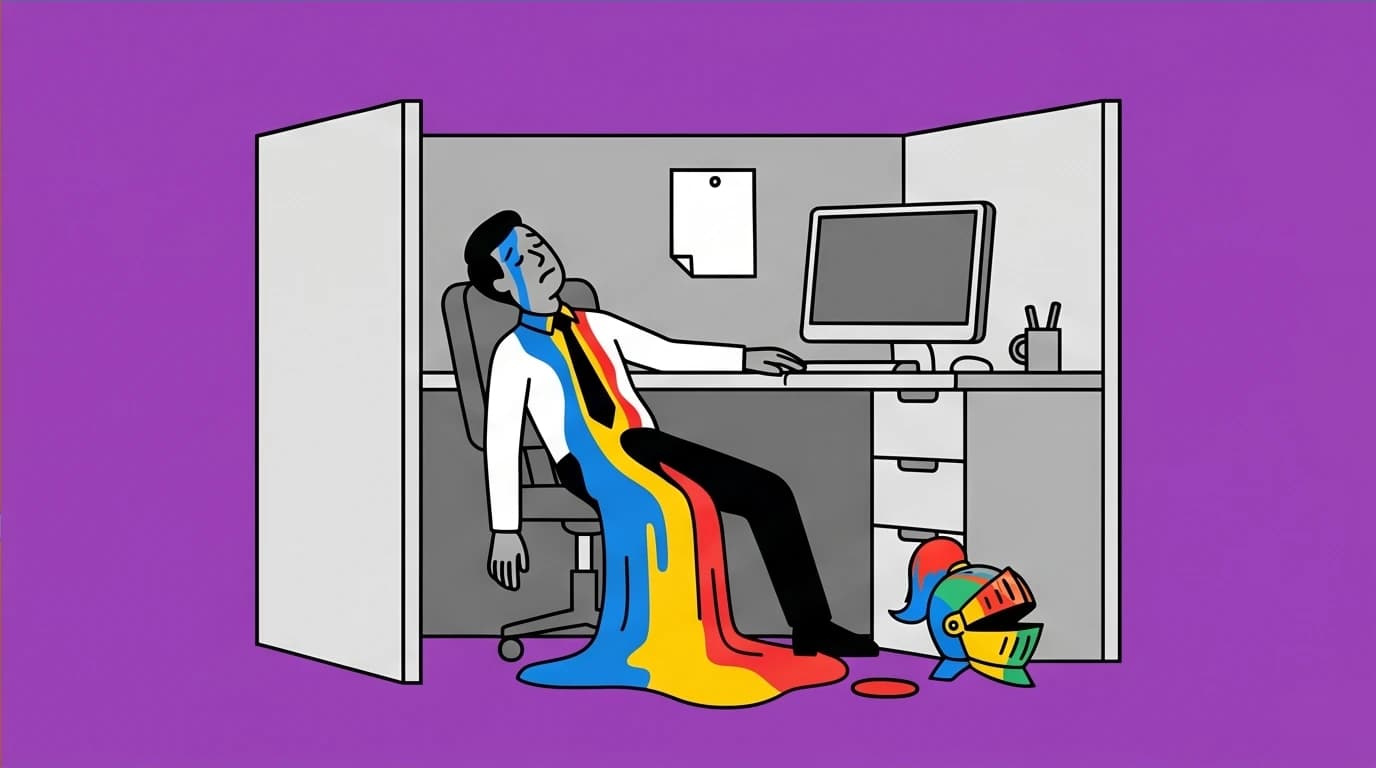
The profound truth here is that a life stripped of passion, belief, and irrational hope is a dead life. Society constantly tries to "cure" us of our dreams. Well-meaning parents, skeptical friends, and harsh economic realities push us to be sensible.
The profound truth here is that a life stripped of passion, belief, and irrational hope is a dead life. Society constantly tries to "cure" us of our dreams. Well-meaning parents, skeptical friends, and harsh economic realities push us to be sensible.
Get a safe job. Stop taking risks. Be realistic.
Cervantes shows us that absolute sanity is spiritually fatal. The willingness to pursue a noble cause, even if you fail repeatedly, is the fuel that keeps the human engine running. The madness of trying is far better than the sanity of giving up.
Cervantes’ powerful observation that absolute, pragmatic sanity can drain the life force right out of us points to a deeper psychological truth. Human beings are fundamentally wired for purpose. Without a profound "why" driving you forward, even the most comfortable life can feel incredibly hollow. If you are interested in exploring how an unyielding sense of a meaning can sustain us through our darkest, most challenging moments, there is a foundational book on the subject. It offers an unforgettable perspective on why holding onto your inner fire is literally vital for your survival.
Man's Search for Meaning
Viktor E. Frankl
44 Duration8 Key Points4.6 RatePowerful Don Quixote Quotes About Life
Cervantes packed this massive novel with sharp insights on human nature. These don quixote quotes about life provide immediate shifts in perspective when you face adversity.
"He who loses wealth loses much; he who loses a friend loses more; but he that loses his courage loses all."
We fixate on losing money, status, or social connections. Cervantes reminds us that these resources are renewable. You can make the money back. You can meet new people. But courage—the internal fire required to step into the unknown—is the foundational asset. Once your courage breaks, your forward motion stops entirely.
"The truth will rise above falsehood as oil above water."
Patience is a weapon. Quixote endured endless mockery, physical beatings, and trickery. Yet, the philosophy of the book maintains that integrity and truth eventually surface. If you are doing genuine work and treating people with honor, you do not need to win every short-term argument. The long game belongs to those with actual substance.
"Until death it is all life."
This is a blunt reminder of human agency. No matter your age, your past failures, or your current limitations, you are still on the board. Quixote was pushing fifty—an old man by 17th-century standards—when he started his quest. He didn't view his late start as a reason to quit. Every single day above ground is an opportunity to saddle up and ride out again.
How to Apply These Lessons Today
Understanding the philosophy is only half the battle. Here is how you actively deploy these lessons in your daily routine.
1. Embrace the Ridicule
If no one thinks your goals are a little crazy, your goals are too small. When you start a new fitness journey, launch a side hustle, or return to school at forty, people will doubt you. Expect it. Quixote was literally beaten and mocked in almost every chapter, yet he dusted himself off because his internal compass was louder than the external noise. Treat mockery as confirmation that you have stepped out of the comfort zone.
2. Find Your Windmills
A windmill is just a boring agricultural tool until you decide it is a giant. You have the power to gamify your life. Reframe your mundane obstacles into epic challenges. Paying off a massive student loan isn't a depressing chore; it is a dragon you are slaying to win your financial freedom. Hitting the gym isn't a tedious routine; it is forging your armor for the battles ahead. Perspective dictates performance.
Reframing your everyday struggles into epic, manageable challenges is one of the most effective ways to build serious mental toughness. When you start viewing your roadblocks as the exact path you need to travel, everything changes. Instead of getting bogged down by frustrations, you learn to leverage them to your advantage. If you want a practical, no-nonsense framework for turning your biggest adversities into high-octane fuel for your personal growth, there is a brilliant modern take on this stoic philosophy. It will teach you how to charge at your obstacles rather than running from them.
The Obstacle Is the Way
Ryan Holiday
44 Duration7 Key Points4.6 Rate3. Read Actively and Curate Your Inputs
Quixote went "mad" because he read books of chivalry obsessively. His inputs dictated his outputs. Look at your own life. What are you reading, watching, and listening to? If you consume cynical news, outrage media, and doom-scrolling content, your reality will become cynical and bleak. If you consume biographies of great innovators, demanding literature, and strategic guides, your mind will orient toward greatness. Control your inputs to control your reality.
Of course, finding time to read deeply in a world of constant distractions is a challenge in itself. For those who want to absorb the wisdom of great books without needing hours of free time, a microlearning app can be a powerful tool.

Quickly absorb the core ideas from the world's best nonfiction books, helping you control your mental inputs and orient your mind toward greatness in just 15 minutes a day.

Download LeapAhead App now
4. Protect Your Inner Knight
There will always be people actively trying to drag you back to "reality." Recognize that their desire to make you normal is often rooted in their own insecurities. When you dare to do something different, it holds a mirror up to their complacency. Smile, thank them for their concern, and keep riding.
The Ultimate Takeaway
We live in an era that relies heavily on data, algorithms, and guaranteed returns. We want the exact ROI before we invest a minute of our time.
Don Quixote remains culturally immortal because he represents the exact opposite of that mindset. He represents the beautiful, messy, reckless pursuit of an ideal. He shows us that the outcome of the quest is secondary. The real victory is having the guts to put on the armor in the first place.
If you are going to live, you might as well live for a grand vision. Let the world call you foolish. The fools are the ones changing the world, while the purely sane people simply watch them do it.
If you're ready to start building the knowledge to support your own grand vision but struggle to find the time, there's a smarter way to learn.
Get the key insights from bestselling books on strategy and personal growth, helping you build your vision one 15-minute audio or text summary at a time.
Download LeapAhead App now
FAQ
Why is Don Quixote still relevant today?
It directly addresses the modern crisis of meaning. Today, many people feel like tiny cogs in massive corporate machines. Quixote’s story is a timeless reminder that you can manufacture your own meaning, set your own rules, and pursue a passionate life regardless of your circumstances or societal expectations.
It directly addresses the modern crisis of meaning. Today, many people feel like tiny cogs in massive corporate machines. Quixote’s story is a timeless reminder that you can manufacture your own meaning, set your own rules, and pursue a passionate life regardless of your circumstances or societal expectations.
Was Don Quixote actually crazy, or just pretending?
Scholars debate this heavily, but practically speaking, his "madness" was a radical form of chosen belief. He actively decided to view the world not as it was, but as it should be. It was less about clinical insanity and more about a desperate, intentional rebellion against a boring, unheroic world.
Scholars debate this heavily, but practically speaking, his "madness" was a radical form of chosen belief. He actively decided to view the world not as it was, but as it should be. It was less about clinical insanity and more about a desperate, intentional rebellion against a boring, unheroic world.
What does "tilting at windmills" actually mean in everyday life?
Historically, it means attacking imaginary enemies or fighting unwinnable battles. However, for the modern idealist, it has taken on a secondary meaning: having the courage to fight for your beliefs even when everyone around you thinks the task is impossible or pointless.
Historically, it means attacking imaginary enemies or fighting unwinnable battles. However, for the modern idealist, it has taken on a secondary meaning: having the courage to fight for your beliefs even when everyone around you thinks the task is impossible or pointless.
How do you balance idealism with paying the bills?
You use the Quixote/Sancho method. You protect your visionary, idealistic goals (writing the novel, launching the app) but you ground them with a Sancho Panza strategy (keeping your day job, tracking your budget). You fund your idealism with your realism until the idealism can pay for itself.
You use the Quixote/Sancho method. You protect your visionary, idealistic goals (writing the novel, launching the app) but you ground them with a Sancho Panza strategy (keeping your day job, tracking your budget). You fund your idealism with your realism until the idealism can pay for itself.