

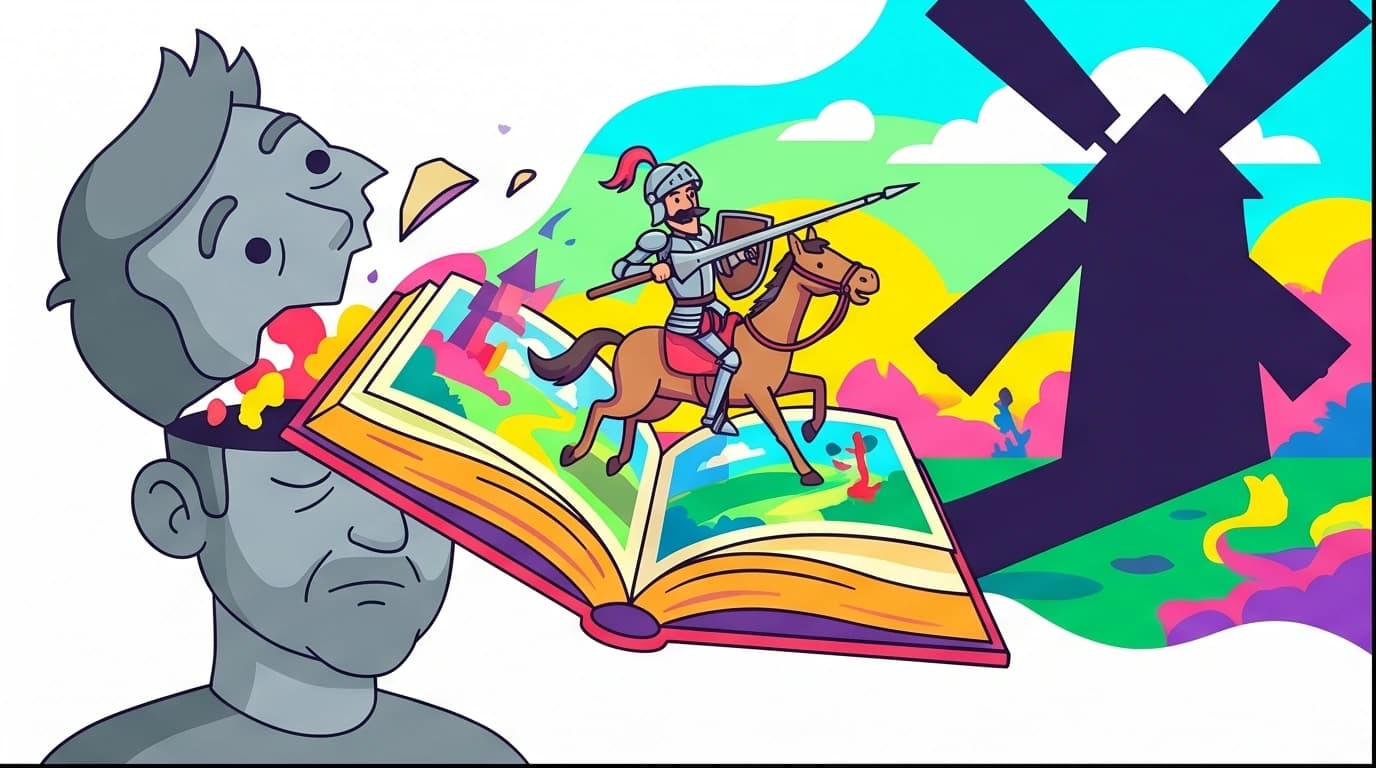
You have probably heard the word "quixotic" used to describe a hopelessly romantic pursuit, or heard someone warn against "tilting at windmills." These cultural touchstones all trace back to a single 17th-century Spanish novel. But finding the time to tackle Miguel de Cervantes’ 1,000-page masterpiece is a massive commitment. If you are balancing a career, family, and a reading list a mile long, diving into archaic prose is likely not on your schedule.
But what if you could grasp the core ideas of classics like Don Quixote without the massive time commitment?


LeapAhead

Helps you understand the key insights from literary masterpieces and nonfiction bestsellers in just 15-minute audio or text summaries.
You need a clear, actionable breakdown of the story without spending weeks reading it. This comprehensive don quixote book summary delivers exactly that. We will strip away the fluff and break down the core narrative arc, the defining character dynamics, and the exact reasons this book is widely considered the first modern novel.
The Core Premise: Madness Born from Books
The story opens in the historical region of La Mancha, Spain. Alonso Quixano is a minor nobleman in his fifties who spends all his time and money reading books of chivalry. He becomes completely obsessed with the romanticized world of knights, damsels in distress, and magical wizards. This obsession ultimately breaks his brain. He loses his grip on reality and decides to become a knight-errant to revive chivalry and serve his nation.
He renames himself Don Quixote de La Mancha. He cleans up some rusty, antique family armor, fashions a makeshift helmet, and mounts his old, overworked horse, which he grandly renames Rocinante. Since every knight needs a noble lady to dedicate his victories to, he chooses a local peasant woman who doesn't even know he exists, christening her Dulcinea del Toboso.
If you find Alonso Quixano’s descent into fiction-induced madness fascinating, you might enjoy exploring how this exact theme influenced later literary classics. Over two centuries later, Gustave Flaubert wrote a masterpiece about a provincial wife whose obsession with romantic novels similarly detaches her from reality, leading to tragic consequences. It is essentially the 19th-century, female-led spiritual successor to Cervantes’ premise, and it is a must-read for anyone captivated by the blurred lines between fiction and real life.
Madame Bovary
Gustave Flaubert
 13 Duration
 5 Key Points
 4.2 Rate
Part 1: The First Sallies and Pure Delusion
Cervantes published Don Quixote in two parts, separated by a decade. Part 1 focuses heavily on slapstick comedy and Quixote’s severe hallucinations.
The Inn and the First Expedition
Quixote sneaks out of his village at dawn to begin his adventures. His first stop is a modest countryside inn, which his broken mind perceives as a magnificent castle. He demands the innkeeper—whom he sees as the castle's lord—officially dub him a knight. The innkeeper plays along to get rid of the eccentric old man. Armed with his new "knighthood," Quixote tries to save a young servant boy from a beating but ultimately makes the situation worse. Shortly after, a group of merchants beats Quixote severely, forcing a neighbor to carry him back home.
Enter Sancho Panza
While recovering, Quixote’s friends (the local priest and the barber) burn most of his chivalric romance books, hoping to cure his madness. They blame a fictional enchanter for the missing library. This only fuels Quixote's delusions.
Realizing he needs a squire, Quixote recruits a poor, uneducated, but highly pragmatic local farmer named Sancho Panza. Quixote secures Sancho's loyalty by promising to make him the governor of an island once they conquer it. Sancho leaves his family behind and rides out on his donkey to serve his new master. This partnership forms the emotional core of the entire novel.
The dynamic between the idealistic knight and his pragmatic squire is one of the most celebrated in all of literature.
Tilting at Windmills and Other Disasters
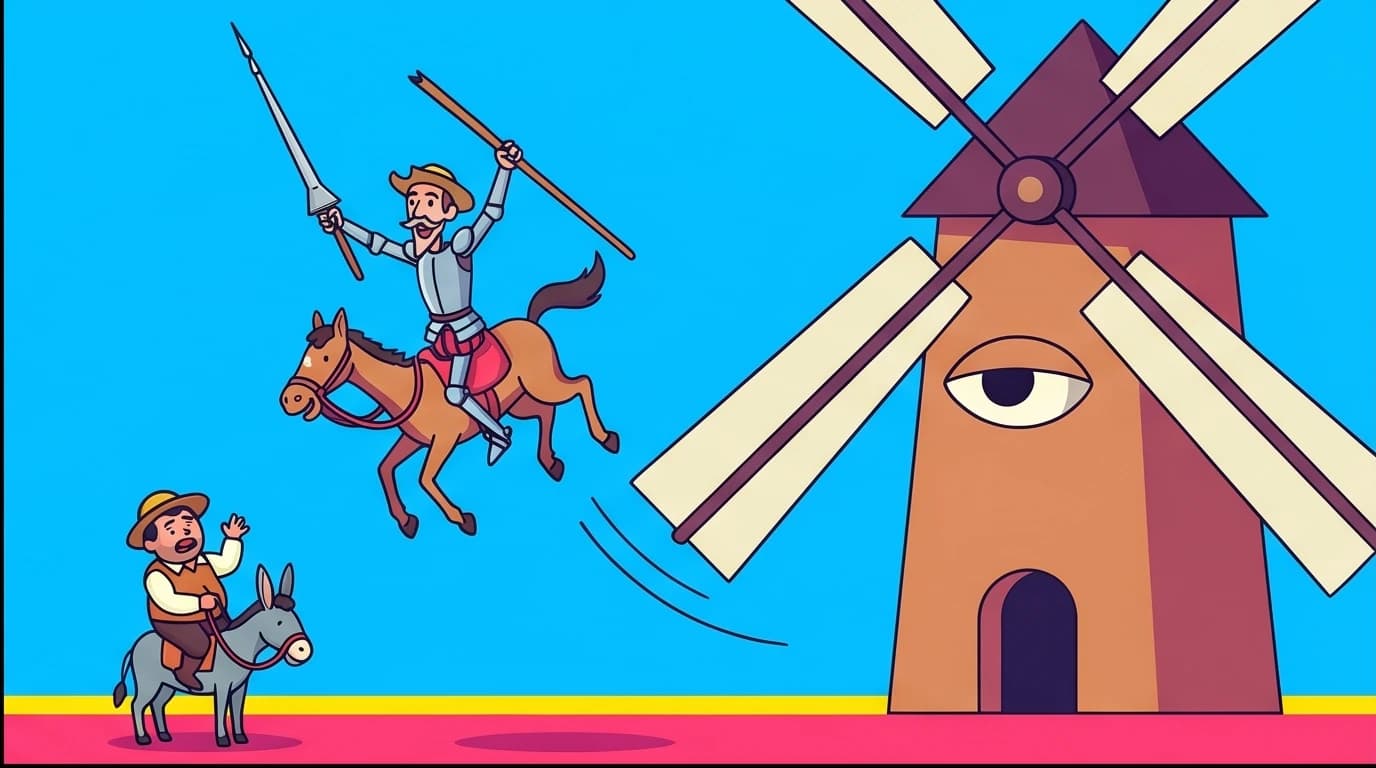
The duo encounters their most famous adventure almost immediately. Quixote spots thirty or forty windmills across the Spanish plains. He genuinely sees them as massive, evil giants. Ignoring Sancho’s frantic warnings, Quixote charges the windmills with his lance. The wind catches the sails, shattering his lance and throwing Quixote and Rocinante to the ground. Quixote simply rationalizes the defeat by claiming an evil wizard transformed the giants into windmills at the last second to deny him glory.
While this summary covers the plot, understanding the origins of well-known phrases like "tilting at windmills" is key to appreciating the book's vast influence.
From here, Part 1 rolls through a series of chaotic misadventures. If you are looking for a quick don quixote synopsis of these events, they all follow a similar pattern:
- Quixote misinterprets a mundane situation.
- He attacks innocent people or objects.
- He and Sancho end up getting brutally beaten.
He attacks a flock of sheep, believing they are two warring armies. He frees a chain gang of dangerous criminals, thinking they are oppressed captives, only for the criminals to stone him. Eventually, his friends trick him into a wooden cage and drag him back to his village, hoping he will finally rest.
Part 2: Meta-Fiction and the Death of Idealism
Published in 1615, Part 2 dramatically shifts the tone. It is deeper, darker, and significantly more psychological. It is also the reason many literary critics view the novel as a masterpiece.
The World Knows Don Quixote
Cervantes introduces a brilliant meta-fictional twist: Part 1 of the novel has actually been published within the world of the story. When Quixote and Sancho ride out for their third expedition, they meet people who have already read about their previous adventures.
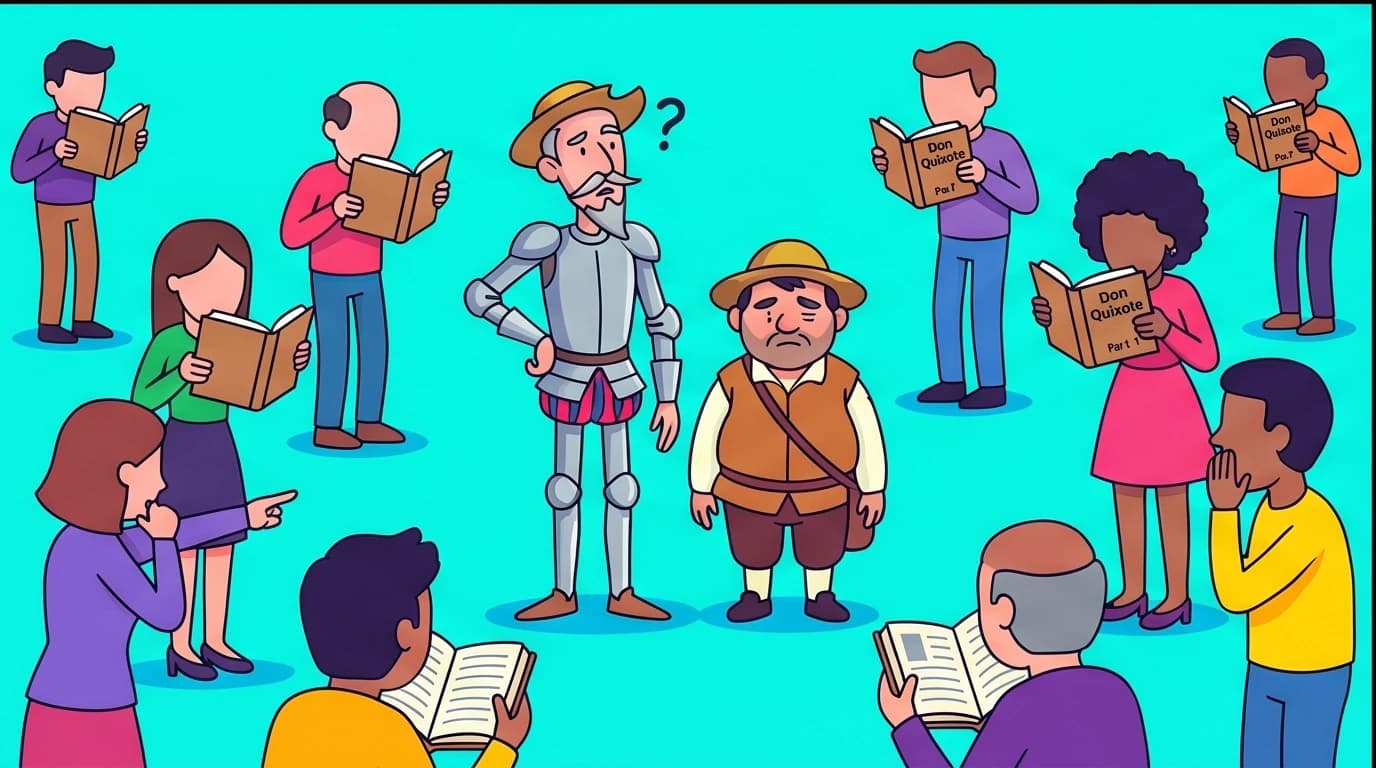
Instead of Quixote imposing his delusions on a normal world, the world now plays along with his delusions to mock him.
The Duke and Duchess
The bulk of Part 2 involves a wealthy, bored Duke and Duchess who invite Quixote and Sancho to their estate. Having read the first book, they orchestrate elaborate, cruel pranks purely for their own entertainment. They stage fake magical encounters, trick Quixote into riding a wooden horse laced with firecrackers, and even fulfill Sancho's dream by making him the "governor" of a fake island (a local town).
Surprisingly, Sancho proves to be an incredibly wise and fair judge, though he quickly realizes the stress of ruling is not worth the trouble and willingly resigns.
The Knight of the White Moon
Quixote eventually travels to the beaches of Barcelona. There, he is challenged to a duel by the "Knight of the White Moon"—who is actually Samson Carrasco, a young student from Quixote's home village trying to force the old man to return home.
Carrasco defeats Quixote. The terms of the duel demand that Quixote abandon his knighthood and return to his village for one year. Crushed and stripped of his life's purpose, Quixote honors the agreement and travels home.
The Return to Sanity
Back in his bed, Quixote falls gravely ill. After a long sleep, he wakes up and announces that his madness has broken. He completely rejects his identity as Don Quixote, states he is once again Alonso Quixano the Good, and condemns the books of chivalry that poisoned his mind.
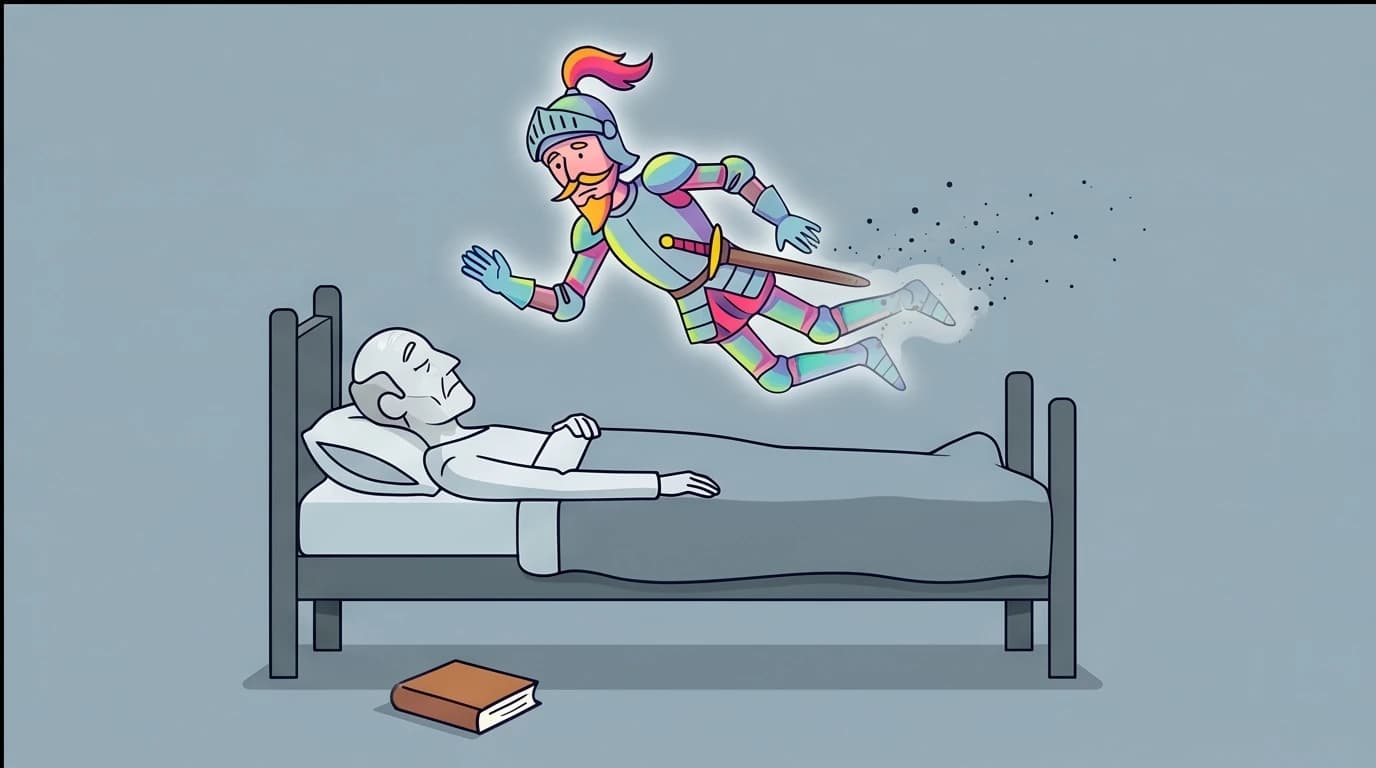
Sancho, who has ironically grown to love the romantic worldview, begs him to keep adventuring. But it is too late. Alonso Quixano writes his will, receives his last rites, and dies a sane but broken man.
Don Quixote Key Takeaways
Reading standard don quixote cliff notes might give you the plot points, but understanding the thematic depth is what actually matters. Here are the core concepts you need to grasp:
Beyond the plot, the novel is a treasure trove of philosophical insights that remain relevant today.
1. Idealism vs. Realism
The tension between Quixote and Sancho is the ultimate clash of worldviews. Quixote represents pure, uncompromising idealism. He sees the world not as it is, but as it should be. Sancho represents grounded, physical realism—he cares about food, money, and survival. As the novel progresses, their personalities bleed into one another. Quixote becomes more grounded, while Sancho becomes more idealistic, a process critics call the "Quixotization" of Sancho.
The philosophical tug-of-war between Quixote's unyielding idealism and Sancho's grounded realism isn't just a clever plot device; it mirrors centuries of actual philosophical debate. If this clash of worldviews piques your interest, diving into a broader overview of how great thinkers have tackled these exact concepts can be incredibly rewarding. A highly accessible guide to the history of philosophical thought will help you see how the competing lenses of idealism and realism have shaped human history well beyond the plains of La Mancha.
2. The Dangers of Media Consumption
Centuries before social media or virtual reality, Cervantes explored what happens when media consumption completely overrides lived reality. Quixote's inability to separate fiction from fact serves as a warning about the seductive, destructive power of living entirely within narratives rather than reality.
Cervantes’ 17th-century warning about the dangers of losing yourself in fictional worlds feels incredibly prophetic today. While Quixote lost his mind to physical books of chivalry, modern readers face a similar cognitive rewiring from the internet and digital media. If you are curious about the science behind how constant media consumption alters our neuroplasticity and fundamentally changes how we perceive reality, there is a Pulitzer Prize-finalist book that breaks this down brilliantly. It explores the modern-day equivalent of Quixote’s media-induced mental shift.
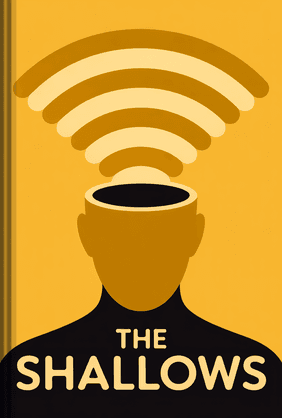
The Shallows
Nicholas Carr
17 Duration8 Key Points4.7 Rate3. The Definition of Madness
Is Don Quixote actually crazy? In Part 1, his madness is visceral and sensory—he hallucinates heavily. In Part 2, his madness becomes almost voluntary. He knows he is aging and frail, but he chooses the noble lie of chivalry over the bleak reality of his mundane life. The tragedy of the book is that when he finally regains his sanity, he immediately dies. It raises the question: is it better to be a sane man in a cruel world, or a madman living a beautiful dream?
The question of whether it is better to live in a beautiful delusion or face a bleak reality is one of the novel's most profound takeaways. Quixote’s altered perception of the world—seeing windmills as giants and inns as castles—raises fascinating questions about how our brains construct reality. If you are intrigued by the psychology and neurology behind how the human mind can misinterpret the physical world, exploring real-life clinical tales of altered perception offers a mind-bending follow-up to Quixote’s fictional delusions.
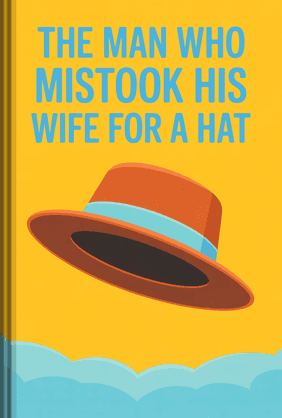
The Man Who Mistook His Wife for a Hat
Oliver Sacks
22 Duration9 Key Points4.8 RateWhy Does It Still Matter?
Don Quixote is widely celebrated as the first modern novel for several distinct reasons. Before Cervantes, European literature consisted mostly of epic poems, religious allegories, or flat romantic tales where perfect heroes fought pure evil.
Cervantes broke the mold entirely. He wrote in everyday language. He created characters who grew, evolved, and changed their minds. He utilized unreliable narrators and meta-fiction centuries before modernism made those techniques popular. Every buddy-comedy, road-trip movie, and story featuring an odd-couple pairing owes a massive debt to the dynamic built between Don Quixote and Sancho Panza.
If you're inspired to explore the brilliant ideas from Don Quixote and other foundational texts but still can't find the time, modern tools can help bridge the gap.
LeapAhead
Absorb the core lessons from the world’s most influential books, turning your commute, workout, or short breaks into valuable learning time.
FAQ
Why is Don Quixote considered the first modern novel?
Unlike previous works of literature that featured static, one-dimensional heroes, Don Quixote features complex characters who evolve over time. Cervantes used conversational language, explored the inner psychology of his characters, and broke the fourth wall by having characters in Part 2 read the actual book they are starring in.
Unlike previous works of literature that featured static, one-dimensional heroes, Don Quixote features complex characters who evolve over time. Cervantes used conversational language, explored the inner psychology of his characters, and broke the fourth wall by having characters in Part 2 read the actual book they are starring in.
Do I need to read both Part 1 and Part 2 to understand the story?
If your goal is just to understand the cultural references, the events of Part 1 (like fighting the windmills) are the most famous. However, critics universally regard Part 2 as the superior piece of literature because it shifts from physical comedy to deep psychological tragedy.
If your goal is just to understand the cultural references, the events of Part 1 (like fighting the windmills) are the most famous. However, critics universally regard Part 2 as the superior piece of literature because it shifts from physical comedy to deep psychological tragedy.
What does the phrase "tilting at windmills" actually mean?
The phrase comes directly from the scene where Quixote attacks windmills, believing them to be giants. Today, "tilting at windmills" means attacking imaginary enemies or dedicating your energy to a noble but completely impossible, futile pursuit.
The phrase comes directly from the scene where Quixote attacks windmills, believing them to be giants. Today, "tilting at windmills" means attacking imaginary enemies or dedicating your energy to a noble but completely impossible, futile pursuit.
Is Don Quixote meant to be a tragedy or a comedy?
It is both. In the 17th century, readers viewed it purely as a hilarious, slapstick comedy about a crazy old man. By the 19th century, Romantic writers began to view it as a deep tragedy about a noble soul crushed by a cynical, unforgiving world. Your interpretation largely depends on how much you value idealism over reality.
It is both. In the 17th century, readers viewed it purely as a hilarious, slapstick comedy about a crazy old man. By the 19th century, Romantic writers began to view it as a deep tragedy about a noble soul crushed by a cynical, unforgiving world. Your interpretation largely depends on how much you value idealism over reality.