

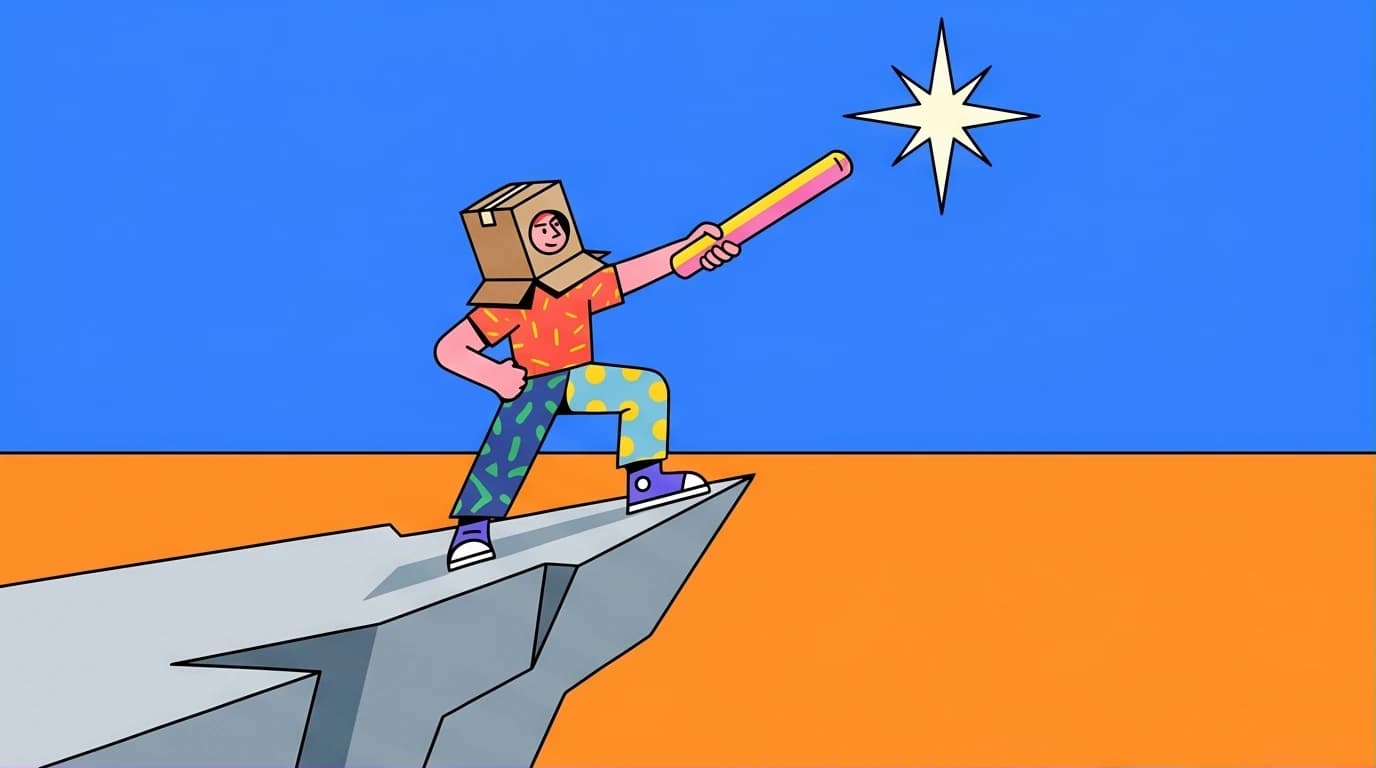
You sit in a boardroom, and a senior executive describes a competitor's new strategy as "rather quixotic." Or you read a book review calling the protagonist's journey a "quixotic quest." You grasp the context—it implies something grand but perhaps foolish—but using the word yourself feels risky.
Using high-level vocabulary isn't about sounding pretentious; it is about precision. When you understand the true quixotic meaning, you unlock a highly effective way to politely critique a flawed plan, analyze a doomed startup, or describe a beautifully impractical dream.
Here is the exact breakdown of the word, its cultural origins, and how to use it confidently in your daily communication.
Unpacking the Exact Quixotic Meaning
To truly grasp the term, you need to look past simple synonyms like "dreamy" or "unrealistic." The word "quixotic" carries a very specific weight. It stands on three distinct pillars:
- Extreme Idealism: The person or idea is driven by a high moral standard or a grand vision.
- Total Impracticality: The vision completely ignores facts, budgets, physics, or human nature.
- A Touch of Romance: There is something inherently charming or noble about the attempt, even if it is doomed to fail.

When you call an idea quixotic, you are not calling it stupid. You are calling it beautifully disconnected from reality.
Quixotic vs. Idealistic: What is the Difference?
Many people use these words interchangeably. That is a mistake.
- Idealistic implies having high standards and aiming for perfection. An idealistic CEO might want a zero-carbon supply chain within ten years. It is difficult, but potentially doable.
- Quixotic implies that the pursuit is functionally impossible. A quixotic CEO might try to convince all their employees to work for free out of pure passion for the product.
Quixotic Definition and Examples in Context
To move this word from your passive vocabulary to your active vocabulary, you need to see it in action. Here is a clear look at the quixotic definition and examples categorized by everyday situations.
In Business and Technology
- "Launching a print-only newspaper in 2024 is a quixotic business plan."
- "The startup founder had a quixotic vision of replacing the entire global banking system with a single app built by three college students."
In Politics and Leadership
- "The senator's quixotic campaign for the presidency ended before the first primary, having gained less than one percent of the vote."
- "He went on a quixotic crusade to ban all cars from the city center, completely ignoring the lack of public transportation."
In Everyday Life
- "My brother's quixotic attempt to fix the plumbing himself ended with a flooded basement and a $3,000 repair bill."
- "She holds a quixotic belief that her rescue dog will one day stop chasing the mail carrier."
Notice how in each sentence, the word softens the criticism. You are acknowledging the ambition while firmly pointing out the lack of logic.
Mastering nuanced words like "quixotic" does more than just expand your vocabulary—it gives you the tools to frame arguments effectively and influence how others perceive a situation. If you are fascinated by the psychological impact of specific word choices and want to learn how subtle language shifts can dramatically alter an outcome in negotiations or daily life, understanding the science of linguistic influence is a game-changer. For a deeper dive into this, consider picking up a guide that explores the hidden power of your everyday vocabulary.
Words That Change Minds
Shelle Rose Charvet
 20 Duration
 10 Key Points
 4.6 Rate
The Source: Don Quixote Cultural Impact
You cannot fully master this word without understanding where it comes from. The term is a direct eponym of Don Quixote, the title character of Miguel de Cervantes' 1605 novel, The Ingenious Gentleman Don Quixote of La Mancha.
The Don Quixote cultural impact cannot be overstated. Widely considered the first modern novel, the book tells the story of an aging Spanish nobleman who reads so many tales of chivalrous knights that he loses touch with reality. He renames himself Don Quixote, puts on a rusty suit of armor, and sets out to revive chivalry, undo wrongs, and bring justice to the world.
The tragicomedy is that the era of knights has been dead for centuries. He recruits a simple farmer, Sancho Panza, as his squire and rides an old, exhausted horse he treats as a noble steed. Quixote views local inns as grand castles, and ordinary peasants as royalty.
The cultural footprint of this character is why "quixotic" means what it does today. It perfectly encapsulates the tension between a noble, romantic mindset and the harsh, unforgiving nature of the real world.
The dynamic between the idealistic knight and his pragmatic squire is central to the novel's themes. To better understand this iconic literary duo, you may find it helpful to read more about their individual motivations and intertwined journeys.
While reading Cervantes' full masterpiece is a rewarding journey, it can be a quixotic goal for those with a packed schedule. If you want to absorb the core ideas and cultural impact of classics like Don Quixote without committing to a thousand-page read, an app can be a great starting point.
For those ready to take on the challenge, knowing where to begin can make all the difference.


LeapAhead

LeapAhead distills the key themes and plot points of literary classics and modern bestsellers into 15-minute audio or text summaries, making profound knowledge accessible on your commute.
The story of Don Quixote is a perfect example of how classic literature continually shapes our modern vocabulary. We use idioms and character archetypes every day, often without realizing the centuries-old stories that birthed them. If you want to uncover the hidden meanings, symbols, and cultural touchstones woven into the books we read and the words we use, exploring the mechanics of literature can be incredibly rewarding. It will completely transform the way you interpret stories, movies, and even corporate narratives.

How to Read Literature Like a Professor
Thomas C Foster
33 Duration11 Key Points4.3 RateExpanding Your Vocabulary: Related Idioms
Because the novel is so deeply embedded in Western literature, it spawned more than just one adjective. If you want to elevate your communication skills, you should understand the related phrases that stem from the exact same story.
Tilting at Windmills Meaning
This is arguably the most famous idiom derived from the book. In the novel's most iconic scene, Don Quixote spots a field of windmills. Because his mind is trapped in fantasy, he believes they are ferocious, multi-armed giants. Despite Sancho Panza's warnings, Quixote lowers his lance and charges at the windmills (a practice known as "tilting"). The windmill blade catches his lance, shatters it, and throws him off his horse.
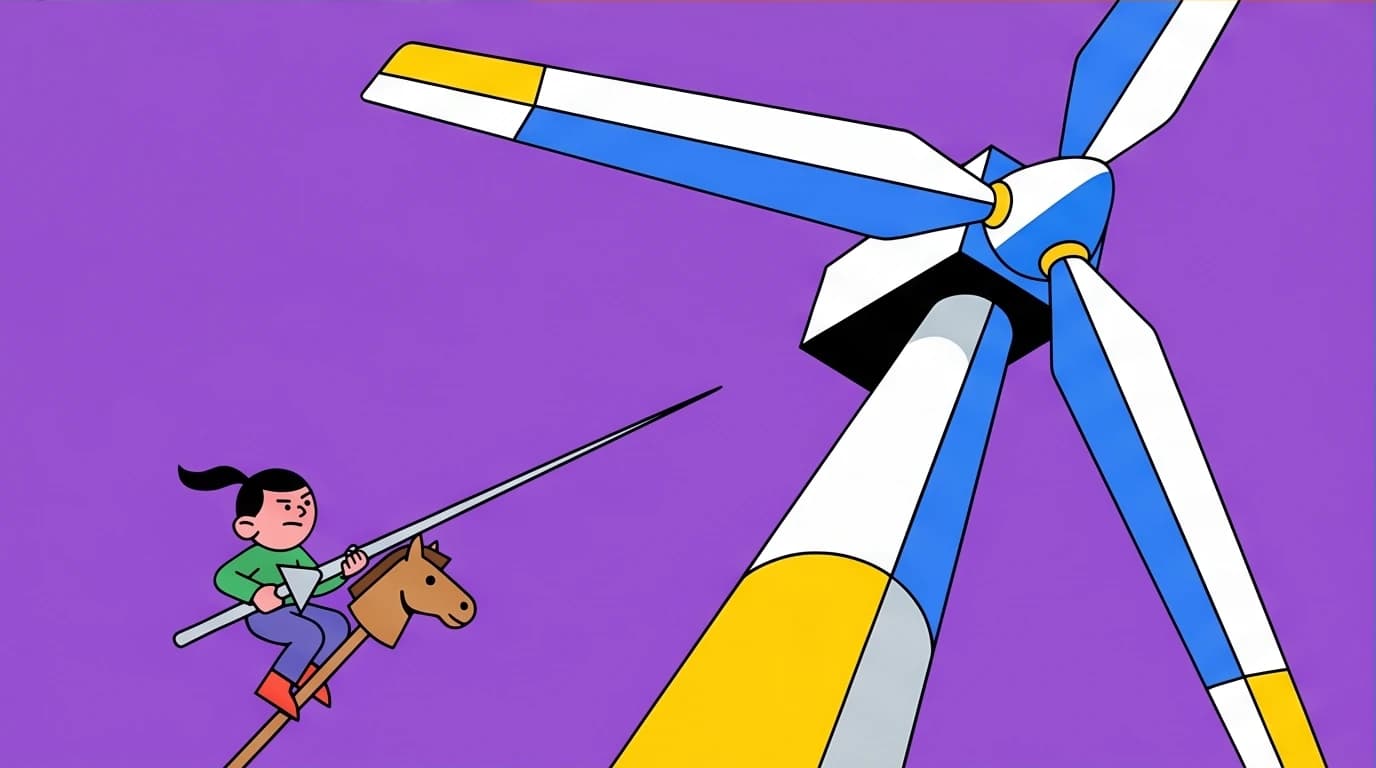
Today, the tilting at windmills meaning refers to wasting your energy fighting imaginary enemies or fighting battles that are entirely pointless and unwinnable.
How to use it:
- "Arguing with anonymous trolls on social media is just tilting at windmills."
- "The manager spent three months writing a 50-page dress code policy for remote workers; he was basically tilting at windmills."
Understanding the Quixote Syndrome
In modern psychology and business analysis, you will sometimes hear references to the "Quixote syndrome." This is a condition where a person's idealism becomes a fatal flaw.
In a corporate environment, the Quixote syndrome occurs when a leader falls so deeply in love with their own vision that they refuse to look at the data. They ignore market research, customer feedback, and dwindling cash reserves because they believe their noble quest will eventually succeed. Recognizing this syndrome is crucial for investors and board members trying to evaluate a CEO's grip on reality.

The tech and startup worlds are particularly vulnerable to the Quixote syndrome. We frequently see charismatic founders pitch impossibly grand visions, convincing investors to pour billions of dollars into fundamentally flawed business models. If you are intrigued by the dark side of extreme corporate idealism and want a real-world masterclass in what happens when a CEO's quixotic vision violently collides with financial reality, analyzing recent tech spectacular failures is eye-opening. It is a thrilling way to understand the fine line between a visionary and a dreamer.
Billion Dollar Loser
Reeves Wiedeman
47 Duration9 Key Points4.8 RatePractical Strategy: How to Use "Quixotic" Like a Pro
Understanding the definition is the first step. Executing it in your writing and speech requires finesse. Here are the core rules for weaving this term into sophisticated communication.
1. Use it to soften a blow.
Calling a colleague's idea "stupid" or "ridiculous" shuts down the conversation. Calling it "quixotic" is diplomatic. It tells them, "I see the grand vision you are aiming for, but we need to pull this back down to reality."
Calling a colleague's idea "stupid" or "ridiculous" shuts down the conversation. Calling it "quixotic" is diplomatic. It tells them, "I see the grand vision you are aiming for, but we need to pull this back down to reality."
2. Pair it with pragmatic contrast.
The word shines brightest when you contrast it with reality.
The word shines brightest when you contrast it with reality.
- Weak: "His plan is quixotic."
- Strong: "While I admire his quixotic vision for our rebranding, our current marketing budget forces us to take a more pragmatic approach."
3. Watch your pronunciation.
This is the number one trap for avid readers. When talking about the book or the character, it is pronounced with a Spanish flair: Don kee-HO-tay.
However, the adjective "quixotic" has been entirely anglicized. It is pronounced kwik-SOT-ik. If you say "kee-HO-tik" in a meeting, you will inadvertently reveal that you do not know how the word is actually spoken.
This is the number one trap for avid readers. When talking about the book or the character, it is pronounced with a Spanish flair: Don kee-HO-tay.
However, the adjective "quixotic" has been entirely anglicized. It is pronounced kwik-SOT-ik. If you say "kee-HO-tik" in a meeting, you will inadvertently reveal that you do not know how the word is actually spoken.
Knowing the exact right word is a fantastic start, but successfully delivering a polite critique in a high-stakes environment requires a broader set of communication skills. Whether you are dealing with a quixotic executive or trying to align a deeply divided team, knowing how to navigate sensitive dialogue without triggering defensiveness is an essential leadership trait. For those looking to master the art of diplomatic pushback and turn potentially disastrous meetings into productive brainstorming sessions, honing your conversational framework is a must.
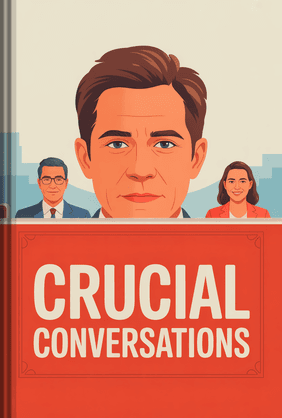
Crucial Conversations
Kerry Patterson, Joseph Grenny, Ron McMillan, Al Switzer
20 Duration9 Key Points4.7 RateThis article mentions several fascinating books, from literary theory to business psychology. If your to-be-read pile is starting to feel overwhelming, or you simply want to vet these books before buying, a book summary app can help you capture the main takeaways quickly.
LeapAhead
Use LeapAhead to get the essential insights from books like these in just a few minutes, helping you decide which ones deserve a deeper dive and clearing your 'reading debt' one summary at a time.
FAQ
Is being called quixotic an insult or a compliment?
It is a double-edged sword, but it usually leans toward a polite critique. It is a compliment to your heart and your ambition, but an insult to your logic and planning. If someone calls your business plan quixotic, they do not think you will succeed.
It is a double-edged sword, but it usually leans toward a polite critique. It is a compliment to your heart and your ambition, but an insult to your logic and planning. If someone calls your business plan quixotic, they do not think you will succeed.
What is the opposite of quixotic?
Words like pragmatic, realistic, practical, and grounded are direct antonyms. If you want to use a literary opposite, you might look at "Machiavellian"—which implies being entirely practical and cunning, devoid of romantic idealism.
Words like pragmatic, realistic, practical, and grounded are direct antonyms. If you want to use a literary opposite, you might look at "Machiavellian"—which implies being entirely practical and cunning, devoid of romantic idealism.
Can "quixotic" be used to describe things, or just people?
It can be used for both. You can describe a person as quixotic ("He is a quixotic leader"), but it is equally common to describe an action, a goal, or an idea ("a quixotic quest," "a quixotic campaign," "a quixotic piece of legislation").
It can be used for both. You can describe a person as quixotic ("He is a quixotic leader"), but it is equally common to describe an action, a goal, or an idea ("a quixotic quest," "a quixotic campaign," "a quixotic piece of legislation").
Do I need to capitalize quixotic?
No. Even though it is derived from the proper noun Don Quixote, the adjective "quixotic" has become a common word in the English language and is written with a lowercase "q" unless it starts a sentence.
No. Even though it is derived from the proper noun Don Quixote, the adjective "quixotic" has become a common word in the English language and is written with a lowercase "q" unless it starts a sentence.