

That massive spine has been glaring at you from your bookshelf for months. You bought a copy from Barnes & Noble with the best intentions. You want to read it. You know it is considered the first modern novel and a towering achievement of Western literature. But every time you crack it open, the sheer weight of 1,000 pages of 17th-century Spanish literature feels entirely overwhelming.
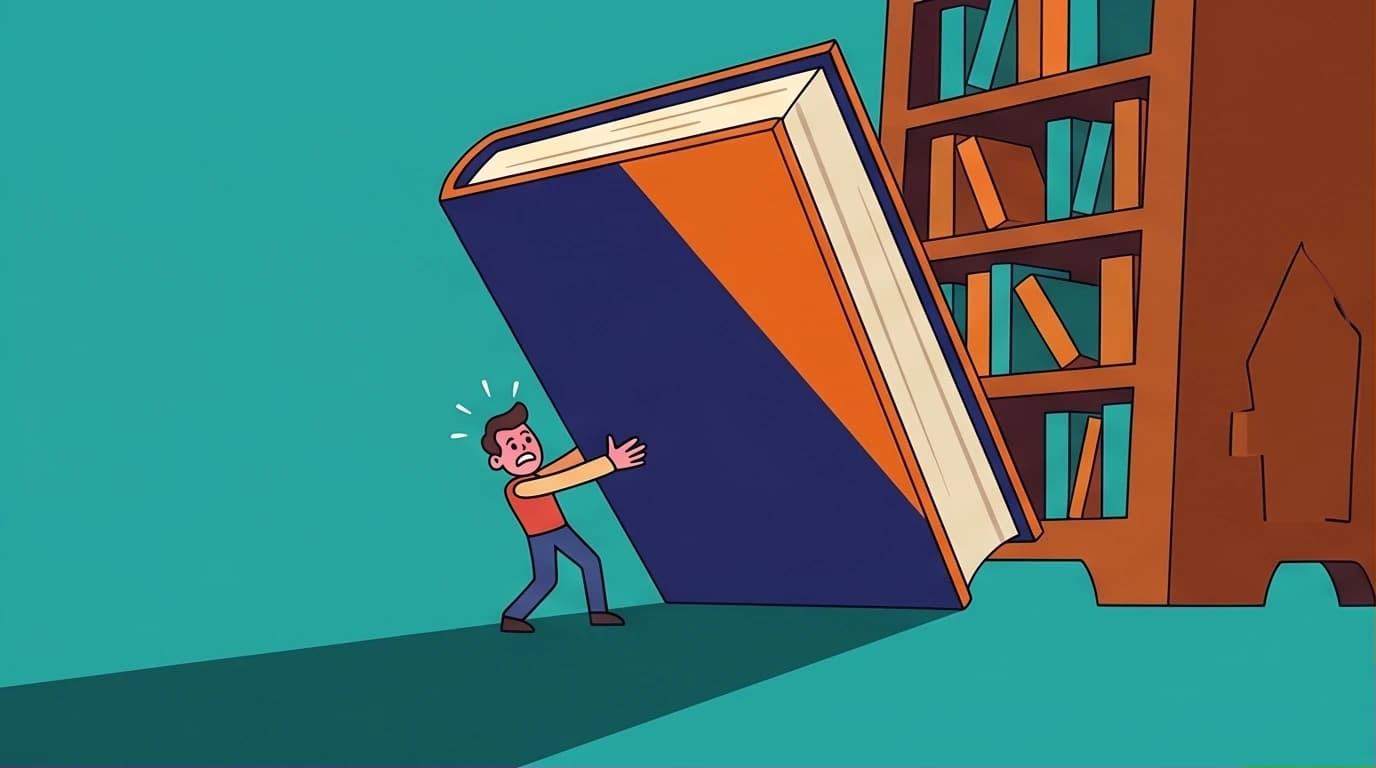
You read a few pages, get bogged down by archaic phrasing, put it down, and promise yourself you will tackle it next summer.
If the sheer size of classics like this is what’s holding you back, it can be helpful to first get the key takeaways to see if the book is worth the commitment. For those books you want to read but find too difficult to start, there are ways to absorb the core ideas in minutes.
For a spoiler-free overview of the plot and key events, a good summary can provide the context you need to dive in confidently.

Grasp the core ideas of challenging classics in just 15 minutes, lowering the barrier to understanding dense literature before you commit to the full text.

Download LeapAhead App now
Stop treating this book like a sacred, untouchable artifact. Miguel de Cervantes did not write a textbook. He wrote a wildly entertaining, deeply human, laugh-out-loud funny adventure. You just need the right approach, the right translation, and a structured plan to get through it without burning out.
Is Don Quixote Hard to Read?
Let's clear up the biggest misconception right away. Many readers search for whether is don quixote hard to read, expecting a dense, philosophical slog filled with impenetrable prose.
It is not hard to read. It is just long.
The story is essentially the world's first buddy road-trip comedy. You have a delusional older man who thinks he is a knight from a fantasy novel, paired with a short, pragmatic, food-obsessed farmer riding a donkey. They wander around the Spanish countryside getting into fistfights with windmills, sheep, and innkeepers.
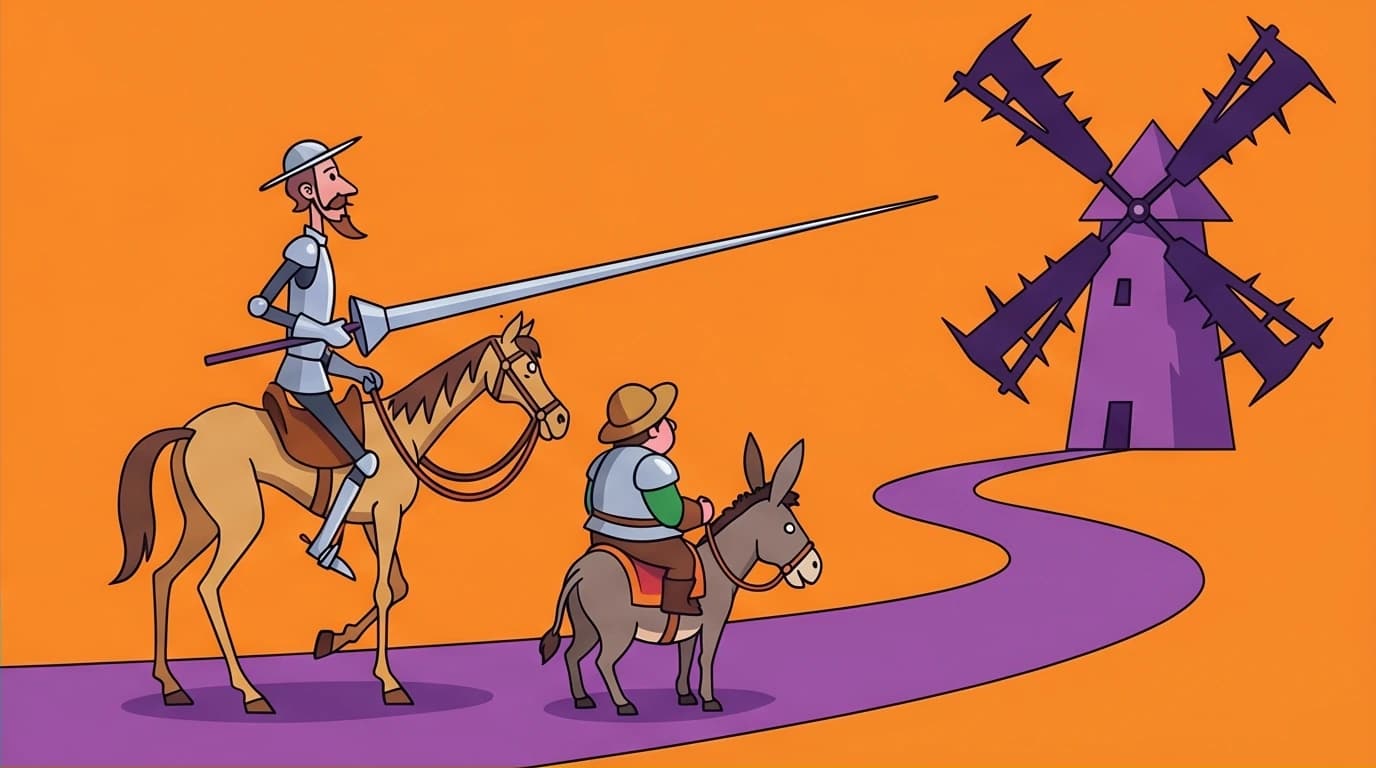
The difficulty modern readers face rarely comes from the plot. It comes from two completely avoidable mistakes: picking up an outdated translation that reads like a legal document, and trying to binge-read 50 pages a day.
If you adjust your expectations and realize this book was the 1600s equivalent of a weekly television show, the friction disappears.
If you find yourself struggling to build the momentum needed for a 1,000-page classic, the issue might not be the book—it might be your reading routine. Tackling massive literary projects requires a solid system rather than just sheer willpower. If you want to transform your daily reading from an intimidating chore into an effortless, automatic part of your day, developing small, manageable habits is the key to success. This incredibly practical guide offers a step-by-step framework for making those tiny behavioral shifts stick.

Atomic Habits
James Clear
 26 Duration
 8 Key Points
 4.7 Rate
Choosing the Best Don Quixote Translation
If you want to know how to read Don Quixote successfully, your first and most critical decision is which version to buy. Do not download a free public domain version from 1885. Those Victorian translations strip away Cervantes' humor and replace it with stiff, formal language that will put you to sleep in ten pages.
The best don quixote translation for a modern American reader balances the comedic timing with accessible, vivid language. Here are your top choices:
Edith Grossman (2003) – The Gold Standard
If you only take one piece of advice from this guide, let it be this: get the Edith Grossman translation. Grossman masterfully captured the energy, humor, and heartbreak of the original Spanish. Her prose flows naturally. It feels like reading a contemporary novel. She perfectly nails the contrast between Don Quixote’s overly dramatic, theatrical speech and Sancho Panza’s blunt, rural common sense. You can easily find this version on Amazon, and it is widely considered the definitive English version for the 21st century.
John Rutherford (2000) – The Comedic Choice
Available through Penguin Classics, Rutherford's translation leans heavily into the humor and absurdity of the text. He is brilliant at translating the puns, insults, and slapstick comedy. If you want to highlight the laugh-out-loud elements of the road trip, this is a fantastic option.
Tobias Smollett (1755) – The Historic Alternative
If you genuinely enjoy slightly older English prose and want a translation that was actually written by a fellow classic novelist, Smollett’s version is highly regarded. It has a rough, energetic, 18th-century flavor. However, avoid this if you are already intimidated by the book's length.
Pro Tip: If you commute several miles to work or spend hours at the gym, grab the Audible audiobook of the Grossman translation, narrated by George Guidall. Guidall’s performance is nothing short of legendary. Switching between reading the physical book at home and listening to the audiobook on the go is an incredibly effective way to conquer the page count.
A Practical Don Quixote Reading Guide
Having the right book in your hands is only half the battle. You need a pacing strategy. Approaching a 1,000-page book requires a marathon runner's mindset, not a sprinter's.
Here is a highly actionable don quixote reading guide to get you from the prologue to the final page without losing steam.
1. Treat It Like a Sitcom, Not a Movie
Don Quixote is highly episodic. Cervantes wrote it in a way that allows you to drop in, witness a crazy misadventure, and step out. Do not try to read 100 pages in one sitting. Read one or two chapters a day. The chapters are relatively short, often ending with a satisfying punchline or a cliffhanger. By reading two chapters a day, you will finish the entire massive volume in about two months.
2. Survive the "Interpolated Tales"
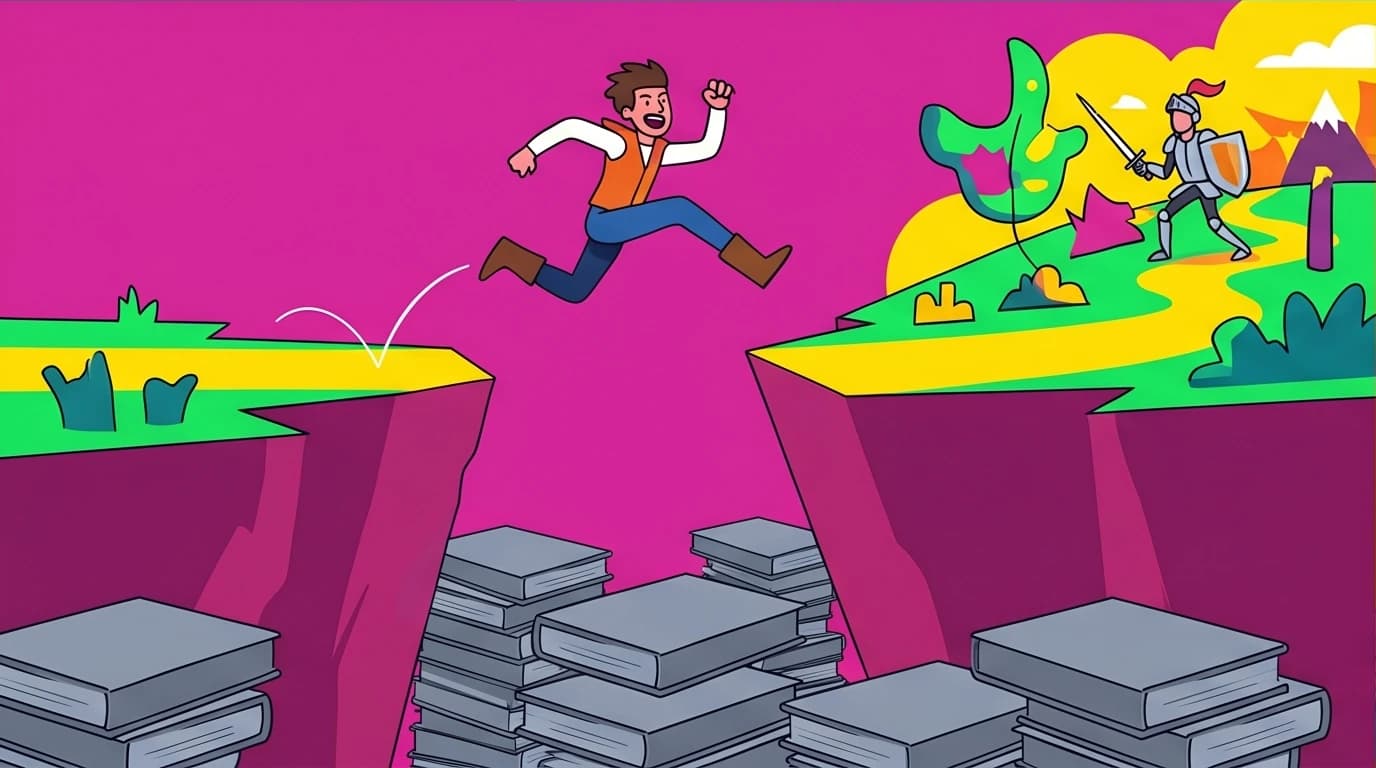
In Part 1, Cervantes occasionally hits pause on Don Quixote and Sancho's adventures to have side characters tell long, drawn-out romantic stories. The most famous is the "Tale of Inappropriate Curiosity." These tangents can last for chapters.
Many readers abandon the book here.
Here is a secret: you can skim them. Even Cervantes later realized these side quests annoyed his readers. If a shepherd starts telling a 30-page story about his lost love, read it fast, or skip to the end of the chapter where Quixote inevitably wakes up and breaks something.
Many readers abandon the book here.
Here is a secret: you can skim them. Even Cervantes later realized these side quests annoyed his readers. If a shepherd starts telling a 30-page story about his lost love, read it fast, or skip to the end of the chapter where Quixote inevitably wakes up and breaks something.
3. Track the Character Evolution
Watch how the relationship between the knight and his squire changes. At first, Sancho is just a simpleton following a madman for money. But as you read, pay attention to how Sancho starts using big words and how Quixote starts showing moments of shocking clarity. This dynamic is the beating heart of the book.
To fully appreciate this central dynamic, it's worth exploring a detailed analysis of Don Quixote and Sancho Panza's relationship.
4. Don't Worry About 17th-Century Spanish Politics
You do not need a degree in European history to understand the jokes. Cervantes is making fun of popular knight-errant romance novels of his time. Think of it like a modern spoof movie making fun of superhero tropes. As long as you understand that knights are supposed to be brave and save princesses, you have all the context you need to find it funny when Quixote mistakes a filthy tavern for a castle.
Once you've mastered the pacing for Don Quixote, you might find yourself catching the bug for other intimidating, heavyweight classics. Approaching foundational texts doesn't have to feel like going back to high school English class. If you're looking for a timeless, structured method to extract the most meaning and enjoyment out of any challenging piece of literature, this legendary resource is an absolute must-read. It breaks down the exact skills you need to analyze, comprehend, and truly savor the world's greatest books.
How to Read a Book
Mortimer J. Adler, Charles Van Doren
18 Duration8 Key Points4.7 RateThe Big Shift: Don Quixote Part 1 vs Part 2
To fully grasp the genius of this book, you must understand the massive structural difference between the two halves. Searching for don quixote part 1 vs part 2 reveals one of the most fascinating literary stories in history.
Part 1 (Published in 1605): The Physical Comedy
The first half of the book is what everyone pictures when they think of Don Quixote. It is action-packed, fast-paced, and filled with slapstick comedy. Quixote charges at windmills, gets beaten up by merchants, and vomits on Sancho. It is highly episodic. Cervantes was figuring out the characters as he went along. It became a massive, runaway bestseller across Europe.
The 10-Year Gap and the Fake Sequel
Cervantes took a decade off. During that time, another author (using a fake name) published a terrible, unauthorized sequel to Don Quixote. Cervantes was furious. He immediately sat down to write the real Part 2.
Part 2 (Published in 1615): The Meta-Fiction Masterpiece
Because Part 1 was a real-world bestseller, Cervantes did something entirely unprecedented for his time. In Part 2, the characters inside the book know they are famous.
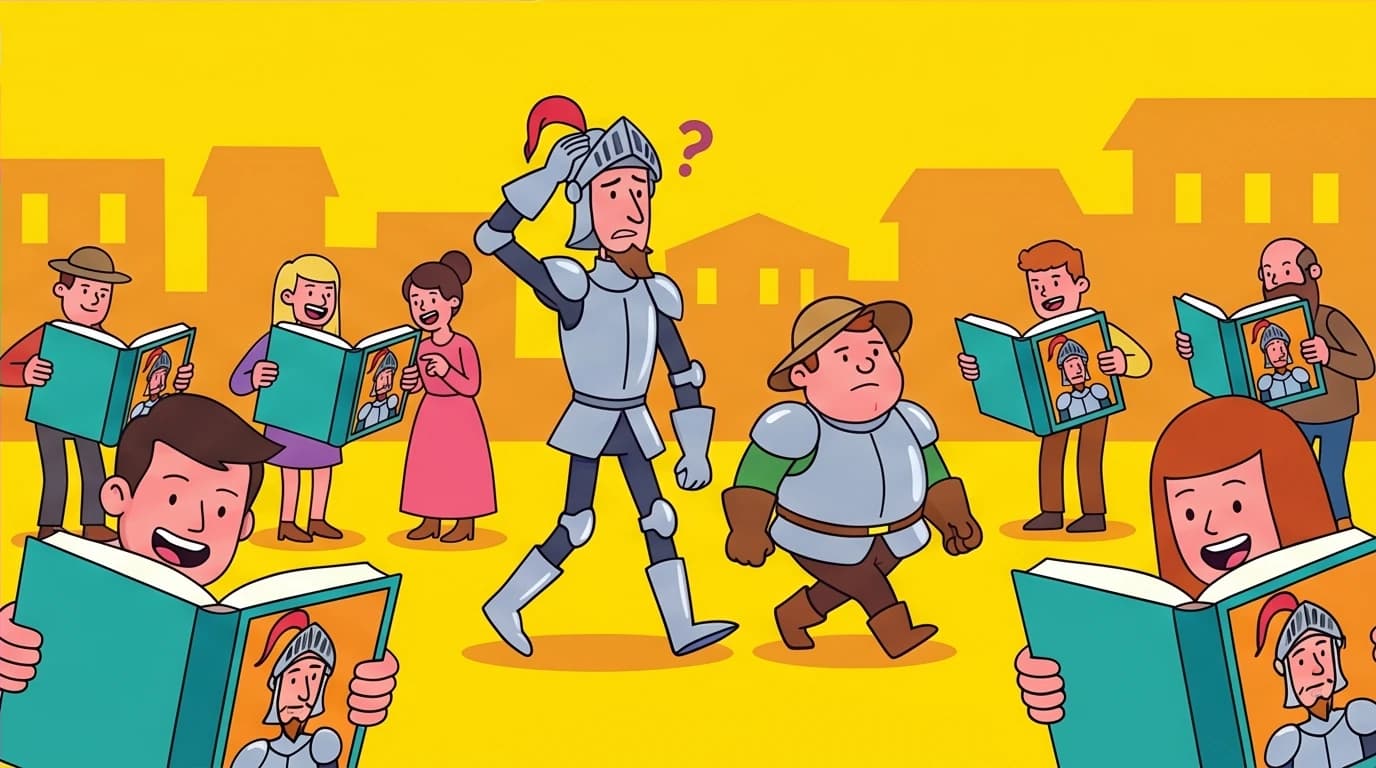
When Quixote and Sancho meet new people in Part 2, those people have already read Part 1. They know Quixote is crazy, and they actively set up elaborate pranks to mess with him. The comedy shifts from physical slapstick to deep psychological humor and melancholy.
Part 2 is where the book elevates from a funny story to the greatest novel ever written. You will see Quixote slowly realizing his own madness, while Sancho ironically becomes more attached to the fantasy. Knowing this shift is coming will give you massive motivation to push through the final chapters of Part 1.
This is where the novel's humor gives way to profound insights on idealism, friendship, and the human condition, revealing the deep life lessons hidden within the comedy.
Part 2 is where Don Quixote reveals its true colors as a groundbreaking piece of meta-fiction, laying the foundation for modern storytelling. When you learn how to spot these brilliant structural shifts and underlying themes, your entire reading experience transforms. If you want to decode the hidden mechanics, recurring motifs, and literary inside jokes that authors use to elevate their work, you'll love this highly accessible, entertaining deep dive into the architecture of literature. It will completely change the way you look at classic fiction.
How to Read Literature Like a Professor
Thomas C Foster
33 Duration11 Key Points4.3 RateFinal Advice: Organize Your Environment
Do not hide the book on a shelf. Leave it on your coffee table or your nightstand. Make it the default thing you pick up when you have 15 minutes of downtime, rather than scrolling on your phone.
Reading Don Quixote is a commitment, but it is one that pays off with deep belly laughs and profound moments of human empathy. Grab Edith Grossman's translation, commit to a chapter a day, and enjoy the ride.
It’s no secret that trading your smartphone for a 17th-century Spanish novel is a massive shift for your brain. In our modern, notification-heavy world, sitting down to focus on a challenging text for more than a few minutes can feel nearly impossible. If you’ve been struggling to quiet your mind and immerse yourself in long-form reading, the problem isn't your attention span—it's the environment designed to distract you. Understanding how to reclaim your mental bandwidth is the perfect first step to finally finishing those ambitious books on your nightstand.
Stolen Focus
Johann Hari
20 Duration8 Key Points4.7 RateBut let's be realistic: even with the best strategy, finding the time and mental energy for a 1,000-page book after a long day can be tough. If fitting a daily chapter into your modern, busy schedule still feels like a challenge, you can build a consistent learning habit in the small pockets of your day.
For days when a 1,000-page classic feels impossible, fit learning into your schedule by listening to key insights from nonfiction bestsellers during your commute.
Download LeapAhead App now
FAQ
How long does it take to read Don Quixote?
It entirely depends on your pace. The book is roughly 1,000 pages containing 126 chapters. If you read two chapters a day (about 15-20 pages), you will finish the entire book comfortably in about two months. Rushing through it often leads to burnout.
It entirely depends on your pace. The book is roughly 1,000 pages containing 126 chapters. If you read two chapters a day (about 15-20 pages), you will finish the entire book comfortably in about two months. Rushing through it often leads to burnout.
Should I read an abridged version of Don Quixote?
It is highly recommended to read the unabridged version, specifically a modern translation. Abridged versions often cut the subtle character development between Quixote and Sancho. If you find the pacing slow, simply skim the standalone short stories embedded in Part 1 rather than buying a chopped-up version of the text.
It is highly recommended to read the unabridged version, specifically a modern translation. Abridged versions often cut the subtle character development between Quixote and Sancho. If you find the pacing slow, simply skim the standalone short stories embedded in Part 1 rather than buying a chopped-up version of the text.
Do I need to read the prologue and introductory poems?
You should absolutely read Cervantes' prologue—it is funny, self-deprecating, and sets the exact right tone for the book. However, you can safely skip the introductory poems at the very beginning. They are inside jokes written to mock the formal literary traditions of 16th-century Spain and do not impact the story at all.
You should absolutely read Cervantes' prologue—it is funny, self-deprecating, and sets the exact right tone for the book. However, you can safely skip the introductory poems at the very beginning. They are inside jokes written to mock the formal literary traditions of 16th-century Spain and do not impact the story at all.
Is it okay if I don't find it deep or philosophical?
Yes! Cervantes wrote this to make people laugh. For centuries, academics have layered heavy philosophical meaning onto the book, but at its core, it is a satire. If you are just enjoying the ridiculous situations and the banter between the two main characters, you are reading it exactly right.
Yes! Cervantes wrote this to make people laugh. For centuries, academics have layered heavy philosophical meaning onto the book, but at its core, it is a satire. If you are just enjoying the ridiculous situations and the banter between the two main characters, you are reading it exactly right.