

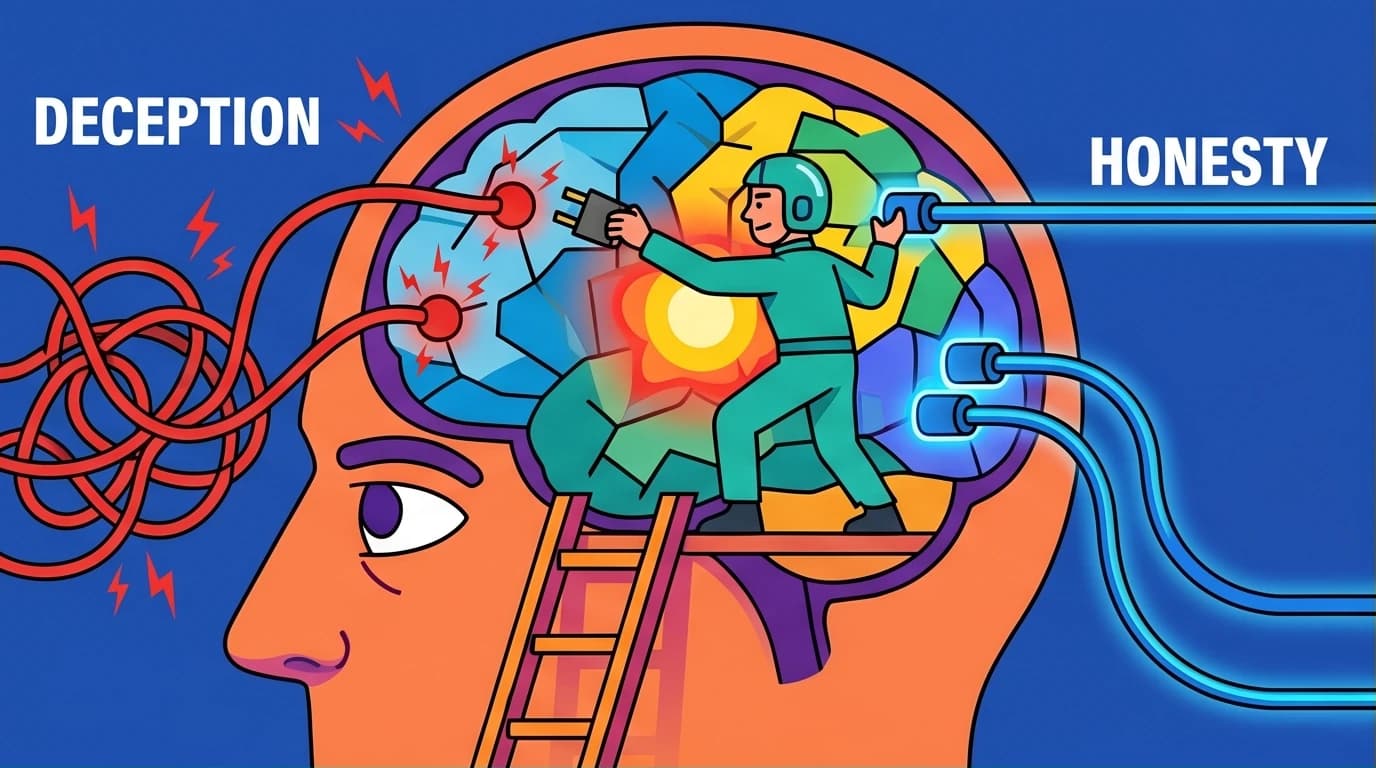
You know the heavy exhaustion of keeping up appearances. Whether you are dealing with a severe substance dependency, compulsive doom-scrolling, or out-of-control late-night shopping on Amazon, the actual behavior is only half the burden. The other half is the hiding.
The secret-keeping. The tiny omissions that snowball into an alternate reality.
You edit your stories. You downplay your screen time. You hide the receipts. Every time you conceal your behavior, you are not just protecting your pride. You are actively feeding your addiction. Understanding the science of Dopamine Nation radical honesty is the key to breaking this exact cycle. It bridges the gap between wanting to change and actually having the neurological capacity to do so.
The Neuroscience of Deception
To understand why truth-telling is a medical intervention, we first have to look at the mechanics of a lie.
Many people ask why lying releases dopamine. The answer lies in our evolutionary wiring. When you tell a lie to cover up a compulsive behavior—and you get away with it—your brain registers a successful survival tactic. You avoided conflict. You protected your stash. You maintained your social standing.
Your brain rewards this evasion with a quick dopamine hit. It feels like a miniature victory.
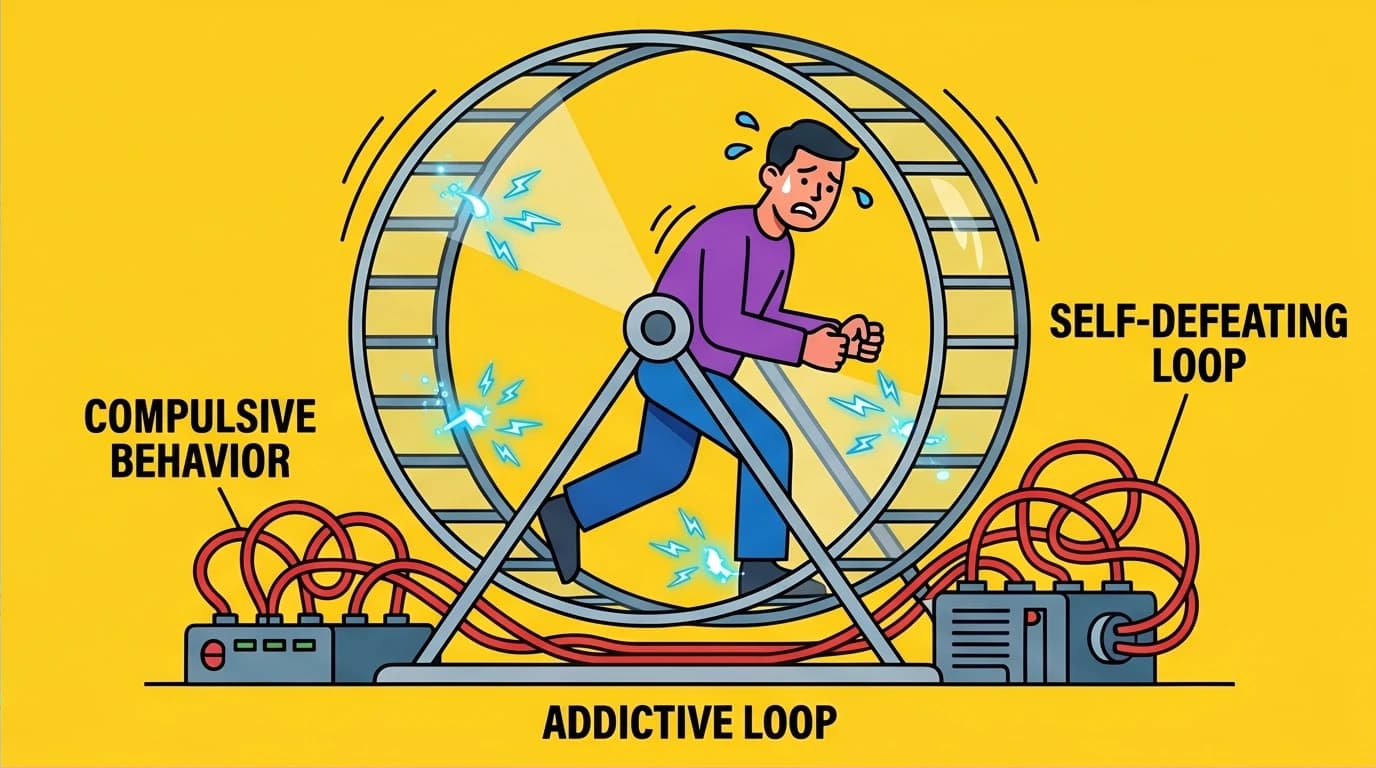
But this creates a dangerous secondary addiction. You become addicted to the cover-up just as much as the primary behavior. The lie temporarily relieves the anxiety of getting caught. However, it also deepens the shame, driving you back to your compulsive behavior for comfort. You are trapped in a loop where the disease and the defense mechanism fuel each other.
Your brain’s pleasure-pain balance, a central theme in Dr. Lembke's work, tips aggressively toward pain. You need more of the substance or behavior, and more complex lies, just to feel normal.
Related reading: Understanding this concept is fundamental to breaking the cycle of compulsion. For a detailed explanation of this neurological seesaw, dive deeper into the science of the pleasure-pain balance and dopamine.
If you find the neuroscience behind addiction and deception fascinating, you might want to explore just how adaptable your mind truly is. The realization that our brains are not permanently hardwired, but constantly remodeling themselves based on our behavior, is incredibly empowering. For a deeper dive into how neuroplasticity allows us to break deeply entrenched habits and form healthier neurological pathways, this groundbreaking read is highly recommended. It offers incredible stories of people who have successfully rewired their minds against all odds.
The Brain that Changes Itself
Norman Doidge, M.D.
 37 Duration
 6 Key Points
 4.6 Rate
Anna Lembke Truth Telling: The Antidote to Compulsion
This brings us to the core of Anna Lembke truth telling. In her clinical practice and research, Dr. Lembke identified that telling the truth is not just a moral imperative. It is a biological reset button.
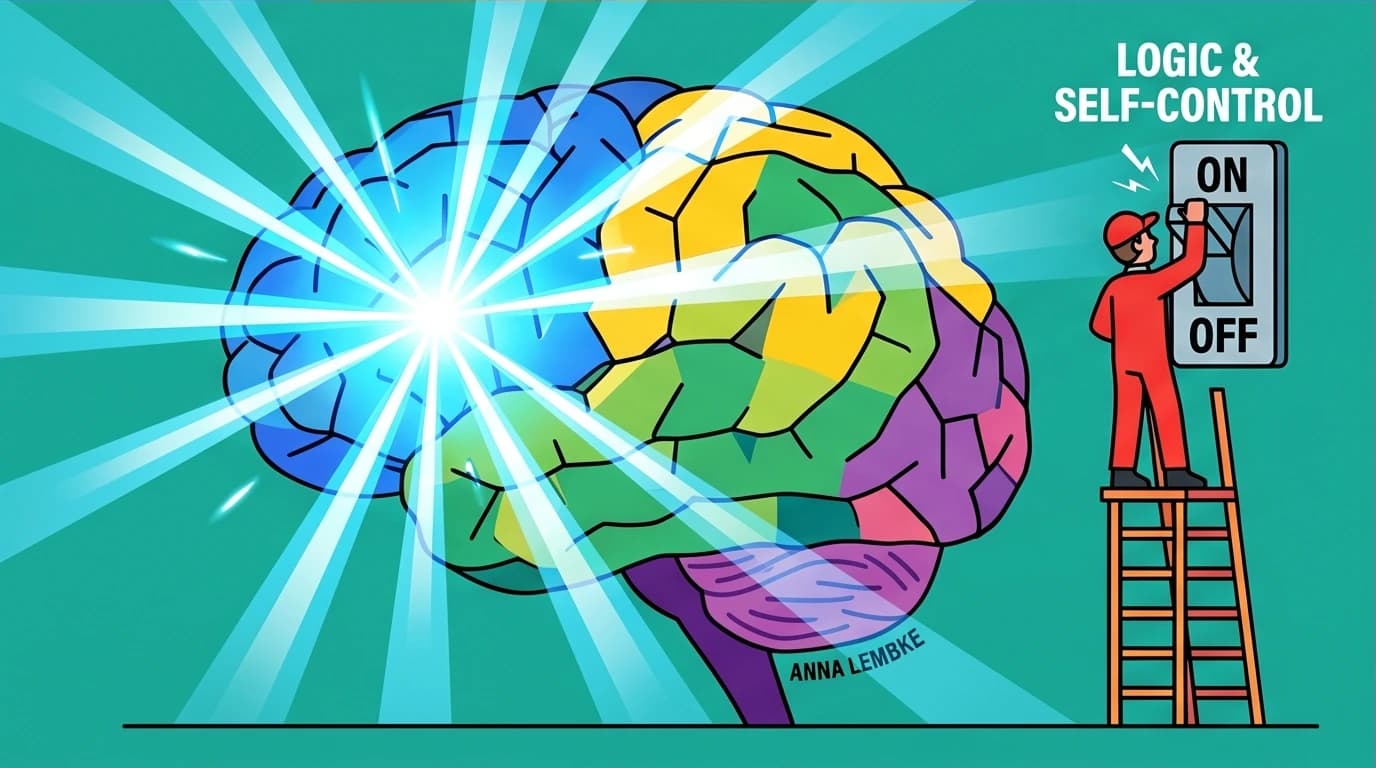
When you practice radical honesty, you engage the prefrontal cortex. This is the part of your brain responsible for complex planning, personality expression, and regulating social behavior. It is the logical adult in the room. Compulsive behaviors bypass this area entirely, hijacking the ancient, instinct-driven limbic system.
Some of the most powerful Dopamine Nation quotes revolve around this awakening. Truth-telling forces the prefrontal cortex back online. When you verbalize your reality exactly as it is, without minimizing or defending it, you build neural pathways that strengthen your self-control.
You stop the secondary dopamine rush of "getting away with it." You force your brain to tolerate the immediate discomfort of reality. Over time, this tolerance recalibrates your reward system. The heavy weight on the pain side of the balance begins to lift.
Dr. Lembke's insights have been shared widely, including in popular discussions with other neuroscience experts. To hear her explain these concepts in a conversational format, you might enjoy learning about the key takeaways from the Anna Lembke Huberman podcast episode.
Since the core concepts of this behavioral reset come directly from Dr. Anna Lembke’s clinical research, reading her full work is an absolute must for anyone trying to understand their own compulsive habits. Her insights into the delicate balance between pleasure and pain explain exactly why we seek out artificial highs—and how we can find our way back to a stable baseline. If you want to master the art of radical honesty and fully understand the modern trap of overconsumption, grab a copy of her foundational book.
Dopamine Nation
Anna Lembke, M.D.
20 Duration8 Key Points4.6 RateIf you’re keen to absorb the core lessons from Dr. Lembke's work but struggle to find the time for a full book, you can start with the main ideas.


Grasp the core principles from books like Dopamine Nation in 15-minute audio summaries, perfect for understanding key concepts without the time commitment.
 LeapAhead
Applying Radical Honesty in Dopamine Nation Recovery
Understanding the science is one thing. Doing it when you feel terrified and vulnerable is another. Successful dopamine nation recovery requires breaking radical honesty down into actionable, manageable steps.
Start with Extreme Self-Honesty
Before you speak to anyone else, you have to stop lying to the mirror. This means dropping the rationalizations.
Do not say: "I just need to unwind by playing a few games."
Say: "I am using video games to completely numb out so I do not have to think about my career anxiety."
Do not say: "I just need to unwind by playing a few games."
Say: "I am using video games to completely numb out so I do not have to think about my career anxiety."
Acknowledge the exact nature of the craving. Label the behavior with absolute precision. This strips the behavior of its romanticized color and forces you to see the raw data of your life.
The Practice of Micro-Truths
Radical honesty does not mean you immediately broadcast your deepest traumas to the world. It starts with micro-truths.
If someone asks why you were late, do not invent traffic. Say, "I lost track of time."
If your therapist asks how your week was, do not say "Fine" if it was terrible. Say, "I struggled a lot this week."
If someone asks why you were late, do not invent traffic. Say, "I lost track of time."
If your therapist asks how your week was, do not say "Fine" if it was terrible. Say, "I struggled a lot this week."
These micro-truths build your tolerance for vulnerability. They prove to your nervous system that you can endure the friction of reality without the world ending.
Implementing radical honesty can feel overwhelming if you try to overhaul your entire life overnight. That is exactly why starting with "micro-truths" is so effective—it treats truth-telling as a small, daily habit rather than a massive character shift. If you want a proven framework for building these tiny, sustainable behaviors without relying on willpower alone, mastering the psychology of habit formation is essential. This phenomenal guide will show you exactly how minute changes compound into life-altering results over time.

Atomic Habits
James Clear
26 Duration8 Key Points4.7 RateOwn the Narrative
Shame thrives in the dark. It convinces you that if people knew the truth, you would be rejected. Find one safe space. It could be a trusted friend, a sponsor, an AA group, or a professional counselor. Tell them the unedited truth about your consumption.
When you speak the truth aloud, you often realize the monster in your head is much smaller in the daylight. The act of sharing intimately connects you to others, triggering the release of oxytocin, which naturally counters the cravings driven by dopamine deficits.
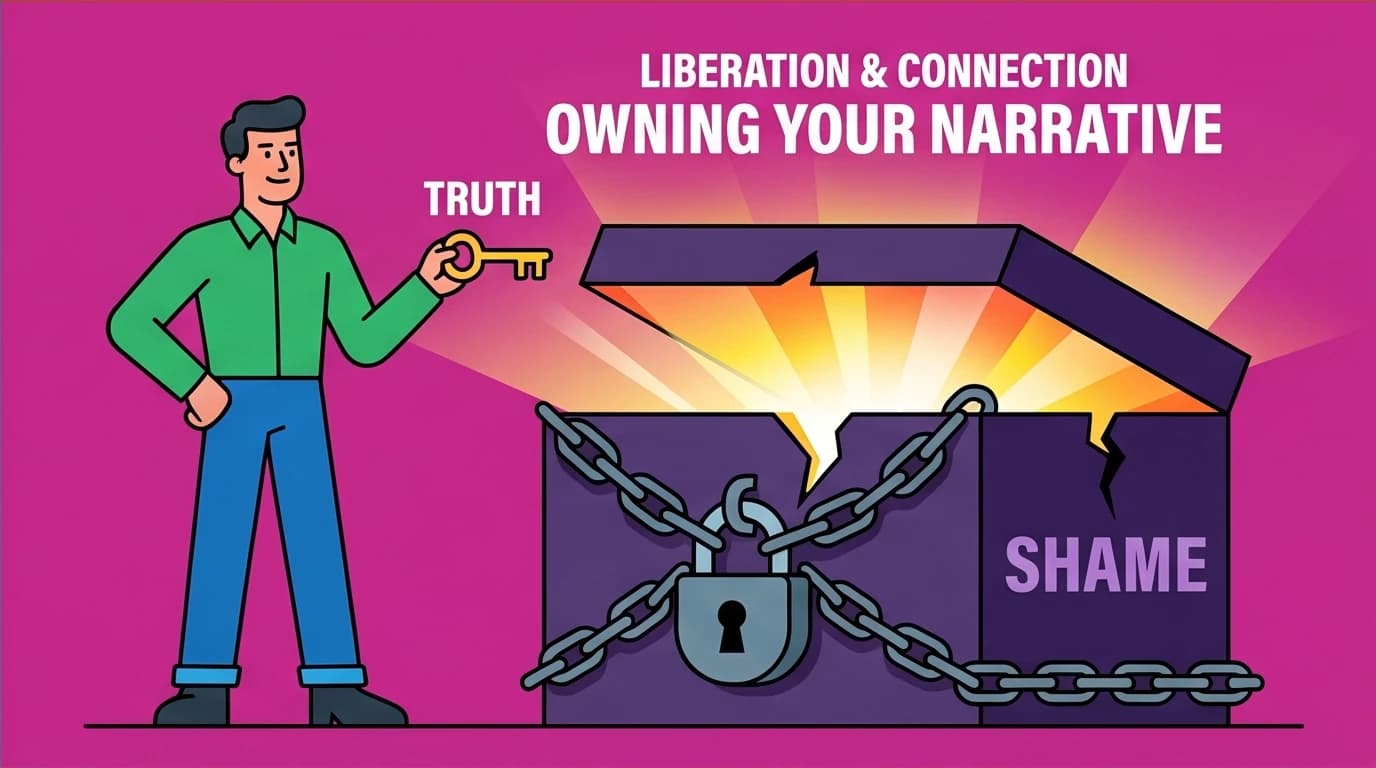
The fear of exposure is often what keeps us locked in cycles of deception, whispering that if people really knew our struggles, they would walk away. Overcoming this requires the courage to step into the light and embrace vulnerability as a profound strength rather than a weakness. If you are wrestling with the heavy burden of shame and want to understand how opening up can genuinely transform your relationships and aid your recovery, this transformative book is a fantastic resource.
Daring Greatly
Brené Brown, Ph.D.
21 Duration8 Key Points4.6 RateThe Pain of the Reset
You need to know what happens when you start doing this.
It is going to hurt.
When you strip away the lies, you also strip away your emotional shock absorbers. You will feel the full weight of your anxiety, your sadness, and your boredom. Your brain will scream for a quick fix. You will feel an intense urge to retreat, to tell a small lie just to ease the pressure.
This discomfort is not a sign that radical honesty is failing. It is the exact sensation of your brain healing. It is the feeling of the pleasure-pain scale leveling out. Accept this withdrawal period. Treat yourself with deep self-compassion, knowing that the intense vulnerability is a temporary bridge to long-term freedom.
This difficult but necessary reset is the foundation of regaining control. For a structured approach to this process, many people find it helpful to learn how to do a dopamine detox.
As you navigate this healing process, replacing old patterns with positive habits is key. If you're often too exhausted for deep reading, you can still build a powerful self-improvement routine.
Turn your downtime into growth time by absorbing key ideas from bestselling books on habits and psychology, helping you stay on track with your recovery.
LeapAheadFAQ
Does truth-telling actually change brain chemistry?
Yes. Consistently telling the truth strengthens the prefrontal cortex, the area of the brain responsible for delayed gratification and logic. It limits the erratic dopamine spikes caused by deception and helps your brain's reward pathways return to a healthy baseline.
Yes. Consistently telling the truth strengthens the prefrontal cortex, the area of the brain responsible for delayed gratification and logic. It limits the erratic dopamine spikes caused by deception and helps your brain's reward pathways return to a healthy baseline.
Is radical honesty safe to practice with everyone?
No. Radical honesty should be practiced with extreme self-awareness and in safe environments. You do not need to share your deepest struggles with a hostile coworker or an abusive family member. Start with yourself, your therapist, and highly trusted individuals who support your recovery.
No. Radical honesty should be practiced with extreme self-awareness and in safe environments. You do not need to share your deepest struggles with a hostile coworker or an abusive family member. Start with yourself, your therapist, and highly trusted individuals who support your recovery.
Why does being honest feel so exhausting at first?
Lying has become a deeply ingrained, automatic habit that your brain uses to conserve emotional energy and avoid immediate conflict. Forcing yourself to be honest interrupts this automatic loop. It requires conscious, deliberate effort from your brain, which is mentally and physically draining in the early stages.
Lying has become a deeply ingrained, automatic habit that your brain uses to conserve emotional energy and avoid immediate conflict. Forcing yourself to be honest interrupts this automatic loop. It requires conscious, deliberate effort from your brain, which is mentally and physically draining in the early stages.
What if I slip up and tell a lie during my recovery?
Relapse is often part of the recovery process, and this applies to lying as well. If you catch yourself in a lie, practice radical honesty immediately afterward. Go back to the person and say, "What I just said wasn't true, and I am trying to be more honest. Here is the actual truth." This repairs the slip and reinforces your new neural pathways.
Relapse is often part of the recovery process, and this applies to lying as well. If you catch yourself in a lie, practice radical honesty immediately afterward. Go back to the person and say, "What I just said wasn't true, and I am trying to be more honest. Here is the actual truth." This repairs the slip and reinforces your new neural pathways.