

You pick up your phone to check a single email, and an hour later you are still scrolling through social media. Despite having more access to entertainment, comfort, and convenience than any generation in history, we feel increasingly anxious, exhausted, and burned out. You are caught in a neurochemical trap, and relying on sheer willpower is not enough to break free.
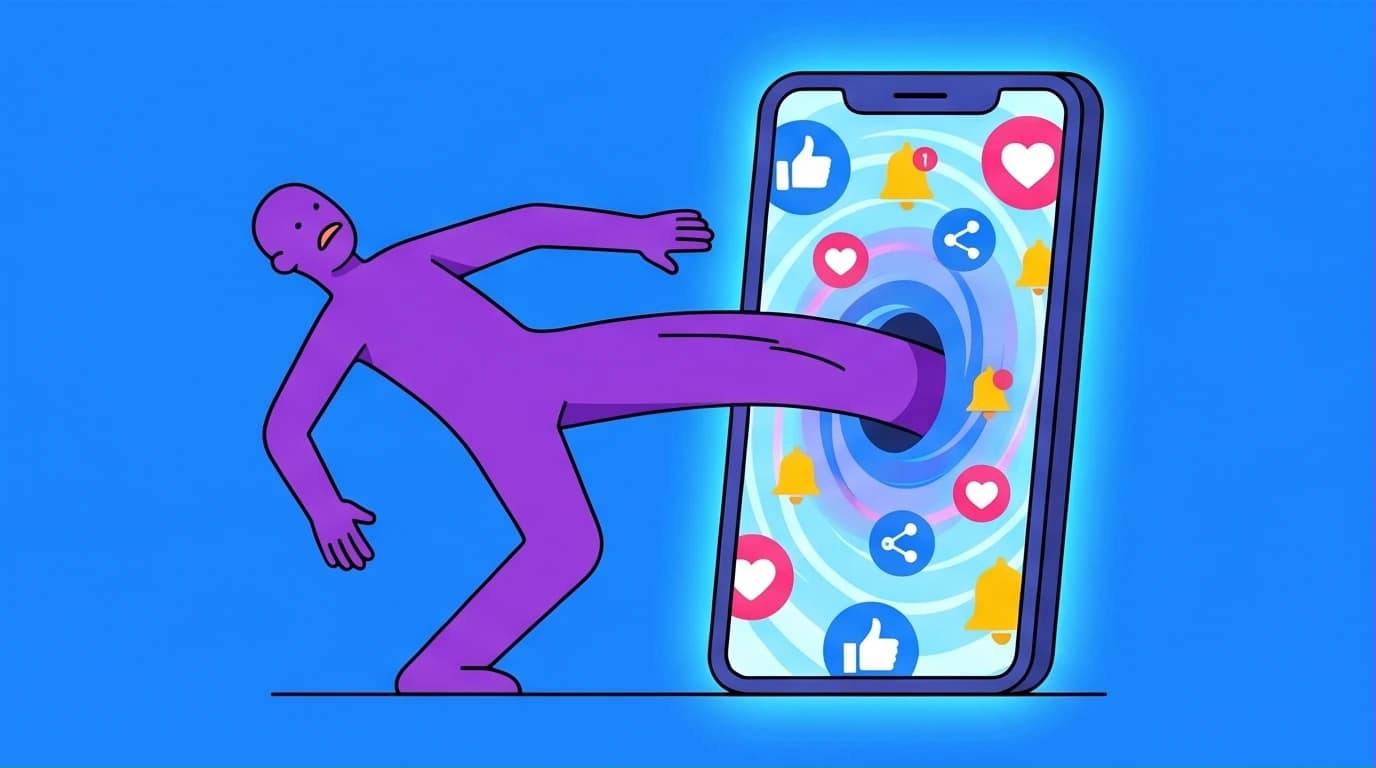
To reclaim your focus, you need to understand the biological machinery driving your behavior. This comprehensive Dopamine Nation summary strips away the filler to deliver the exact science and actionable frameworks you need to reset your brain.
The Core Problem: The Pleasure-Pain Balance
Dr. Anna Lembke, medical director of Stanford Addiction Medicine, centers her entire thesis on one profound neurological mechanism: the brain processes pleasure and pain in the exact same place.
Imagine a seesaw inside your brain. When you experience something rewarding—eating junk food, watching a funny video, or buying something on Amazon—your brain releases dopamine. The seesaw tips toward pleasure.
However, your brain favors homeostasis (balance). Every time the seesaw tips toward pleasure, your brain mounts a biological counter-response to level it out. It does this by pressing on the pain side of the seesaw. This is the biological "comedown."

If you constantly bombard your brain with high-dopamine stimuli, the brain compensates by building a permanent tolerance. The pain side gets heavier and heavier. You enter a "dopamine deficit state." In this state, you no longer scroll or eat to feel good; you do it just to feel normal. Everything else in life—reading, walking, talking with friends—suddenly feels profoundly boring.
Understanding this biological comedown is the first step, but it’s easy to feel overwhelmed by how much modern life hijacks our biology. If you are fascinated by how our environment manipulates our pleasure centers—and want to explore how diet, sleep, and digital habits all feed into this trap—Brain Wash is an incredible resource. Dr. David Perlmutter dives deep into how the modern American lifestyle promotes chronic inflammation and impulsive decision-making, offering a holistic roadmap to naturally heal your brain's reward circuitry.
Brain Wash
David Perlmutter M.D. and Austin Perlmutter M.D.
 19 Duration
 9 Key Points
 4.5 Rate
The irony is that to fix a brain overstimulated by cheap dopamine, you often need to read books like Dopamine Nation—but that same lack of focus can make it hard to start. If you're struggling to dive into dense non-fiction, an app that breaks down key ideas can be a great first step.

LeapAhead

Get the powerful insights from books like Dopamine Nation and Brain Wash in 15-minute summaries, perfect for rebuilding your focus when long-form reading feels too difficult.
Dopamine Nation Chapters Breakdown
If you want a quick roadmap of the book's structure before heading to Barnes & Noble, here is a clear Dopamine Nation chapters overview. Lembke divides the book into three distinct parts:
Part 1: The Pursuit of Pleasure
Lembke introduces the neuroscience of reward and shares clinical stories of extreme addiction. She explains how the modern environment—often called the "limbic capitalist" system—has engineered ordinary products to be highly addictive. This section establishes the foundation of the pleasure-pain balance and illustrates how constant indulgence inevitably leads to chronic anhedonia (the inability to feel pleasure).
Part 2: Self-Binding
This section transitions from theory to practice. Lembke explains why willpower fails and introduces "self-binding"—the practice of creating physical or psychological barriers between yourself and your drug of choice. Whether your "drug" is a smartphone, vaping, or excessive shopping, you must engineer your environment to prevent automatic consumption.
Part 3: The Pursuit of Pain
The most counterintuitive part of the book. Lembke argues that intentionally seeking out mild, healthy pain—like cold plunges in 50-degree Fahrenheit water, intense exercise, or intermittent fasting—forces the brain to naturally generate dopamine to restore balance. By leaning into discomfort, you actually increase your baseline level of happiness and resilience.

Dopamine Nation Key Takeaways
For a rapid understanding of Lembke's philosophy, here are the core Dopamine Nation key takeaways you can apply immediately:
- Abstinence resets the brain: It takes approximately 30 days of complete abstinence from a high-dopamine behavior for your brain's reward circuitry to baseline and recover.
- Willpower is a depreciating asset: Do not rely on self-control. Use friction. Put your phone in another room. Block distracting websites. Use physical barriers to stop mindless consumption.
- Radical honesty builds awareness: Lying—even minor white lies—perpetuates addiction. Telling the exact truth strengthens the prefrontal cortex, the part of the brain responsible for long-term planning and impulse control.
- Pain is protective: Avoiding all discomfort makes us hypersensitive to pain. Exposing yourself to deliberate physical or mental effort builds a thicker skin against modern anxiety.
The DOPAMINE Framework: Your Step-by-Step Reset Plan
Any effective Anna Lembke book summary must detail the author's primary clinical tool. She uses the acronym DOPAMINE to help patients navigate recovery. Here is how you can use it to break your own bad habits:
D - Data
Gather the facts. What are you consuming, how much, and how often? Be brutally honest with yourself about your screen time, alcohol intake, or spending habits.
O - Objectives
Why are you using this substance or behavior? What does it do for you? Often, we use high-dopamine activities to numb social anxiety, escape boredom, or avoid difficult tasks.
P - Problems
Acknowledge the negative impact. Has your productivity tanked? Is your sleep destroyed? Are you neglecting relationships? Connect the habit directly to the damage it causes.
A - Abstinence
Commit to a 30-day fast from the behavior. The first two weeks will be miserable as you experience withdrawal. By weeks three and four, your dopamine receptors will begin to heal, and your baseline anxiety will drop.
M - Mindfulness
During your abstinence, you will feel the urge to relapse. Instead of fighting it, observe the craving without judgment. Craving is just a physical sensation; it passes if you wait it out.
I - Insight
After a few weeks of clarity, you will gain a new perspective on your behavior. You will clearly see the biological trap you were stuck in.
N - Next Steps
What happens after the 30 days? Decide if you want to abstain completely forever or attempt moderation. For severe addictions, lifelong abstinence is required. For things like technology or food, you must establish strict rules.
E - Experiment
Test your new rules. If you decided to only use social media for 30 minutes a day but find yourself relapsing into hours of scrolling, your rules are too loose. Adjust the boundaries until you find a sustainable balance.
Once you successfully complete your 30-day dopamine fast and figure out your new rules in the "Experiment" phase, your next challenge is making those new rules stick. Willpower alone won't keep you on track. To build sustainable, long-term systems around your newly found focus, Atomic Habits is an absolute must-read. James Clear brilliantly outlines how to make good behaviors easy and bad behaviors difficult—perfectly complementing Dr. Lembke's self-binding strategies to ensure you never slip back into the dopamine deficit state.

Atomic Habits
James Clear
26 Duration8 Key Points4.7 RateStrategies for Self-Binding
If you cannot simply rely on willpower, what do you do? Lembke suggests three forms of self-binding:
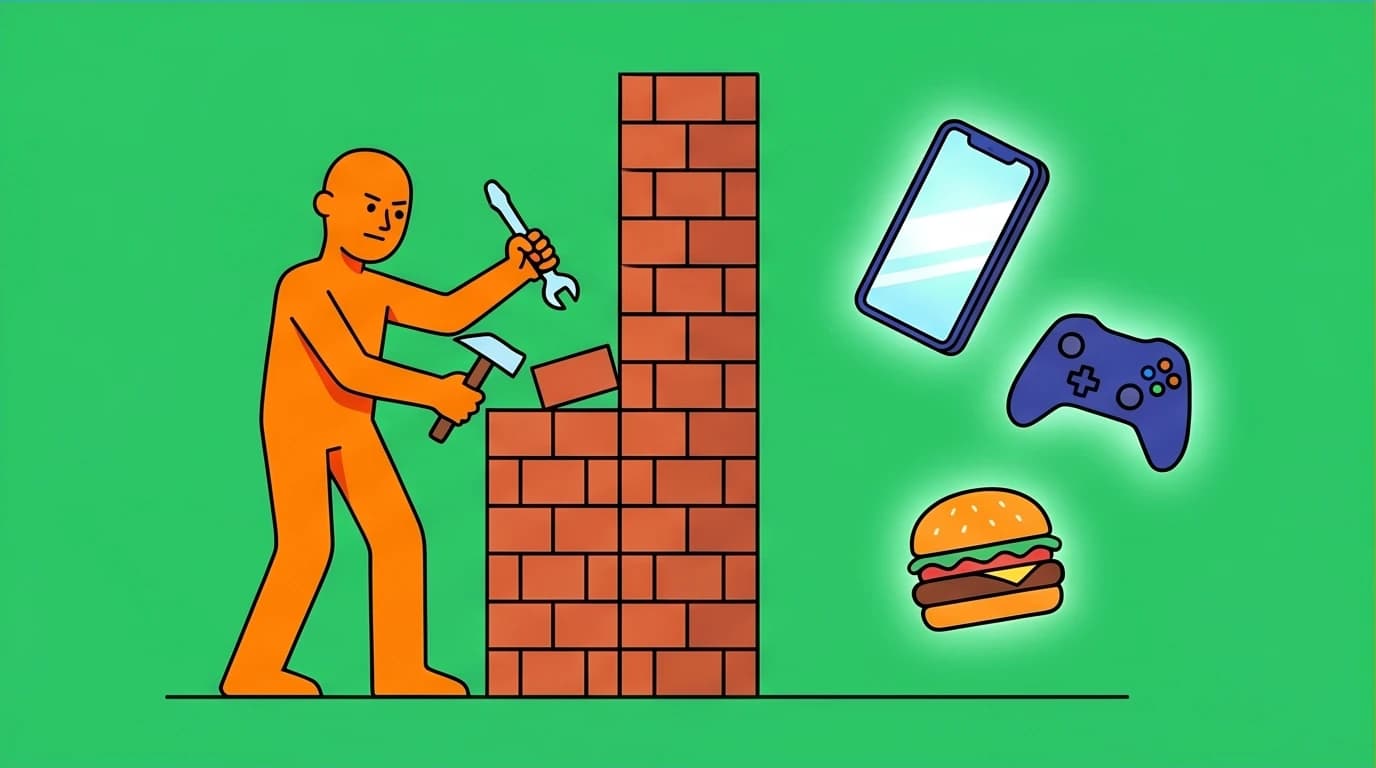
- Physical Self-Binding: Creating geographic distance. Leaving your credit cards at home when you go out. Putting your phone in a timed lockbox.
- Chronological Self-Binding: Setting strict time limits. Only checking email between 9 AM and 10 AM. Only playing video games on weekends.
- Categorical Self-Binding: Avoiding entire categories of triggers. If you are trying to cut out junk food, do not walk down the snack aisle at the grocery store. If certain apps trigger doomscrolling, delete them completely.
Categorical and chronological self-binding are incredibly effective, especially when trying to manage your smartphone and digital workspace. However, setting these boundaries is often easier said than done in a constantly connected culture. If you need a more tactical playbook for redesigning your digital environment, Indistractable by Nir Eyal is the gold standard. Eyal, an industry insider who actually helped design addictive tech, teaches you how to flip the script, utilize tech to your advantage, and build an ironclad defense against modern distractions.
Indistractable
Nir Eyal
23 Duration10 Key Points4.5 RateBy now, your reading list might be getting long. If you're eager to absorb the ideas from all these transformative books but don't have months to spare, you can get a head start with an app that condenses them into key takeaways.
LeapAhead
Listen to the key ideas from Dopamine Nation, Atomic Habits, and Indistractable in 15-minute audio summaries, turning your commute or workout into a powerful learning session.
Dopamine Nation Review: Is It Worth Your Time?
If you are reading this to decide whether to invest time in the full book, here is a straightforward Dopamine Nation review.
Dr. Lembke excels at blending hard neuroscience with compelling, real-world clinical stories. The book is highly readable and avoids dense medical jargon. It acts as a mirror, forcing you to look at your own modern compulsions—be it checking text messages, binging Netflix, or online shopping.
If you are already highly versed in neurobiology (such as listening to hundreds of hours of Andrew Huberman podcasts), some of the science might feel elementary. However, the true value of the book lies in its practical self-binding strategies and the 30-day reset framework. It is absolutely worth an Audible credit or picking up a hardcover copy on Amazon if you struggle with focus, procrastination, or mild behavioral addictions.
While this summary gives you the core framework, nothing replaces the profound impact of reading the actual clinical stories and deep neurobiological insights Dr. Lembke shares. If you are ready to stop relying on cheap thrills and want to fundamentally rewire how you experience pleasure and pain, picking up the full version of Dopamine Nation is your best next step. It is an eye-opening read that will completely change how you view your everyday habits, your smartphone, and your pursuit of happiness.
Dopamine Nation
Anna Lembke, M.D.
20 Duration8 Key Points4.6 RateFAQ
What is the 30-day dopamine fast?
The 30-day dopamine fast is a period of complete abstinence from a specific highly addictive behavior or substance. Dr. Lembke recommends 30 days because clinical observation shows it takes the brain roughly two weeks to endure withdrawal and another two weeks to reset its dopamine baseline, allowing you to enjoy ordinary activities again.
The 30-day dopamine fast is a period of complete abstinence from a specific highly addictive behavior or substance. Dr. Lembke recommends 30 days because clinical observation shows it takes the brain roughly two weeks to endure withdrawal and another two weeks to reset its dopamine baseline, allowing you to enjoy ordinary activities again.
Does Dopamine Nation apply to smartphone and social media addiction?
Yes. While Dr. Lembke treats patients with severe drug and alcohol addictions, she explicitly applies the exact same neurological mechanisms to digital behaviors. Smartphones deliver rapid, potent doses of dopamine, creating the same pleasure-pain imbalance as chemical substances.
Yes. While Dr. Lembke treats patients with severe drug and alcohol addictions, she explicitly applies the exact same neurological mechanisms to digital behaviors. Smartphones deliver rapid, potent doses of dopamine, creating the same pleasure-pain imbalance as chemical substances.
What is the difference between pleasure and happiness according to the book?
Pleasure is a short-term, dopamine-driven biological response to a specific stimulus, which inevitably triggers a comedown. Happiness is a stable, long-term state achieved by maintaining a balanced dopamine seesaw, often requiring the pursuit of meaningful effort and occasional discomfort.
Pleasure is a short-term, dopamine-driven biological response to a specific stimulus, which inevitably triggers a comedown. Happiness is a stable, long-term state achieved by maintaining a balanced dopamine seesaw, often requiring the pursuit of meaningful effort and occasional discomfort.
Can I still enjoy things after a dopamine reset?
Absolutely. That is the entire goal. Resetting your brain does not eliminate joy; it lowers your tolerance. Once your baseline is restored, you will find genuine pleasure in simple, everyday activities like having a conversation, going for a walk, or reading a book—activities that felt boring when your brain was flooded with artificial dopamine.
Absolutely. That is the entire goal. Resetting your brain does not eliminate joy; it lowers your tolerance. Once your baseline is restored, you will find genuine pleasure in simple, everyday activities like having a conversation, going for a walk, or reading a book—activities that felt boring when your brain was flooded with artificial dopamine.