


You grab your phone to check a quick text. Suddenly, 45 minutes have vanished. You’ve scrolled past dozens of videos, checked your email three times, and now feel scattered, drained, and guilty. You aren't lacking discipline. You are fighting a multi-billion-dollar engineering machine specifically designed to manipulate your neurochemistry.
The Brain Science: Phone Addiction, Dopamine, and the Pleasure-Pain Balance
To fix the problem, you first have to understand the machine. Your brain relies on a neurotransmitter called dopamine to regulate motivation and reward. Historically, we got small dopamine releases for finding food or connecting with our tribe—actions essential for survival.
Today, your smartphone acts as a hypodermic needle delivering digital dopamine 24/7.
Every time you swipe down to refresh a feed, your brain anticipates a reward. Will it be a funny video? A like on your post? A breaking news alert? This unpredictable reward system is the exact same psychological mechanism used in slot machines.

When analyzing the concepts outlined in Dopamine Nation, social media emerges as the ultimate modern drug. Dr. Anna Lembke explains that the brain processes pleasure and pain in the exact same place. When you flood your brain with cheap, effortless dopamine from Instagram or TikTok, your brain tries to adapt by down-regulating its own dopamine receptors. It tips the scale toward the "pain" side to regain balance.
This is why you feel anxious, restless, or irritated the moment you put your phone down. You reach for the screen again not because you are having fun, but because you are trying to relieve the psychological withdrawal. You are self-medicating a deficit created by the phone itself.


LeapAhead

Tired of a phone that just takes? Turn your device into a tool for growth. LeapAhead helps you build a positive learning habit, one 15-minute book summary at a time.
If you want to truly understand the mechanics behind your endless scrolling, Dr. Anna Lembke’s eye-opening research is a must-read. As mentioned earlier, her work brilliantly breaks down how our brains are being hijacked by modern technology and why finding balance feels so incredibly difficult. It provides a fascinating, science-backed look at the modern addiction spectrum and offers a compassionate, actionable roadmap for resetting your neurochemistry and reclaiming your peace of mind.
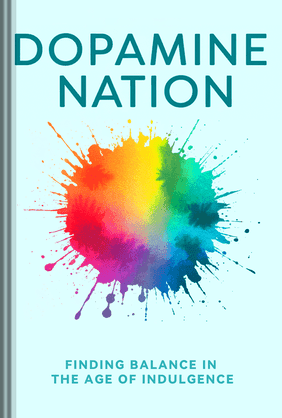
Dopamine Nation
Anna Lembke, M.D.
 20 Duration
 8 Key Points
 4.6 Rate
Why "Just Put It Down" Is Terrible Advice
Most people treat excessive screen time as a bad habit. They tell themselves they will just use more willpower tomorrow. Willpower is a finite resource. By 3:00 PM, after dealing with demanding clients or managing kids, your willpower tank is empty. Your brain craves an easy escape, and the smartphone is always in your pocket.
Effective smartphone addiction treatment requires acknowledging that you are dealing with a physiological dependency. You cannot out-willpower an algorithm designed by thousands of engineers whose sole job is to keep your eyeballs glued to the screen. You must change your environment.

Since relying purely on willpower is a losing battle, the secret to beating smartphone addiction is fundamentally redesigning how you interact with your devices. If you find yourself constantly derailed by dings, buzzes, and phantom notifications, learning how to build bulletproof habits can be a game-changer. By exploring behavioral design, you can flip the script on technology—using it as a tool that serves your actual goals rather than a master that constantly steals your precious attention.
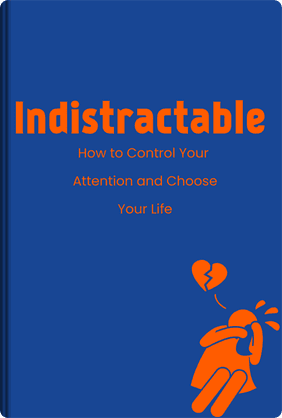
Indistractable
Nir Eyal
23 Duration10 Key Points4.5 RateHow to Stop Scrolling: Science-Backed Digital Detox Strategies
If you want to regain your mental clarity and focus, you have to build systems that protect your attention. Here are the most effective strategies to break the cycle.
1. Implement "Self-Binding" (Create High Friction)

Self-binding is a strategy where you place physical or digital barriers between yourself and your addiction. Make the bad habit incredibly annoying to execute.
- Go Grayscale: Dive into your phone's accessibility settings and turn the screen completely gray. Algorithms use bright reds and blues to trigger your brain. Removing color makes your expensive device look incredibly boring.
- The 20-Second Rule: Move your most problematic apps out of your thumb's natural reach. Bury them in a folder on the third page of your home screen. Better yet, delete the apps entirely and only access social media through your mobile browser. The clumsy interface and extra logins provide enough friction to make you rethink the action.
- Use Physical Lockboxes: If you work from home and cannot stop reaching for your device, buy a timed lockbox on Amazon. Drop your phone inside, set the timer for two hours, and get your deep work done.
2. The 24-Hour Dopamine Fast
To reset your brain's reward pathways, you need a period of absolute abstinence. Pick a Saturday or Sunday and commit to zero recreational screen time.
No social media, no streaming, no mindless web browsing. You can use your phone for essential calls, navigation, or text messages to coordinate logistics.
The first few hours will feel incredibly uncomfortable. You will experience phantom vibrations. You will reach for your pocket subconsciously. Let the boredom wash over you. Boredom is the state where your brain actually recovers and generates new ideas. By the end of the 24 hours, you will notice a significant drop in your baseline anxiety and a renewed appreciation for slower activities.
3. Rebuild Your Attention Span with Microlearning
After years of doomscrolling, your ability to focus on a single task is likely damaged. Jumping from a 30-second video feed to a 400-page book is a massive leap that can feel overwhelming. Microlearning apps like LeapAhead offer a practical bridge to help retrain your focus. It provides 15-minute summaries of over 30,000 bestselling nonfiction books in both audio and text formats. Instead of feeling the pressure to finish a whole book, you can absorb its core ideas during a commute or coffee break.
This approach helps you build a positive habit on the very device that caused the problem. By setting daily learning goals and following curated book collections on topics like productivity or mindfulness, you can replace a negative feedback loop with a positive one.
Of course, a summary is not a substitute for deep reading. If you need academic-level detail or the full narrative of a book, LeapAhead’s condensed format may feel too high-level. It’s also a mobile-first experience, which is great for on-the-go learning but might feel limiting for those who prefer to study on a desktop. However, for a brain recovering from digital overload, it’s an excellent tool for making learning feel achievable again.
LeapAhead
Reclaim your focus by turning short breaks into powerful learning moments. Get key insights from bestselling books in just 15 minutes with LeapAhead.
4. Redesign Your Bedroom
The most destructive scrolling happens in bed. Morning scrolling spikes your dopamine right after waking, setting a chaotic tone for the rest of the day. Nighttime scrolling destroys your circadian rhythm with blue light, ruining your sleep.
- Ban phones from the bedroom entirely.
- Buy a standard alarm clock. Do not rely on an iPhone or an Apple Watch to wake you up.
- Charge your phone in the kitchen or living room overnight. If you want to look at your phone in the morning, force yourself to physically get out of bed and walk to the other room.
Putting physical boundaries between yourself and your device, especially in the bedroom, is one of the most effective ways to detox your daily routine. If you are looking for a clear, step-by-step program to untangle your life from your device without giving it up completely, there are fantastic resources that guide you through a practical reset. A guided approach can help you customize these friction strategies, ensuring you keep the helpful aspects of your smartphone while eliminating the toxic, time-wasting compulsions.
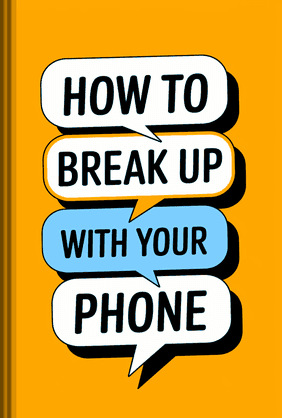
How to Break Up with Your Phone
Catherine Price
45 Duration8 Key Points4.6 RateReplacing the Void: What to Do With Your Reclaimed Time
If you successfully execute these digital detox strategies, you will suddenly find yourself with an extra two to four hours of free time every day. If you don't fill this void with intentional activities, you will relapse.
You need low-dopamine, high-value activities that rebuild your attention span.
- Read Physical Books: Go to Barnes & Noble or a local library. Hold a physical book. Your brain needs to relearn how to process linear information without swiping every 15 seconds. If you prefer digital, use a dedicated e-reader like a Kindle Paperwhite that does not have email or social media capabilities.
- Engage in Physical Hobbies: Bake bread, build a model, paint, or start a garden. Use your hands for something other than holding a screen.
- Walk Without Audio: Take a 30-minute walk outside without your phone, without music, and without a podcast. Just look at the world around you.
Reclaiming your brain from phone addiction is not a one-time event. It is a continuous practice of setting boundaries. You are taking back control of your time, your focus, and your life.
Once you have successfully dialed back your screen time, you might be surprised by how much quiet space opens up in your day. Filling that void with intentional, high-quality offline activities is the cornerstone of a fulfilling, low-tech lifestyle. For those eager to dive deeper into this philosophy, exploring the concept of digital minimalism can help you cultivate a life focused on deep work, meaningful hobbies, and genuine human connection—proving that less technology often leads to a much richer life.

Digital Minimalism
Cal Newport
20 Duration8 Key Points4.7 RateFAQ
Can I be addicted to my phone even if I need it for work?
Yes. This is a common trap. While you may need email or Slack for your job, the addiction often hides behind "productivity." If you find yourself checking work emails at 11:00 PM or rapidly switching between work apps and social media without a specific goal, you are exhibiting addictive behaviors. Separate your devices if possible, or strictly time-block your work communications.
Yes. This is a common trap. While you may need email or Slack for your job, the addiction often hides behind "productivity." If you find yourself checking work emails at 11:00 PM or rapidly switching between work apps and social media without a specific goal, you are exhibiting addictive behaviors. Separate your devices if possible, or strictly time-block your work communications.
How long does it take to reset dopamine receptors?
Clinical observations suggest that a complete 30-day abstinence from highly addictive digital behaviors is the gold standard for resetting brain pathways. However, even a strict 24-to-48-hour digital detox can significantly lower your immediate cravings and reduce the constant background anxiety associated with smartphone use.
Clinical observations suggest that a complete 30-day abstinence from highly addictive digital behaviors is the gold standard for resetting brain pathways. However, even a strict 24-to-48-hour digital detox can significantly lower your immediate cravings and reduce the constant background anxiety associated with smartphone use.
Are screen time limit apps actually effective?
They are a good starting point for awareness, but they often fail as a standalone cure. It is too easy to hit "Ignore Limit for Today" when you are craving a dopamine hit. For true behavioral change, combine digital app blockers with physical friction, like keeping the phone in another room or deleting the most problematic apps entirely.
They are a good starting point for awareness, but they often fail as a standalone cure. It is too easy to hit "Ignore Limit for Today" when you are craving a dopamine hit. For true behavioral change, combine digital app blockers with physical friction, like keeping the phone in another room or deleting the most problematic apps entirely.
How do I help my teenager with smartphone addiction without constant fighting?
Lecturing teens about dopamine rarely works. Instead of focusing entirely on restriction, focus on replacement. Create tech-free zones in the house (like the dinner table or bedrooms overnight) that apply to the whole family, including adults. Lead by example. Encourage physical activities and provide them with offline alternatives so they aren't left staring at a wall when the screen is put away.
Lecturing teens about dopamine rarely works. Instead of focusing entirely on restriction, focus on replacement. Create tech-free zones in the house (like the dinner table or bedrooms overnight) that apply to the whole family, including adults. Lead by example. Encourage physical activities and provide them with offline alternatives so they aren't left staring at a wall when the screen is put away.