

You feel overwhelmed by a racing mind, a packed schedule, and constant digital distractions. You have likely heard Oprah or your favorite podcast host recommend Eckhart Tolle as a reliable source for finding mental quiet. But staring at a Barnes & Noble shelf or scrolling through Amazon leaves you wondering which title actually fits your busy life, and more importantly, what the core lessons are. You do not have time to read thousands of pages of spiritual philosophy. You need the most impactful concepts distilled so you can apply them to your life right now.



LeapAhead

Get the key ideas from Eckhart Tolle and other bestselling authors in just 15 minutes a day with the LeapAhead app.
The Best Eckhart Tolle Books: Where Should You Start?
When searching for the best Eckhart Tolle books, you only need to focus on two foundational texts. The rest of his bibliography acts as supplementary material. If you want to maximize your time, follow this exact reading order:
- The Power of Now: This is the core curriculum. Read this first. It introduces his specific vocabulary and the foundational concept of separating your identity from your thoughts.
- A New Earth: Read this second. It takes the concepts from the first book and applies them to how you interact with the world, your relationships, and your life purpose.
- Practicing the Power of Now: Keep this on your nightstand. It is a condensed manual containing only the practical exercises from the first book.
If you are ready to dive directly into Tolle's life-changing philosophy, there is no better starting line than his breakout masterpiece. Grabbing your own copy of The Power of Now allows you to highlight key passages, fold the pages, and truly absorb his framework for escaping constant mental chatter. It is a must-have for anyone looking to build a foundation in mindfulness and break free from the anxiety of living in the past or the future.
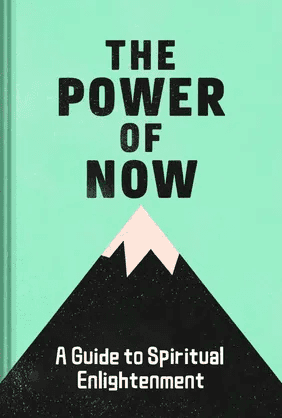
The Power of Now
Eckhart Tolle
 36 Duration
 9 Key Points
 4.6 Rate
The Power of Now Summary: Escaping the Mental Noise
To save you hours of reading, The Power of Now summary comes down to one radical idea: You are not your mind. Your mind is simply a tool. When you cannot stop thinking about that upcoming presentation or agonizing over a past mistake, your tool has taken control of you.
Core Concept 1: The Illusion of Time
Tolle argues that the past and the future do not exist. They are mental constructs. The past gives you an identity (your ego), and the future holds the promise of salvation or fulfillment. Because we constantly dwell in these two illusions, we completely miss the present moment—the only place where life actually happens.
Core Concept 2: The Pain-Body
This is one of Tolle’s most famous concepts. The pain-body is an accumulation of old emotional pain that lives inside you. It feeds on negative thinking and drama. When someone cuts you off on the highway and you fly into a rage that lasts for hours, that is your pain-body taking over to feed on the negativity.
For a deeper dive into this cornerstone concept, see our guide on Eckhart Tolle's teachings on the pain-body and how to begin dissolving its influence on your life.

Actionable Takeaway for Daily Life
Observe the Thinker. You do not need to meditate for an hour a day to apply this. The next time you feel anxious sitting at your desk, stop and literally listen to the voice inside your head. Do not judge it. Just observe it. The moment you realize, "I am hearing my mind panic," you instantly separate yourself from the panic. You become the observer. That tiny gap in thought is the essence of presence.
This simple observation is a powerful tool. For more specific strategies on using presence to calm your mind, see our guide on how Eckhart Tolle addresses anxiety and overthinking.
Once you start practicing this technique of observing your thoughts rather than getting tangled up in them, you might want to explore how far this mental freedom can go. If Tolle’s concept of stepping back from the "thinker" resonates with you, Michael A. Singer takes a remarkably similar, highly accessible approach. His work is fantastic for digging deeper into releasing old emotional baggage and maintaining inner peace, even when your daily life in the US gets incredibly stressful.
The Untethered Soul
Michael A. Singer
26 Duration9 Key Points4.6 RateA New Earth Summary: Awakening to Your Life's Purpose
While his first book teaches you how to step out of your mind, A New Earth summary focuses on the ego and how it dictates your interactions with the world. This book is highly practical for anyone navigating corporate environments, difficult family dynamics, or personal ambition.

Core Concept 1: The Anatomy of the Ego
The ego thrives on identification. It attaches itself to things: your job title, your bank account, your political beliefs, and even your problems. The ego constantly compares itself to others to feel superior or inferior. Tolle explains that this constant need to identify with external forms is the root of human suffering and conflict.
Understanding how your ego creates unnecessary drama is a massive step forward, especially in hyper-competitive corporate environments where titles and status are heavily emphasized. If you are fascinated by how the ego sabotages your success and want a more secular, historically grounded take on taming it, you will love Ryan Holiday’s perspective. It bridges the gap between ancient philosophy and the modern American hustle, offering practical strategies to stay humble, focused, and out of your own way.
Ego Is the Enemy
Ryan Holiday
18 Duration7 Key Points4.6 RateCore Concept 2: Inner Purpose vs. Outer Purpose
Most people obsess over their outer purpose: starting a business, getting a promotion, buying a house. Tolle flips this. Your primary inner purpose is simply to be fully conscious and present in whatever you are doing right now. If your inner purpose is aligned, your outer purpose will naturally fall into place.
Actionable Takeaway for Daily Life
The Three Modalities of Awakened Doing. Tolle provides a massive shortcut for busy professionals dealing with tasks they hate. If you want to remain present, your actions must fall into one of three categories:
- Acceptance: If you cannot enjoy a task (like doing your taxes or stuck in traffic), you must accept it completely. Resistance causes suffering.
- Enjoyment: Finding simple joy in the act itself, without needing a specific outcome.
- Enthusiasm: Enjoyment combined with a goal or vision.
If you are doing a task and cannot accept, enjoy, or be enthusiastic about it, you must stop doing it. Otherwise, you are just polluting your mind with negativity.
Exploring Other Books by Eckhart Tolle
Once you have digested the core teachings, you might want to look into other books by Eckhart Tolle that fit specific formats or moods.
- Stillness Speaks: This book is organized into short, paragraph-length entries. It reads like modern Zen sutras. It is perfect for reading one page a day with your morning coffee.
- Oneness With All Life: A collection of inspirational selections from A New Earth. It serves as a great pocket-sized reminder of his teachings.
- Milton's Secret: A children's book Tolle co-authored. It is an excellent resource if you want to teach the concepts of mindfulness and dealing with anxiety (like bullying) to young kids.
How to Consume Tolle’s Work on a Tight Schedule
If sitting down with a physical book feels impossible, you need to change how you consume the material.

- Use Audible for Pacing: Many readers actually prefer listening to Tolle rather than reading his text. He narrates his own audiobooks. His speaking pace is famously slow and deliberate. Listening to him on your commute naturally forces your brain to slow down, acting as a guided meditation.
- Highlight and Review on Kindle: Tolle’s books are dense with meaning. You cannot read them like a thriller. Read five pages on your Kindle, highlight the sentences that strike a chord, and stop. Review those highlights on Goodreads or your Kindle app when you have a free five minutes waiting in line.
- Use the Bathroom Break as a Reset: Keep Practicing the Power of Now in your bathroom or on your desk. Read exactly one paragraph during a break. Focus on your breathing and feeling the energy in your hands for 60 seconds before returning to your emails.
- Get the Key Insights with a Microlearning App: For those who feel they have "reading debt"—books on the shelf they never get to—a book summary app can be a game-changer. An app like LeapAhead distills the core ideas of books like The Power of Now into 15-minute audio and text summaries. This approach is perfect for absorbing the main takeaways during a commute or workout. Of course, a summary won't replace the deep, meditative experience of reading Tolle’s prose yourself, but it’s an incredibly efficient way to grasp the foundational concepts when you’re short on time.
LeapAhead
Too busy to read? Absorb the wisdom of books like The Power of Now on your commute with LeapAhead's audio summaries.
Sometimes, even the most practical spiritual teachings can feel a bit too abstract when you are rushing through a packed 9-to-5 schedule. If you are naturally skeptical or just want a grounded, no-nonsense approach to finding mental quiet without the mystical overtones, Dan Harris’s journey is incredibly relatable. It is the perfect complementary read for busy professionals who want the tangible benefits of mindfulness—like lower blood pressure and better focus—while still thriving in a demanding career.
10% Happier
Dan Harris
39 Duration9 Key Points4.6 RateFAQ
Do I need to read The Power of Now before A New Earth?
Yes. While they function as standalone books, The Power of Now acts as a glossary. It thoroughly explains concepts like the "pain-body" and "the watcher." Having this background makes the social and personal concepts in A New Earth much easier to grasp quickly.
Yes. While they function as standalone books, The Power of Now acts as a glossary. It thoroughly explains concepts like the "pain-body" and "the watcher." Having this background makes the social and personal concepts in A New Earth much easier to grasp quickly.
Are Eckhart Tolle books religious?
No. His teachings are strictly non-denominational. He frequently references concepts from Buddhism, Zen, Hinduism, and Christianity to illustrate his points, but he does not promote any specific religion. The focus is entirely on human consciousness and psychology.
No. His teachings are strictly non-denominational. He frequently references concepts from Buddhism, Zen, Hinduism, and Christianity to illustrate his points, but he does not promote any specific religion. The focus is entirely on human consciousness and psychology.
What is the best way to read these books if I get easily bored?
Do not try to read them cover-to-cover in one weekend. Treat them like reference manuals. If you get bored or find your mind wandering, stop immediately. Close the book and try to practice the specific concept you just read for the rest of the day. Opting for the audiobook version on Audible is also a highly effective alternative for those who struggle with reading non-fiction.
Do not try to read them cover-to-cover in one weekend. Treat them like reference manuals. If you get bored or find your mind wandering, stop immediately. Close the book and try to practice the specific concept you just read for the rest of the day. Opting for the audiobook version on Audible is also a highly effective alternative for those who struggle with reading non-fiction.
What is his most practical book for immediate results?
Practicing the Power of Now strips away the philosophical explanations and leaves only the exercises and meditations. If you want pure execution and zero theory, start there.
Practicing the Power of Now strips away the philosophical explanations and leaves only the exercises and meditations. If you want pure execution and zero theory, start there.