

Your chest feels tight. Your mind races. You are exhausted from fighting your own thoughts, trapped in a loop of anticipating the worst and dreading tomorrow. The more you try to reason with your panic, the louder it gets. Maybe you recently picked up a copy of The Power of Now at a local Barnes & Noble, or perhaps you are listening to it on Audible during a stressful morning commute. Yet, in the heat of a severe anxiety spike, those spiritual concepts can feel miles away.

You need relief right now. You need to understand why your mind is doing this and how to make it stop.
To understand the core teachings of Eckhart Tolle on anxiety, you have to recognize one fundamental truth: you are not your anxiety, and you are not the voice in your head.
The Root of the Problem: Psychological Time
Anxiety does not exist in the present moment. It is a byproduct of what Tolle calls "psychological time."
Your mind is a survival machine. It constantly scans the horizon for potential threats to protect you. To do this, it pulls data from past experiences and projects it into imagined future scenarios. You start worrying about your job security, your health, your relationships, or your finances.
The catch is that the future never arrives. It is entirely a mental construct. When you obsess over things that have not happened yet, you force your body to experience the stress of those imaginary events right now. Your physical body cannot tell the difference between a real physical threat and a thought about a future threat.

According to the philosophy of Eckhart Tolle, overthinking is not a personality flaw. It is a disease of the ego. The ego needs the past for its identity and the future for its fulfillment or survival. It views the present moment as an obstacle to overcome. When you strip away the past and the future, the ego feels threatened, and anxiety is its defense mechanism.
Because you might have heard of The Power of Now at your local bookstore or in passing, diving into the actual text is the best way to fully grasp how psychological time feeds your ego. Eckhart Tolle’s foundational book is essential if you want to understand why your mind acts as an overactive survival machine. It offers a profound, step-by-step guide to stepping out of your mental narrative and finding genuine peace in the present moment. If you are tired of living in the imagined future, this is the perfect starting point.
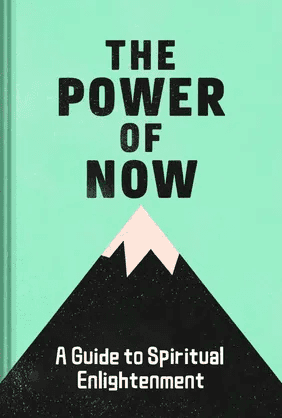
The Power of Now
Eckhart Tolle
 36 Duration
 9 Key Points
 4.6 Rate
If diving into a dense spiritual text feels like too much while you're already feeling overwhelmed, an easier first step is to absorb the main concepts quickly.


LeapAhead

Understand the core ideas from The Power of Now and similar books in just 15 minutes, helping you grasp Tolle's teachings on anxiety without the heavy reading.
The Connection Between Past and Future
Anxiety and heavy emotional slumps are closely related. If you look closely at the teachings of Eckhart Tolle, depression and anxiety are two sides of the same coin. Both take you away from the "Now."
While anxiety is an excessive focus on the future and a refusal to accept the present, depression is often an excessive focus on the past. Tolle describes the "pain-body" as an accumulation of old emotional pain that lives inside you. This pain-body feeds on negative thinking. It loves the heavy, dark color of your saddest thoughts. When you get caught in a loop of worry, your pain-body wakes up and feeds on that nervous energy, making your physical symptoms even worse.
Tolle’s concept of the "pain-body" highlights a crucial truth: old emotional pain doesn’t just stay in your head; it becomes physically trapped in your nervous system. If you want to understand how chronic anxiety and heavy emotional slumps literally change your biology, diving into the science of trauma can be incredibly eye-opening. Recognizing how your physical body keeps a record of your stress is the first step toward releasing that tension and finally healing the mind-body connection.
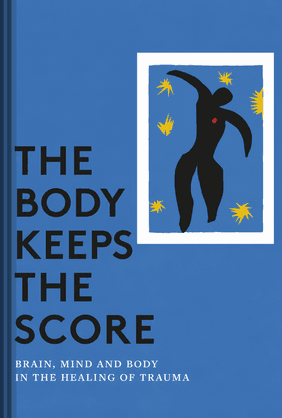
The Body Keeps The Score
Bessel Van Der Kolk
32 Duration10 Key Points4.5 RateStopping Negative Thoughts: The Power of the Watcher
When it comes to stopping negative thoughts, the standard advice usually fails. If you tell yourself, "Stop worrying," you are fighting your mind with your mind. It is like trying to put out a fire with gasoline.
Tolle offers a completely different approach. Do not fight the thoughts. Watch them.
Imagine you are standing on a platform watching trains go by. The trains are your thoughts. Most people jump onto every anxiety train that passes, letting it take them miles down the track into worst-case scenarios.

Instead of jumping on the train, stay on the platform.
Be the "Watcher." Notice the thought arising. Say to yourself, "There is a fearful thought about my finances." By simply observing the thought without judging it or engaging with it, you separate your true self (the awareness) from the ego (the thinker). The moment you realize you are the awareness behind the thought, the thought loses its power over you.
Separating your true identity from the relentless chatter in your head is a game-changer for your mental health. If Tolle’s concept of being the "Watcher" resonates with you, exploring similar philosophies can help reinforce this new perspective. Learning how to detach from your inner monologue and navigate life without being controlled by passing thoughts is incredibly liberating. When you are ready to let go of the mental baggage tying you down, finding a clear path to inner freedom is completely worth your time.

The Untethered Soul
Michael A. Singer
26 Duration9 Key Points4.6 RateDealing with Fear: Eckhart Tolle's Approach to the Unknown
Fear is paralyzing. But what are you actually afraid of?
For anyone dealing with fear, Eckhart Tolle suggests a reality check. Look around your immediate environment right at this exact second. Look at the room you are in. Listen to the sounds around you. Feel the chair supporting your weight.
Is there a tiger in the room? Is there an immediate physical threat to your life right now?
In 99% of cases, ahe answer is no. Your current reality is usually completely fine. You are sitting, breathing, reading a screen. The fear you feel is a reaction to a mental movie your ego is playing.
You cannot cope with the future because the future does not exist. You only ever have to cope with this exact moment. And you are fully equipped to handle this moment.
Practical Steps to Anchor Yourself Right Now
When a wave of anxiety hits, theoretical philosophy is rarely enough. You need immediate, grounding actions to pull your awareness out of your head and back into reality. Try these steps.
1. Feel Your Inner Body
Close your eyes. Bring your full attention to your hands. Can you feel the life energy in them? Don't move them, just feel them from the inside. You might notice a slight tingling or a sense of warmth. Move that attention to your feet, then to your chest.
By directing your focus to your inner body, you forcefully withdraw consciousness from your mind. You literally starve your anxious thoughts of the energy they need to keep spinning.

2. Focus on Your Breath
Your breath is the ultimate anchor to the present moment. You cannot breathe in the past, and you cannot breathe in the future. Take a slow, deep breath. Follow the air as it enters your nose and fills your lungs. Notice the slight pause before you exhale. Do this three times. It acts as a circuit breaker for an overactive mind.
3. Accept the "Is-ness" of the Moment
Anxiety feeds on resistance. You feel anxious, and immediately you think, "I shouldn't feel this way. I need this to stop." That resistance creates more panic.
Surrender to what is. If you feel anxious, say to yourself, "I am experiencing anxiety right now, and that is okay." Let the feeling sit there. Do not judge it. Do not try to organize your mind or fix the emotion. Let it be exactly what it is. When you drop the resistance, the emotional charge dissipates much faster.
Building the Muscle of Presence
You will not master this overnight. The habit of leaving the present moment is deeply ingrained in human conditioning. You will forget. You will get swept away by a wave of fear, a stressful email, or a sudden change of plans.
When you realize you have lost yourself in thought, do not beat yourself up. The moment you realize you are not present, you are present.
Make it a daily practice. While you are washing the dishes, just wash the dishes. Feel the temperature of the water. Listen to the sound of the plates clinking. Smell the soap. Do not use dishwashing as a bridge to think about your next meeting. Claim those small moments back from your mind.
The more you practice stepping into the "Now" during ordinary moments, the stronger your anchor will be when the storms of anxiety try to pull you away.
Building the muscle of presence takes consistent effort, especially when living in a fast-paced environment where anxiety feels like the default setting. If you need more practical, everyday techniques to halt mental spirals alongside Tolle's spiritual approach, adding a few targeted mental exercises to your toolkit can be a lifesaver. Learning specific strategies to derail a panic loop, declutter your thoughts, and organize your mind will help you stay anchored in the "Now"—even when life throws a curveball.
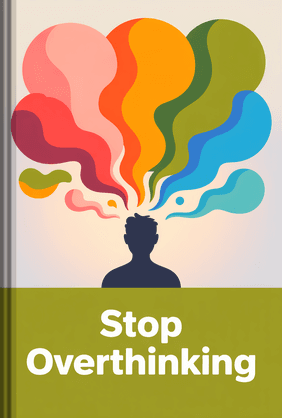
Stop Overthinking
Nick Trenton
50 Duration9 Key Points4.5 RateThe key is consistency, but it can be hard to find the energy to read after a long day. A great way to stay on track is to fit learning into the moments you already have, like your commute or while doing chores.
LeapAhead
Build your "presence muscle" by listening to 15-minute book summaries on mindfulness and overthinking during your commute, making daily practice feel effortless.
FAQ
Does Eckhart Tolle believe we should never plan for the future?
No. Tolle distinguishes between "clock time" and "psychological time." Clock time is practical. It means setting an appointment on your calendar, saving money for retirement, or packing for a trip. You use your mind as a tool to plan, and then you put the tool down. Psychological time is when you obsess over that plan, attach your identity to it, and worry about it failing. Plan your life, but do it while rooted in the present.
No. Tolle distinguishes between "clock time" and "psychological time." Clock time is practical. It means setting an appointment on your calendar, saving money for retirement, or packing for a trip. You use your mind as a tool to plan, and then you put the tool down. Psychological time is when you obsess over that plan, attach your identity to it, and worry about it failing. Plan your life, but do it while rooted in the present.
What if my anxiety is caused by a genuinely bad situation?
If your current situation is causing you pain, Tolle offers three clear choices: remove yourself from the situation, change it, or accept it totally. Any other response is madness. If you cannot leave and you cannot change it right now, you must accept it. Resisting a reality you cannot change only creates profound suffering and anxiety.
If your current situation is causing you pain, Tolle offers three clear choices: remove yourself from the situation, change it, or accept it totally. Any other response is madness. If you cannot leave and you cannot change it right now, you must accept it. Resisting a reality you cannot change only creates profound suffering and anxiety.
Can simply watching my thoughts replace therapy or medication?
Tolle’s teachings provide a powerful spiritual framework for mental peace, but they are not a substitute for professional medical treatment. If you are experiencing severe clinical anxiety, panic disorders, or deep depression, finding a qualified therapist or doctor is a vital step. You can practice presence alongside professional help.
Tolle’s teachings provide a powerful spiritual framework for mental peace, but they are not a substitute for professional medical treatment. If you are experiencing severe clinical anxiety, panic disorders, or deep depression, finding a qualified therapist or doctor is a vital step. You can practice presence alongside professional help.
Why does my anxiety feel worse when I try to sit still and be present?
When you first stop distracting yourself and get quiet, you come face to face with the accumulated noise in your mind. It feels overwhelming because you are finally looking at it instead of running from it. This is normal. Anchor yourself in your body or your breath. Let the storm rage around you, but remain the silent observer on the platform. It will pass.
When you first stop distracting yourself and get quiet, you come face to face with the accumulated noise in your mind. It feels overwhelming because you are finally looking at it instead of running from it. This is normal. Anchor yourself in your body or your breath. Let the storm rage around you, but remain the silent observer on the platform. It will pass.