

You wake up, grab your phone, and suddenly your mind is racing through endless to-do lists, work emails, and yesterday's awkward conversation. Your body is making coffee in the kitchen, but your mind is miles away. This chronic overthinking drains your energy before the day even begins. You feel stressed, disconnected, and completely trapped in your own thoughts.
If you are trying to figure out how to live in the present moment, Eckhart Tolle provides a practical framework that cuts through this mental noise. His philosophy isn't about escaping reality or retreating to a mountain cave. It is about finding stillness right in the middle of your chaotic, everyday life.

Here is exactly how to stop fighting your own mind and start living in reality.
The Foundation of Eckhart Tolle Teachings
Before you can change your daily habits, you need to understand the core mechanism of your frustration. According to Eckhart Tolle teachings, the root of human suffering is our identification with the mind.
You have a voice in your head that never shuts up. It constantly judges, complains, compares, and worries. It dwells on a past that is already gone and obsesses over a future that hasn't happened yet.
This constant mental commentary is a primary source of stress and unease. For a more detailed look at how these thought patterns create emotional turmoil, explore Eckhart Tolle's specific guidance on managing anxiety and finding peace.
The biggest breakthrough you will ever have is realizing this simple truth: You are not the voice in your head. You are the one listening to it.
When you create space between yourself (the observer) and your thoughts (the noise), you instantly remove the power those thoughts hold over you. You stop being a hostage to every anxious idea that crosses your brain.

Once you realize you are not the voice in your head, the next logical step is learning how to actively turn down the volume of that internal chatter. If you struggle to separate your true self from the constant stream of worries, it helps to have a practical roadmap for rewiring your thought patterns. For anyone looking to break the exhausting cycle of mental loops and finally find some mental clarity, Nick Trenton's work offers fantastic, actionable techniques to help you regain control over a racing mind.
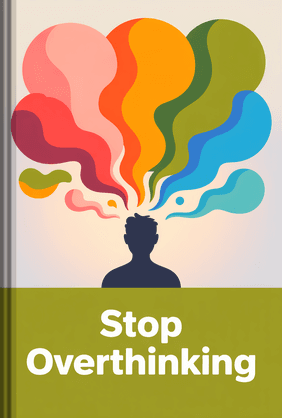
Stop Overthinking
Nick Trenton
 50 Duration
 9 Key Points
 4.5 Rate
How to Be Present: Actionable Daily Strategies
Understanding the theory is easy. Executing it while dealing with an overflowing inbox or sitting in terrible traffic is hard. Learning how to be present requires building small, consistent anchors throughout your day.
1. The Inner Body Anchor
Whenever you feel overwhelmed, shift your focus away from your thoughts and direct it into your body. Close your eyes for ten seconds. Can you feel the life inside your hands? Don't look at them—just feel them. Notice the subtle tingling, the warmth, the energy.
Move that attention to your feet, then your arms, then your chest. This is what Tolle calls "inner body awareness." Your mind cannot think about next week's deadline while your attention is completely absorbed in feeling the physical sensations of your hands. It acts as an instant circuit breaker for anxiety.

2. Routine Activity Immersion
We spend hours every week performing automated tasks while our minds wander. Use these mundane moments as triggers for mindfulness.
When you wash your hands, pay close attention to the sound of the water. Feel the exact temperature—whether it is 60 or 90 degrees Fahrenheit. Smell the soap. Notice the texture of the towel.
When you are waiting in line at a grocery store or tracking an Amazon package on your porch, resist the urge to pull out your phone. Just stand there. Observe the colors around you. Listen to the hum of the refrigerator or the traffic outside. Let the moment just be a moment.
When you are waiting in line at a grocery store or tracking an Amazon package on your porch, resist the urge to pull out your phone. Just stand there. Observe the colors around you. Listen to the hum of the refrigerator or the traffic outside. Let the moment just be a moment.
3. Observe the Thinker
You will inevitably get caught up in negative thoughts again. When you catch yourself doing it, do not judge yourself. Do not get angry. Simply notice it.
Say to yourself: “Oh, there goes my mind worrying about the electric bill again.”
By simply watching the thought without getting emotionally involved, you break its momentum. You step out of the thought stream and back onto the riverbank.
Building these daily anchors takes practice, especially when you are constantly pulled in a dozen different directions. If you want to deepen your ability to find stillness during everyday tasks—whether you are stuck in rush hour traffic or waiting in line at the grocery store—Jon Kabat-Zinn provides a beautiful framework. His approach takes the mystery out of mindfulness, showing you how to embrace the present moment without needing a quiet meditation retreat or hours of free time.

Wherever You Go, There You Are
Jon Kabat-Zinn
19 Duration8 Key Points4.6 RateApplying Eckhart Tolle Mindfulness to a Fast-Paced Life
Incorporating Eckhart Tolle mindfulness doesn't require adding a two-hour meditation block to your already packed schedule. It simply requires a shift in how you approach the things you are already doing.
Transform Your Commute:
Driving 20 miles down the highway is usually a breeding ground for stress. Someone cuts you off, and your blood pressure spikes. Instead of cursing the traffic, use the car as your monastery. Feel the texture of the steering wheel. Listen to the sound of the tires on the pavement. If you prefer to listen to something, skip the angry political podcasts. Put on The Power of Now via Audible or Apple Books, and let the concepts gently remind you to return to the current moment.
Driving 20 miles down the highway is usually a breeding ground for stress. Someone cuts you off, and your blood pressure spikes. Instead of cursing the traffic, use the car as your monastery. Feel the texture of the steering wheel. Listen to the sound of the tires on the pavement. If you prefer to listen to something, skip the angry political podcasts. Put on The Power of Now via Audible or Apple Books, and let the concepts gently remind you to return to the current moment.
Redefine Your Reading Habit:
If you want to deepen your understanding, reading is excellent, but how you read matters. Whether you are holding a physical copy from Barnes & Noble or scrolling through highlights on Goodreads, read slowly. Pause between paragraphs. Tolle’s work isn't meant to be speed-read for information; it is meant to trigger a shift in your consciousness as you read it.
If you want to deepen your understanding, reading is excellent, but how you read matters. Whether you are holding a physical copy from Barnes & Noble or scrolling through highlights on Goodreads, read slowly. Pause between paragraphs. Tolle’s work isn't meant to be speed-read for information; it is meant to trigger a shift in your consciousness as you read it.
If you're inspired to explore his teachings further but aren't sure where to begin, our guide to the best Eckhart Tolle books can help you choose the right one for your journey.
Of course, finding the time and mental energy for deep reading can be tough. For those moments when you're too busy or drained to open a book, you can still absorb the core concepts from authors like Tolle during your commute or a workout.

Listen to the key insights from bestselling mindfulness books in just 15 minutes, making it easier to practice presence even on your most hectic days.

Download LeapAhead App now
If you are serious about applying these concepts to your fast-paced schedule, going straight to the source is the best investment you can make. Eckhart Tolle’s foundational guide is essential reading for anyone trying to escape the heavy burden of their own thoughts. Whether you listen to the audiobook on your morning commute or keep a paperback on your nightstand, this transformative book will completely change the way you experience stress, time, and your own identity.
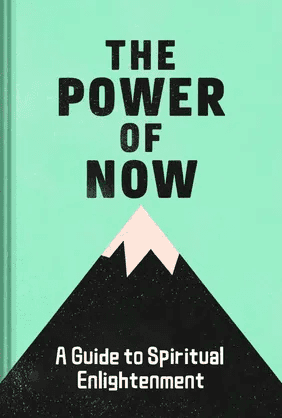
The Power of Now
Eckhart Tolle
36 Duration9 Key Points4.6 RateThe Reality of Living in the Now
A massive misconception about living in the now is that it means you can never plan for the future or that you must accept bad situations without changing them.
This is completely false.
Planning for the future is a practical use of the mind. You sit down, check your bank account, map out your expenses, and set a schedule. That is practical time. Once the planning is done, you close the laptop. Continuing to agonize over the budget while eating dinner with your family is psychological time. It serves zero purpose.

If you are in a toxic job or a bad relationship, accepting the present moment doesn't mean staying a victim. Acceptance simply means acknowledging the reality of the situation without adding layers of emotional drama. You say: "This job is taking a toll on my health. I need to leave." Then you take action. You drop the internal complaining, the bitterness, and the victim mentality. You just deal with the facts.
Shifting your perspective on how you spend your time isn't just about reducing stress; it's about accepting your limits in a hyper-productive culture. When you stop obsessing over an imaginary future, you might realize that trying to optimize every single hour is exactly what's making you miserable. Oliver Burkeman offers a refreshing, counterintuitive take on time management that perfectly complements the practice of living in the present. It is a must-read if you want to stop feeling rushed and start living meaningfully.
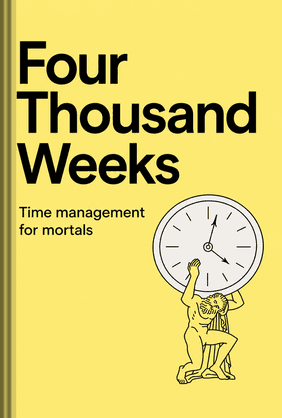
Four Thousand Weeks
Oliver Burkeman
36 Duration7 Key Points4.6 RateCommon Roadblocks to Watch Out For
Trying to Force the Mind to Stop:
You cannot fight the mind with the mind. If you sit down and aggressively think, "I need to stop thinking," you are just creating more mental noise. Stop trying to quiet the mind. Just ignore it by placing your attention somewhere else, like your breath.
You cannot fight the mind with the mind. If you sit down and aggressively think, "I need to stop thinking," you are just creating more mental noise. Stop trying to quiet the mind. Just ignore it by placing your attention somewhere else, like your breath.
Waiting for the "Perfect" Moment:
Your mind will constantly tell you that you can finally relax and be present after this project is done, after the kids graduate, or after you get a promotion. This is a trap. The future never actually arrives. When the future comes, it appears as the present moment. If you cannot find peace now, you will not find it then.
Your mind will constantly tell you that you can finally relax and be present after this project is done, after the kids graduate, or after you get a promotion. This is a trap. The future never actually arrives. When the future comes, it appears as the present moment. If you cannot find peace now, you will not find it then.
Identifying with the Pain-Body:
Tolle frequently discusses the "pain-body"—an accumulation of old emotional pain that lives inside you. It feeds on negative thinking and drama. When you feel a sudden surge of anger or deep sadness, recognize that this is the pain-body getting hungry. Observe the emotion intensely. Feel it in your chest or stomach, but do not let your mind create a story around it. Shone the light of your awareness on it, and it will eventually shrink.
Tolle frequently discusses the "pain-body"—an accumulation of old emotional pain that lives inside you. It feeds on negative thinking and drama. When you feel a sudden surge of anger or deep sadness, recognize that this is the pain-body getting hungry. Observe the emotion intensely. Feel it in your chest or stomach, but do not let your mind create a story around it. Shone the light of your awareness on it, and it will eventually shrink.
Understanding this concept is crucial for breaking free from recurring negative emotions. To learn more about this energy field and its influence on your life, read our in-depth guide on how to recognize and dissolve the pain-body.
Living a conscious life is not a one-time achievement. It is a continuous, moment-by-moment choice to step out of the illusion of time and embrace the only thing that is ever truly real: right now.
Building this habit requires consistent reinforcement. If you find your old thought patterns creeping back in on busy days, having a simple way to reconnect with these powerful ideas can make all the difference.
Get daily reminders and 15-minute summaries of books on mindfulness and focus, helping you stay anchored in the present when life gets chaotic.
Download LeapAhead App now
FAQ
How long does it take to learn how to live in the present moment?
There is no timeline because time itself is part of the problem. You can step into the present moment instantly. The challenge is staying there. It takes consistent daily practice—often just seconds at a time—to build the habit of catching your mind wandering and gently bringing your focus back to the now.
There is no timeline because time itself is part of the problem. You can step into the present moment instantly. The challenge is staying there. It takes consistent daily practice—often just seconds at a time—to build the habit of catching your mind wandering and gently bringing your focus back to the now.
Can I be present while planning for the future?
Yes. Tolle distinguishes between "clock time" and "psychological time." Using clock time to book a flight or schedule a doctor's appointment is necessary and practical. Psychological time is when you obsess, worry, or build your identity around future events. Plan practically, then return your attention to what you are doing today.
Yes. Tolle distinguishes between "clock time" and "psychological time." Using clock time to book a flight or schedule a doctor's appointment is necessary and practical. Psychological time is when you obsess, worry, or build your identity around future events. Plan practically, then return your attention to what you are doing today.
What if my current situation is painful or unbearable?
If your present situation is intolerable, you have three options: remove yourself from the situation, change it, or accept it totally. The suffering comes from the internal resistance—the voice in your head constantly complaining about how unfair it is. Take action to fix the problem, but do it without the emotional baggage of anger and resentment.
If your present situation is intolerable, you have three options: remove yourself from the situation, change it, or accept it totally. The suffering comes from the internal resistance—the voice in your head constantly complaining about how unfair it is. Take action to fix the problem, but do it without the emotional baggage of anger and resentment.
How do I handle negative thoughts when they keep coming back?
Do not fight them. Treat negative thoughts like passing cars while you sit on a porch. Acknowledge that the car drove by, but do not run out into the street to chase it. Shift your attention immediately to a physical sensation, like the feeling of your feet on the floor or the rhythm of your breathing.
Do not fight them. Treat negative thoughts like passing cars while you sit on a porch. Acknowledge that the car drove by, but do not run out into the street to chase it. Shift your attention immediately to a physical sensation, like the feeling of your feet on the floor or the rhythm of your breathing.