

You read the books. You understand the value of staying present. Yet, out of nowhere, a minor comment from a coworker or a partner sends a massive surge of anger or deep sadness through your system. It feels like a completely different personality hijacks your brain, desperately looking for an argument or a reason to suffer. This overwhelming, uncontrollable wave of historical emotion is exactly the problem you are facing. To stop it from running your life, you need to understand its mechanics and learn how to dismantle it.
What is the Pain Body?
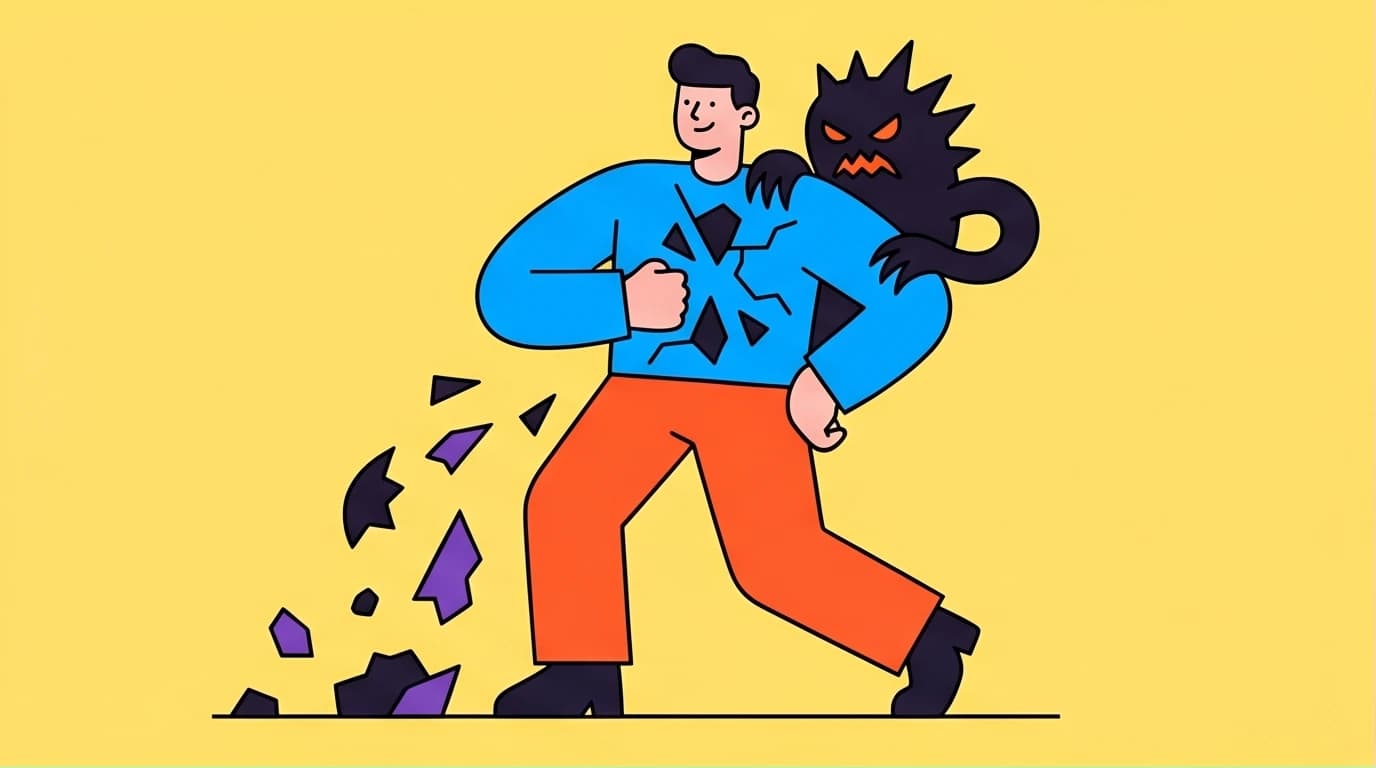
Every time you experience intense emotional pain and fail to fully process or accept it in the moment, it leaves behind a residue. Over time, these residues merge into a unified energy field within you. If you are wondering exactly what is the pain body, think of it as a semi-autonomous psychic entity made entirely of unprocessed emotional trauma.
It is the heavy baggage of your past. The emotional pain body Eckhart Tolle brought to mainstream awareness operates almost like a parasite. It has two stages: dormant and active. When dormant, you might feel perfectly fine, rational, and calm. But when triggered by an event, a specific word, or even a particular tone of voice, it wakes up.
Once awake, its sole purpose is survival. And like any living entity, it needs food. The pain-body feeds exclusively on experiences that resonate with its own frequency: anger, drama, grief, violence, and conflict. It does not want joy. It does not want peace. It actively seeks out situations that will generate more pain so it can consume that energy and grow larger.
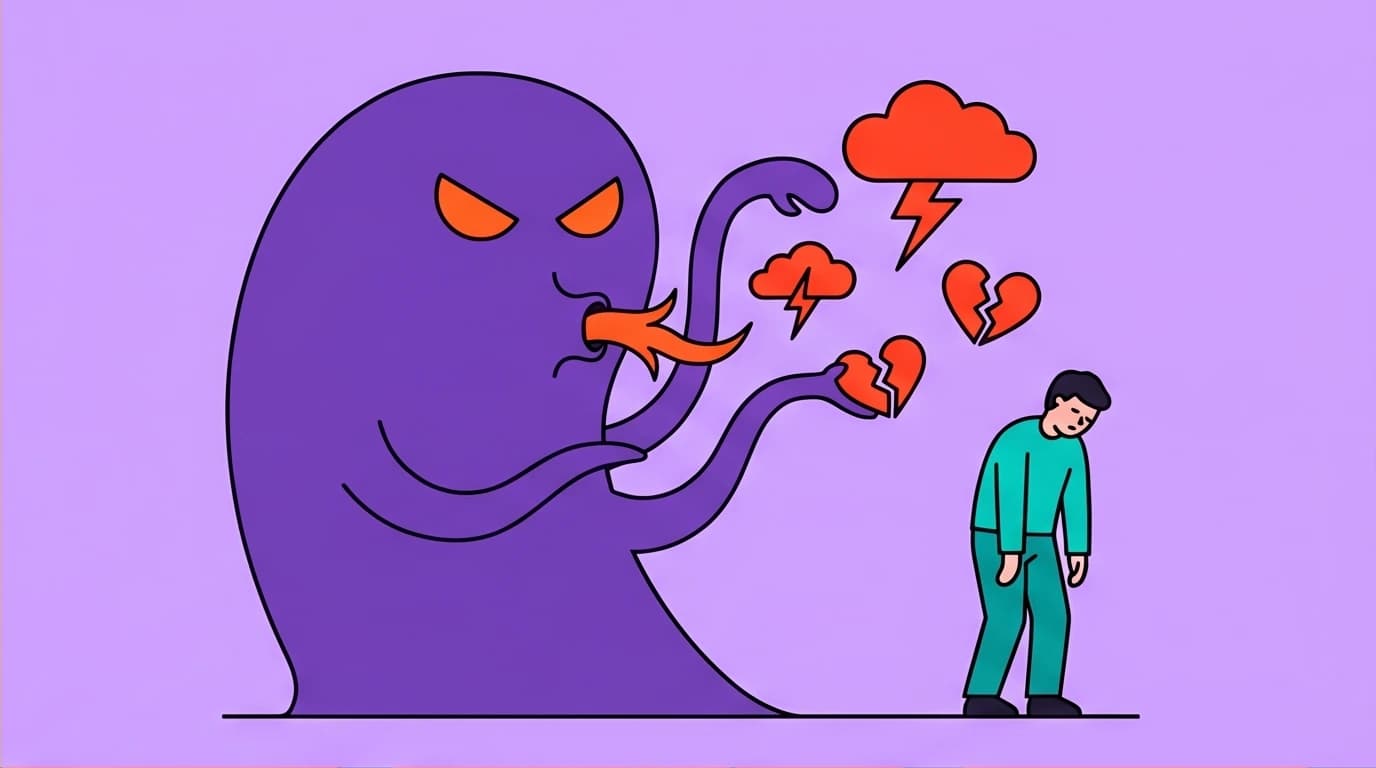
This is why you sometimes catch yourself starting arguments over trivial matters. You know you are being irrational, but you cannot stop. That is not you talking; that is the pain-body feeding.
Understanding the pain-body is a crucial first step. To see how this concept fits within Eckhart Tolle's broader teachings on presence and consciousness, it's helpful to review the core ideas from his groundbreaking book.
The Symbiotic Loop: Mind, Ego, and Pain
To fully grasp the Eckhart Tolle pain body explained in practical terms, you must understand its relationship with your mind. The pain-body does not operate in isolation. It teams up with your ego.
When looking at The Power of Now ego explained by Tolle, the ego is essentially your false sense of self, constructed from your past experiences, labels, and thoughts. The ego needs problems and conflicts to strengthen its identity. "I am the victim," "I am the one who is always treated unfairly."
When the pain-body wakes up, it immediately invades your mind. It takes control of your internal dialogue. Suddenly, your thoughts become intensely negative, hostile, or depressive. The ego supplies the storyline, and the pain-body supplies the emotional intensity.
- The Trigger: A neutral event occurs (someone doesn't text you back).
- The Ego's Story: Your mind creates a narrative ("They don't respect me; people always abandon me").
- The Pain-Body's Reaction: Your body floods with anxiety and anger.
- The Loop: The intense emotion fuels more toxic thoughts, and those toxic thoughts generate more painful emotion.
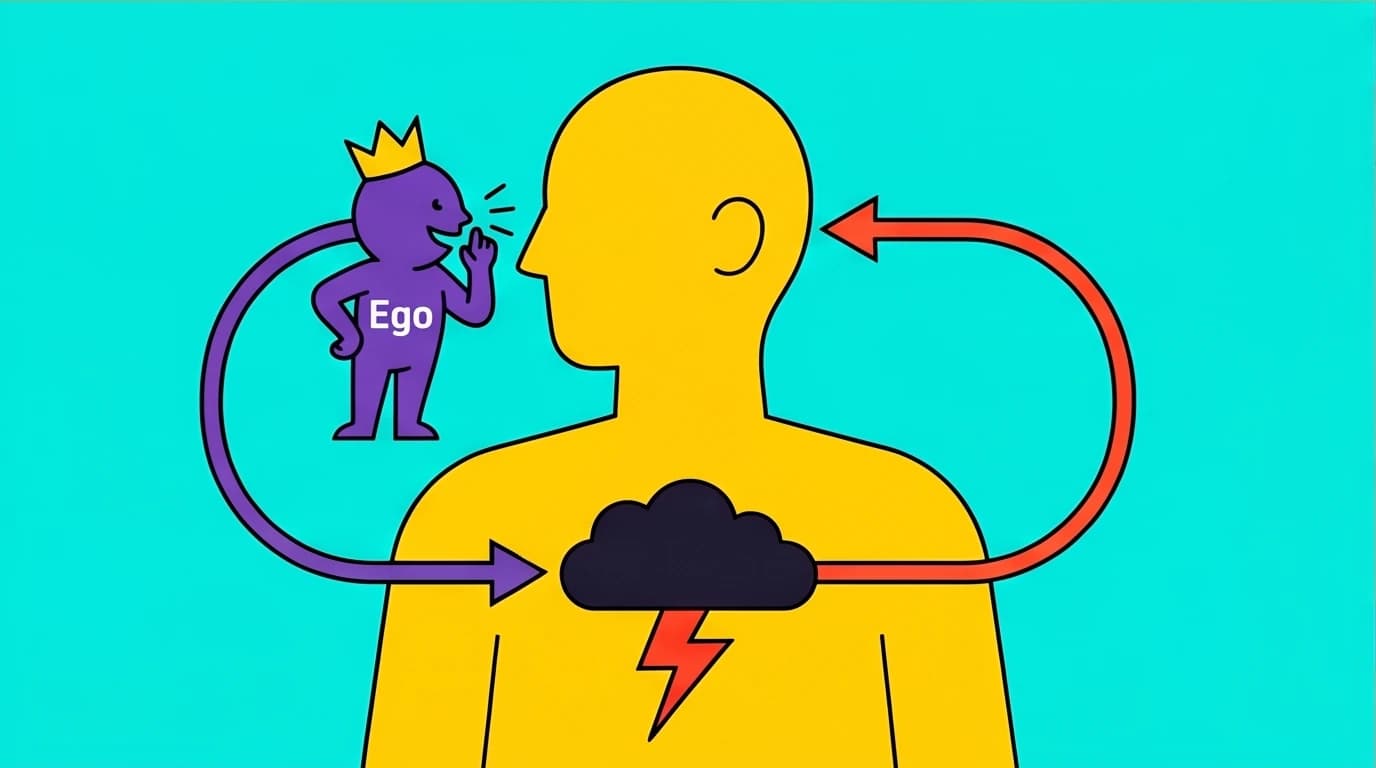
This vicious cycle can last for hours, days, or even weeks. As long as you believe the thoughts in your head, you remain trapped in the loop.
Since this article touches on the mechanics of the ego as outlined by Eckhart Tolle, you might be looking to explore his foundational work firsthand. Understanding how to separate your true self from the constant stream of negative mental chatter is much easier when you have a comprehensive guide to staying anchored in the present. This modern classic is essential reading if you want to stop feeding your pain-body and start reclaiming your peace of mind.
The Power of Now
Eckhart Tolle
 36 Duration
 9 Key Points
 4.6 Rate
While diving deep into Tolle's work is invaluable, finding the time for such foundational reading can be a challenge. If you want to grasp these core concepts quickly, an app can help.


Absorb the key ideas from essential self-improvement books like The Power of Now in just 15-minute audio or text sessions, making profound concepts easier to digest.
 LeapAhead
How to Get Rid of the Pain Body (and Why the Phrasing is a Trap)
People constantly ask how to get rid of the pain body, but this desire itself contains a fatal flaw. You cannot fight the pain-body. Fighting it creates resistance, and resistance is a form of negative energy—the exact food the pain-body eats. If you hate your pain-body, you make it stronger.
You do not destroy it through willpower. You dissolve it through conscious awareness. Here is the exact psychological and spiritual method to dis-identify from it.
Step 1: Catch It at the Moment of Awakening
The hardest part is noticing the shift. Pay attention to sudden changes in your mood. Do you feel a sudden heaviness in your chest? A tight knot in your stomach? A strong, compulsive urge to say something sharp and defensive? Recognize this physical sensation immediately. Tell yourself, "The pain-body has been triggered." Labeling it separates you from it.
Step 2: Cut the Link Between Emotion and Thought
Do not let the emotion travel up into your head. The moment you feel the heavy emotion, your mind will desperately try to attach a story to it ("I am angry because John did X"). Refuse to follow the story.
Direct your complete attention to the physical sensation in your body. Feel the burning anger or the crushing sadness as raw energy. By focusing on the feeling rather than the story, you starve the pain-body of its primary food source: your thoughts.
Direct your complete attention to the physical sensation in your body. Feel the burning anger or the crushing sadness as raw energy. By focusing on the feeling rather than the story, you starve the pain-body of its primary food source: your thoughts.
Step 3: Become the Silent Watcher
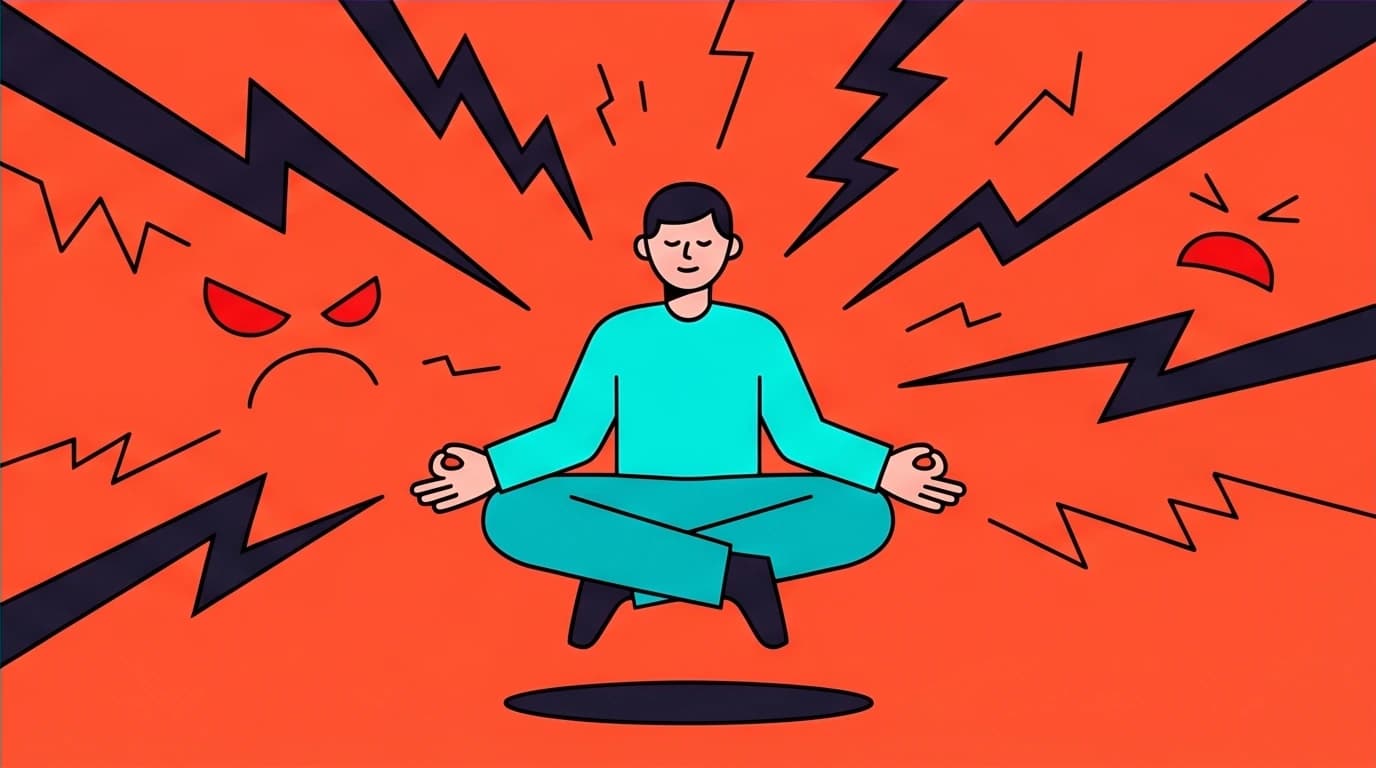
Shift your identity from the person experiencing the pain to the witness observing the pain. You are not the anger; you are the awareness that notices the anger. This is the core mechanism of dis-identification. When you watch the pain-body without judging it, without trying to change it, and without analyzing it, it loses its grip on you.
Step 4: Allow It to Be There
Accept the physical discomfort. It might feel deeply unpleasant. It might feel like a dark cloud sitting over your chest. Let it be there. Do not suppress it. As you shine the light of your conscious presence onto this old energy, it slowly transmutes. The pain-body begins to lose its charge. Over time, what used to be a massive emotional explosion becomes a minor, manageable wave.
Learning to become the silent watcher of your own thoughts is a practice that can completely transform how you handle stress. If you are struggling to detach from overwhelming emotional waves, it helps to read more about the mechanics of human consciousness. Taking a step back to simply observe your inner world without judgment is exactly what Michael A. Singer teaches, making his insights a perfect complement to Tolle’s philosophy.

The Untethered Soul
Michael A. Singer
26 Duration9 Key Points4.6 RateThe process of becoming a 'silent watcher' is a fundamental skill. If you want to explore more hands-on techniques for integrating this and other Tolle-inspired methods into your daily life to reduce anxiety and stress, we have a guide for that.
The Psychological Reality Behind the Concept
Tolle’s framework aligns perfectly with modern clinical psychology and trauma therapy. Psychologists understand that trauma is not just a mental memory; it is stored in the nervous system. As documented in foundational trauma works like The Body Keeps the Score, the body retains physical imprints of past distressing events.
When Tolle talks about a dormant pain-body waking up, a psychologist would call this an "amygdala hijack" or an "emotional flashback." Your brain perceives a current situation as a replica of past trauma and floods your system with stress hormones (cortisol and adrenaline).
The method of becoming the "watcher" maps directly onto Cognitive Defusion in Acceptance and Commitment Therapy (ACT) and somatic tracking in mindfulness-based therapies. You are essentially training your prefrontal cortex (the logical, observing part of the brain) to stay online while your limbic system (the emotional center) is firing. This neuroplasticity physically rewires your brain, shrinking the neural pathways associated with your triggers.
To truly grasp why your nervous system reacts as if it is under threat, diving into the science of trauma is highly recommended. As mentioned above, clinical research proves that unprocessed emotional pain isn't just in your head—it leaves a literal, biological imprint on your physical body. For readers who want to understand the profound connection between past experiences and present-day triggers, Dr. Bessel van der Kolk’s landmark research is an indispensable resource.
The Body Keeps The Score
Bessel Van Der Kolk
32 Duration10 Key Points4.5 RateInterpersonal Drama: When Pain-Bodies Collide
One of the most destructive aspects of the pain-body is its impact on relationships. Pain-bodies love other pain-bodies.
If your partner’s pain-body activates and they make a passive-aggressive comment, it is a direct attempt to trigger yours. If you react, both pain-bodies enter a feeding frenzy. You will argue for hours, bringing up events from five years ago, totally detached from the present moment. Once both entities have consumed enough negative energy, they go back to sleep, leaving you and your partner feeling drained, guilty, and confused about why the fight even happened.
To stop this, one person must break the circuit. When you see your partner acting out of character, recognize that you are not talking to them; you are dealing with their active pain-body. Stay deeply rooted in the present. Do not react defensively. Your intense, calm presence will eventually starve their pain-body of the drama it needs, forcing it to subside.
Common Pitfalls in the Healing Process
Dismantling years of emotional accumulation requires patience. Avoid these common traps:
- Judging yourself for failing: You will inevitably get pulled back into the pain-body. You will lose your temper. When you realize it happened, do not feel guilty. Guilt is just another negative emotion for it to feed on. Acknowledge the lapse and return to the present.
- Expecting an overnight cure: Transmuting the pain-body takes time. You are chipping away at an entity built over decades. Focus on making the gaps of awareness between triggers longer, rather than demanding immediate perfection.
- Creating an identity around being "awake": Sometimes the ego sneaks in the back door. It starts feeling superior because you "understand the pain-body" and others do not. This spiritual superiority is just the ego wearing a new disguise.
Living free from the heavy anchor of past trauma is possible. It does not require analyzing every childhood memory or fighting your own mind. It requires the courage to sit still, observe the darkness within, and simply refuse to let it dictate your present reality.
Approaching your dark, heavy emotions with curiosity instead of hostility requires a major paradigm shift. Instead of viewing your pain-body as a monster that needs to be destroyed, it is incredibly healing to view it as a wounded part of your psyche that simply needs to be witnessed. If you are tired of fighting your own mind and want to explore a compassionate, psychology-backed method for embracing all aspects of yourself, the Internal Family Systems framework offers a brilliant path forward.

No Bad Parts
Richard Schwartz Ph.D.
22 Duration7 Key Points4.6 RateBuilding a reading list of transformative books is the first step, but tackling it can feel daunting, especially on busy days. For those looking for a way to consistently learn without the pressure, a microlearning approach can be a game-changer.
Clear your reading list by listening to the core insights of bestselling books on personal growth and psychology during your commute or workout, turning spare moments into learning time.
LeapAheadFAQ
Is the pain-body a recognized psychological condition?
While "pain-body" is a spiritual and philosophical term rather than a clinical diagnosis, the phenomena it describes—emotional dysregulation, trauma triggers, emotional flashbacks, and somatic memory—are heavily validated by modern psychology and neuroscience.
While "pain-body" is a spiritual and philosophical term rather than a clinical diagnosis, the phenomena it describes—emotional dysregulation, trauma triggers, emotional flashbacks, and somatic memory—are heavily validated by modern psychology and neuroscience.
Can I completely eliminate my pain-body?
You cannot eliminate it by force, and expecting a permanent state of zero negative emotion is unrealistic. However, through continuous conscious observation, the pain-body loses its density and its ability to hijack your mind. It transforms from a destructive monster into a quiet, manageable remnant that rarely affects your behavior.
You cannot eliminate it by force, and expecting a permanent state of zero negative emotion is unrealistic. However, through continuous conscious observation, the pain-body loses its density and its ability to hijack your mind. It transforms from a destructive monster into a quiet, manageable remnant that rarely affects your behavior.
How long does it take to shrink the pain-body?
It varies entirely based on the density of your past trauma and the consistency of your present-moment awareness. You will likely notice a drop in the intensity of your reactions within a few weeks of practicing conscious observation. Total transmutation is a gradual, lifelong process of staying present.
It varies entirely based on the density of your past trauma and the consistency of your present-moment awareness. You will likely notice a drop in the intensity of your reactions within a few weeks of practicing conscious observation. Total transmutation is a gradual, lifelong process of staying present.
What should I do if someone else's pain-body is triggered?
Do not tell them their pain-body is active—this will only enrage them further. Instead, stay grounded, maintain a non-reactive presence, and refuse to engage in defensive arguments. Your lack of reaction deprives their pain-body of the fuel it needs to keep going.
Do not tell them their pain-body is active—this will only enrage them further. Instead, stay grounded, maintain a non-reactive presence, and refuse to engage in defensive arguments. Your lack of reaction deprives their pain-body of the fuel it needs to keep going.