

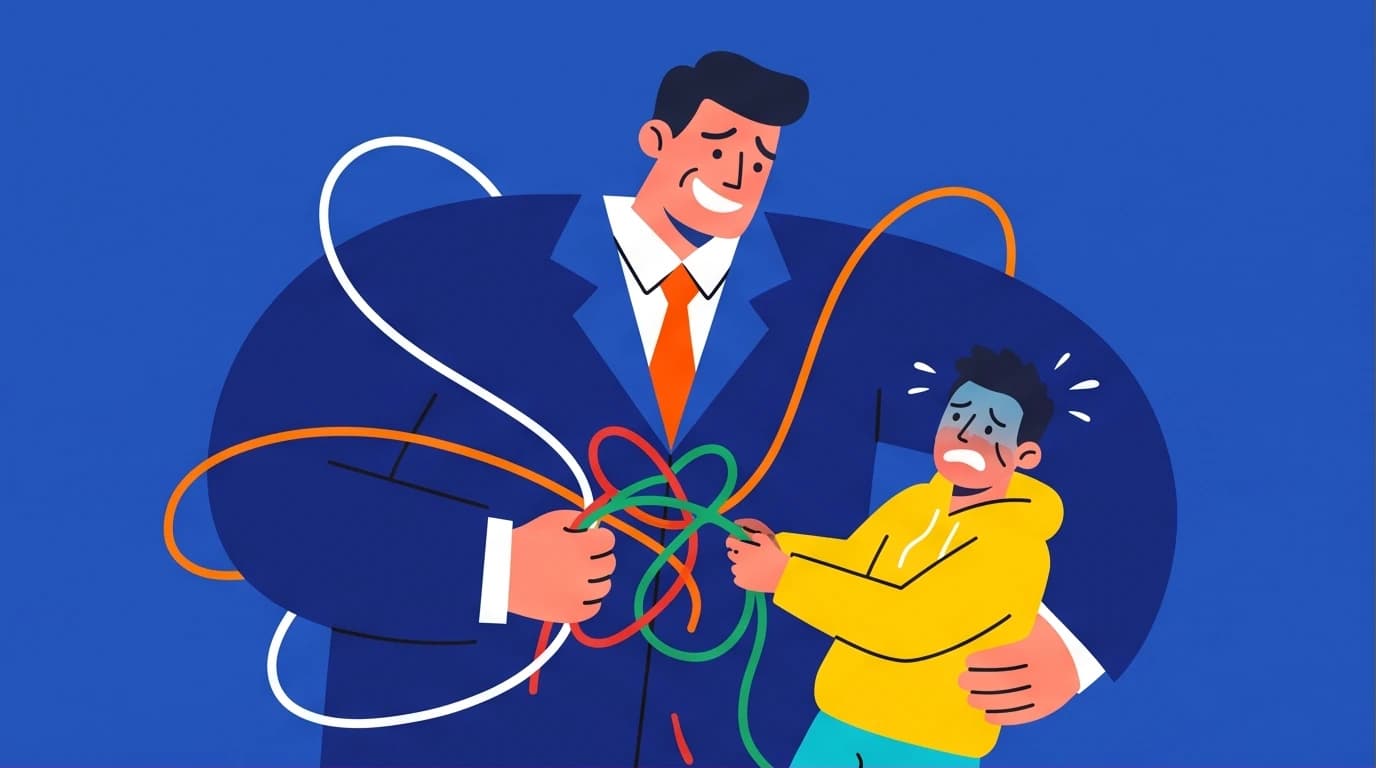
You feel suffocated by your family's constant need to know every detail of your life. Saying "no" to a simple request triggers overwhelming guilt, and your parent's bad mood instantly ruins your entire day. You are not just dealing with a close-knit family; you are caught in a psychological web where individuality is treated as a betrayal.
Breaking away from this dynamic requires understanding the mechanics of enmeshment, diagnosing the trauma it causes, and learning to rebuild the boundaries that were never allowed to exist.
What Are Enmeshed Family Dynamics?
In a healthy family system, closeness coexists with independence. You can love your family while holding different political views, making independent career choices, and keeping parts of your life private.
Enmeshed family dynamics operate on a different set of rules. First identified by family therapist Salvador Minuchin, enmeshment describes a relationship system lacking clear boundaries. Emotions are contagious; if a parent is anxious, the child is expected to be anxious. Roles are often reversed, with children acting as emotional caretakers for their parents. In these families, privacy is viewed as secrecy, and separation is viewed as abandonment.
Recognizing the Signs of Enmeshment Trauma
Growing up in an enmeshed environment leaves deep psychological scars. Because you were never allowed to develop a distinct self, adult life often feels confusing and exhausting. The signs of enmeshment trauma manifest in several distinct ways:

- Chronic Guilt: You feel a constant, baseline level of guilt whenever you prioritize your own needs, hobbies, or partner over your family of origin.
- Emotional Contagion: You cannot regulate your own emotions if a parent is upset. Their mood dictates your reality.
- Identity Confusion: You struggle to answer the question, "What do I actually want?" Your choices in career, relationships, and even where you live are heavily filtered through what would appease your parents.
- Fear of Conflict: You go to extreme lengths to avoid upsetting your family, often masking your true feelings or flat-out lying to keep the peace.
- Over-sharing: You feel an uncontrollable urge to report your daily activities, finances, and relationship struggles to your parents, even when you know they will use that information to criticize you.
Recognizing these patterns is the first step toward recovery. The journey of untangling your identity from your family's emotional system is a form of trauma recovery.
The Root Cause: Unhealthy Attachment Styles in Parents
Enmeshment rarely stems from malice. It is almost always a byproduct of unhealthy attachment styles parent figures developed during their own childhoods.
Parents who force enmeshment typically have an anxious attachment style. They harbor a deep-seated fear of abandonment and use control, masked as intense love and concern, to keep their children close. They rely on their children for emotional regulation because they lack the tools to self-soothe. By making the child completely dependent on them—or by making themselves completely dependent on the child—they ensure they will never be left alone.

Understanding this dynamic is critical. It shifts your perspective from "my parent is evil" to "my parent is emotionally unequipped." This realization allows you to set boundaries based on your needs, rather than acting out of anger.
If you are struggling to accept that your parent's controlling behavior comes from their own unhealed wounds rather than a place of healthy love, you are certainly not alone. Coming to terms with a parent's emotional limitations is a profound step in your healing journey. For a deeper dive into why some parents rely on their children for emotional regulation and how you can protect your own peace while dealing with them, this highly recommended guide is a must-read.

Adult Children of Emotionally Immature Parents
Lindsay C. Gibson, Psy.D.
 39 Duration
 8 Key Points
 4.6 Rate
The Specific Weight of Mother-Daughter Enmeshment
While enmeshment can happen between any parent and child, mother daughter enmeshment is particularly common and uniquely difficult to untangle. Society heavily romanticizes the "mother and daughter as best friends" narrative.
In an enmeshed mother-daughter relationship, the mother often treats the daughter as an extension of herself, a therapist, or a peer. The lack of boundaries with mother figures in these scenarios looks like this:
- The mother sharing highly inappropriate details about her marriage or sex life.
- The mother demanding daily or multi-daily phone calls and getting frantic if a text goes unanswered for an hour.
- Extreme jealousy if the daughter spends time with other friends or a romantic partner.
The daughter learns that her primary job in life is to keep her mother stabilized. Breaking this specific bond often feels like a violent act, but it is a necessary step for psychological survival.
This dynamic is especially pronounced when a mother has narcissistic traits, as the child's purpose becomes to serve the parent's emotional needs.
Untangling yourself from a mother-daughter enmeshment dynamic can be one of the most painful, guilt-ridden processes you will ever go through. Because our culture expects mothers and daughters to be inseparable, setting limits often feels like a deep betrayal. If you find yourself constantly trying to manage your mother's feelings or seeking her impossible approval, this insightful book provides a compassionate, practical roadmap for daughters who are ready to finally reclaim their individuality.

Will I Ever Be Good Enough?
Dr. Karyl McBride, Ph.D.
20 Duration8 Key Points4.4 RateHow to Establish Boundaries and Reclaim Your Identity
Untangling yourself from enmeshed family dynamics is not a one-time event; it is a prolonged campaign of behavioral changes. You cannot reason a boundary into existence. You must enact it.
1. Identify Your Non-Negotiables
Start by defining exactly where the enmeshment is hurting you the most. Is it the daily phone calls? The unannounced visits? The unsolicited financial advice? Pick one specific area to tackle first. Do not try to fix the entire relationship structure overnight.
2. Implement Micro-Boundaries
If setting a massive boundary feels impossible, start micro-dosing independence.
- The Information Diet: Stop volunteering sensitive information. If you are struggling at work, talk to a therapist or a friend, not the enmeshed parent who will use it to heighten their own anxiety.
- Delayed Responses: If your parent expects an immediate text back, wait 30 minutes. Next week, wait an hour. Break the expectation of immediate access.
3. Use Clear, Declarative Scripts
When enforcing a boundary, do not over-explain, apologize, or ask for permission. Justify less.
- Instead of: "Mom, I'm so sorry, I'm just really busy with work and I feel overwhelmed, so I can't come to dinner on Sunday, is that okay?"
- Use: "I won't be able to make it to dinner this Sunday. I need the weekend to rest. I'll call you on Tuesday."
Learning what to say and how to say it without apologizing for your own existence is a skill that takes practice. It can be incredibly intimidating to voice your needs after a lifetime of staying quiet to keep the peace. If you want actionable advice on exactly how to communicate your limits—and how to handle the inevitable pushback from your family without backing down—this empowering book offers step-by-step strategies for living a more authentic life.

Set Boundaries, Find Peace
Nedra Glover Tawwab
29 Duration10 Key Points4.5 Rate4. Weather the "Extinction Burst"
In behavioral psychology, an "extinction burst" happens when a behavior that previously yielded a reward suddenly stops working. When you start enforcing boundaries, your parents will escalate their behavior. They may cry, throw tantrums, give you the silent treatment, or accuse you of abandoning them.
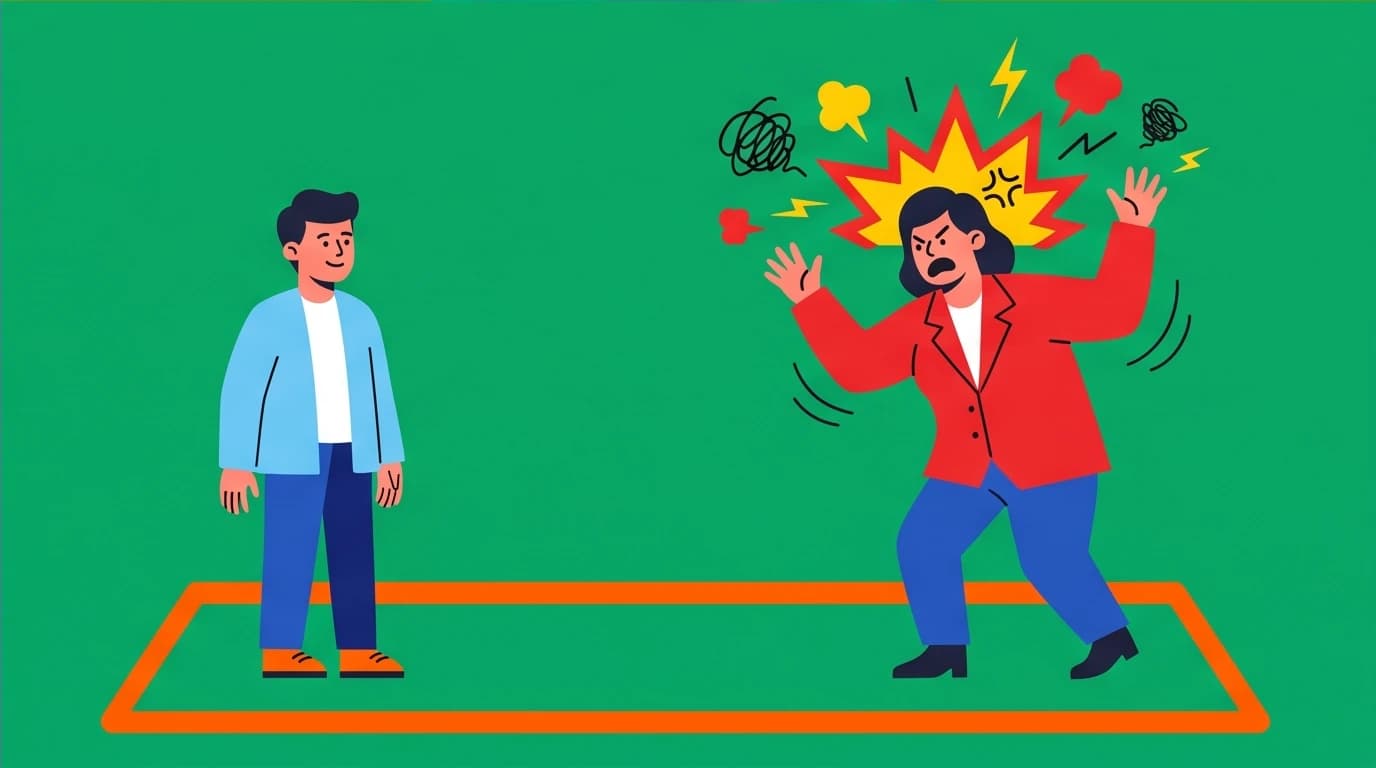
Anticipate this reaction. Recognize it not as a sign that you are doing something wrong, but as proof that the boundary is working. Do not cave. If you give in during the extinction burst, you teach them that emotional blackmail is still an effective tool.
When your family uses tantrums, silent treatments, or intense guilt trips to force you back into your old role, it can feel impossible to stand your ground. This kind of manipulation is specifically designed to break your resolve and make you second-guess yourself. To help you navigate these high-pressure reactions and stop falling victim to the cycle of fear, obligation, and guilt, consider picking up this classic resource on identifying and disarming manipulative family behavior.

Emotional Blackmail
Susan Forward, PhD, with Donna Frazier
36 Duration10 Key Points4.7 Rate5. Reprogram Your Relationship with Guilt
In an enmeshed family, you have been conditioned to interpret guilt as an alarm bell signaling you have done something terrible. You must rewire this association.
When you set a healthy boundary and feel a crushing wave of guilt, treat that guilt as a symptom of your conditioning, not a reflection of reality. Feeling guilty does not mean you are a bad child; it means you are breaking a decades-old psychological habit. Tolerate the discomfort. It fades over time.
All of these books offer powerful roadmaps, but the emotional work of healing from enmeshment can leave you feeling too drained to read them. If you want to start absorbing these critical insights without the pressure of another task on your to-do list, an app might be a helpful tool.

LeapAhead lets you grasp the core lessons from popular psychology books in 15-minute audio or text summaries, helping you learn to set boundaries and heal even on your most exhausting days.

Download LeapAhead App now
FAQ
Does setting boundaries mean I have to cut my parents out of my life?
No. Setting boundaries is actually the only way to sustain a relationship with your parents long-term. Without boundaries, resentment builds until going completely "no contact" feels like the only option. Boundaries protect the relationship by making it safe for you to participate in it.
No. Setting boundaries is actually the only way to sustain a relationship with your parents long-term. Without boundaries, resentment builds until going completely "no contact" feels like the only option. Boundaries protect the relationship by making it safe for you to participate in it.
How do I deal with a parent who says "You've changed" when I set limits?
Agree with them. "You are right, I have changed. I am learning how to manage my own life and take care of my mental health." You do not need to defend your growth. Their observation is accurate; their negative framing of it is the problem.
Agree with them. "You are right, I have changed. I am learning how to manage my own life and take care of my mental health." You do not need to defend your growth. Their observation is accurate; their negative framing of it is the problem.
Is an enmeshed family dynamic considered emotional abuse?
While it is often driven by a parent's unmanaged anxiety rather than intentional malice, enmeshment is a form of emotional dysfunction that causes severe psychological harm. Whether you label it abuse or profound dysfunction, the impact on the child—loss of identity, chronic anxiety, and boundary blindness—requires serious psychological recovery.
While it is often driven by a parent's unmanaged anxiety rather than intentional malice, enmeshment is a form of emotional dysfunction that causes severe psychological harm. Whether you label it abuse or profound dysfunction, the impact on the child—loss of identity, chronic anxiety, and boundary blindness—requires serious psychological recovery.
Will my enmeshed parents ever realize what they are doing?
Some parents possess the self-awareness to recognize their unhealthy patterns when confronted, often with the help of family therapy. However, many will remain defensive and never fully understand. Your goal is not to force them to understand your boundaries; your goal is simply to enforce them, regardless of their comprehension.
Some parents possess the self-awareness to recognize their unhealthy patterns when confronted, often with the help of family therapy. However, many will remain defensive and never fully understand. Your goal is not to force them to understand your boundaries; your goal is simply to enforce them, regardless of their comprehension.