

Your third grader throws their pencil across the kitchen table because a math worksheet is "too hard." Your middle schooler begs to drop out of the school band three weeks into the semester. As a parent or educator, you feel that familiar knot in your stomach. You do not want them to be miserable, but you also cannot let them quit every time life gets uncomfortable.
Talent is rarely enough to guarantee success. What matters more is stamina—the ability to stick with a challenge, bounce back from failure, and keep moving forward.
If you want to know how to build grit in kids, you need to move beyond motivational posters. You need practical, daily habits that shift how children perceive struggle. Here is how to create an environment where giving up is no longer the default option.

Growth Mindset vs Grit: Understanding the Core Difference
Before you can build resilience, you have to understand the mechanics behind it. Walk into any Barnes & Noble or search Amazon for parenting books, and you will see these two terms everywhere. They are related, but they are not the same thing.
Growth mindset is the underlying belief. Coined by psychologist Carol Dweck, it is the understanding that intelligence and abilities are not fixed traits. A child with a growth mindset believes, "If I practice, I will get better."
Grit, popularized by Angela Duckworth, is the behavior. It is passion and perseverance for long-term goals.
Think of growth mindset as the engine and grit as the fuel. A child needs the growth mindset to believe that their effort matters. But they need grit to actually sit down and practice the piano for thirty minutes every Tuesday, even when their friends are playing outside. You cannot have grit without a growth mindset, but a growth mindset alone will not survive without the behavioral habits of grit.
To truly grasp the engine that drives a child's resilience, it helps to go straight to the source. Psychologist Carol Dweck's groundbreaking research reveals exactly why praising intelligence backfires and how shifting to a growth-oriented framework transforms the way kids approach challenges. If you want to dive deeper into the science of why some children thrive under pressure while others crumble, her foundational book is a must-read for any parent or educator.

Mindset
Carol S. Dweck
 51 Duration
 8 Key Points
 4.6 Rate
Parenting for Perseverance: Age-by-Age Strategies
Building grit at home requires adjusting your approach as your child develops. What works for a kindergartener will alienate a high school sophomore.
Early Childhood (Ages 4-7): The "Power of Yet"
Young children are natural scientists. They fail repeatedly when learning to walk or talk, yet they do not judge themselves. Around school age, however, they start comparing themselves to peers.
- Praise the process, not the person: Stop saying, "You are so smart." Start saying, "I love how hard you worked on that puzzle."
- Introduce "Yet": When your child says, "I cannot ride this bike," you immediately add the word "yet." "You cannot ride it yet." This tiny linguistic shift frames frustration as a temporary state, not a permanent limitation.
- Let them struggle: If they are trying to zip their jacket, do not step in immediately. Wait ten seconds. Let them experience the frustration and the subsequent victory of figuring it out.
Middle Childhood (Ages 8-12): The "Hard Thing" Rule
This is the age where kids start hobbies and quickly want to abandon them when the initial novelty wears off. Implement the "Hard Thing Rule," a staple strategy for parenting for perseverance.
- Everyone does a hard thing: Every family member (including parents) must pick one challenging activity that requires daily, deliberate practice. It could be learning Spanish, playing soccer, or mastering coding.
- You cannot quit in the middle: If they sign up for a fall baseball league, they must finish the season. If they start piano, they commit to six months. They are not allowed to quit on a bad day.
- They get to choose: You do not pick the activity; they do. Autonomy drives intrinsic motivation. Once the commitment period is over, they can choose to quit, but they must replace it with a new "hard thing."
The "Hard Thing Rule" is actually a famous concept popularized by researcher Angela Duckworth in her extensive studies on what makes high achievers successful. If you are looking for practical, science-backed strategies to help your kids develop passion and perseverance, her definitive guide breaks down exactly how to cultivate these traits at home. It is an incredibly encouraging read that proves long-term stamina matters far more than natural-born talent.
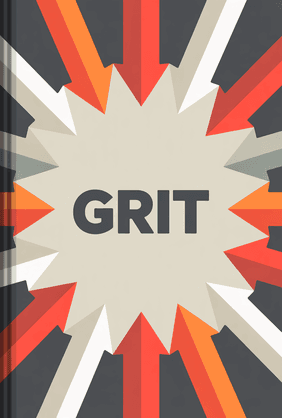
Grit
Angela Duckworth
18 Duration8 Key Points4.6 RateAs a busy parent, it can be tough to find the time to read all these insightful books on top of everything else.


LeapAhead offers 15-minute summaries of parenting and psychology bestsellers like *Grit*, helping you absorb key strategies for raising resilient kids during your commute or coffee break.
 LeapAhead
Teens (Ages 13-18): Purpose and Passion
Teenagers will not push through difficulty just because you tell them to. They need to see the "why."
- Connect effort to their goals: If they are stressed about AP classes or SAT prep, help them connect today’s annoying assignment to their long-term vision of college or a specific career.
- Model failure recovery: Talk openly about your own setbacks at work. Share how you handled a lost client or a bad performance review. Teens need to see that adults fail, survive, and adapt.
Teaching Grit to Students: A Guide for the K-12 Classroom
Educators face a unique challenge. State testing, strict grading rubrics, and the sheer volume of a classroom can inadvertently punish failure. Teaching grit to students requires shifting the classroom culture from a performance-based room to a mastery-based room.
Normalize the Struggle
Create a "Famous Failures" bulletin board. Feature Michael Jordan being cut from his high school basketball team, or Thomas Edison's thousands of failed attempts at the lightbulb. Show students that frustration is not a sign of stupidity; it is the physiological feeling of learning.
Grade for Growth
If a student bombs a math test and gets a D, the traditional model tells them the learning is over and they failed. A gritty classroom allows for redemption. Offer students the chance to analyze their mistakes, correct them, and earn back a portion of the points. This teaches them that a poor performance is a starting point for improvement, not a final verdict.
Audit Your Praise
Teachers move fast, and it is easy to say, "Great job, you are a natural." Shift your classroom vocabulary. Use phrases like:
- "I noticed you tried three different strategies to solve that equation."
- "You completely missed the mark on the first draft, but your revisions were incredibly thoughtful."
Transforming a classroom culture to prioritize perseverance over perfect test scores is no easy feat. For educators and parents curious about why character traits like grit, curiosity, and hidden resilience often outrank IQ when it comes to long-term achievement, Paul Tough offers a compelling look into the modern educational landscape. His insights provide a brilliant roadmap for adults trying to help students navigate adversity and succeed both in and out of the classroom.

How Children Succeed
Paul Tough
46 Duration9 Key Points4.6 RateRaising Gritty Children: 3 Common Pitfalls to Avoid
Even with the best intentions, parents and coaches often sabotage their own efforts. Raising gritty children means knowing what not to do.
1. Snowplow Parenting
Helicopter parents hover; snowplow parents clear the path. If you rush to the school to deliver a forgotten lunch, or if you immediately email a teacher to argue about a B- minus, you are robbing your child of the opportunity to develop resilience. Let them face natural consequences. A missed lunch will not harm them, but the lesson in responsibility will last a lifetime.
Stepping back and letting your kids experience natural consequences is incredibly difficult in today's high-pressure parenting culture. If you find yourself constantly wanting to intervene, email a teacher, or smooth out every bump in your child's path, Julie Lythcott-Haims offers a refreshing, necessary perspective. Her work provides an excellent wake-up call and actionable advice for raising truly self-sufficient, resilient kids who are prepared to handle the real world.
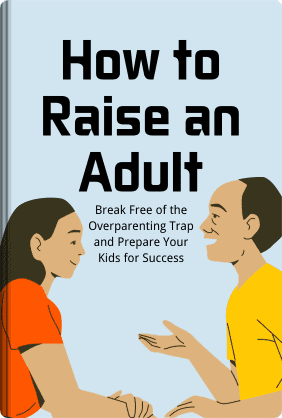
How to Raise an Adult
Julie Lythcott-Haims
33 Duration9 Key Points4.6 Rate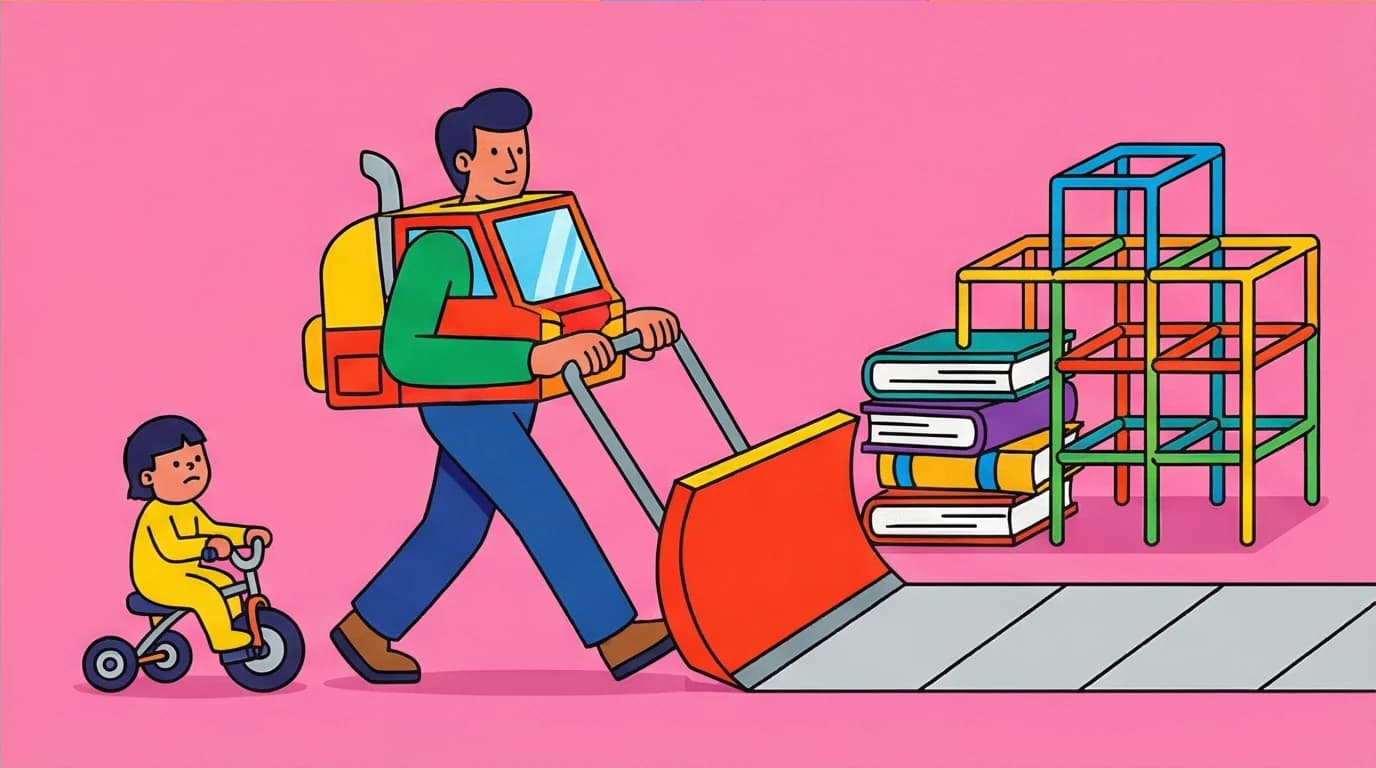
2. Confusing Grit with Stubbornness
There is a massive difference between quitting because something is hard, and moving on because something is a dead end. If your child has given a sport a fair shot, finished the season, and genuinely hates it, letting them pivot to robotics or theater is not encouraging them to quit. It is helping them allocate their energy efficiently. Grit means persevering toward high-level goals, not suffering through activities that drain their soul.
3. Ignoring Your Own Lack of Grit
Children are excellent observers and terrible listeners. You cannot lecture your child about perseverance while you complain about your boss and quit a new diet every three weeks. If you want gritty kids, you have to be a gritty adult. Show them how you handle traffic, a broken appliance, or a difficult project at work.
Modeling grit is a powerful tool, but it requires continuous learning and self-improvement, which can feel daunting when you're already short on time.
Use LeapAhead to fit powerful ideas from bestselling books into your busy schedule, turning small moments of your day into opportunities for personal and professional growth.
LeapAheadFAQ
How do I know if my child should quit or keep pushing?
Evaluate the timing. Never let a child quit on a bad day, right after a loss, or in the middle of a crying fit. Enforce a "cooling off" period. Require them to finish the current commitment (the end of the semester, the end of the season). If they still want to transition to a different activity after the commitment is fulfilled, let them.
Evaluate the timing. Never let a child quit on a bad day, right after a loss, or in the middle of a crying fit. Enforce a "cooling off" period. Require them to finish the current commitment (the end of the semester, the end of the season). If they still want to transition to a different activity after the commitment is fulfilled, let them.
Can you teach grit to a child who gets easily frustrated?
Yes. High frustration often comes from a fixed mindset—the belief that struggling means they are not smart. Break tasks down into micro-steps. If a 50-problem math worksheet causes a meltdown, fold the paper so they only see five problems. Praise them aggressively for finishing those five, then unfold the next section.
Yes. High frustration often comes from a fixed mindset—the belief that struggling means they are not smart. Break tasks down into micro-steps. If a 50-problem math worksheet causes a meltdown, fold the paper so they only see five problems. Praise them aggressively for finishing those five, then unfold the next section.
Is there a downside to having too much grit?
Yes, it is called "stubborn persistence." Sometimes, sticking to a failing strategy or an unhealthy environment (like a toxic sports team or an unachievable AP course load) causes burnout and anxiety. Teach your children that quitting a specific tactic is fine, as long as they are not giving up on their overarching goals.
Yes, it is called "stubborn persistence." Sometimes, sticking to a failing strategy or an unhealthy environment (like a toxic sports team or an unachievable AP course load) causes burnout and anxiety. Teach your children that quitting a specific tactic is fine, as long as they are not giving up on their overarching goals.