

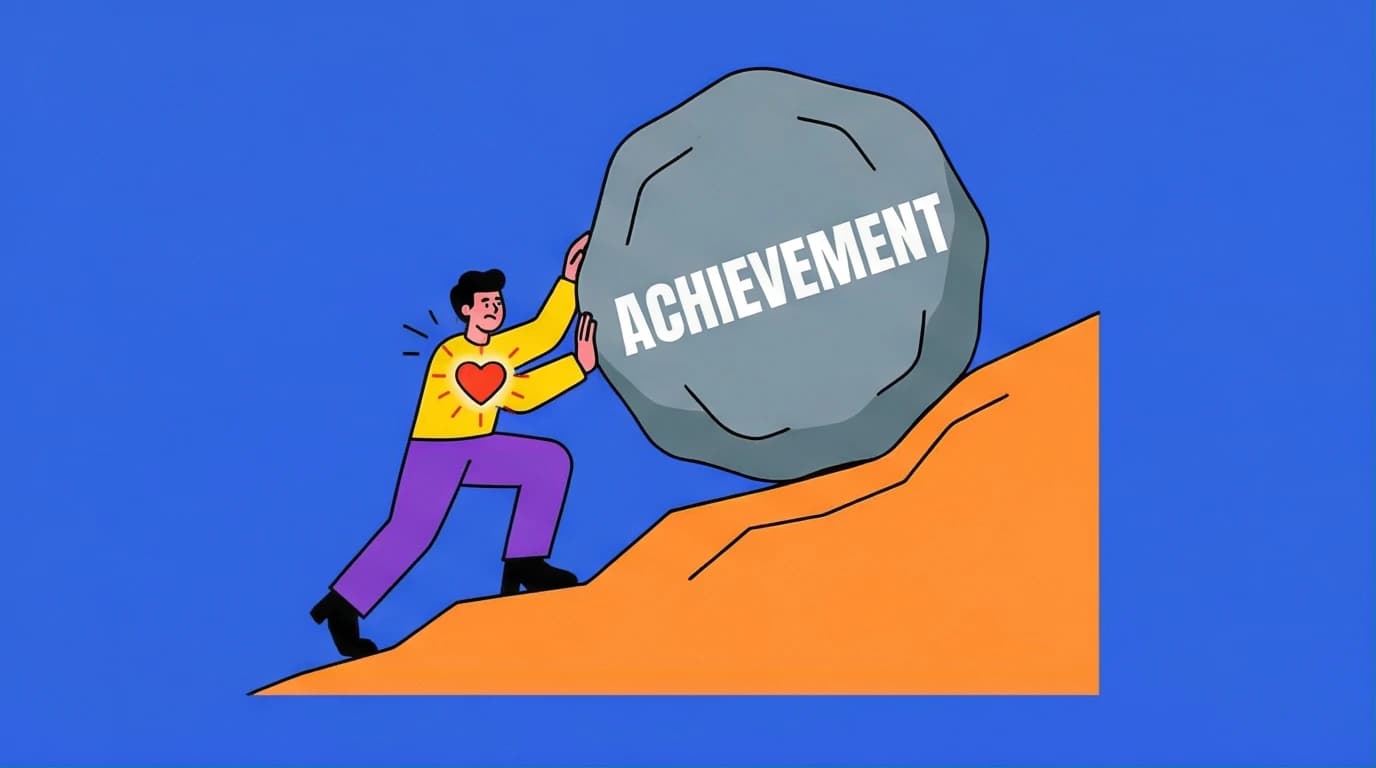
You see it everywhere—the startup founder who wasn't the smartest in the room but built a massive enterprise, or the student who outworked naturally gifted peers to land a spot at a top-tier university. Society conditions us to worship natural talent. We treat "gifted" individuals as if they have a magic gene the rest of us lack. Angela Duckworth shatters this myth entirely.
If you are looking for a complete grit book summary without reading all 300 pages, you need to understand one fundamental shift in thinking: consistency beats intensity. Here is the definitive breakdown of how grit works and how to engineer it.
The Core Thesis: Why Effort Counts Twice
To understand any grit Angela Duckworth summary, you have to look at her defining mathematical framework. Duckworth spent years studying cadets at West Point, contestants in the Scripps National Spelling Bee, and rookie teachers in rough neighborhoods. She wanted to know who survived the grueling environments and who dropped out.
The answer was never the smartest or the most physically fit. It was the grittiest.
Duckworth crystallizes her findings into two simple equations:
- Talent × Effort = Skill
- Skill × Effort = Achievement
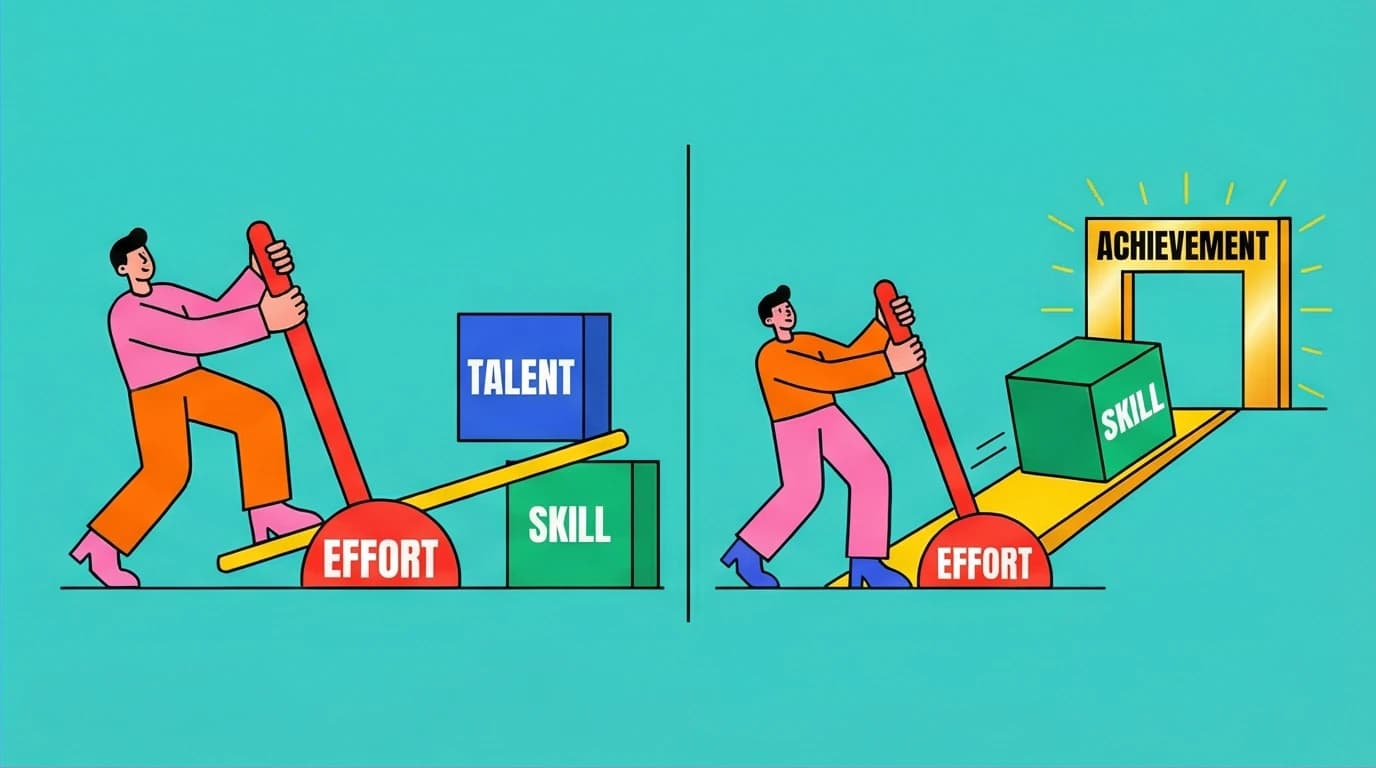
Talent is how fast your skills improve when you invest effort. Achievement is what happens when you take your acquired skills and use them daily. Notice what appears in both equations: Effort.
When you rely solely on talent, you only reach the first level. You build a skill quickly, but without sustained effort, you never translate that skill into tangible achievement. Effort builds the skill, and effort makes the skill productive. This is why highly talented people often plateau, while seemingly average people who possess high grit surpass them over the long haul.
This powerful framework highlights that while talent is a factor, it is the consistent application of effort that truly drives success. If you're curious about your own baseline for this crucial trait, you can get a clear picture by using the assessment developed by Duckworth herself.
If this summary is already changing how you view talent and achievement, you owe it to yourself to read the source material. Angela Duckworth’s groundbreaking work dives much deeper into the fascinating psychological studies and real-world examples that prove effort beats raw genius every single time. Grabbing a copy of the full book will give you the complete, unedited insights you need to build unbreakable perseverance in your own life and career.
Grit
Angela Duckworth
 18 Duration
 8 Key Points
 4.6 Rate
And if the idea of tackling a full 300-page book feels daunting on a busy schedule, you can start by absorbing its core lessons in a more condensed format.

Listen to the key ideas from 'Grit' and other monumental books on achievement in just 15 minutes, turning your commute or workout into a powerful learning session.

Download LeapAhead App now
Grit Core Concepts: What Exactly Is It?
Grit is not just working hard. Plenty of people work exhausting hours but lack grit. True grit is the exact intersection of passion and perseverance applied toward a top-level goal.
- Passion: This doesn't mean a fleeting burst of intense emotion or obsession. In the context of grit, passion means consistency over time. It is holding the same top-level goal for years. It is waking up every day and being interested in the same exact pursuit, refining it, and staying loyal to it.
- Perseverance: This is the resilience to overcome setbacks. It is the ability to maintain your effort even when progress is invisible, when you fail publicly, or when the work becomes boring.
A gritty person organizes their goals in a hierarchy. Low-level goals (answering emails, daily workouts) only exist to serve mid-level goals (finishing a project, making a team), which ultimately serve one defining top-level goal (becoming an industry leader, building a legacy). When a low-level goal fails, gritty people abandon it and find another route. They are flexible at the bottom, but unyielding at the top.

Grit Chapter Summary: The Journey from Inside to Outside
To fully grasp the book's architecture, this grit chapter summary breaks down the text into its three primary sections.
Part I: What Grit Is and Why It Matters
Duckworth uses the first third of the book to dismantle the "naturalness bias." We secretly favor natural talent over hard work because attributing someone's success to their "gift" lets us off the hook. If they are a genius, we don't have to compete with them. Part I forces you to realize that greatness is highly doable if you are willing to endure the mundane, unglamorous reality of continuous effort.
Part II: Growing Grit from the Inside Out
Can you increase your own grit? Yes. Duckworth identifies four psychological assets that gritty people develop over time, always in this specific order:
- Interest: You cannot force passion. You have to discover it. Gritty people explore early on, find something that captures their attention, and actively foster that interest until it becomes a lifelong fascination.
- Practice: Once you have the interest, you must do the work. This means deliberate practice. You must set a stretch goal, focus 100% on a specific weakness, seek immediate feedback, and reflect on it. You don't just put in hours; you put in targeted, uncomfortable hours.
- Purpose: Interest without purpose is selfish and eventually burns out. Grit requires the conviction that your work matters to other people. You must connect your daily grind to a larger societal value.
- Hope: This is not blind optimism. Gritty hope is the belief that your own efforts can improve your future. It is a defining trait of a growth mindset. When you fail, you blame fixable causes (strategy, effort) rather than permanent flaws (lack of talent).
The book lays out a clear internal roadmap for self-improvement. Developing these four assets—interest, practice, purpose, and hope—is the key to unlocking your potential. For more actionable techniques on this journey, our comprehensive guide can help.
Notice how Duckworth highlights the importance of a growth mindset in developing hope and resilience? That concept actually originates from another foundational piece of psychological research. If you want to understand exactly how to shift your brain from a fixed state—where you believe talent is set in stone—to a growth-oriented state that thrives on challenges, this next recommendation is essential reading. It perfectly complements the internal grit-building process by teaching you how to reframe failure.

Mindset
Carol S. Dweck
51 Duration8 Key Points4.6 Rate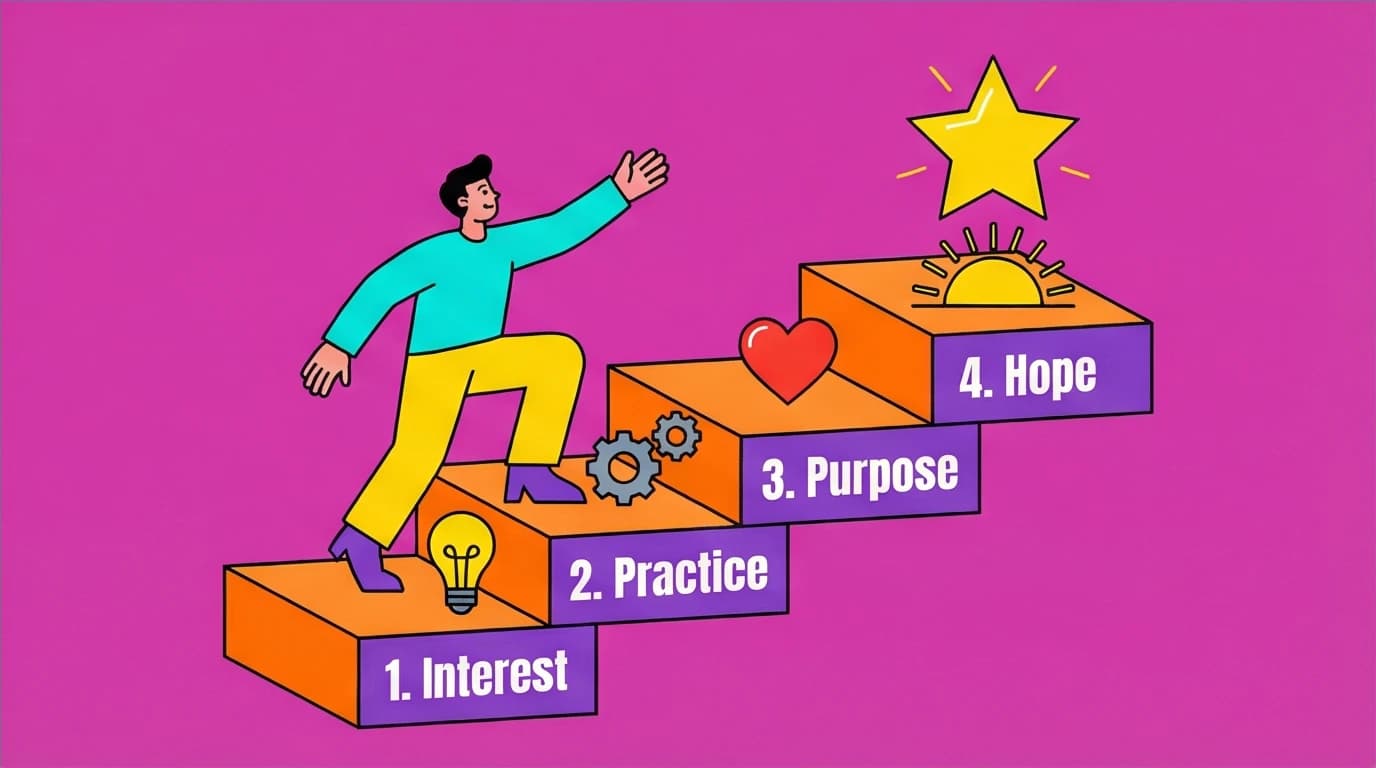
Part III: Growing Grit from the Outside In
You don't have to build grit in isolation. The environment plays a massive role.
- Parenting for Grit: Duckworth advocates for being "wise" parents—both highly demanding and highly supportive. You set incredibly high standards but provide the warmth and resources necessary to hit them.
- The Playing Fields of Grit: Extracurricular activities are the best training grounds for grit in youth. Kids who commit to an activity (like playing an instrument or joining a sport) for more than a year show significantly higher grit scores as adults.
- A Culture of Grit: The fastest way to become gritty is to join a gritty culture. If you want to push your limits, join a team or an organization where extreme effort and resilience are the baseline norms. Humans conform to their environment.
Creating an environment that fosters perseverance is one of the most impactful things a parent, coach, or manager can do. The principles of setting high standards combined with strong support are foundational.
Duckworth frequently references "deliberate practice" as the engine for building skill, a concept she borrowed from the world’s leading experts on peak performance. If you are wondering what deliberate practice actually looks like in the real world—whether you are trying to master the violin, learn to code, or become a top-tier athlete—you need to read the original research. It is a fantastic follow-up that shows you how to structure your practice sessions so you aren't just wasting hours on the clock.

Peak
Anders Ericsson and Robert Pool
48 Duration10 Key Points4.5 RateActionable Takeaways: How to Apply This Today
Understanding the theory is useless without execution. Here is how you apply these principles to your career or personal life immediately.
Implement the "Hard Thing Rule"
Duckworth uses this rule in her own home. Everyone in the family must do one "hard thing"—something that requires daily deliberate practice (e.g., piano, track, coding). You are allowed to quit, but only after the season is over or the tuition period ends. You cannot quit on a bad day. This builds the muscle of seeing commitments through.
Duckworth uses this rule in her own home. Everyone in the family must do one "hard thing"—something that requires daily deliberate practice (e.g., piano, track, coding). You are allowed to quit, but only after the season is over or the tuition period ends. You cannot quit on a bad day. This builds the muscle of seeing commitments through.
Audit Your Goal Hierarchy
Write down your top 25 goals. Circle the top 5. Now, look at the other 20. Instead of working on them when you have free time, you must actively avoid them. They are distractions stealing your focus from the top 5. Align your daily actions so they filter up to one single, defining professional or personal compass.
Write down your top 25 goals. Circle the top 5. Now, look at the other 20. Instead of working on them when you have free time, you must actively avoid them. They are distractions stealing your focus from the top 5. Align your daily actions so they filter up to one single, defining professional or personal compass.
Shift Your Feedback Loop
Stop praising talent in your team or your kids. If someone does a great job, do not say, "You are so smart." Say, "You worked incredibly hard on that, and the strategy you used was highly effective." Praise the effort and the process. This fosters the growth mindset necessary for perseverance.
Stop praising talent in your team or your kids. If someone does a great job, do not say, "You are so smart." Say, "You worked incredibly hard on that, and the strategy you used was highly effective." Praise the effort and the process. This fosters the growth mindset necessary for perseverance.
The strategy of auditing your goal hierarchy and aggressively cutting out your mid-level distractions is incredibly powerful. If you struggle to narrow down those top 25 goals into a single, defining focus, you aren't alone. Taking the time to master prioritization is the ultimate productivity hack. To help you eliminate the background noise and ruthlessly execute on your most important professional or personal compass, check out this brilliant guide on narrowing your focus to what truly matters.

The ONE Thing
Gary Keller, Jay Papasan
22 Duration10 Key Points4.5 RateWith recommendations for Grit, Mindset, Peak, and The ONE Thing, your reading list is probably growing. If finding the time to get through them all feels daunting, an app can help you absorb the core concepts efficiently.
Clear your 'reading debt' by getting the main takeaways from books like 'The ONE Thing' and 'Grit' in minutes, not months, so you can start applying the knowledge today.
Download LeapAhead App now
FAQ
Does grit mean you should never quit anything?
No. Gritty people quit all the time, but they quit low-level goals to protect their top-level goals. If a specific marketing tactic isn't working, drop it immediately. Quitting a dead-end strategy is smart; quitting your ultimate mission because you hit a roadblock is a lack of grit.
No. Gritty people quit all the time, but they quit low-level goals to protect their top-level goals. If a specific marketing tactic isn't working, drop it immediately. Quitting a dead-end strategy is smart; quitting your ultimate mission because you hit a roadblock is a lack of grit.
Can you have too much grit?
Duckworth admits that there can be a point of diminishing returns. Obsessively grinding on a goal that is fundamentally flawed or physically destructive can be detrimental. However, the vast majority of people suffer from a lack of grit, not an excess of it.
Duckworth admits that there can be a point of diminishing returns. Obsessively grinding on a goal that is fundamentally flawed or physically destructive can be detrimental. However, the vast majority of people suffer from a lack of grit, not an excess of it.
Is grit just another word for stubbornness?
Stubbornness is continuing to do the exact same thing while ignoring feedback. Grit involves deliberate practice—meaning you constantly adapt, seek critical feedback, and change your approach to improve. Grit is highly adaptable; stubbornness is rigid.
Stubbornness is continuing to do the exact same thing while ignoring feedback. Grit involves deliberate practice—meaning you constantly adapt, seek critical feedback, and change your approach to improve. Grit is highly adaptable; stubbornness is rigid.
How do I test my own grit score?
Angela Duckworth developed a widely used "Grit Scale." It is a short questionnaire that asks you to rate yourself on statements regarding your focus on new ideas, how you handle setbacks, and your work ethic. You can find it on her official website to benchmark your current baseline.
Angela Duckworth developed a widely used "Grit Scale." It is a short questionnaire that asks you to rate yourself on statements regarding your focus on new ideas, how you handle setbacks, and your work ethic. You can find it on her official website to benchmark your current baseline.