


You sit down at your desk with a cup of coffee, ready to tackle that big project. Five minutes later, you are scrolling through your phone, replying to a Slack message, and checking your email inbox. An hour passes, and you realize you have barely written a single sentence. The constant switching leaves you drained, fighting through brain fog, and ending the workday feeling like you accomplished absolutely nothing.
You are not broken. Your brain is simply reacting to an environment built to steal your attention. If you want to get your productivity back, you have to change your approach from the ground up.
The Multitasking Myth
Before you can fix your focus, you need to understand why you struggle with it. Society praises multitasking, but the human brain physically cannot do two cognitively demanding tasks at the same time.

When you think you are multitasking, your brain is actually rapid-switching between tasks. Every time you switch from a spreadsheet to a text message and back, you pay a "switching tax." Your brain takes an average of 23 minutes to fully refocus on the original task after an interruption.
This constant shifting floods your brain with cortisol and dopamine. You feel busy, but you are actually just burning out your cognitive reserves. Figuring out how to stop getting distracted starts with accepting a simple truth: doing one thing at a time is the only real way to get things done.
Understanding this cognitive limitation is the first step. For a more detailed comparison of these work styles and why embracing one is critical for productivity, it's helpful to explore the science behind it.
If you're struggling to let go of the multitasking illusion and want to truly master the art of prioritizing, it helps to understand the mechanics behind exponential productivity. By narrowing your concentration down to a single objective, you can eliminate the overwhelming noise of your daily to-do list. For a deeper dive into why paring down your focus is the ultimate secret to extraordinary success, you might want to check out this fantastic read that completely reshapes how you look at your daily workload.

The ONE Thing
Gary Keller, Jay Papasan
 22 Duration
 10 Key Points
 4.5 Rate
Step-by-Step Focus Techniques for Work
Telling yourself to "just focus" never works. You need a system that removes the need for willpower entirely. Here are the most effective focus techniques for work that you can implement right now.
1. The Post-it Note Anchor
Start your day by identifying your absolute most important task. This is the task that, if you finish it today, will make you feel satisfied with your workday.
Write this single task on a physical Post-it note and stick it to your monitor. Do not use an app for this. Digital lists get hidden behind other windows. You need a physical, visual anchor in your workspace. When you inevitably get distracted or feel the urge to open a new tab, your eyes will catch the note. It acts as a physical reminder pulling you back to your single priority.
Identifying that one crucial task is a skill in itself. If you're unsure how to choose your daily priority from a long to-do list, learning a few structured methods can make a significant difference.
2. Design a Distraction-Free Zone
Your environment dictates your behavior. If your phone is sitting face-up on your desk, you will look at it.
Put your phone in another room. If you are at an office, put it in your bag or a drawer. Turn on the "Do Not Disturb" or "Work Focus" mode on your Apple or Android devices. Close out of your email client completely. Do not just minimize it—quit the application.
If you work in a noisy office or a busy coffee shop, invest in high-quality noise-canceling headphones. Even if you are not playing music, the physical act of putting on headphones signals to your brain that it is time to work, and it signals to your coworkers that you are unavailable for casual chat.
Creating a distraction-free physical environment is a massive step, but sometimes the psychological pull of our digital devices feels impossible to break. If you find yourself constantly battling the urge to check notifications even when your phone is in another room, learning how to master your internal triggers is essential. To truly take back control of your attention and build a bulletproof mindset against modern technology's constant interruptions, this insightful book offers a practical framework for becoming completely immune to distraction.
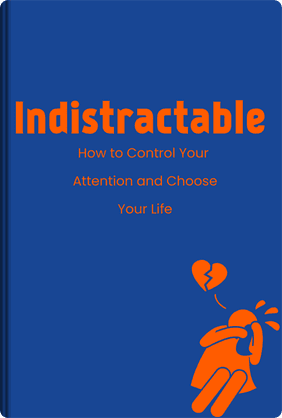
Indistractable
Nir Eyal
23 Duration10 Key Points4.5 Rate3. The 25-Minute Sprint
You cannot expect your brain to stay locked onto a hard task for three hours straight, especially if you are dealing with burnout. You have to build the muscle back slowly.

Set a timer for 25 minutes. During this time, you have one rule: you only work on the task written on your Post-it note. You do not check your phone. You do not open a new browser tab. If a coworker interrupts you, politely say you are in the middle of a focused sprint and will find them in half an hour.
When the timer rings, stop immediately. Take a five-minute break. Stand up, stretch, walk to the kitchen, or look out the window. Step away from the screen. This brief rest prevents cognitive fatigue and resets your brain for the next sprint.
4. The "Brain Dump" Pad
External distractions are only half the battle. Often, it is our own thoughts that pull us off track. You are in the middle of writing a report, and suddenly you remember you need to order dog food from Amazon or schedule a dentist appointment.
Keep a blank notepad next to your keyboard. When a random thought or to-do item pops into your head, do not act on it. Write it down on the pad immediately, and return to your main task. By writing it down, you tell your brain that the thought is safe and will not be forgotten. You can process that list of random thoughts at the end of the day.
The simple act of writing down intrusive thoughts on a physical notepad is actually the foundation of one of the world's most popular and effective productivity systems. When you externalize your mental clutter, you free up massive amounts of cognitive bandwidth for the task right in front of you. If you are ready to take this brain-dumping habit to the next level and organize your entire life so nothing ever slips through the cracks again, this classic guide to stress-free productivity is an absolute must-read.
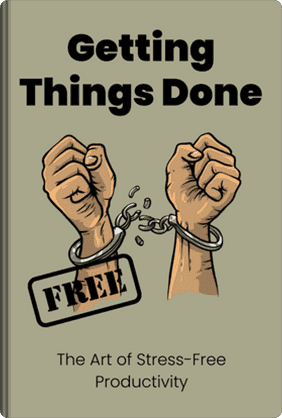
Getting Things Done
David Allen
43 Duration7 Key Points4.5 RateHow to Improve Concentration Over the Long Term
The techniques above are great for immediate relief, but building a durable, bulletproof focus requires lifestyle adjustments. If your battery is constantly empty, no productivity hack will save you. Here is how to improve concentration and protect your mental energy every single day.
Optimize Your Physical Environment
Your physical comfort plays a massive role in your ability to maintain focus. If your workspace is too hot or too cold, your brain will spend energy regulating your body temperature instead of working. Keep your workspace comfortable—usually around 68 to 72 degrees Fahrenheit is ideal for mental work.
Pay attention to your lighting. Sit near a window if possible. Natural light regulates your circadian rhythm and keeps you alert. If you work in a dark room, buy a desk lamp that simulates natural daylight.
Drink water. Dehydration shrinks brain tissue and causes immediate brain fog. Keep a large glass of water on your desk and make sure you are actively drinking it throughout your focus sprints.
Rebuild Your Attention Span
Modern technology has fractured our ability to sit still. If you want true attention span improvement, you have to train your brain to tolerate boredom again.

Stop looking at your phone every time you have a spare second. When you are waiting in line at the grocery store, just wait. When you are in the elevator, just stand there. Resist the urge to pull out your phone for a quick hit of dopamine.
Read physical books. Buy a novel from Barnes & Noble or grab your Kindle, leave your phone in another room, and try to read for 30 minutes straight. Reading a long-form narrative forces your brain to follow a single, linear train of thought. It is the ultimate workout for a broken attention span.
But if carving out 30 uninterrupted minutes feels overwhelming at first, you don't have to go from zero to one hundred. You can start by absorbing the core ideas of powerful books in a way that fits a modern, fragmented schedule.


LeapAhead

Listen to or read the key insights from bestselling books like Deep Work in just 15 minutes, making it easier to learn without the heavy time commitment.
Get outside and walk. Leave your smartwatch and phone behind. Walk a mile around your neighborhood. Let your mind wander naturally. This unstructured time allows your brain to process background stress, making it easier to lock in when you sit back down at your desk.
Rebuilding your attention span and learning to sit with boredom isn't just a neat trick—it is a critical professional advantage in today's highly distracted world. When you condition your mind to engage in prolonged, uninterrupted thinking, you unlock a level of high-quality output that sets you apart from the crowd. If you want to learn exactly how to cultivate this rare skill and use it to fast-track your career without ever burning out, you will find immense value in exploring the mechanics of intense concentration.
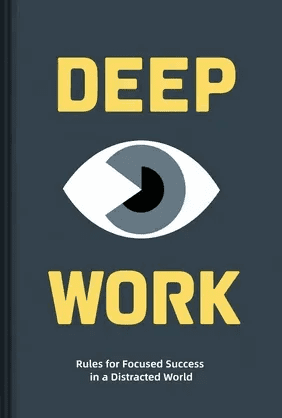
Deep Work
Cal Newport
47 Duration8 Key Points4.6 RateCommon Pitfalls to Avoid
As you practice focusing on one thing, you will hit roadblocks. Watch out for these common traps that can derail your progress.
Relying on Motivation: Motivation is a feeling, and feelings change. Do not wait until you "feel" like working. Rely on your systems. Set the timer, hide the phone, and start typing. The motivation usually arrives five minutes after you start the actual work.
Ignoring Rest: Focus requires massive amounts of energy. If you sleep five hours a night, your brain cannot sustain concentration, no matter how many cups of coffee you drink. Prioritize seven to eight hours of quality sleep. Treat sleep as the ultimate productivity tool.
Failing to Break Tasks Down: If your Post-it note says "Finish Taxes" or "Write Website," you will immediately feel overwhelmed and start looking for distractions. Break the task down to its smallest possible action. Change "Write Website" to "Write the first paragraph of the About page." A small, clear target eliminates friction and makes starting easy.
Mastering the art of single-tasking takes time. Your brain is used to chaos, and it will fight the silence at first. But if you stick to these boundaries, the fog will lift. You will start finishing your work faster, the quality of your output will soar, and you will finally end your day with the energy to enjoy your life.
Now that you have the framework to reclaim your focus, the next step is to absorb the knowledge that helps you stay sharp. If your to-read list—including the great books mentioned above—feels daunting, there's a more efficient way to get started.
LeapAhead
Clear your 'reading debt' by getting the core lessons from productivity classics in minutes, helping you apply new ideas without the burnout of long reading sessions.
FAQ
How do I focus if my job requires multitasking?
Even in highly reactive jobs, you are never truly doing two things at once. Group similar tasks together through a method called "batching." Check emails and Slack messages only at the top of the hour for 15 minutes, then close the apps. Spend the next 45 minutes focused on deep work. Communicate this schedule to your team so they know when to expect your replies.
Even in highly reactive jobs, you are never truly doing two things at once. Group similar tasks together through a method called "batching." Check emails and Slack messages only at the top of the hour for 15 minutes, then close the apps. Spend the next 45 minutes focused on deep work. Communicate this schedule to your team so they know when to expect your replies.
Why do I get brain fog even when I try to focus?
Brain fog is often a sign of cognitive overload, poor sleep, or dehydration. If you sit down to focus and immediately feel cloudy, step away. Go outside, get some sunlight, and drink a large glass of water. Pushing through severe brain fog usually results in mistakes and deeper burnout.
Brain fog is often a sign of cognitive overload, poor sleep, or dehydration. If you sit down to focus and immediately feel cloudy, step away. Go outside, get some sunlight, and drink a large glass of water. Pushing through severe brain fog usually results in mistakes and deeper burnout.
Are there apps that actually help with focus?
Yes, but they should act as walls, not crutches. Applications like Freedom or Cold Turkey block distracting websites across all your devices for a set period. Focusmate pairs you with a virtual accountability partner for 50-minute work sessions. Use these tools to enforce the boundaries your willpower cannot handle.
Yes, but they should act as walls, not crutches. Applications like Freedom or Cold Turkey block distracting websites across all your devices for a set period. Focusmate pairs you with a virtual accountability partner for 50-minute work sessions. Use these tools to enforce the boundaries your willpower cannot handle.
How long does it take to fix a ruined attention span?
You will notice immediate improvements in your daily output just by blocking external distractions. However, physically rewiring your brain to feel comfortable with sustained, deep focus usually takes about two to four weeks of consistent practice. Treat it like going to the gym; start with light weights (15-minute intervals) and slowly build up your endurance.
You will notice immediate improvements in your daily output just by blocking external distractions. However, physically rewiring your brain to feel comfortable with sustained, deep focus usually takes about two to four weeks of consistent practice. Treat it like going to the gym; start with light weights (15-minute intervals) and slowly build up your endurance.